AP McCoy and Ruby Walsh reflect on their rivalry and friendship
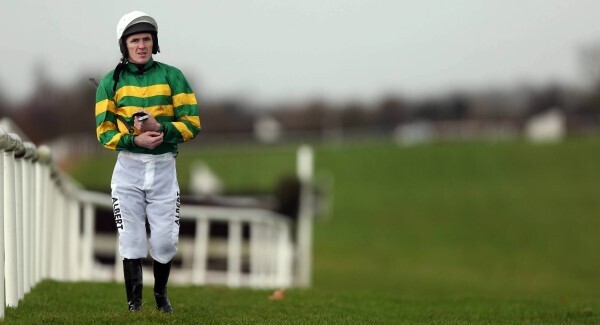
hen AP McCoy wrote his latest autobiography â there was always a reason to write another, as there was always another few champion jockey titles to reflect on â the title he chose was self-explanatory â Winner.
Winningâs what he did â more than anyone who ever sat in a saddle â winning was what he was about, winning was what defined, consumed, obsessed him.
If you were to believe the McCoy of caricature, youâd have the impression heâd stop at nothing to win, or to stop someone else from winning, like one of the characters in the couple of horse-racing novels heâs written in recent years.
That heâd willingly do a Tonya Harding to take a Nancy Kerrigan out of the equation.
But horse racing doesnât work that way. McCoy certainly doesnât.
His last race was at Sandown. And he didnât pull off what defined him â winning.
Instead Richard Johnson was first past the winning post. The McCoy of caricature would barely have saluted him, maybe even blanked him, and been driven out of the racetrack and into the sunset, brooding and seething.
Instead when McCoy returned to the weighing room, he sought out Johnson.
âCâmere, I want a photograph of the two of us in here, today of all days.â
Unknown to McCoy, Johnson had broken down in tears in an immediate post-race interview. Now he was welling up again.
Sixteen years Johnson had been runner-up to McCoy in the champion jockey standings and yet his greatest nemesis was also one of his dearest friends.
âWhile we were the greatest rivals we were the greatest friends,â heâd write in Winner. âWe sat beside each other in weighing rooms for nearly 20 years. He knew me inside out, I knew him inside out.â
If he couldnât win that last race, the greatest consolation, heâd say, was Johnson winning it.
âIf I have one abiding memory from my retirement, one that will stay with me forever, itâs when I watched the coverage later and saw Richard Johnson so emotional... I have as much admiration for Richard Johnson as I have for any other jockey.â
There is one other though that is of equal standing, as a friend, as a rival.
Ruby. Not that when theyâre in company, youâll ever hear refer to him by that name or any other, just as Walsh rarely refers to âyour manâ by name either.
âThe best national hunt rider I have ever ridden against,â is McCoyâs summation of Walsh. âAs good as we [the sport] have ever seen.â
They didnât really mix their first few years on the circuit.
Just nod at the other. About their first conversation was on the racetrack at Aintree when they famously both remounted their fallen horses in the 2001 Grand National. (âThereâs only two standing,â said McCoy. âWell, sure come on, so,â says Walsh. âWeâll go again.â)
Towards the end of that year Walsh was to go over to the UK to ride and school a few horses for Henrietta Knight.
He was talking to a mutual friend of his and McCoyâs, James Nash, who suggested, âRing the McCoy lad, stay with him.â
âI was supposed to stay just that night,â says Walsh now, over a table from you at Gordon Elliottâs stable.
âI ended up staying another fortnight.â
Soon heâd have a permanent pass to that guest room, so much so it would be renamed Rubyâs Room.
The favour would be returned; when McCoy would be riding in Ireland, heâd go over the previous day and stay with Walsh and his wife Gillian to prevent the possibility of being fogged in.
Walsh reckons only David Casey would be the only jockey that would be as close to him.
When Walsh was drowned for the ice-bucket challenge his nomination was McCoy.
When McCoy needed a caddie for a round with Tiger Woods at the JP McManus Pro-Am in Adare, he chose Walsh.
âAny time I duffed a shot, Ruby would throw the bag on the ground in a huff,â McCoy has written.
âThat would get a good laugh from the crowd.â
Walsh likes and gets McCoyâs humour too. Droll. Though he says McCoy is awful to watch TV with â he canât watch any channel for more than a minute. Heâs the worst driver heâs travelled with.
And a terrible morning person, where conversation is minimal before McCoyâs had his lunch.
Theyâve shared more serious and poignant moments. When McCoy finally won the Grand National, he made a point of calling over to Walsh who had broken his arm earlier in the day in the Aintree Hurdle.
âHeâs always looked after me,â Walsh tells you.
âHeâs come and seen me in hospitals, Iâve seen him in hospitals. Thereâd be that sense of respect among jockeys. We all know how dangerous it is.â
We often saw them on the track together, vying against one another.
âHe rode with his body,â smiles Walsh.
âHe has short legs. So he rode horses off the bridle, behind the bridle. The opposite to how I ride. I ride horses with my legs. So I could be squeezing them and there could be nothing left [in the horse] though to the ordinary eye, Iâm running away.
âHe often made them look like they were going worse than they were. Heâd be in front of you and youâd see the one foot off the bridle and be thinking âI have him beat.â
âThen as soon as youâd get to his boot, the horse would take off. Thatâs how he got better tactically.
âHe was able to cod lads into thinking he was going nowhere, trick you into thinking you could beat him and heâd get you into a battle and then heâd beat you.â
He laughs softly. âHe always had plenty left.â
And yet, for all the time theyâve had and have for each other, the rest of us have never seen them bounce off each other anywhere other than on horseback.
But thatâs changed. A couple of weeks ago we caught up with them when they were shooting a preview for Channel 4âs extensive daily coverage of Cheltenham.
Itâll be the first post-McCoy festival, though the man himself sees an upside.
âI donât have to be looking at his [Rubyâs] arse, seeing him beating me all the time.â
Walsh quips it will be different for him as well.
âThe atmosphere will definitely be a bit lighter. There wonât be the depressed mood over in the corner.â
âAh, says the happy fella,â McCoy retorts.
And theyâre off...
The closer you get to the door, the worse it is. The new lads sit at the end of the pegs basically. Last one in. Thatâs kind of the way it is. Thankfully in Cheltenham my valet is in at the back.
:
Your peg, youâve probably sat in the same spot there from Day One [at Cheltenham], have you?
:
Yeah.
I kind of got moved down. Iâd say when I first went in there [Richard] Dunwoody was probably in the corner to start with. Actually, no, it would have been Simon McNeill.
:
Dean Gallagher sat in the corner when I started.
:
I would have had the likes of Dunwoody, Norman [Williamson], Warren Marston. Who else would have been there?
[Jamie] Osborne.
Yeah, Osborne sat on my side. Carl Llewellyn was on my side.
Charlie [Swan] always sat in the middle of our side.
So thereâs been a lot of names through there from when I started to when I finished. But you get to the stage where you donât have a lot in common with the younger guys just like those lads [in the early years] before me didnât have a lot in common with me. I wouldnât say it was the moment I knew it was time to retire but I remember my valet Chris Mullen â actually Chris was another who sat beside me â wishing young Brendan Powell happy birthday last January. I said âBrendan, how old are you?â He said âIâm 20.â And Chris said âYou do realise he wasnât born when you were champion jockey?â
I noticed that as well. Youâd be looking down the line or across the way in Punchestown and thereâs all these young lads. Even Jack Kennedy here [at Gordon Elliotâs yard]...
Heâs 16! He doesnât even drive! Heâs not 17 âtil May. And already heâs after riding a couple of hundred grand race winners and heâs won races like the Troytown Chase.
I was Irish champion jockey before he was born. And youâre looking at him...
Hey [Ruby], when you get that age in life, you have to start thinking about the future!
[Both laugh]. I think when I started riding there was statistically more jockeys riding so there was more depth to the weigh room. I think thereâs more of a gap between the top five or six jockeys now from the rest.
Iâd say jobs changed that as well. More owner-retained riders. Thereâs less stable jockeys.
Yeah. Whereas when I was in Martin Pipeâs, you rode for a yard, not an owner.
:
The secret to [dealing with] disappointments is to get back out and have another go and prove yourself.
:
You need to have another go. Thatâs the good thing about riding compared to probably football or golf or definitely something like boxing. You get to go out again straightaway. Obviously if you get beaten by a head in the Grand National or Gold Cup, youâve another year to wait but riding another winner will give you some bit of satisfaction and you wonât be dwelling on the fact that itâs so long away. I think what separates all the great sportspeople or good jockey is that theyâre level. They can handle both [victory and defeat] the same.
I was definitely better in my later life than I was in my younger life. I learned to get over it much quicker. I suppose when youâre younger you think youâve got a divine right to win. You canât understand why you donât win. But I do think the way the likes of him [Walsh], Ryan Moore, [Johnny] Murtagh are so good is because theyâre very level. They donât get up or down.
Well, I had a massive headstart on the likes of AP in that I was a trainerâs son. If Dad trained 10 winners in the year it was brilliant. So you realised before you started that racing is actually about 90 percent losing and only a small part winning. Youâre going to ride more losers than youâre going to have winners so losing is huge part of it. So when I started riding I was used to the emotions of losing. I think that definitely helped getting over it.
Itâs fairly black and white. You sit down, put on the colours for the second race, weigh out and start thinking of the form of the second race and whatâs going to happen in that? The first race is history. Once you get off the horse, that race is over, good luck, think about it tonight. And Willie Mullins has said that about Cheltenham this year â things are going to go right, things are going to go wrong, (but) we just move on. The expectation is that Willie Mullins is just going to breeze through Cheltenham and mop it all up. Thatâs not going to happen (smiles). Some of them will win, some of them will get beat. I just hope Iâm on the ones that win.
Iâd say only once in my life in a big race I did the opposite of what the trainer told me. I did it on Well Chief in the Arkle Chase [2004]. I rode him too handy in the Triumph before and the owner [Martin Pipe] wanted me to ride him handy again. And I just couldnât get it out of my head that if I rode him the same way I wouldnât have the belief that I could win. When I started riding for Martin Pipe, he was champion trainer and notoriously difficult to ride for. First year I rode for him, I did anything he wanted me to do. Go fast, go slow, whatever; I would never go against him. But we got to the point where he trusted me. Weâd have a discussion but then heâd just let me do what I want. And he [Walsh] has that with Willie Mullins.
I canât think of the last time I followed instructions.
:
We were lucky that we were always put in a position to ride a horse that a chance of winning the race. Other lads are going out riding horses that canât win. But sometimes youâve got to look at the bigger picture with horses. You might be riding a horse and think âIf he has a grueller today he might never come back.â If heâs a young horse you may have to ride him in a certain way that heâs going to be better the next day and sacrifice [a few placings]...
Willie hates you being hard on a young horse.
:
Most trainers do.
RUBY

Theyâre talking away freely here.
McCoy asking Walsh why he thinks Willie Mullins is such a good trainer, Walsh saying he thinks McCoy changed how jockeys prepared (McCoy downplays it, saying sport in general changed, he just reflected that raising of standards instead of setting them; Dunwoody, he contends, was the real ground-breaker on that score).
About the day when Walsh told Paul Nicholls he wasnât going to race in England any more.
When they were racing though there were certain things they didnât talk about. They rarely gave the other advice, says Walsh.
âLook, Rory McIlroy isnât going to tell Jordan Speith if he drops his right hand then his swing....â Sometimes alright if one of them was riding a horse the other had before, theyâd sound the other out about him.
âOr if something happened to you,â says Walsh, âyou might ask him âWhat did you think of that?â Youâd only be hoping heâd be backing your opinion up, that you didnât do anything wrong.â
And you never gloated about beating the other in the big races. Sometimes alright in the more routine races there could be a bit of banter if someone else beat you.
Through the years Walsh would give McCoy plenty of what AP calls âI-canât-believe-you-got-beaten-on-thatâ jibes. But bragging was out.
âIâd say we never discussed I beating him or him beating me,â Walsh tells you.
âJockeys donât brag because racing will level you. Itâs the greatest sport in the world to level people. Iâm not going to come out in the press a week before Cheltenham and say so-and-so is an average rider.
âBecause true as God, the person who comes out saying something like that will be the one whoâll get the fall and be in hospital that night.â
But yet they were never afraid of that fall.. That was something else they had in common.
âHe never cracked,â says Ruby. âA lot of guys lose their bottle but I never saw him wilting in the corner even though he always looked like he was half-dying.
âI never saw him swinging, going up or down. He was just dead consistent, dead level. He was incredibly focused. And heâd an unbelievable pain threshold.
âAnd I never worry that I could end up in an ambulance. If you went out thinking that way you wouldnât go out. Itâs a risk thatâs there but you park it.â
Thatâs not what he fears. He doesnât doubt himself either.
âIâm never doubting myself,â he says with that breezy, even endearing, self-assurance.
âYou might be doubting the horse youâre on. Wondering, is that horse good enough to win? Iâve never thought going out âIâm not able to ride this horse and I wonât be able to ride him well enough to win.â Never.
âI would very much be of the view that itâs the horse that has to be good enough rather than the jockey.
âTo me itâs about the horse. Is Annie Power good enough to win the Champion Hurdle? Is Min good enough to win the Supreme? Itâs not if Iâm good enough.
âI think the best horse nearly always wins. So itâs about getting the best horse.â
Favouritism doesnât bother him either. âI would prefer to go to Cheltenham riding 20 favourites than going there riding 20 7/1 shots and under no pressure but hoping you might ride a winner.
âI prefer to go there with the expectation that you are going to win. The more short-priced horses you ride, the more chances you have of riding winners.â
But of course he has nerves around now.
âThe build-up to Cheltenham, thereâs a knot in your stomach. And youâre thinking to yourself, âWhy do I do this?â
âBut you canât tell me that Usain Bolt is on the blocks in an Olympic final and isnât a fraction nervous. Or that Messi the night before a Champions League final is just reading the bloody Beano.
âI think thatâs part of any sportsmanâs life. But then you turn up at Cheltenham and see the crowds and atmosphere and you realise âThis is why I do it.ââ
And so he mounts up again, at 36. McCoy was contemplating retirement when he hit that age. Is Walsh? Not for another good while yet, he says.
Why?
âBecause I still f***inâ love it.â
McCOY

Well before Tony McCoy entered retirement, youâd gauge from interviews that heâd dread it.
Now itâs here. Howâs he finding it?
âIâm lucky that Iâm busy and I donât have too much time to think about it,â he says. This past fortnight heâs only been home once. But heâs still around a lot more than he was. Heâll admit that at times during their courtship and even marriage he took Chantelle for granted.
âShe put up with a lot,â he smiles, âbut itâs gone full circle now. Iâm totally a yes husband. Iâm a complete yes- man to her now.â Thereâs a lot of things he doesnât miss about racing. âI donât miss travelling. I donât miss not eating. I donât miss not being injured. I just miss the excitement â of winning. I loved winning.
âThatâs the only thing I miss. Well, I miss riding, like. But I still ride out. I still work for JP so I still go around the yard and ride a few of his horses.â
A few years ago he gave an interview to Liam Mackey of this paper. âIf I could retire tomorrow,â he said, gazing into the middle-distance, âIâd have a couple of days off, change my name and then come back as someone else and start riding again the next day, Iâd be happy.â Does he still think like that?
âI would love to ride Don Cossack in the Gold Cup. Iâd love to just walk in and someone didnât know it was me.â
But why is it so important that you wouldnât want to be seen to be you?
âA fear of failure, I suppose. I didnât want to carry on too long because I didnât want people to think I shouldnât be riding any more. I donât mean this in an arrogant way, but I think I had a certain reputation in sport and I didnât want it diluted. I didnât want to tarnish myself. I didnât want to be a sports person who wasnât as good as he was.â
He sees Kobe Bryant, another 20-year veteran and all-time great, in his final NBA season, shooting the worst individual field-goal percentage in league history, playing for a losing team, a shadow of his former self.
âWhyâs he doing that?â wonders McCoy. âSame with Roger Federer.â
But Federer, you point out, is still one of the top four players in the world.
âBut heâs not going to beat Djokovic, or probably even Andy Murray now.â
But maybe thatâs why heâs staying on, because he feels he can take them one more time, and he still just loves competing, the same way youâd love to still compete if your name was anyone else?
âBut I couldnât take the risk of tarnishing myself,â he repeats. âIf I hadnât been Champion Jockey 20 years in a row, I wouldnât have retired. I could have rode for another two or three years.â
But yet you rode in year 18, year 19, year 20. You risked it.
âThatâs true.â
Thereâs the winning post. You go past it before anyone else and you have that high. But did you enjoy the rest of the race as well, or was it something just to be endured to get to that winning post.
âYeah, you enjoyed the anticipation of it, you enjoyed the unpredictability of it. You enjoy the process of trying to win, you enjoyed trying to unravel that in your head, the thought process beforehand and the thought process afterwards and figuring out why you didnât win. You were keeping yourself mentally active all the time. And you were never satisfied with what was going on. I was never satisfied in my life. Well, I was satisfied â but [only] for minutes.â
And with that, he has to head off. Fly. Still on the move, still busy, and maybe even satisfied now. But still loving if McCoy could go up against his old pal Walsh again, just under a different name.