‘If it was somebody you didn’t really respect you’d think ‘what right have they got to slag off my riding?’

Whether or not Gary Neville has any interest in horses, his influence will be felt around the Cotswolds next week.

The ex-Man United full-back has quickly established himself as the best sports pundit in Britain and Ireland, that reputation based on an ability to impart knowledge, understanding, insight and analysis when working on soccer games.

There are many ex-pros walking into media jobs who fail to educate the viewer in the manner one should expect of someone who knows the subject intimately.


They get paid gillions (a Paul Merson term) to tell you “he’ll be over the moon with that Jeff”.

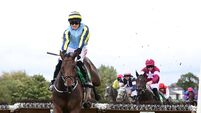
When ex-jockey Mick Fitzgerald went into punditry, having been forced into retirement after suffering spinal injuries in a fall in the 2008 Aintree Grand National, he wasn’t Gary Neville. He had a standing, as a former winner of the race that ended his time in the saddle (Rough Quest 1996) and a Gold Cup victor (See More Business 1999); lying fifth in the all-time list of winning-most jockeys.

And who doesn’t have props for a guy who had to be persuaded to retire by his doctor, despite suffering four broken vertebrae in his neck, two of which penetrated his spinal cord?

Bluffing and saying nothing has proven to be sufficient to keep punditry jobs but it never deceives the viewers. Though not in that league of ineptitude, Fitzgerald had his eyes opened by Neville, who “in one night of watching, you will learn two different things you would never have known”.

So now the Wexford native tries to explain the thinking behind a jockey’s actions in a race, what he’s doing to get the best response from a horse. Why it has been a good ride, or a bad one. It took a little while to adjust, though.

“I’ll never forget I walked away from Cheltenham the first year I wasn’t riding and I’m not ashamed to admit it I cried,” says Fitzgerald. “Because I knew then that that was gone.

“I wallowed away in self-pity but I got home and saw my two young lads and they didn’t give a fuck. They were delighted to see me; I was home. And it made me realise, you’ve got a lot more here than just racing and riding winners at Cheltenham to worry about. You’ve got a job to do and you can give a bit more back by being better at your job.

“And from that day on I made a conscious decision that I was going to try harder and do more to try and get that across.”

This conversation is taking place in the sitting room of Ruby Walsh’s home. Fitzgerald is over with a crew from Channel 4 to film an interview that will be played over the station’s four days of festival coverage.

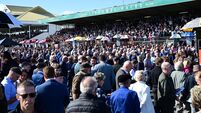
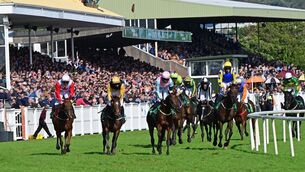
In the course of their conversation, Walsh described the festival as “the be-all and end-all”, so you can understand why Fitzgerald misses it so much. Walsh likens it to running out for a Premier Division game cross-channel; riding a winner in front of 60,000 people is not the same as booting one home at Sedgefield with 200 people watching. Not even for AP.

“Ruby said it himself, when you ride a winner and go into the winner’s enclosure, (all those) people are cheering you and for that moment in time you are their focus. That is a feeling you will never replace because it is magic time.

“If you could bottle that feeling and any day you are feeling low and depressed and could open that bottle just a little bit, it would perk you up no end because it’s a buzz like no other.”

When you experience such highs, the lows tend to be pretty drastic too. Walsh told him earlier that Willie Mullins is a good loser. Fitzgerald definitely wasn’t.

“The feeling you get when you win is so much better than the feeling you get when you’re second. The margin might be millimetres but the gulf is huge. And the rollercoaster of emotions you go through riding (at Cheltenham) is like nothing I have ever experienced. The low walking out of that place when you haven’t had a winner… it’s very hard to explain how bad it is.”

He rode 14 winners and was leading rider at the festival twice. Walsh is on 32 winners and counting and he has been leading rider seven times.

This week, you’ll hear Wash explain his decision for calling time on his arrangement with Paul Nicholls. Ultimately, it came down to life-work balance. He had been greedy, trying to have it all, but with two daughters – wife, Gillian is expecting their third child shortly – he wanted to spend more time at home.

Because of his forthrightness, Walsh is an easy interview. Fitzgerald tees him up on some interesting subjects, such as the comparison between Nicholls and Mullins (“chalk and cheese”), the qualities of Hurricane Fly, Quevega, Kauto Star and Big Buck’s (“if you were brave enough to have enough on, he was safer than the banks at the time”) and family.

You always get the sense with Walsh that he doesn’t suffer fools so Fitzgerald’s credibility makes the conversation an easy one for both of them. Mind you, when Fitzy tries to milk the family line, Ruby has to pull him up.

“We’re not Swiss Family Robinson!”

They enjoy the banter. But doing the job properly means that it isn’t always like this. Sometimes the analyst has to criticise former colleagues. That is always the difficult part of moving into a media role – if you are going to do it properly.

“The way I look at it now is that I have a job to do,” Fitzgerald explains. “If I’m looking at a race and have to give an opinion on a ride, or how somebody has done a job, I will. I will try to put myself in their shoes. I’ll try and ride the race as they did and think to myself ‘would I be happy if that was me?’ And if the answer is ‘no’, then I must say it. Otherwise I’m not doing my job properly.

Ironically, he wouldn’t have always responded well to having one of his rides being picked apart on television.

“Of course you’d be pissed off! You’d be like ‘who the fuck is he?’ If it was somebody you didn’t really respect you’d think ‘what right have they got to slag off my riding?’, even if they were right. That was my opinion sometimes.

“Other times, if it was somebody I respected, you turn around say ‘actually yeah, they do have a point’. The thing is, as a jockey, you know yourself. When you’ve given one a bad ride, you’ll know. Ruby will tell you. When he’s given a horse a bad ride, he doesn’t need anyone to tell him.”

He is comfortable with what he says because he knows he can look jockeys in the eye and tell them exactly what they did wrong. He has taken stick from injured parties with hurt feelings before but is satisfied that it goes with the territory. Anyway, it’s not like he’s always criticising. More often than not, he’s educating, trying to get inside the jockey’s head to accentuate the viewer’s experience. “I’m looking to see ‘there, that’s what won that race… The reason he did that was he could see what would happen at the next fence, or two fences down the line or turning into the straight. The reason he made that manoeuvre was to get himself ahead of the game for when that happens.’

“Good footballers or soccer players look like they have all the time in the world on the ball because they’ve got themselves into a position where they’ve got all the time. That’s why you see people like Ruby, AP, Dickie Johnson, Paul Townend, all the top lads, they get themselves into a position where they can win the race.

“Yes it’s about riding the best horse. Always. Because no matter how good a jockey you are, if your horse is shit, you won’t win. If you’re a moderate jockey riding a brilliant horse it will still win, if it’s so much better than the others.

“But your job as a jockey, especially on the big days, is to get yourselves into a position where you can win the race and that’s what the best jockeys do most often.”

It is interesting, listening to Ruby both in front of the camera and sitting on the kitchen counter after, accepting that with all the choices he will have in the week ahead, he will make some wrong decisions. He won’t like it but he’ll shrug it off when, as he expects, one he could have been on wins under Paul Townend, or maybe David Casey.

The thing is, Cheltenham affects horses too. He may well know his fate in the parade ring, as a horse might not have taken the trip well or be too revved up by the crowd, the surroundings. He will factor in conditions, ground, opposition and temperament when making his selection but still…

“You have to be prepared to be wrong,” Walsh tells Fitzgerald. “You’re going to be wrong. You move on. You get it wrong. If you can’t accept that …”

A typical, no-bull Walsh delivery. No wonder Fitzy thinks he will be as natural a pundit as he is a horseman if he pursues that route.

For now, though, they are at opposite spectrums but still involved in the biggest jumps show on Earth. That will do both of them nicely.

* Channel 4: Cheltenham Festival March 11–14

More in this section

Sport

Newsletter

Sign up to our daily sports bulletin, delivered straight to your inbox at 5pm. Subscribers also receive an exclusive email from our sports desk editors every Friday evening looking forward to the weekend's sporting action.

Cookie Policy Privacy Policy Brand Safety FAQ Help Contact Us Terms and Conditions

© Examiner Echo Group Limited