O’Hagan refutes reported number of slaughterings
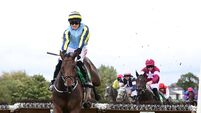
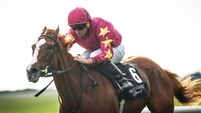
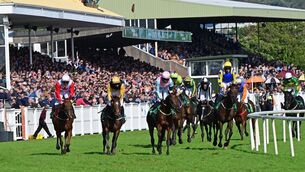
Michael O’Hagan was speaking in Prestbury Park with the Cheltenham Festival in full swing and shortly after Paul Nolan’s Noble Prince had just recorded a record-equalling tenth success of the week for Ireland and a day after a record-breaking six wins in one afternoon.
“That’s not even close to what’s going on,” he said.
“Those figures are telling you over the last three years the number of thoroughbreds registered has dropped from 12,000 to 7,000. That’s a figure people are assuming all sorts of things about which makes no sense at all.
“In a recession, people realise the market dictates what they can or can’t sell. We know what people can pay or not pay.
“The market will dictate to the breeders what they bring through. It’s about quality not quantity. Rubbish is no longer tolerated. We’d be pushing quantity and on Wednesday the proof was in the pudding.
“The best horses are coming out of Ireland. When people had a lot of money it was a fad to breed another and it takes a couple of years to wind down. People are breeding to sell or to race so they manage quality.”
It was reported by the BBC that 9,790 horses had been put to slaughter in abattoirs in Ireland in 2010, 4,618 of them being thoroughbreds, but O’Hagan took exception to facts which he claimed had been “twisted and turned”.
“That is simply just not true. Of course, there is natural attrition, animals not able to run, or ill. If you think there is no future for the thoroughbred, then you have it euthanised but it is done properly and professionally.
“To use the word ‘slaughter’ gives connotation of a gun to head in a field, that’s not what happens.
“You can drive into any yard in Ireland, criticise their house, their dog, car, almost their wife but say one bad word about a horse and you’ll be thrown out the gate. You watched that on Wednesday with all those winners.
“The fact they weren’t all favourites made it better because it shows at every level you have a chance at this game.
“The word slaughter is wrong, the number is wrong, the reality is that it’s responsible ownership, if an animal is beyond its usefulness on the racetrack or in the breeding shed, or is in pain, you might be better to take it away and put down professionally.”
However, trainer Colm Murphy, who had a number of runners at Cheltenham this week, was not surprised at the numbers quoted.
“No, not surprised but it’s been brought to the fore a lot quicker. Before if a syndicate had a mare and she was no good, they’d put her in foal. A horse would go around to half a dozen trainers but now you’re telling owners ‘the horse is no good, get rid of him.’ If we can find a home for them, great, but it’s not always possible.”
The Wexford trainer added: “I hate to see horses going to a home and things don’t work out. I heard of an instance of a former Grand National horse I think who was dying of malnutrition in the field. The kindest thing, and it’s an awful thing to say, is to put them down.
“I think this is knock-on of the Celtic Tiger when everyone had a leg of a horse.
“Now it’s got to the stage where people couldn’t afford the leg of a horse. All that has been weeded out. This is the knock-on effect of that.
“What’s in racing now will always be in racing but the flash in the pan days are gone. We had a lot of syndicates at one time, around 80% of our horses were owned by syndicates but I’d say 95% of what we have now is owners who can afford to have a horse in training.”