Meet the man responsible for Ireland's most successful Olympic programme
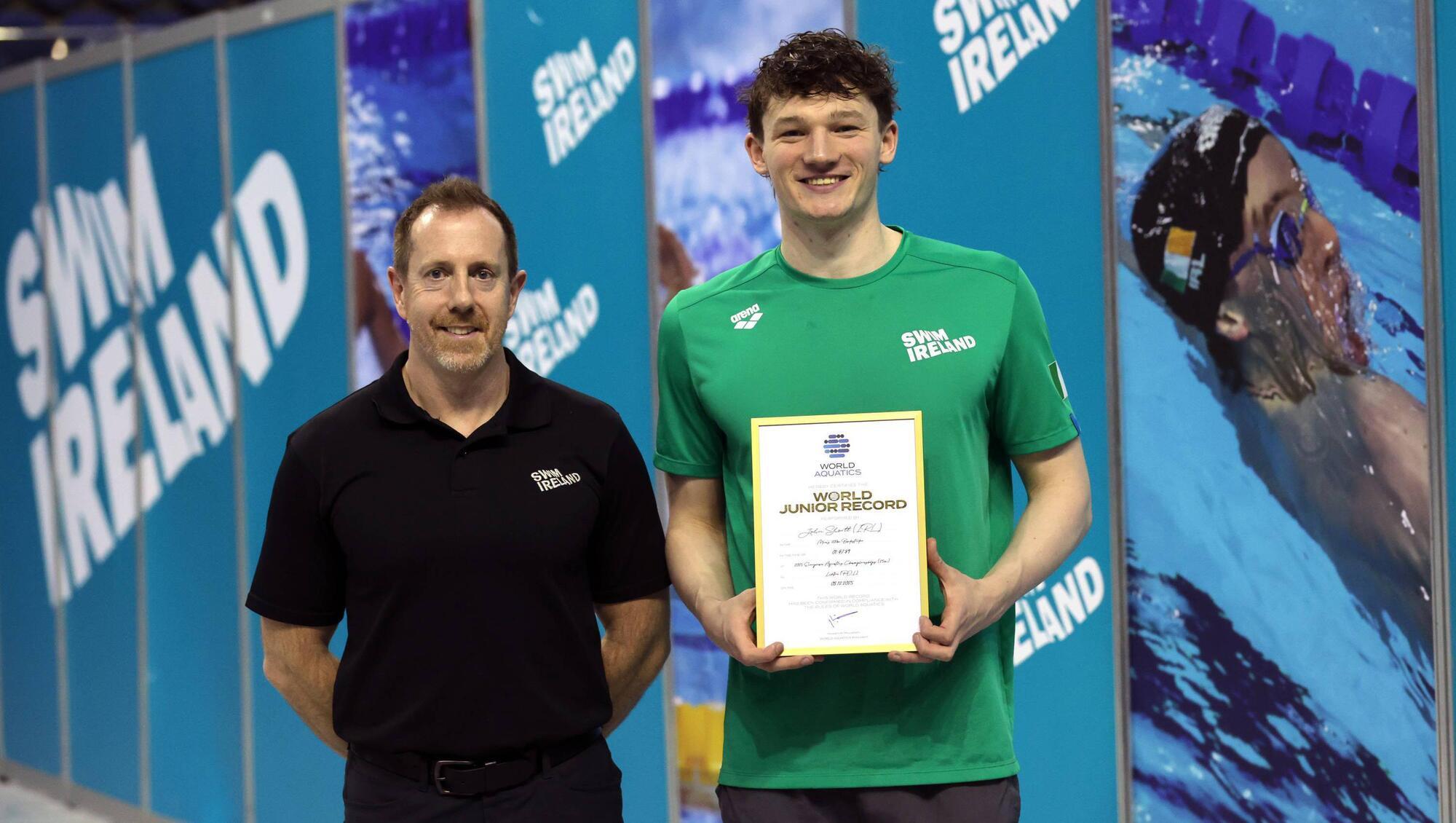
REID ALL ABOUT IT: Swim Ireland High Performance Director Andy Reid with John Shortt. Pic: ©INPHO/Bryan Keane
We’re all products of our environments, and of our experiences.
Andy Reid had been swimming for 20 years by the time he stood on the edge of the pool in Kuala Lumpur’s National Sports Complex at the 1998 Commonwealth Games and readied himself for his first ever stab at a major championships.
An asthmatic kid, he took to the water in a bid to combat the condition, fell in love with it, and progressed slowly but steadily through the ranks from the junior leagues in Ulster and with the Irish Schools. He was 23 by the time he made the senior international grade.
All of that led him to that moment in Malaysia but Swim Ireland's high performance chief can look back now, more than half-a-lifetime later, and speak dispassionately about an experience that should have been the culmination of a dream but turned into a nightmare.
“That was my first international and a lot of how I run things now are based on that still. Just the intensity of pressure. It was self-imposed and that cabin fever you get at a major championship, especially at a multi-sport Games and [being] in the village too long. For a lot of people it’s just too much.
“It was amazing to do but I don’t look back on it as one of the best experience of my life. Like, Tom Fannon last summer didn’t come out with everyone else [to the World Aquatic Championships in Singapore] because he wasn’t racing until day eight. There are times we have to do things together and others when you have to be mindful of what’s right for the athletes.”
Reid took other lessons home with him 28 years ago.
When he stripped back everything about the Commonwealths he came to realise that he had been over-trained. That meant a rebuild of his entire regime and it paid off with qualifications for World and European Championships with Ireland.
His was a time when swimmers and other athletes were finding this stuff out for themselves, following crumbs of information left behind by others before them, adding to it all with their own morsels, some of them half-baked, others more enriching food for thought.
Nutrition for him as a swimmer was basically whatever his mother, who doubled up as his coach, put in front of him on the kitchen table. The idea of a national institute was only in its very infancy. In modern sporting terms, it was year zero stuff.
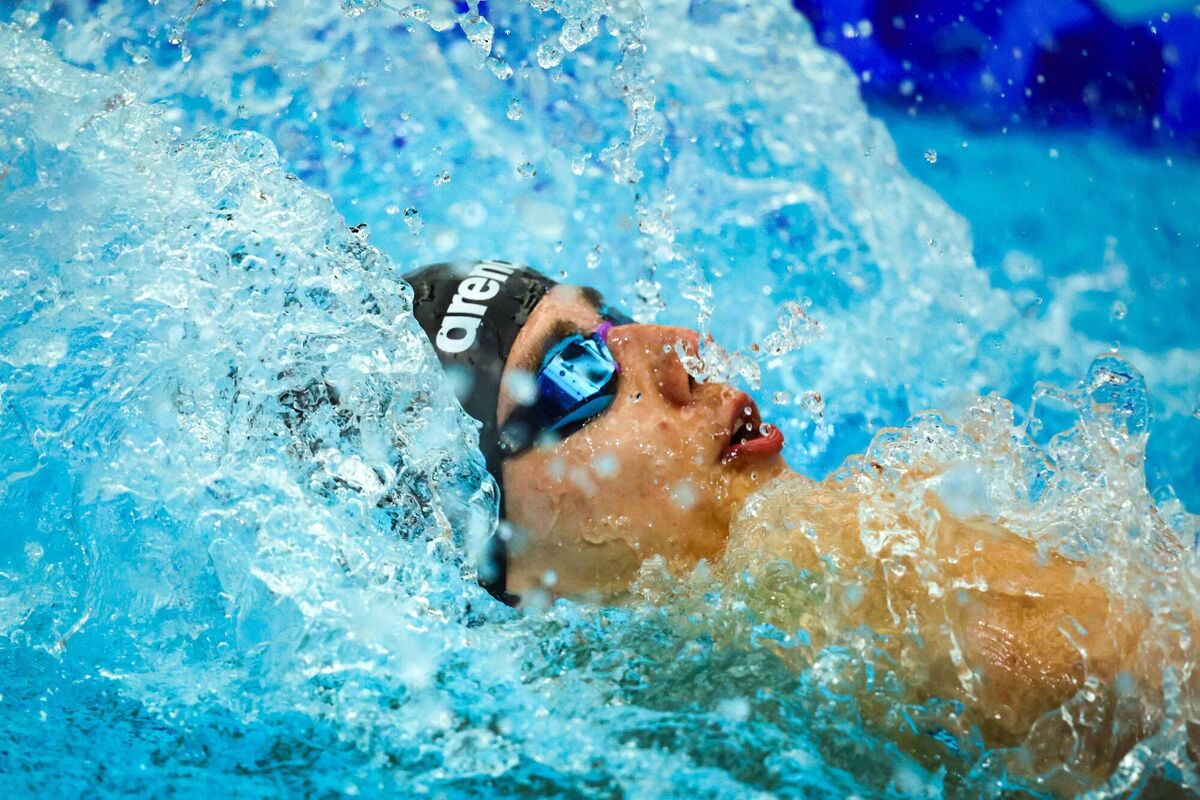
His own career serves another purpose again. Reid was filled to the brim with internal motivations. Winning, an exterior goal, wasn’t part of his thinking. He loved personal development, loved getting that bit faster year after year, and he got frustrated when that didn’t happen.
So he likes to think that he understands how athletes can feel.
His coaching chapter opened in Larne but he had harboured an interest in that side of the house while he was still competing. Some development courses got him started in City of Belfast at age grade levels. Then a full-time opportunity opened with Swim Ireland in Bangor.
He spent seven years there, the first three years of it spent building systems and programmes before the pool there opened 36 months later than scheduled. All of these little things add up to a bigger picture.
Now he’s at the top of the pyramid, overseeing the country’s three-pronged high-performance system with swimmers working out of centres at the National Aquatic Centre in Dublin, the University of Limerick and Bangor.
Ireland’s results in the pool are through the roof in recent Olympic cycles. It was our most successful sport in Paris in 2024 but there are medals and PBs being returned in any manner of distances and strokes at different levels.
But it’s not perfect either.
The Dublin centre struggles with its location out on the capital’s western fringes, far away from the nearest universities. Limerick is cocooned nicely with UL while Bangor, the newest of the three, is close enough to the unis in Bangor and is going well.
Money, as with everything in Irish sport, is always an issue. Swim Ireland has lost some of its coaches to foreign climes, one just recently to Saudi Arabia where former HP director Jon Rudd is now in charge. It’s hard to compete financially and the housing situation is no help in attracting and keeping the brightest and best either.
Still, Ireland is more attractive now than it used to be for our best swimmers.
Mona McSharry, bronze medallist in the 100m breaststroke at the 2024 Olympics, is still based in the US despite finishing her third-level studies but the vast majority of the country’s elite swimmers are based domestically now.
Daniel and Nathan Wiffen are based in Dublin now after a long stint in Loughborough University in the UK and a short, aborted spell in California. Evan Bailey is back in Limerick after a truncated stint at the University of Texas.
Reid only became the permanent HP boss earlier this year but he was very soon on a plane across the pond to talk to those based Stateside at the time, not to put undue pressure on over locations so much as to keep the lines of communication open.
“It’s not about being Big Brother,” he says. His take is that some will always choose the distant fields but that, in the majority of cases, Ireland can offer better support for the Irish athlete even if they can’t compete with the head-turning NCAA scholarships on offer over there.
“We’re probably going in to the fourth year now where we have not just the facilities but the training and the coaching support and the sport science support around the athletes to make this one of the best places to be. There are going to be people that thrive elsewhere.
“It has worked for some and not others, and it hasn’t worked for more athletes than it has. We just have to make sure what we have here can compete with the best in the rest of the world even if we can’t compete with scholarships.”
The talent is there, at the top of the tree and on the branches underneath. Ireland is a medal contender at the biggest of meets now and that won’t be any different at the European Aquatics Championships starting in Paris next week.
LA in 2028 will be the ultimate arbiter, but here again Reid eschews the external.
“We talk about stuff that is within our control. We can’t control what the Americans, the Aussies and all the other European nations do. Our objectives for LA are that every individual swimmer who qualifies progresses to a minimum of a semi-final.
“Then those at the level qualify for a final and compete for medals. We’ll not put a number on what medals they can do. If they can deliver season’s best times at the Games then they are putting themselves in the right position to compete.”

CONNECT WITH US TODAY



Be the first to know the latest news and updates