'It can be your Hercules muscle' — Motivators and coaches focus on battling their own burnout
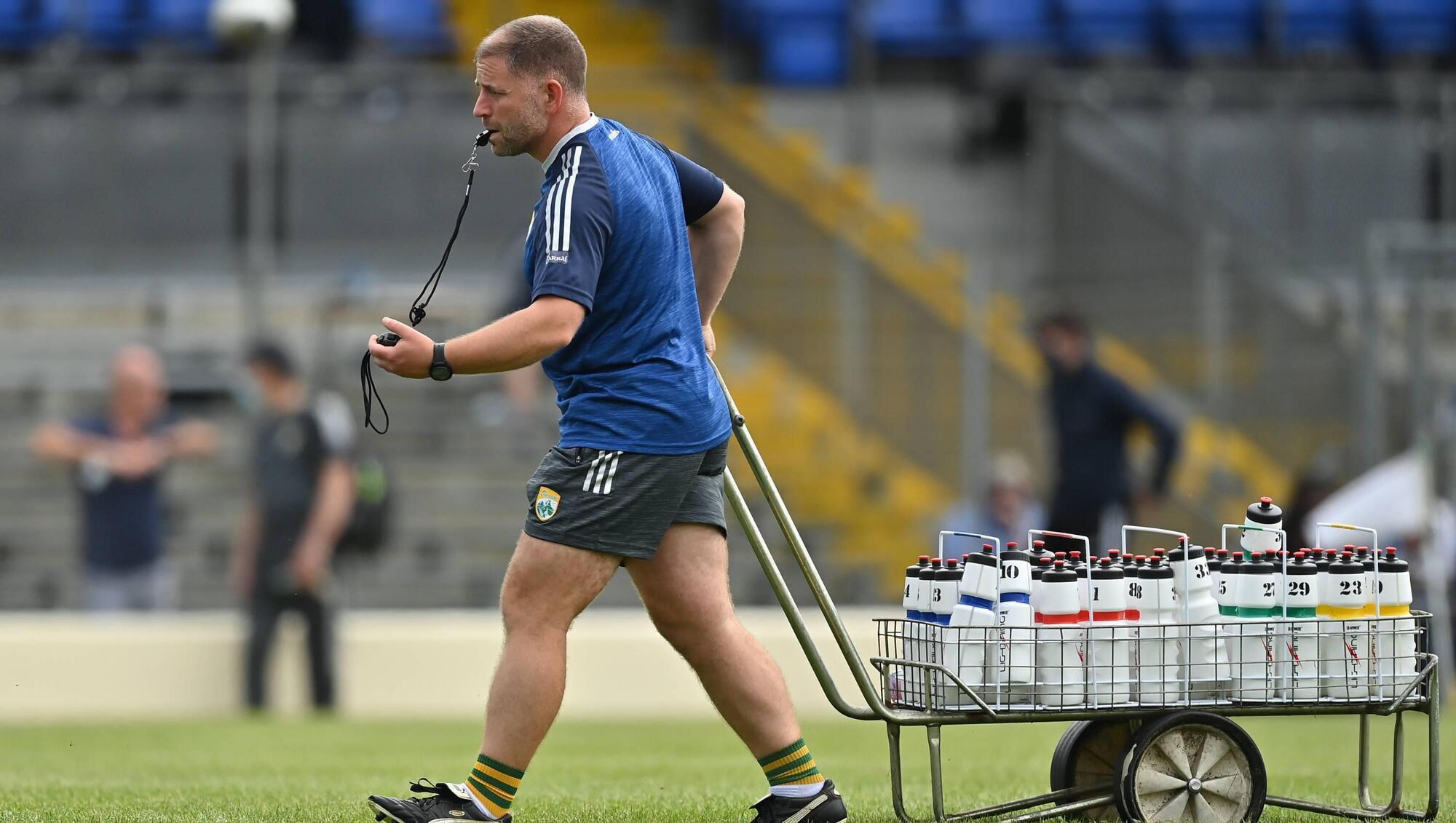
MULTI-TASKING: Kerry'S head of performance Jason McGahan. Pic: Brendan Moran/Sportsfile
They’re the ones – the experts – who observe the top athletes’ load. The people that make up the team behind the team. That advise on how to stay fresh, avoid burnout, navigate the high performance landscape.
But who in turn is looking out to see that they themselves aren’t in danger of burnout? Who is helping the helpers? It’s a question that Joe O’Connor has frequently pondered over the years.
Both his face and name you’re probably recognisable with, though you mightn’t necessarily have put them together.
He has been a key background figure in the Limerick hurling revolution, serving at different stages as the strength and conditioning coach and this past season as high performance manager to John Kiely’s squad before in recent months stepping back to coordinate the fitness testing of the county’s academy programme.
On the big match days his face may have occasionally flashed up on your television screen but most likely you’ll be familiar with it from him signalling the start of any challenge on Ireland’s Fittest Family.
It was early on his collaborations with Davy Fitzgerald that he himself hit a wall. After their final season in Waterford and before they teamed up with Clare, O’Connor hit a wall, and had to lay up for a spell.
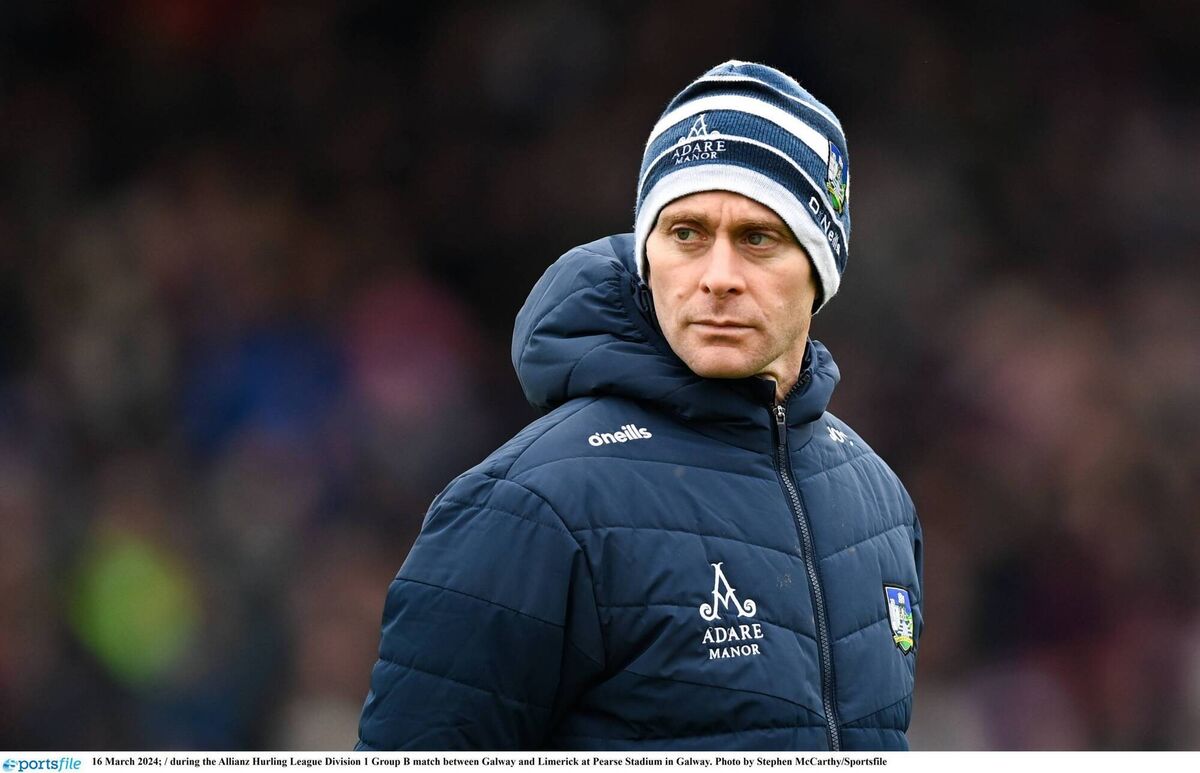
“Often in a setup it is the strength and conditioning coach who has the most contact with any player. Because we’re at every gym session, every field session, every team meeting, every management meeting. So we’ve the most touch points with the athletes even though we’re not the most qualified person to bring it all together. And that can be taxing. Mentally it can wear you out.
“Back around 2011, I was teaching in the college [now MTU Tralee, where he is a lecturer in exercise physiology and performance nutrition], involved with Waterford, Kerry [football], Athletics Ireland, and setting up a business. When I look back on the diary I should have said, ‘Stop, you idiot!’ But the brain had been overridden with fatigue and so I kept pushing and pushing.
“That’s where I learned we’ve to be proactive with our own health and fitness and nutrition and lifestyle habits. Say no to some things without feeling guilty about it. Otherwise we cognitively burn out, and then we physically burn out. We keep pushing like that hamster on the wheel until we stop with a bang.”
It is so that other practitioners may learn to avoid or overcome such a pitfall that O’Connor will MC a fireside seminar in TUS Thurles on November 14 on that very theme:
One of the panellists for the event organised by ISESA (Irish Sport and Exercise Sciences Association) will be Jessie Barr, the former Olympian who is now a leading performance psychologist with Sport Ireland Institute.
Part of her job is to prevent and deal with possible athletic burnout: she’s read the academic papers on it, seen it first hand. But she’s also learned from that job that practitioners can make the same mistakes – and interventions – as athletes.
“Something we come across a lot is the concept of athletic identity. That your sport comes to define how you perceive yourself and shapes the decisions you make.
“At times it can be your Hercules Muscle: it’s what makes you work harder and set and achieve goals. But it can also be your Achilles heel whereby you become so dogged driving for those goals you develop unhelpful behaviours, like coming back too fast from injury. And we see that with practitioners as well.
“I know for a while there the work was becoming all-consuming. I would be available to athletes at any time of the day, not narrowing my work hours or family life. If an athlete texted me on a Sunday at two o’clock while I was at a family dinner, I’d be thinking, ‘Oh, I better get back to them.’ I didn’t set any parameters.
“I was nearly thinking while I was transitioning from an athlete to a practitioner, ‘Oh, it doesn’t matter now if I don’t go to bed early.’ But now that I’m older, I’ve realised I need to look after my own health. Put on my own mask first.” Before – and so – she can help others.
“As practitioners our egos can take over to protect the image that we portray,” says O’Connor. “We feel that we have to keep this façade up of always pushing, pushing the whole time. And especially early on, you can very protective of your area. You feel that if you’re not seen to be busy then you’re not seen to be valuable.
“By the Tokyo Games when I was working with the equestrian team, I was standing back and letting the nutritionist and the high performance manager do most of the work. I was just there to quantify what they were doing. Because there was no need to get in the way. I’d learned after over 20 years in the field to take that step back. Whereas earlier in my career I’d have tried to justify my existence and that would burn me out.”
Again, Barr can relate. She was part of the Institute’s psychological support at the holding camp prior to those same 2020 (or rather 2021) Olympics. “I think I came home stressed out because I didn’t feel I had been doing enough.
It was two weeks out from the games, and while there were a lot of coffees with athletes, there was no major thing or intervention I had to make. You’re comparing yourself to someone like a physio who is extremely busy at that point, and feeling like you when you were working on a shop floor when you were younger and felt you had to look busy.
“But Phil Moore and Kate Kirby in the Institute reminded me: it was okay to be as quiet as I was. It meant I wasn’t firefighting. It meant that the work had been done.”
Younger practitioners can be particularly vulnerable to wanting to do too much or take on too much. They take on unpaid gigs to build up experience and a profile, but means then they might have to take on work not related to their expertise to pay the rent.
And over time even the most grounded of practitioners can be blunted by the grind.
Adam Grainger is a leading S&C coach with Ulster rugby having taken a few years out from the gig to pivot – and reenergise himself.
He reminds you how high performance sport differs from, say, accountancy. An accountant goes to the local shop and the person behind the counter doesn’t know what their bottom line was the previous week.
They know what it was for Grainger though: it was on the back page of the paper on the far shelf. The job’s process might be private but its outcomes are pubic. The hours long and unsociable.
“I definitely juggled too many plates at once. Didn’t know how to say no or to switch off and would try to fix problems that I couldn’t solve. But as my wife would often say to me, ‘Don’t watch sport when you put on the TV: put on something else. Put that research paper away: read a flippin’ novel instead.’
“I think governing bodies and clubs have a responsibility to educate their staff on matters such as burnout prevention and the importance of managing their energy and not letting the work becoming their primary identity.”
That is why ISESA are having this conference. In person. And for free.
“To bring across the message that everyone is this together,” says Grainger.
As part of that O’Connor will share some of his own insights. “I’ve got better at leaving the phone in the car, the laptop at home. Get in my workouts in the morning: make that appointment with myself.
“That sounds so contradictory from where I was nearly 15 years ago but I got my burns and that’s why I’m passionate about this. To help younger practitioners not make the same mistakes that we’ve made.”
CONNECT WITH US TODAY



Be the first to know the latest news and updates