Brendan O'Brien: Seven days, seven medals - Ireland's Olympic journey so far
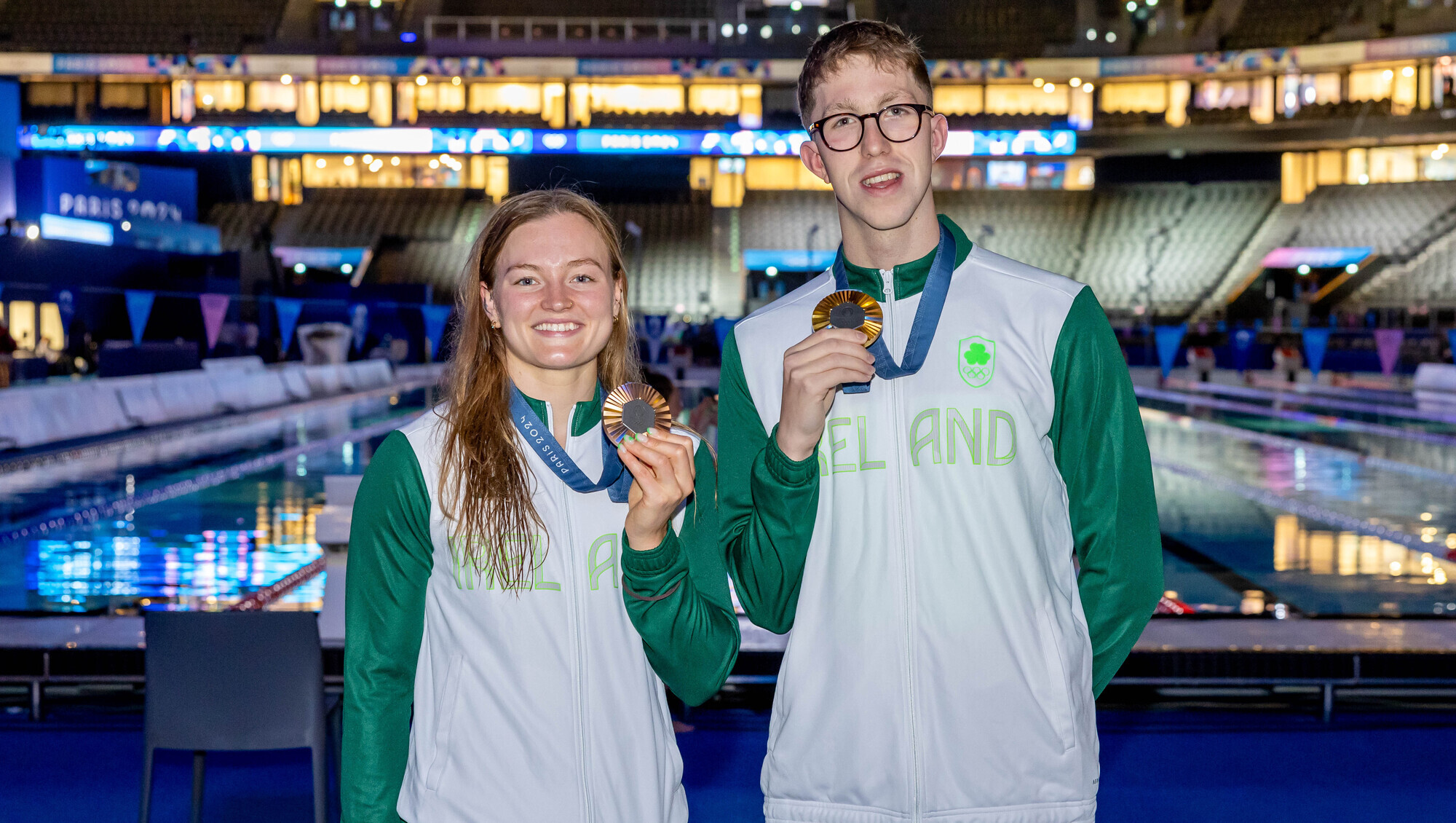
This started with Mona McSharry’s bronze this day last month and one-a-day, like a vitamin prescribed by a doctor, has followed since: Daniel Wiffen, Kellie’s guaranteed bronze, Lynch and Doyle, O’Donovan and McCarthy, Rhys, and now Wiffen again.
Brendan O'Brien: Seven days, seven medals - Ireland's Olympic journey so far

IMPRESSIVE MEDAL HALL WEEK ONE: Ireland's Mona McSharry and Daniel Wiffen with their medals. Picture: ©INPHO/Morgan Treacy

As weeks go, we’d never seen the like. Maybe never will again. It actually stretched to eight days, if you want to be picky, but that run, as London turned the corner from August to September in 2012, will always stand up there with the most remarkable chapters in Irish sporting history.

The numbers are still staggering, a dozen years on from that Paralympic Games.

A total of 16 medals, half of them gold, across four different sports. A hat-trick of medals claimed in the space of 24 hours on three of those days. It started on August 29th with gold for Bethany Firth in the 100m backstroke S14. It ended with two bronze medals in track cycling on September 7th.

It’s no coincidence that the Irish Olympic team had just enjoyed its most successful ever Games, their six medals in the English capital outstripping the mark of five that had been set by Ronnie Delany and four of the boxing team in Melbourne in 1956. Stagings since, in Rio and in Tokyo, while good, hadn’t matched that ‘home’ Games.

And now this.

This started with Mona McSharry’s bronze this day last month and one-a-day, like a vitamin prescribed by a doctor, has followed since: Daniel Wiffen, Kellie’s guaranteed bronze, Lynch and Doyle, O’Donovan and McCarthy, Rhys, and now Wiffen again.

Seven days, seven medals. Sensational.

And that’s the very tip of the pyramid. Ireland has recorded 75 other top-tens in the French capital on top of that, and there is the very obvious fact that these Games aren’t done yet even if the Irish have fired most of their bullets at this point in time.

What has stood out alongside world-class performances here is how Irish athletes now carry themselves. If Daniel Wiffen, with his unshakeable and matter-of-fact confidence, stands apart then Mona McSharry, bronze medallist in the 100m breaststroke, is one of a chorus.

“Now that I have [the medal], I'm like, ‘what's next?’ But no, it's unbelievable to be a part of, not only an athlete on an Irish team that makes a final, that makes multiple finals, but then an Irish athlete that can also win a medal is just amazing.” 

It’s not true to say that no-one saw this happening here in Paris. When Cian O’Connor was stripped of his gold medal and Ireland bottomed out after the Athens Games 20 years ago, weeks like this looked beyond the country but seeds had already been sown.

Component parts were, even then, being put in place that would bear fruit – and still are. The review of that Olympics actually set an ambitious target of six-to-nine medals was put on the table and here Team Ireland is now threatening the upper end of it.

There was a table published by the New Zealand Herald over the weekend which showed Ireland standing top of an Olympic table based on medals won per 10 million people in terms of population.

Julien Alfred’s gold in the women’s 100m final at the Stade de France soon put St Lucia (pop.180,000) on that particular summit but it still spoke for the leaps and bounds made by Ireland who had for so long compared unfavourably to the likes of the Kiwis and the Danes.

Ciaran Gallagher has been one of those fuelling the fire behind the scenes. CEO of Gymnastics Ireland and a board member with the Olympic Federation of Ireland. Gallagher was in the Bercy Arena when Rhys McClenaghan won gold on Saturday.

“It’s no surprise to those of us who have been working in the sector and planning for all those years. You are exactly right in what you said: this is all about three things and those three things are people, programmes and places. Places in our case being facilities.

“The financial model is wrapped around all that and we all remember when we didn’t have a penny in Irish sport. Now that has all changed and the support of Sport Ireland in all of this has been critical as well.

“That is how you get your Rhys, your Daniel, your Rhasidat, your Kellie and all the rest.”

More in this section

Sport

Newsletter

Latest news from the world of sport, along with the best in opinion from our outstanding team of sports writers. and reporters

Cookie Policy Privacy Policy Brand Safety FAQ Help Contact Us Terms and Conditions

© Examiner Echo Group Limited