Anatomy of golden glory: How Ireland's 4x400m relay heroes made history in Rome
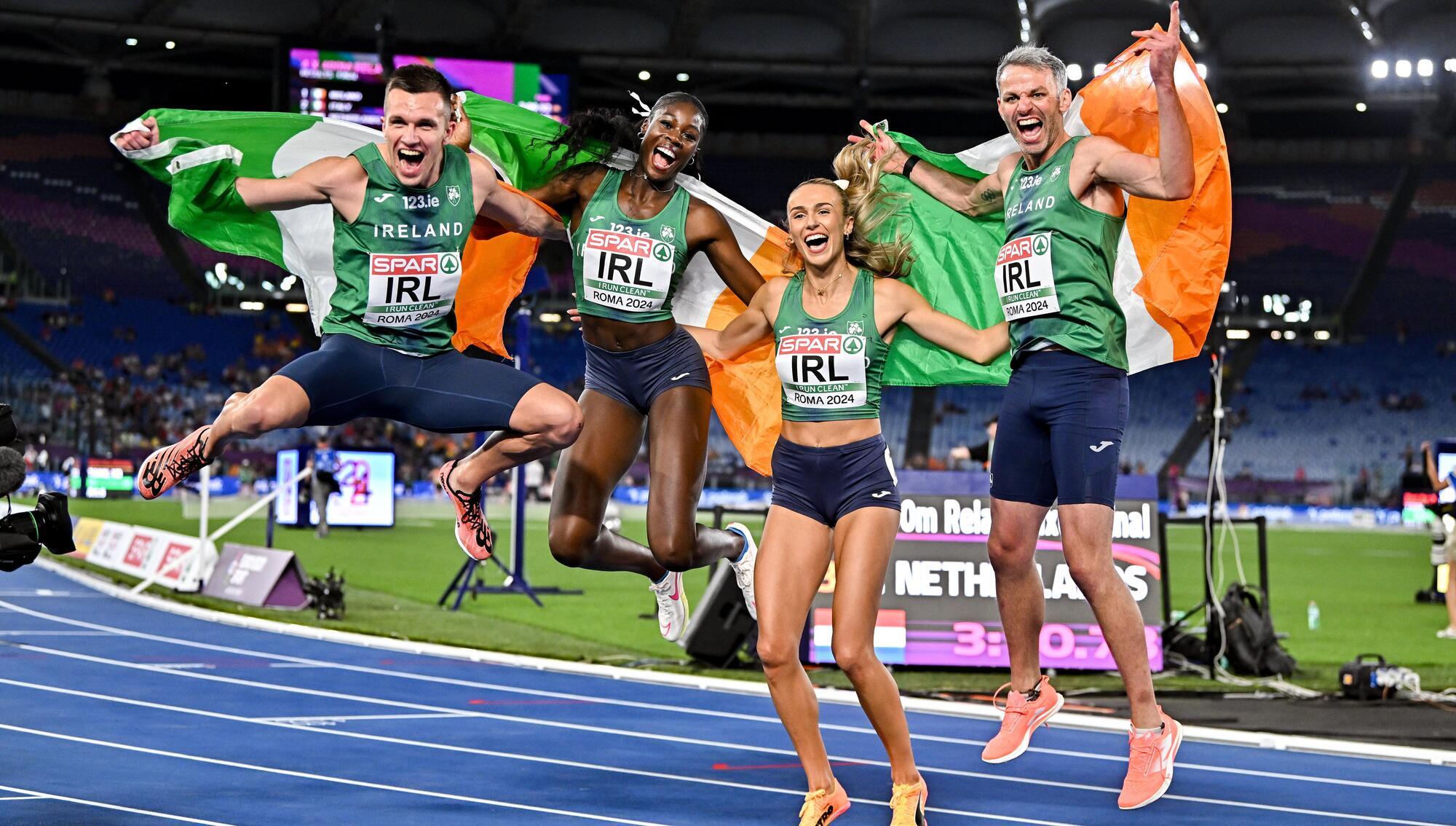
FLOATING ON AIR: Ireland 4x400m relay team, from left, Chris O'Donnell, Rhasidat Adeleke, Sharlene Mawdsley and Thomas Barr celebrate after winning the Mixed 4x400m Relay final during day one of the 2024 European Athletics Championships at the Stadio Olimpico in Rome, Italy. Pic: Sam Barnes/Sportsfile
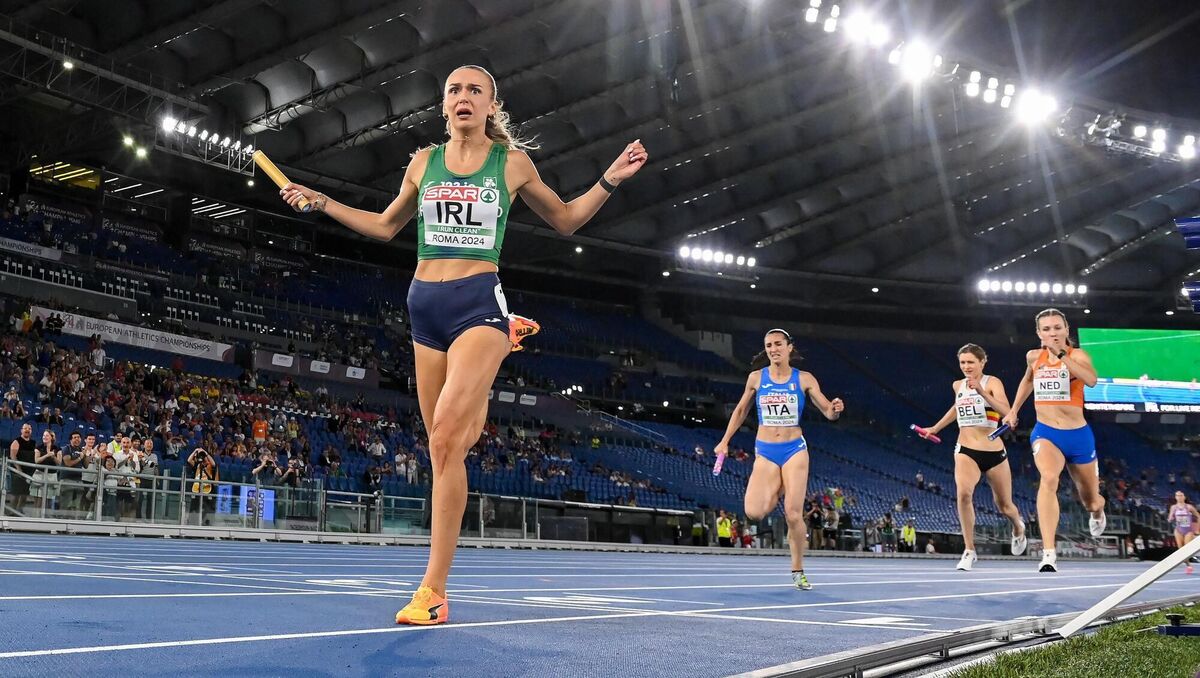
The race was won on the anchor leg, at least on the surface – Sharlene Mawdsley sweeping to victory with a scintillating home-straight surge, the disbelief etched on the Tipperary sprinter’s face telling the story of the sweetest kind of shock.
But the race was also not won on the anchor leg. This gold medal was won long before that. Chisel down into the details of the Irish mixed 4x400m victory at the European Championships in Rome on Friday night and a certain story reveals itself, one that’s not yet been truly told.
Before the race, everyone knew the Dutch, the odds-on favourites, would be Ireland’s biggest rivals in the battle for gold, given they edged the Irish to silver at the World Relays last month by just eight hundredths of a second. To beat them, Ireland knew they had to get the baton to Mawdsley with a decent lead on Dutch anchor Femke Bol, who time and again has produced remarkable comebacks when placed in that position.
But while Bol was the trump card for the Netherlands, Rhasidat Adeleke was that for those in green, and it was one the Irish would play earlier in the race. When the Dubliner took the baton from Chris O’Donnell, she was in fourth, and she ripped through the opening 100 metres of her leg in a remarkable 11.10 seconds. She covered the next 100 metres in 11.23 seconds, a 22.33-second first 200m that carried her to front – just about. But she had company, unwanted company, with Lieke Klaver of the Netherlands utilising her vast speed to battle Adeleke as they entered the final turn.
They had done this same thing at the World Relays, and the pair went to war again, fighting for the lead, damn near emptying the tank to get it. Adeleke won the battle, swooping to the front on the final turn, but in the end it took a substantial toll on both.
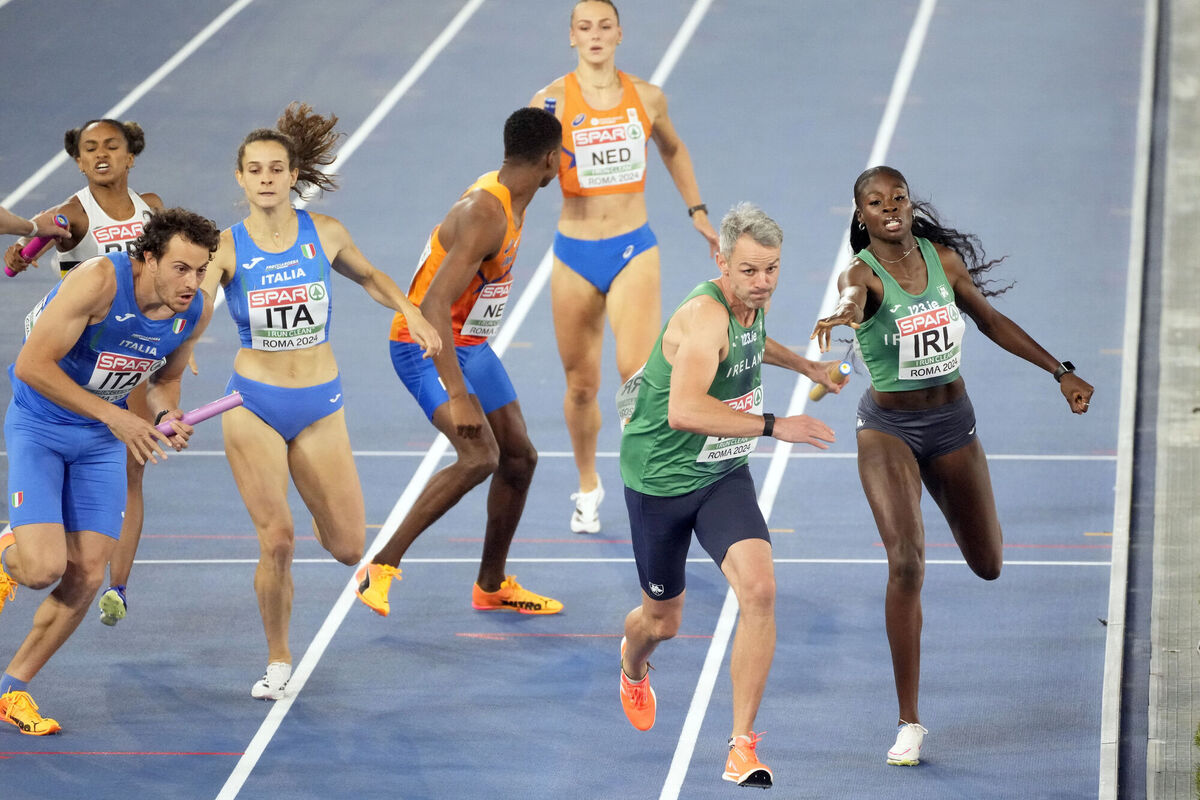
Adeleke tied up down the home straight, inevitably, her second 200m covered in 27.20. But by drawing Klaver into that fight, she had taken her into a state of deep, dark distress, and Klaver was wading through treacle up the home straight, her last 200m covered in just 28.37, her last 100m in a painful, pedestrian 15.36.
Suddenly, that left the Dutch a whopping 1.2 seconds adrift of the Irish at halfway, a gap that narrowed to exactly one second ahead of the final leg following a remarkable 44.90-second split from Thomas Barr, the quickest of the Waterford athlete’s life, right when his country needed it most.
Now, Bol might gobble up a one-second gap on most international 400m athletes, but not on Mawdsley, who, for all of the breakthroughs she’s made individually over the past year, continually rises to a new level when she’s running with a baton.
In truth, Mawdsley had little to fear from the two athletes sandwiching her on that final leg – Belgium’s Charlie Carvell out front and Italy’s Alice Mangione just behind. The real threat, she knew, was 10 metres back in fourth. But Bol made little inroads over the opening half, and while she ran down the Belgians to take bronze in the end, her 49.21 split was not nearly enough to threaten Mawdsley, who clocked the second fastest female split of the entire race with a remarkable 49.40.
The moments after the finish were lost in delirium, the quartet running to the Irish fans clustered near the finish, getting swallowed up in a sea of smiles and hugs, their exhaustion melting away amid the elation.
They did something only Sonia O’Sullivan achieved in the 90-year history of this event, winning gold, producing one of the finest team performances in Irish athletics history. Maybe the best of all.
Their time, 3:09.92, was just one second shy of the world record, bringing them home ahead of Italy (3:10.69) with the Netherlands third in 3:10.73. That has only ever been bettered five times in a mixed relay. Four of those times were run to win world or Olympic titles. The fifth was to win a world silver medal.
That’s the standard the Irish have reached now, and they’re front and centre in the conversation for an Olympic medal in Paris in eight weeks’ time. This shouldn’t come as a surprise to anyone who’s followed their trajectory in recent years, specifically the steady but relentless rise of Adeleke and Mawdsley to world-class levels.
Both of them will line up for tomorrow’s 400m semi-finals knowing a place in Monday’s final is almost assured, barring disaster. Both hold realistic medal claims, with Poland’s Natalia Kaczmarek the big threat in the race for gold.
Of course, every relay is a team event in the true sense, and while O’Donnell turned in a fine opening leg, and Barr a truly astonishing third leg, in essence, the story of this gold was that one Irishwoman made the race, and then another won it.
By doing what she did on that second leg, and putting Klaver to the sword, Adeleke died a relative death up the home straight, but she knew her chief rival would die an even bigger one. As such, Adeleke perfectly teed up Mawdsley to deliver the glittering gold.
And Mawdsley, who at times in the past has got things wrong on the big stage, was foot-perfect on the final leg. It was a cool, clinical display of giant-killing to take down the Dutch and the rest of Europe, and at 5:35pm local time today, the four will be rewarded by stepping up on top of the podium, watching that tricolour rise, as Amhrán na bhFiann blares out alongside Rome’s Stadio Olimpico.
Athletics is a cruel, lonely sport, and every one of them has undoubtedly shed tears on the journey to this point. But soon they’ll flow for a very different reason.

CONNECT WITH US TODAY



Be the first to know the latest news and updates