Jack Woolley looks to Paris Olympics a 'better person and athlete' after Tokyo trauma and Dublin assault
There is a saying that an athlete’s first Olympics is all about the experience and the second about performance. Jack Woolley has experienced a lifetime of good and bad.
Jack Woolley looks to Paris Olympics a 'better person and athlete' after Tokyo trauma and Dublin assault

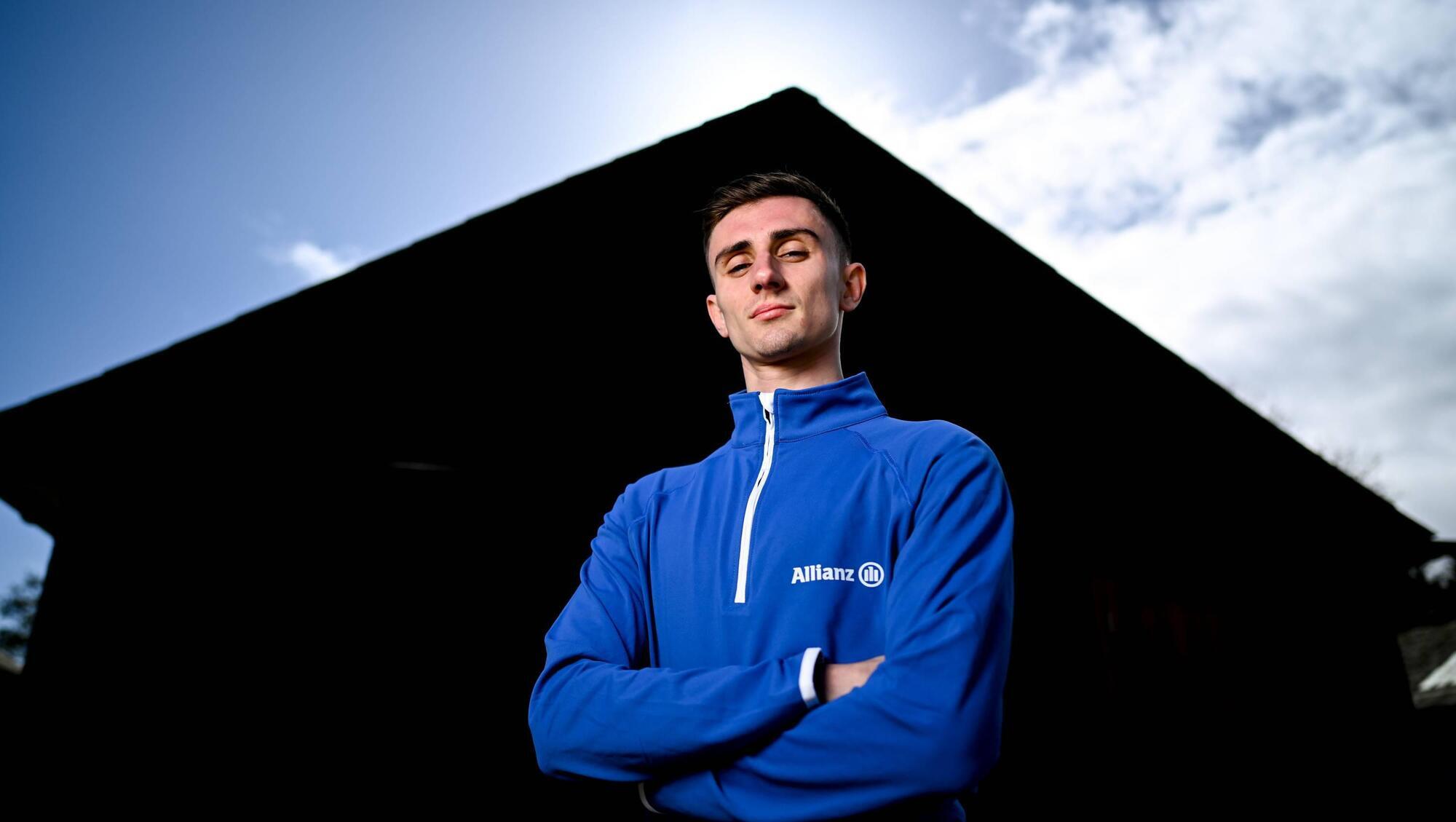
ON THE RISE: Team Ireland Taekwando Olympian Jack Woolley poses for a portrait. Photo by Brendan Moran/Sportsfile.

Simone Biles had them zapped on her forearm.

The swimmers Missy Franklin and Kathleen Hersey went for the thigh. Ireland’s Greg O’Shea opted for one on his right calf muscle after playing in Tokyo in the rugby sevens.


The universality of the Olympic rings applies equally to the human body: they’ll go almost anywhere.

GB’s Adam Peaty has his on his bicep. Others opt for the ribs, or the back of the shoulder, the back of the neck, the ankle, the wrist, or the foot.

Ask Jack Woolley if he got himself tattooed after the delayed 2020 Games and he pulls down his Team Ireland t-shirt to reveal the distinctive ink splayed across his heart.

Sport Top Pics

His 2020 Olympics did not go according to plan.

Woolley made for Japan at the age of 22 full of ambition and belief that there was a gold medal to be won. Argentina’s Lucas Guzman eliminated him in the round of 16. Tears followed when he spoke to RTÉ.

He hadn’t gone all that distance just to take part, but he knew even then, in the pits of despair, that this was something worth commemorating.

Tokyo was the first competition he graced with a gold chain given to him by his granddad Joe. Its sentimental value was enormous.

Joe had bought it from the shop that provided the wedding ring for his wife Teresa who passed away in 2018 while her grandson was away winning the Polish Open.

Woolley rang home to deliver his good news, only to be told that she had died five minutes earlier. His medal was used in a funeral service that he himself missed because of an event in Taipei.

He wasn’t going to fly but any conflicted emotions were dismissed by his mum who knew how important the tournament was for his Olympic hopes.

“Realistically, it did come down to the points I got there. If I hadn’t got them in Taipei I wouldn’t have qualified for Tokyo. My mam said if my nana was still here she would tell you to shut up and get on the plane. She wouldn’t want you to not go to an Olympics just because you had to go to the funeral.”

That chain went everywhere with him for the next three years.

When it came time to fight he would take it off and put it in his gumshield box. His coach would keep it in his pocket. Then he qualified for Paris by beating Albania’s Ernest Merdanaj in Bulgaria back in February, danced around the ring with an Irish flag and then discovered that there was no chain in the box.

“It had fallen out and gone missing and I’ve not got it back,” he explains.

“I was obviously very upset, devastated, at the time but, thinking back now, what are the chances that the first time to wear the chain was Tokyo and the last time was just qualifying for my second Games?”

*****

Jack Woolley and Leroy Nsilu Dilandu. Pic Credit: Morgan Treacy, Inpho.

The Tokyo Games weren’t finished a week when Woolley was hospitalised after a serious assault in Dublin city centre by a gang of what he described as 8-12 men and women. Harrowing images he posted on social media showed the taekwondo fighter drenched with blood.

Woolley is liberal with his use of the phrase ‘the best thing that ever happened to me’. He mentions it in reference to his disappointment in Tokyo, and he reaches for it again when recalling the assault. There is a sense in both of a strength in adversity as he rebounded from the bad times to go again.

He was back in the ring within six weeks of that trauma along the River Liffey. And he won. He beat the reigning European champion in the final and then he won three more competitions on the spin through October and into December. He appreciated it all the more after everything he had been through, and because of the support he enjoyed.

His partner Dave? “The best thing that’s ever happened to me.”

He knows how cringey that sounds but, whatever about being an Olympian, he never envisaged a relationship like the one he has given his devotion to an elite sport that requires such sacrifices and so much time away from home.

“He’s a PT [personal trainer] and he kind of understands it. It’s just nice to have. I actually met him the week I got home from Tokyo. It was kind of like a big change. I went into Tokyo not really having the support there, maybe it was friends and family, kind of being a little bit lost, but I got back from Tokyo and I had somebody there. It was structure.”

His mum knew it was big. She saw it in the way her son spoke about his new partner and compared it to the time she had brought his own father home for the first time and how his grandmother rolled her eyes in an acknowledgement that this was the start of something serious.

This is support that has, by and large, been offered from a distance when it comes to competitions. Woolley has been travelling to events under the supervision of his coach alone since he was 12, the logic being that any trip taken by his parents would eat into the cost of him going to another competition further down the line.

All told, he reckons they have seen him fight three times in 13 years but his family, his best friend and his partner Dave will all be in the magnificent Grand Palais in central Paris when he goes into action in early August. His grandfather Joe will be back home in Ireland, three years after the family bought him a Smart TV to take in the show from Japan.

“He knows more about the sport now because he obviously gets suggested videos so he is there watching videos of me back from ‘oh, this is from 2017’ and I can’t even remember that. ‘Do you remember you scored this in that fight?’ No, but at least he is going into the Games understanding what’s going on.”

*****

His Olympic experiences have been cruel so far. He missed out on the Rio Games in 2016 as a 17-year old when he won bronze at a qualifying event where the bar was set at silver. Then there was Tokyo and the pressure he loaded on himself by speaking so boldly about gold and the desire to showcase a sport emerging from the background.

He goes to France perfectly happy to say that he can be an Olympic champion but in the knowledge that the 58kg class is wide open. He has beaten the European and Olympic champions, yes, but they have beaten him too. Add in a silver at last summer’s European Games and the confidence is there.

He’s doing this one for himself. He has proven himself time and again on the world stage and this will be a very different lived experience to the Covid Games where athletes were told not to mix with different sports or other countries. “I was the only [Irish] person from taekwondo,” he laughs. “So how was I supposed to do that?”

These are all ingredients for a more enriching stew. He looks back now and feels gratitude at experiencing what everyone hopes will be a unique Games. Add in the support of coaches, psychologists, nutritionists and S&C staff and the challenges he has overcome in and out of the ring and he feels like it has all made him a better person.

How so?

“A better person in the sense that I’m able to be honest with myself and have conversations with people and be more open to criticism. I feel like I’m very much a perfectionist. I have been since I was a kid. My mam is very critical, but I didn’t really like hearing anything negative before.

“Now I take anything negative and see the positive in it. These people are telling me these things because they want me to be better, whereas before I would have been, “Oh my God I’m making all these mistakes”, and going into panic mode. Whereas now, I’m just willing to take advice off people and not be so hard on myself.

“I think that's the biggest step forward I’ve made.” That openness and honesty has fed into Woolley the athlete. It made him more amenable to working on the weaker side of his craft, fighting with his opposite leg forwards, adding kicks that he didn’t have in his arsenal before. He has matured, gotten stronger - and added weight.

*****

Taekwondoin Jack Woolley during the Tokyo 2020 Official Team Announcement . Photo by Ramsey Cardy/Sportsfile.

That last part hasn’t been easy.

He fights at 58kg, his ‘walk around’ weight is more like 63. To put that into perspective, he fought at 54kgs into his late teens and he hasn’t grown an inch since. That leaves him having to shed five kilos for competitions with the weigh-ins held the day before the action gets underway.

“It’s the worst part of the sport, easily. I’m not going to sugarcoat things. I think it’s something that does need to possibly be addressed within high-level sport. How do you expect athletes to perform when they’re under-fuelled? Luckily we have a 24-hour window between weigh-in and fights, because all of our fights are on the same day.”

As with so many sports, this led to drastic weight cutting. Taekwondo has tried to counter that with rules that a quarter of athletes, chosen randomly, have to go through a second weigh-in on the day of the fights with an extra 5% allowance to spare. Exceed the limits and you’re gone.

So, Woolley can’t weigh in at more than 60.9 kilos before he takes to the ring. He has sat in saunas and refrained from drinking water for two days. And he still has to eat. It’s not something that he describes as a struggle so much as something that has to be monitored at all times. And it has its consequences.

“My relationship with food has been terrible since I was a kid, realistically. Growing up, my mam always had issues with me eating because I was always skinny. But then with the weight in sport, I would say it’s not healthy at all. It’s something that I’m working on. I have a nutritionist and a psychologist, and I deal with weight a lot better now.

“There was a period of time where it got stressful. That’s why you brought out the 54 kilos. I think I spoke about it a lot in the media because it was eating me alive, forgive the pun. It was just all I could think about. Any time I got asked a question, it might not be about the weight, but I’d always bring it back to the weight, just because it was containing my life.”

He is 25 now with the maturity and experience and knowledge to handle all this better, but Woolley feels for younger athletes still trying to figure it all out, not least those going through puberty and teenage girls. One thing he won’t ever do when he retires is step on another weighing scales.

He won’t be alone in welcoming that day. Woolley jokes that he is an “angel all the time” when asked if all this leaves him ‘hangry’ but he concedes that his partner might have a different response and that his mum has felt at times like killing him. Now they just know that ‘Jack is cutting’ and they give him his space.

There is a saying that an athlete’s first Olympics is all about the experience and the second about performance. Jack Woolley has experienced a lifetime of good and bad going back to Tokyo and he has performed time and again in between two Olympic cycles. Performing to his potential in Paris is the next step.

“Hopefully no-one sees me crying on the telly anymore,” he laughs, “because I’m sick of that.”

Jack Woolley, Team Ireland taekwondo Olympian, was speaking as an Allianz ambassador

More in this section

Sport

Newsletter

Sign up to our daily sports bulletin, delivered straight to your inbox at 5pm. Subscribers also receive an exclusive email from our sports desk editors every Friday evening looking forward to the weekend's sporting action.

Cookie Policy Privacy Policy Brand Safety FAQ Help Contact Us Terms and Conditions

© Examiner Echo Group Limited