Paul Rouse: The disease of hope is most virulent in January
In county and club dressingrooms all across the GAA world, hope is alive this weekend.
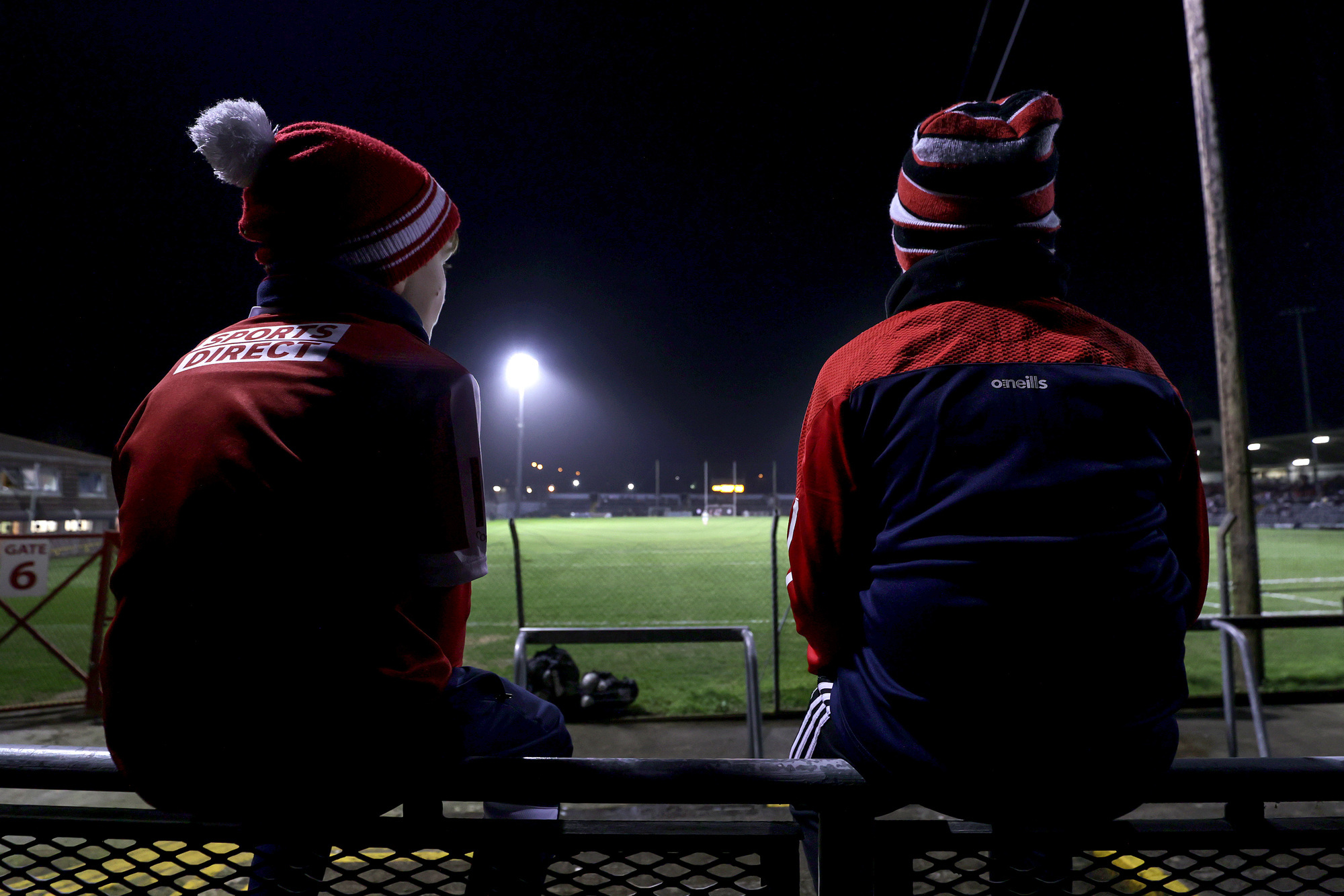
HOPE SPRINGS:  Young fans watch the Cork v Kerry game in the McGrath Cup at Páirc Uí Rinn on Wednesday evening. Picture: INPHO/Laszlo Geczo

HOPE SPRINGS:  Young fans watch the Cork v Kerry game in the McGrath Cup at Páirc Uí Rinn on Wednesday evening. Picture: INPHO/Laszlo Geczo

Hope is a disease. There is no month that its signs and symptoms are more prevalent than in January.

This is a disease that can afflict even the most unlikely of individuals, the giddiness of a new beginning promising to purge painful memories of past failures.

In county and club dressingrooms all across the GAA world, hope is alive this weekend.

There are academic studies from sports around the world that record the trait of ‘hope’ to be higher in elite athletes than in the rest of the population. It is something which might be considered almost an essential.

And yet it is only to state the obvious to say that this is not a condition that will last for long into a season, at least not everywhere. There are places where it will be extinguished almost immediately – and other places where it will wither more slowly, but will do so irresistibly nonetheless.

Fortunate, indeed, are those teams where genuine hope flourishes month after month; it is the greatest of all galvanising forces to bring momentum to and through a season.

You can fill the walls of a room with motivational quotes and listen to any number of “high performance” podcasts which give forth inspirational stories, but they are useless without hope.

And you cannot pretend hope; it is one of those things that smells of desperation and destroys belief when it comes without credibility.

It is obviously a big thing to identify the things that destroy genuine hope in a team.

The most obvious answer, of course, is defeat. There is nothing like the reality of a bad loss, or even a succession of narrow ones, to suck the optimism from any group. That’s normal and hard enough to prevent when it’s happening.

It is true that having realistic expectations can offer something of a buffer to defeat. It allows space for people to hang their hat on “improvement” and “progress”. There comes a point, however, where the relentlessness of defeat is inescapable and corrodes morale in a team.

This thing ‘morale’ is – of course – a very hard to define; it is hope’s cousin. What is certain, however, is that no team can be successful without morale. And the surest way to build morale, and to sustain, it is to win matches.

But even winning matches is no guarantee of the survival of hope, at least not on an individual basis.

There is an awful lot made of the importance of the collective, of being part of something, of representing a place and wearing a jersey that has been passed through the decades.

There is no doubting that this idea of ‘tradition’ can lend another dimension to the experience of playing sport.

But it only gets you so far.

For example, it can offer only scant consolation when you’re not actually playing.

This gets to the nub of the issue of ‘hope’ – nothing destroys the hope of a season more for a player than if they are not in the team.

There are two things here that are worth considering. The first is injury. Being injured promotes notions of powerlessness and frustration at the inability to participate that causes even the most robust temperaments to struggle if it extends over time or recurs.

Everyone understands that being injured is a part of physical contact sport. For example, research shows that just over half of all male players sustained an injury while either training or playing with their inter-county team during the 2016 season. For some, the injuries were minor and quickly overcome; others had the unwelcome clarity of having their seasons ended, such was the severity of what happened.

For still more, they ended up caught in a debilitating loop of rehabilitation, early return, recurrence and ultimate disillusion.

More than 25% of all players in that year – 2016 – missed at least one month of play. And, of course, miss the wrong month and your season is essentially over.

It is a simple fact that various medical studies have shown that the impact of injuries that stop people playing competitive sport can lead to significant mental health issues, including anxiety and depression.

That such a mental response can, in turn, serve to delay physical recovery further underlines the impact on the individual.

And a team winning without you can be a complicated thing.

There is a second thing to consider alongside injury: it is being left out of a team or a match-day squad by a manager who does not select you because they prefer to choose others.

One of the worst positions to be in modern Irish sport is that of a member of an extended inter-county panel without making the matchday squad.

All of the sacrifices, all the gym sessions, all the travel to training, all of everything – but sitting in the crowd on the day of a match.

This is also a complicated thing. Players who have worked so hard to get to the highest level of their sport can find themselves almost marooned on the margins, unable to get onto the pitch when it really matters.

Being a county footballer or a county hurler is fundamental to the identity of many players. But this cannot be easily maintained in the absence of play.

This is obviously a somewhat different experience for a new arrival onto a county panel, as against a player who is mid-career and supposedly in their prime, or a player who is coming towards the end.

But it is something that ultimately arrives at precisely the same question: is it all worth it if I am not playing?

In these weeks at the beginning of January, hope is often alive and well, for all or almost all.

Managers are searching for their teams and players are pitched into the struggle, hoping to make the team and hoping to win.

It is this democracy of hope that draws people back into the fields every year, a sort of glorious disease.

Paul Rouse is professor of history at University College Dublin.

x

More in this section

Sport

Newsletter

Sign up to our daily sports bulletin, delivered straight to your inbox at 5pm. Subscribers also receive an exclusive email from our sports desk editors every Friday evening looking forward to the weekend's sporting action.

Cookie Policy Privacy Policy Brand Safety FAQ Help Contact Us Terms and Conditions

© Examiner Echo Group Limited