As EA Sports and FIFA part ways, we count down five iconic games
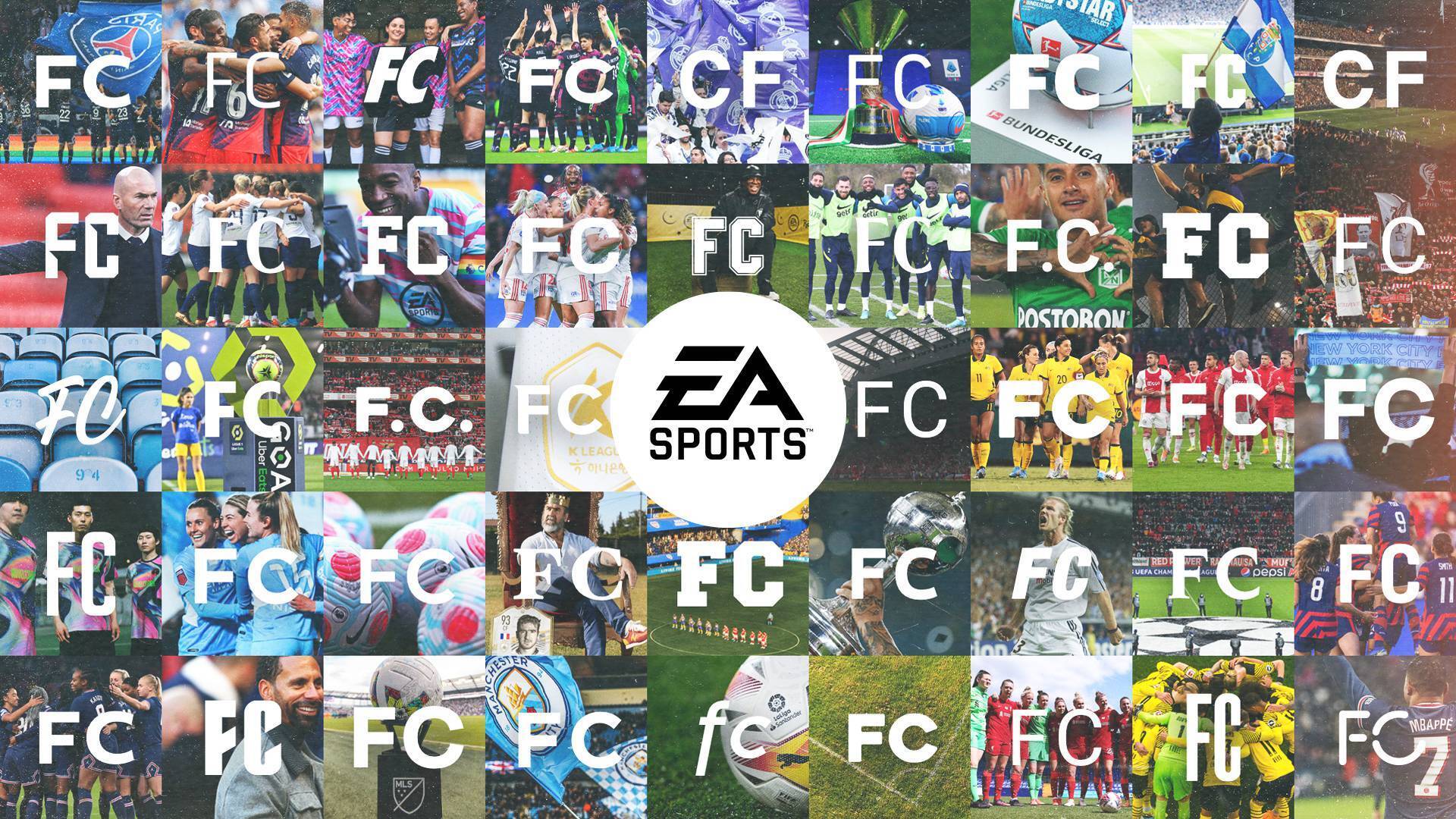
EA Sports FC will be the new name of Fifa from summer 2023.
Simon and Garfunkel, Lennon and McCartney, Miley and Biddy.
It’s always sad when iconic partnerships reach the end of their road. So it was yesterday when it was announced that FIFA and EA Sports were going to stop making their iconic FIFA video games. The partnership has brought much to both parties over the years.
A trusted, venerable institution built up over decades, beloved by millions. And FIFA.
Indeed, about the only positive publicity football’s under-fire governing body got in recent years was on the back of this hugely popular video game.
FIFA 23 will be the last collaboration with the game being rebranded as EA Sports FC from next year.
Here we take a look at the top five versions of FIFA down through the years.
On the Cover: David Platt and Piotr Świerczewski
Soundtrack: All songs were composed by Jeff van Dyck in the style of a classic early 90s video game.
The first but very much not the best. The graphics left a lot to be desired, but sales were brisk.
The most memorable aspect was the ability to have your player run away from the referee while he was trying to book him.
Much like the early albums of David Bowie, its greatness lies in the legacy it left after it.
On the Cover: Marco Reus
Soundtrack: Send Them Off! by Bastille
This was the first edition to introduce a story element into the game.
Alex Hunter, an up and coming youth footballer, is introduced and we follow him on ‘The Journey’ as he tries to make it in professional football.
It is a similar scenario to one that games like Fight Night Champion had introduced before.
The similarity of Hunter’s story with that of Marcus Rashford has been pointed out.
Claims that his disappearance from FIFA 21 onwards mirrors Rashford’s career are wholly uncalled for.
On the Cover: Sol Campbell
Soundtrack: It’s Only Us by Robbie Williams
A sentimental choice, this was the first FIFA game I owned after my parents got tired (and poor) from driving me to Listowel to rent FIFA 98 from the local video store.
The game play was decent. There were classic teams which allowed you to play as Man Utd 1968 or Brazil 1970.
For some odd licencing reason, none of Brazil’s Ronaldo (a god in my eyes), Pele, or Romario allowed their names to be used. They were known as ‘number 9’, ‘number 10’, and ‘number 11’ in the game.
Whatever about Ronaldo, however, this game was all about Robbie Williams. Right at the height of his post-Take That popularity, he provided the title song.
EA Sports also allowed him to add his favourite team (Port Vale, as you ask) into the game as an extra treat.
The absence of the Republic of Ireland soccer team was made up for by editing one of the less glamourous international teams (sorry Luxembourg) and painstakingly adding in versions of Mark Kinsella and Steve Staunton.
On the Cover: Kaka and Wayne Rooney
Soundtrack: Record Collection by Mark Ronson Feat. Simon Le Bon and Wiley
If Blur vs Oasis was the defining cultural rivalry of the 90s then Pro Evo vs FIFA was the noughties equivalent. Pro Evolution Soccer had none of the licences or real names that FIFA did, but from 2001 to 2008 it had by far the better gameplay.
FIFA 2009 brought FIFA back into the conversation but it was FIFA 11 that really heralded the new era of FIFA dominance. It received a 10/10 from Playstation magazine.
The gameplay surpassed that of Pro Evo and for the first time a player was able to control the celebrations of a scorer rather than having to watch a cut scene.
Peter Crouch’s iconic robot celebration took place just months before at the 2010 World Cup. Coincidence?
On the Cover: David Beckham
Soundtrack: Song 2 by Blur
The greatest of them all. The music, the gameplay, the commentary. It even had Des Lynam presenting completely superfluous links.
And the main reason this is number one? Indoor mode. Five a side soccer, no throw ins, very few fouls, constant action.
EA Sports said it would be very difficult to bring the mode back into the modern versions of the games.
Proof, if proof were needed, that humanity peaked in the late 1990s.

CONNECT WITH US TODAY



Be the first to know the latest news and updates