From Arigato to Zaur: An A-Z guide to the 2020 Tokyo Olympics
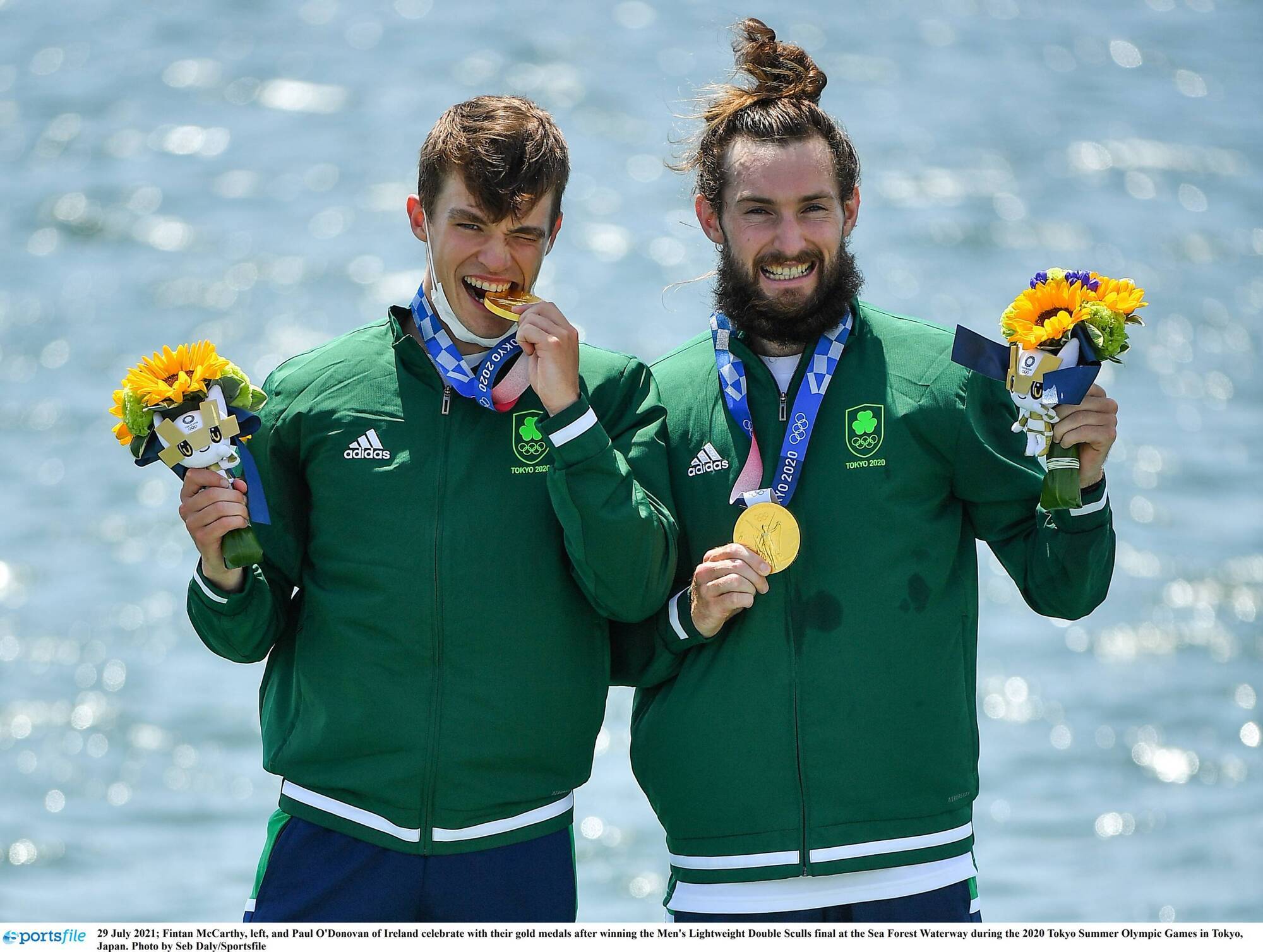
S IS FOR SKIBBEREEN: Ireland’s Fintan McCarthy, left, and Paul O’Donovan celebrate with their gold medals in the men’s lightweight double sculls. Picture: Seb Daly/Sportsfile
A IS FOR ARIGATO
Okay, three whole weeks in Japan and I’m stuck at a whopping two words of the native language, but I’ll use one straight off the bat to say a big, heartfelt thank you to the hosts for what they have pulled off.
The Games so many said couldn’t go on found a way, and cost them a whopping $15 billion, at least. Most of that was public money, yet the locals were frozen out of attending their own party due to Covid restrictions. Despite all that, they were unfailingly polite and welcoming to the tens of thousands of athletes and journalists in attendance. A wonderful country, a wonderful people. Arigato.
B IS FOR BATON
Swiftly passed from Cillin Greene to Phil Healy to Sophie Becker to Chris O’Donnell on the opening night of action at the Olympic Stadium, the mixed 4x400m quartet became the first ever Irish relay team to make an Olympic final, carving four seconds off the national record with their time of 3:12.88. They couldn’t reproduce the same magic in the final, finishing eighth in 3:15.04, but what an achievement to get there.
C IS FOR CRAB
Heading towards the finish of the women’s lightweight double sculls, Dutch rowers Ilse Paulis and Marieke Keijser were all set to take gold when Keijser caught a crab (accidentally dug her oar in the water), which stunted their momentum and saw them demoted to third in the final strokes.
The Italian boat swept past and screamed in stunned surprise at their victory. Keijser put her hands to her head in disbelief, the occasional cruelty of the Games on full display.
D IS FOR DEFECTOR
At the Rio Olympics in 2016 Kimia Alizadeh made history for Iran by becoming its first ever female Olympic medallist, winning taekwondo bronze. Four years later, the fighter fled her home nation for Europe after criticising the Iranian regime, seeking asylum in Germany.
In Tokyo she competed for the Refugee Olympic Team and almost won its first ever Olympic medal, beaten in the bronze medal match by Turkey’s Kubra Ilgun.
E IS FOR THE END
Defeat is hard to take no matter your age, but when it comes in the autumn of your career it stings that little bit more. After falling short of qualifying for the medal race in laser radial, Annalise Murphy admitted this was likely her last appearance on this stage. While Sanita Puspure didn’t speak to the media after her disappointment in the women’s single sculls, most would imagine the 39-year-old was in a similar space. Siblings Ben and Megan Fletcher also hinted this was likely their last appearance at the Games after bowing out in judo.
F IS FOR FOUR

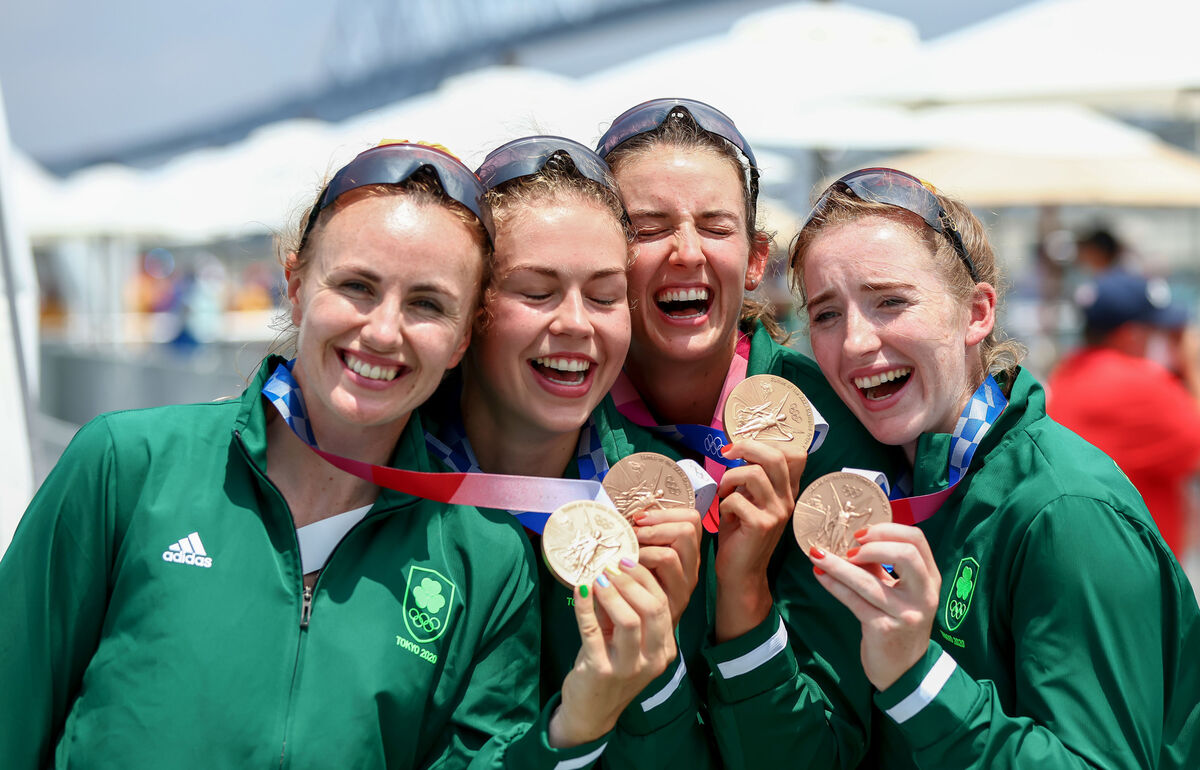
They spoke of them quietly in rowing circles, unwilling to jinx their chances by saying what they truly felt: That the Irish women’s four of Aifric Keogh, Eimear Lambe, Fiona Murtagh and Emily Hegarty would become Olympic medallists. After their semi-final it was clear to all concerned and on the big day itself, the quartet delivered in magnificent fashion, winning bronze with a flying finish behind Australia and the Netherlands. “We could never experience anything like this again,” said Hegarty. “So it’s a case of enjoying it, living in it — it’s once in a lifetime.”
G IS FOR GYMNAST
In 2018 he made history by winning Ireland’s first-ever world championships medal. In 2021 he did the same by becoming the first Irish gymnast to make an Olympic final. And yet, we all knew Rhys McClenaghan could have done more. A finger caught momentarily under the handle of the pommel horse was enough to send him off balance in the final, the 22-year-old falling off and his medal chance disappearing in an instant. “There’s going to be many more Olympic Games and hopefully more gold medals wrapped around my neck,” he said.
H IS FOR UNSUNG HEROES
We’re not thinking here of the medallists, whose achievements are splashed across front pages and who justifiably will earn lifelong plaudits. We’re thinking of the also-rans, the down-the-field finishers who did all they could in the green kit to be the very best they could be, both in the past few weeks and the past few years. They’ll return to communities and villages and clubs across Ireland knowing they have forged a path that many other youngsters can follow — which counts for so much more.
I IS FOR INJURY

It was a strange kind of success for Aidan Walsh to reflect on this week — his euphoric ring celebrations after winning his quarter-final were likely the cause of an injury to his ankle that ruled him out of a chance to go for silver or gold. He at least had that medal in the bag by the time the injury gods struck him down. For Ciara Mageean, a torn calf eight days before her 1500m heats meant she went to the line a shadow of her previous self. She never stood a chance.
J IS FOR JOHN AND JASMINE
During the height of the pandemic, athletics coach John Coghlan — at the time working in Meath GAA — was offered a job guiding the career of Puerto Rican hurdler Jasmine Camacho-Quinn. He accepted it, moving to Florida and guiding the 24-year-old star to gold in the 100m hurdles in Tokyo. Ireland’s loss was Puerto Rico’s gain.
K IS FOR KELLIE

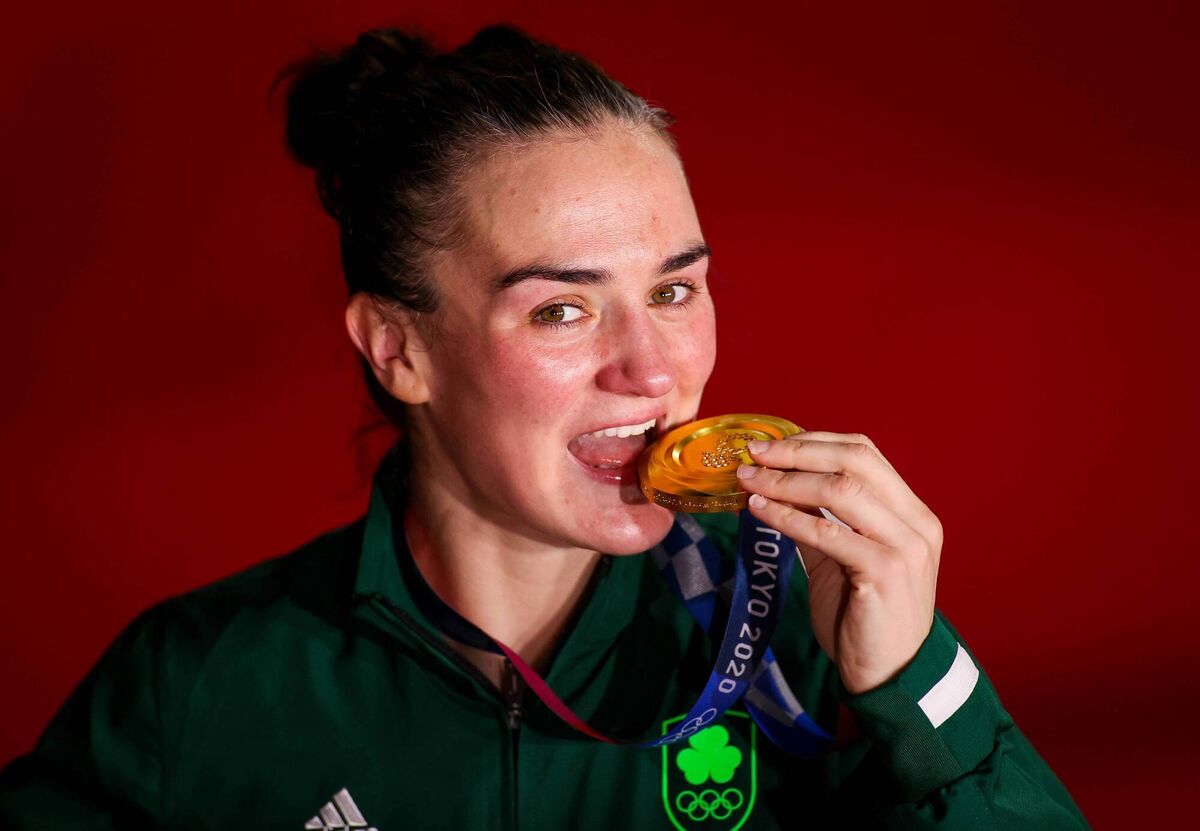
Won the nation’s hearts and won an Olympic gold medal. An achievement that had been a long time coming for the 31-year-old Dubliner, who was world lightweight champion in 2018 and who will now sit in the most exclusive pantheon of Irish sporting greats. A worthy flag-bearer at the Opening Ceremony, a worthy athlete to close the Games in the best way possible for the Irish. An athlete and person who embodies the very best of us.
L IS FOR LIP
Rory McIlroy might not have sounded too enthusiastic about the Games beforehand but once he was out there on the course he sure gave it everything to win Ireland its first Olympic medal in golf. He was one of seven men to contest a play-off for bronze and, needing to sink a 10-foot birdie putt to stay in it, his ball slipped to the right and lipped out.
“I have never tried so hard in my life to finish third,” said McIlroy, and it showed.
M IS FOR MONA

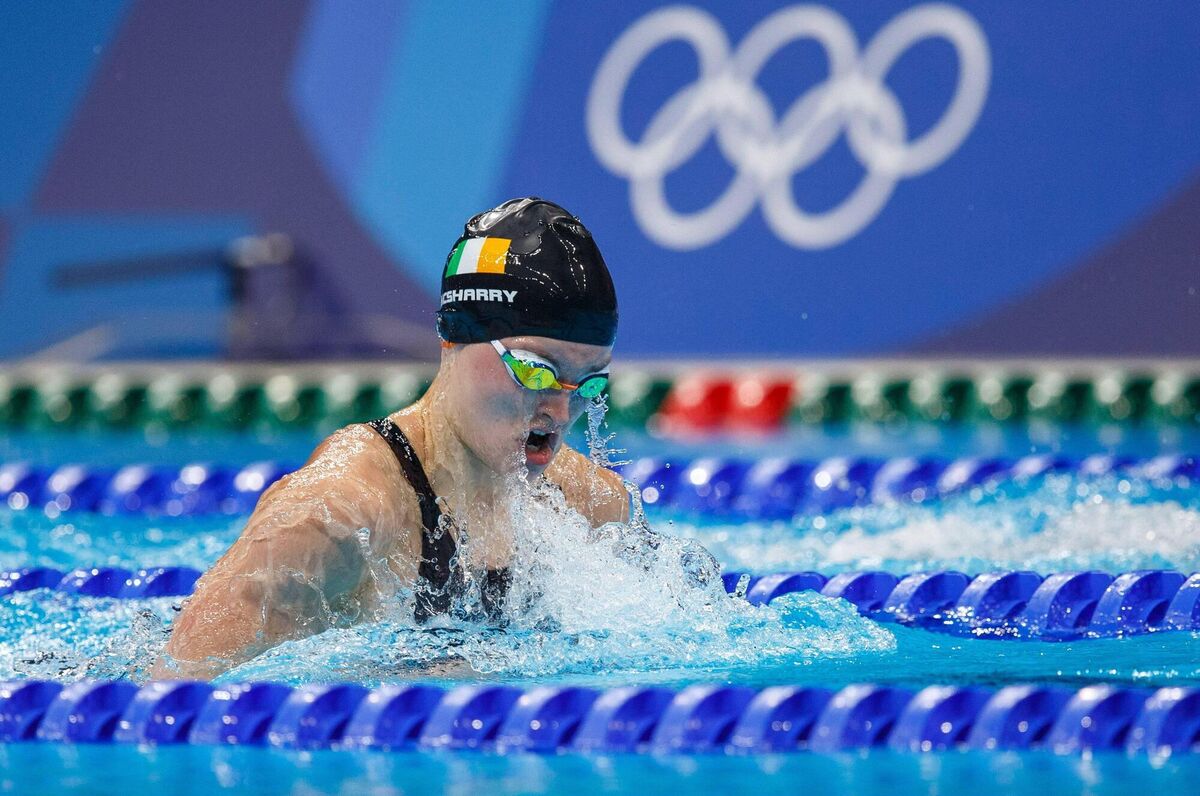
Mona McSharry became the first Irish swimmer in 25 years to make an Olympic final, and just the second in history after you-know-who. A time of 1:06.59 was enough to see her through. The Sligo swimmer had given up a lot over the past decade to focus on swimming, and this proved sweet reward for the 20-year-old. “All the early mornings, early nights, not going out as much as my friends did in school, it was all worth it,” she said.
N IS FOR NHAT NGUYEN
The 21-year-old briefly made badminton experts of us all as he fought valiantly in his final group match, a nail-biting final game seeing him denied 21-12. “This is only the start,” said the Dubliner. “I will keep moving on and pushing forward.”
O IS FOR OPENING CEREMONY
A strange way to kick off a sporting festival in a relatively deserted stadium, but the hosts put on a good show that blended the usual razzmatazz with a far-too-long athletes’ parade, all capped off by Japan’s poster girl Naomi Osaka ascending the steps to set these Games alight.
P IS FOR POOR
There’s no other way to describe the performance of the US male athletes at the Olympic stadium. In the 125-year history of the Games there had never been an edition where the US had not won one of the men’s individual gold medals on the track, but it happened here. The 100m gold went to Italy, the 200m to Canada, the 400m to Bahamas, while their male distance runners failed to truly fire. To add insult to injury, they botched the 4x100m, getting eliminated in the heats.
Q IS FOR QUEUE
Okay, an easy one for all A-to-Z writers, but one thing that stood out going to the Olympic Stadium over the past week was the length of queues forming among the locals to get a photo with the various sets of Olympic rings dotted around outside. Unfortunately none of them was allowed access to arenas. If they were, this would have been one of the best-attended Games in history. You had to feel for them.
R IS FOR RUSSIAN OLYMPIC COMMITTEE
Okay, Russia, you’ve been a bad boy with that whole state-sponsored doping thing so you’re banned from the Olympics. Got it? Your athletes can still attend, but no Russian flags, yeah? And no anthem, right? Sure, your kit and tracksuits can be red, white and blue and in place of an anthem, work away and play Tchaikovsky’s Piano Concerto No.1 if your athletes win gold. But you better bloody well call yourself the Russian Olympic Committee, and that’s not — I repeat, NOT — to be confused with Russia. Clear? Spasiba.
S IS FOR SKIBBEREEN
The hometown of Fintan McCarthy and Paul O’Donovan, who will now forever reside among the immortals of Irish sportspeople. But it’s not just them. Skibbereen is also the home of Aoife Casey and her father Dominic, and the site of a medal factory that just keeps churning out champions, a town which, pound for pound, likely has few rivals across the entire sporting spectrum given its impact on the global stage. There truly is something in the water.
T IS FOR TEARS

It was an observation made many times throughout the past 17 days: This seemed to be the most emotional Games we’ve ever witnessed.
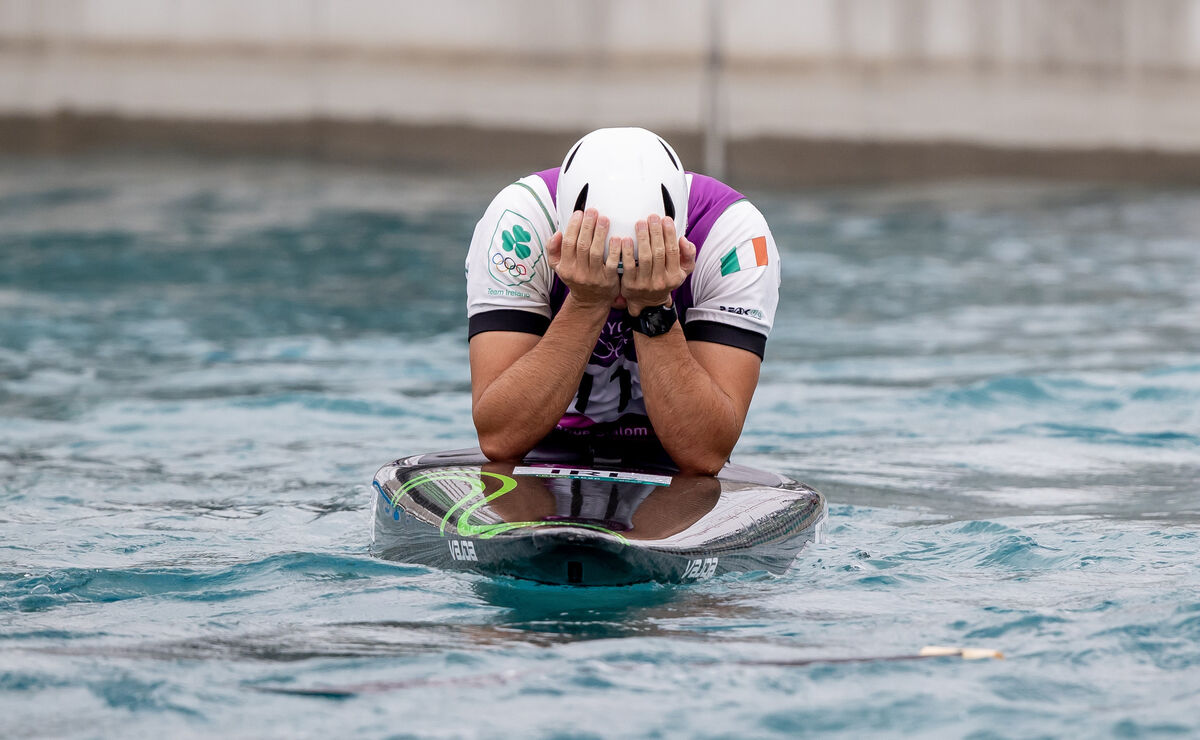
Perhaps it was the delayed build-up and everything the world has been through over the last 18 months, or perhaps it’s a new era where athletes — especially male athletes — are not afraid to show vulnerability. Either way, it was hard not to shed a tear as you watched Emmet Brennan, Jack Woolley, Kurt Walker, Liam Jegou and so many others pour their hearts out in interviews, showing just how much this all meant.
U IS FOR UPSET
If athletics aficionados were asked to draw up a list of the 10 most likely champions in the men’s 100 metres before the Games, Italy’s Lamont Marcell Jacobs would likely not have been on it. The 26-year-old had never broken 10 seconds before this year and went to Tokyo with a lifetime best of 9.95. But he clocked 9.94 in his heat, 9.84 in his semi-final and somehow found a new level in the final, crowning a glorious summer of sport for Italy with victory in 9.80.
V IS FOR VAULT
The women’s all-around team final had been one of the most-anticipated events of the Games, with Simone Biles expected to lead the US to gold. But when the 24-year-old star botched her first rotation on the vault, she left the arena and later withdrew from the night’s competition in an attempt not to jeopardise her team’s chances.
The Russian Olympic Committee took gold in her absence. Biles spoke admirably after about the pressure she’d been feeling and its effect on her mental health. She returned to action later in the Games to win bronze in the balance beam.
W IS FOR WARHOLM

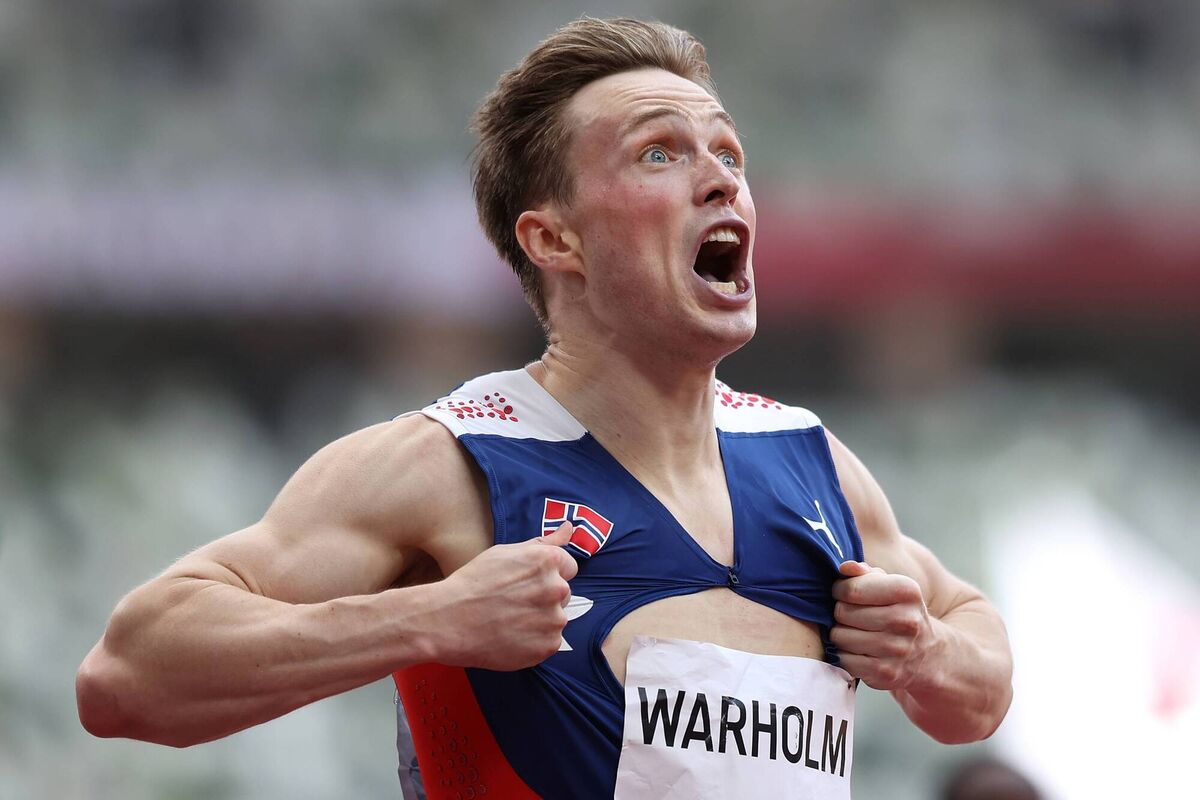
If there was one earth-shattering, jaw-dropping moment of these Games, it happened at the Olympic Stadium shortly before midday last Tuesday. Norwegian Karsten Warholm didn’t just break the world 400m hurdles record, he destroyed it, taking it from 46.70 down to a mind-boggling 45.94 in one swooping lap of the track. Runner-up Rai Benjamin also ran way below the world record with 46.17. A day later, Sydney McLaughlin and Dalilah Muhammad emulated their achievement, the two running way below the world record with McLaughlin edging victory in a race for the ages in 51.46.
X IS FOR XY CHROMOSOMES
The inclusion versus fairness debate ignited once again in Tokyo as Laurel Hubbard of New Zealand, who was born male with XY chromosomes, competed in the women’s 87+ kg weightlifting category where she bowed out early in the final. The 43-year-old transitioned in 2012 and broke no rules by competing in Tokyo.
“I’m not entirely unaware of the controversy which surrounds my participation,” she said. “I’d particularly like to thank the IOC for really affirming their commitment to the principles of Olympism, and establishing that sport is something for all people.”
Y IS FOR YULIMAR
Venezuela never had a woman win Olympic gold before, but then it never had a female athlete like Yulimar Rojas. The triple jump star won silver in Rio five years ago but went one better in Tokyo, smashing the world record with an astonishing leap of 15.67m, breaking a mark that stood since 1995. “I’m lost for words,” she said. And so were we.
Z IS FOR ZAUR
It was late 2002 when Georgia native Zaur Antia first arrived in Dublin, interviewing for a job that ultimately went to Billy Walsh, but such was the impression Antia made that Gary Keegan, the IABA’s high performance director at the time, scourged for extra funding to also hire Antia.
He’s been the technical guru for Irish amateur boxers ever since, a huge hand in the many medals that have been won. An under-appreciated wizard who prefers working in the wings.
No obligation. Ts&Cs apply.
CONNECT WITH US TODAY
Be the first to know the latest news and updates