Baseball-mad Japan going for Olympic gold but sense of loss at silent stadiums
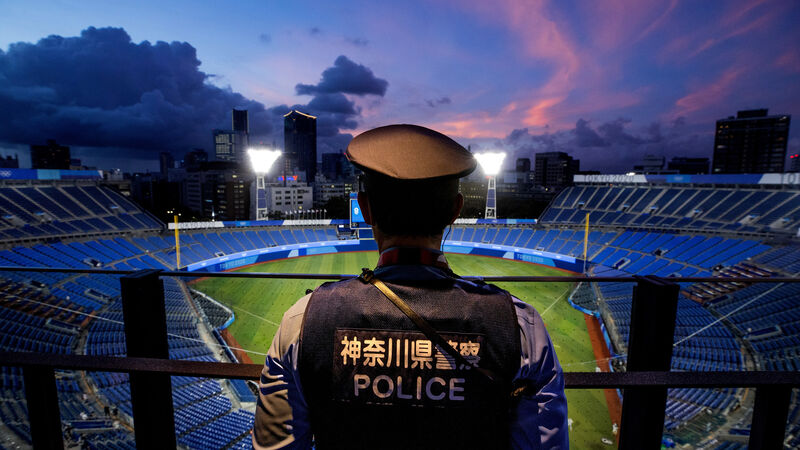
A member of the Japanese Police at the baseball game between Japan and Team USA. Picture: INPHO/James Crombie
There must be millions of personal histories that speak for Japan’s love of baseball but we’ll settle on just the one.
Yasuaki Yamasaki’s mother had a choice to make when she divorced her Japanese husband. A Filipino, she could have taken her child back to her native country but chose instead to remain where they were so her son could continue to play baseball. Yamasaki wasn’t some hot teenage prospect. He was in third grade at the time, maybe nine years old.
It paid off.
Almost 20 years later and Yamasaki is a pitcher with the Yokohama DeNA BayStars, a six-timer in the domestic Nippon Professional Baseball League’s All-Star game, and a member of the national team that, last night, took on the USA in the Olympics at the stadium he has called home since 2015.
If the particulars of Yamasaki’s story are his and his alone then the centrality of baseball to the plot is shared by pretty much every one of those sharing the home dugout. The same could be said for their female counterparts who claimed the gold medal this day last week after defeating the Americans in the final.
First baseman Hideto Asamura gravitated to the game through two older brothers and a father who played at High School. Pitcher Suguru Iwazaki’s parents had played baseball and softball but he was barred from the sport in primary school by his father Hisashi who, seeing the long game, didn’t want him straining his shoulder or his elbow too soon. Iwazaki made do with swimming until he hit middle school and grade seven.
Ryoji Kuribayashi, another pitcher, showed a similar clarity of vision. Now a pitcher with Hiroshima Toyota Carp, and Japan, he wrote a letter for a time capsule when he was no more than 12 years of age. "I am not good at school,” it read, “but I like baseball. I want to be a professional baseball player.”
Almost every player on Japan’s roster speaks about the role that a sibling or a parent or a friend had in them first picking up a glove or a bat. For some, the attraction was only heightened by the proximity of the type of diamonds that are as ubiquitous here as GAA, rugby, and football fields are in Ireland.
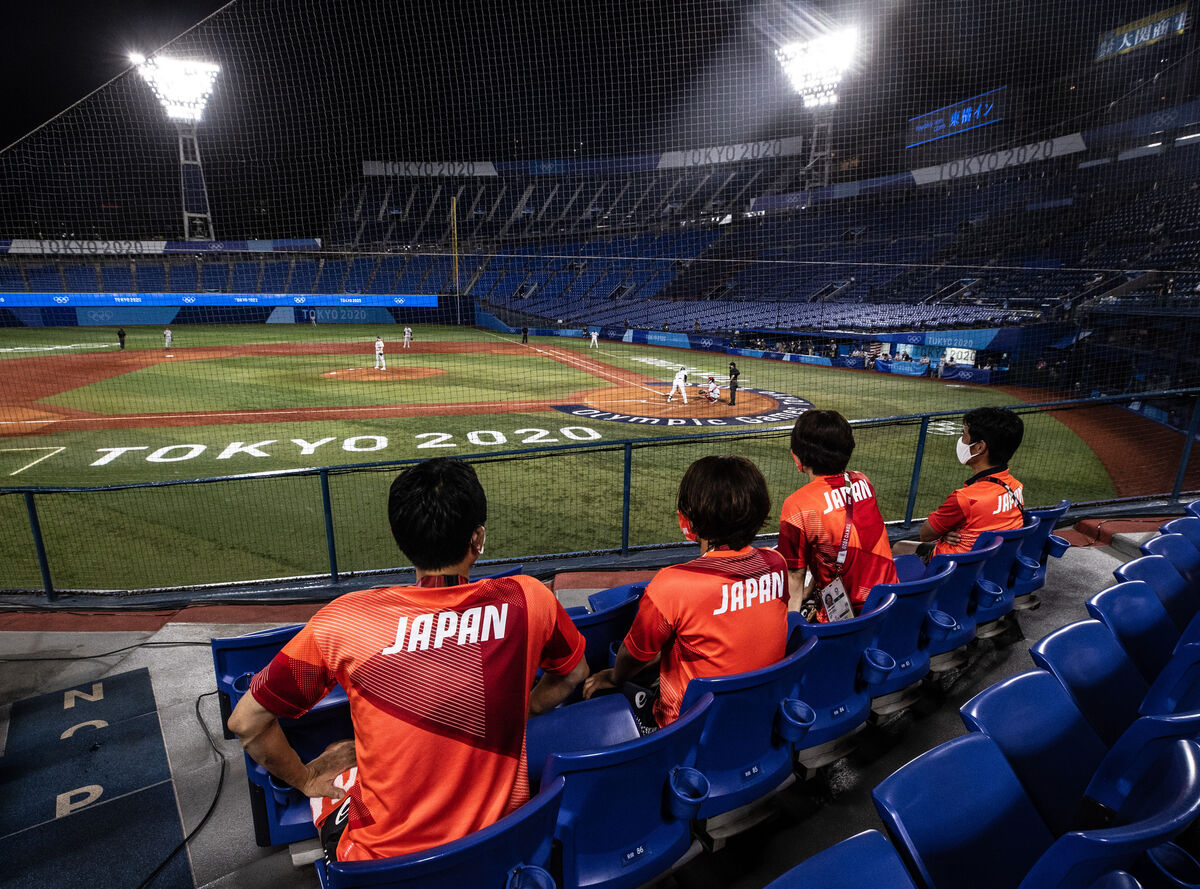
Baseball is the most popular sport in this sports-mad country. By a mile. It outstrips sumo and soccer two-fold. The domestic league boasts 27 million fans and the game dominates the news cycle from March through to October regardless of other distractions. The 2019 Rugby World Cup can attest to that.
It’s a national pastime that filters through all tiers of society. The National High School Championship draws 50,000 people to Koshien Stadium near Kobe, a facility built with the specific purpose of hosting these tournaments. Millions more take it in on TV. So many, in fact, that it is the most-watched sporting event in the country.
All of which made last night’s game feel like an orphan to circumstance.
It’s not that the US rocked up with some sort of Dream Team. Baseball is back at these Games for the first time since 2008 as an effective sop to the hosts, its absence the last two turns stemming directly from the lack of star names on the rosters as Major League Baseball franchises refuse to release players for national duties.
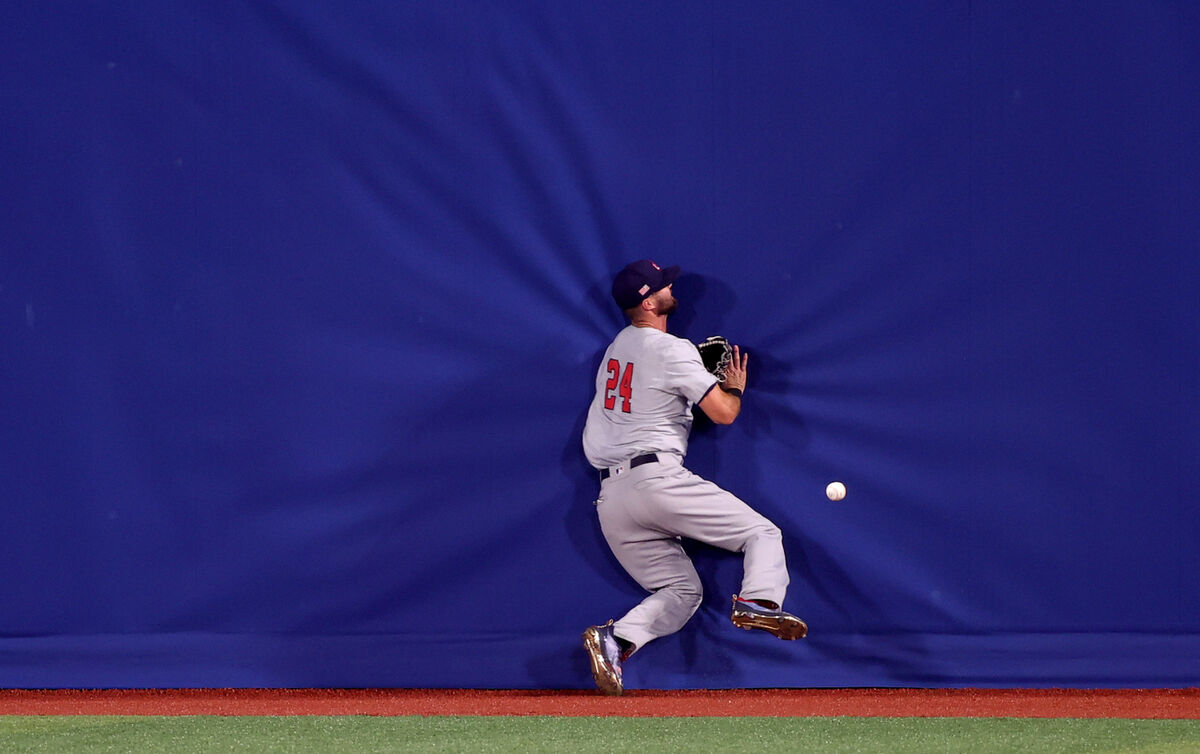
The 24-man group put together by manager Mike Sciosa includes 14 MLB vets, two World Series champions, and four former All-Stars, but third baseman Edwin Jackson and relief pitcher David Robertson haven’t played in the big leagues since 2019, and third baseman Todd Frazier was effectively discarded by the Pittsburgh Pirates in May.
All three and more are well into their 30s. Add in a supporting cast of young and eager prospects and you have a collection of players who are, frankly, over the hill and another bunch who may never make it to the top. But this is still a team representing the USA, the country that gave Japan its chief sporting passions, and there was no-one there to see it.
That lack of spectators has hit home more at some Olympic venues and sports than others. It’s been surreal to see a 100m run to total silence, disconcerting to watch beach volleyball played out to a backdrop of emptiness, but the 30,000 seats at Yokohama Baseball Stadium last night may well represent the most profound loss of these Games.
To the hosts, at least.
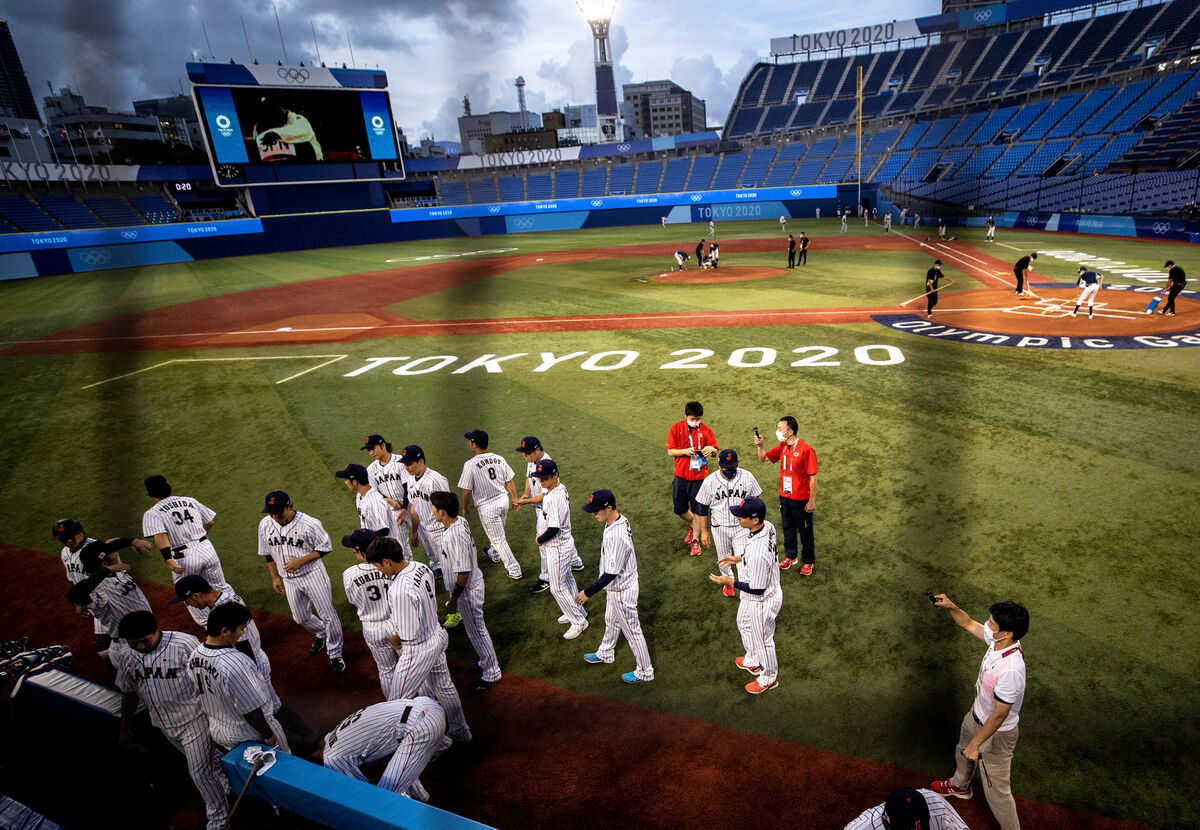
This baseball tournament was an opportunity for Japan to marry its love of baseball with its duties as Olympic host, a chance to afford the world a glimpse of how it has taken this most American of pastimes and made it their own, but maybe baseball and softball have already played their most meaningful part in this gathering.
When Tokyo won the rights to host these Games in 2013, then prime minister Shinzo Abe said it would be the country’s opportunity to repay the world for their assistance in the wake of the earthquake, tsunami, and nuclear disaster that hit the Tohuku region two years earlier. They would also serve as a symbol of the region’s recovery.
That sentiment has been followed through.
The opening ceremony hadn’t even happened when the women’s softballers opened their tournament in Fukushima almost two weeks ago. That it was baseball and softball chosen to kick things off in the still-devastated region was symbolic in and of itself.
Head coach Reika Utsugi and star pitcher Yukika Ueno spoke about how they carried all the hopes and dreams of Fukushima after they opened the Games there with an 8-1 defeat of Australia. “We began the Olympics with so much on our backs,” said the latter, “so many feelings and emotions."
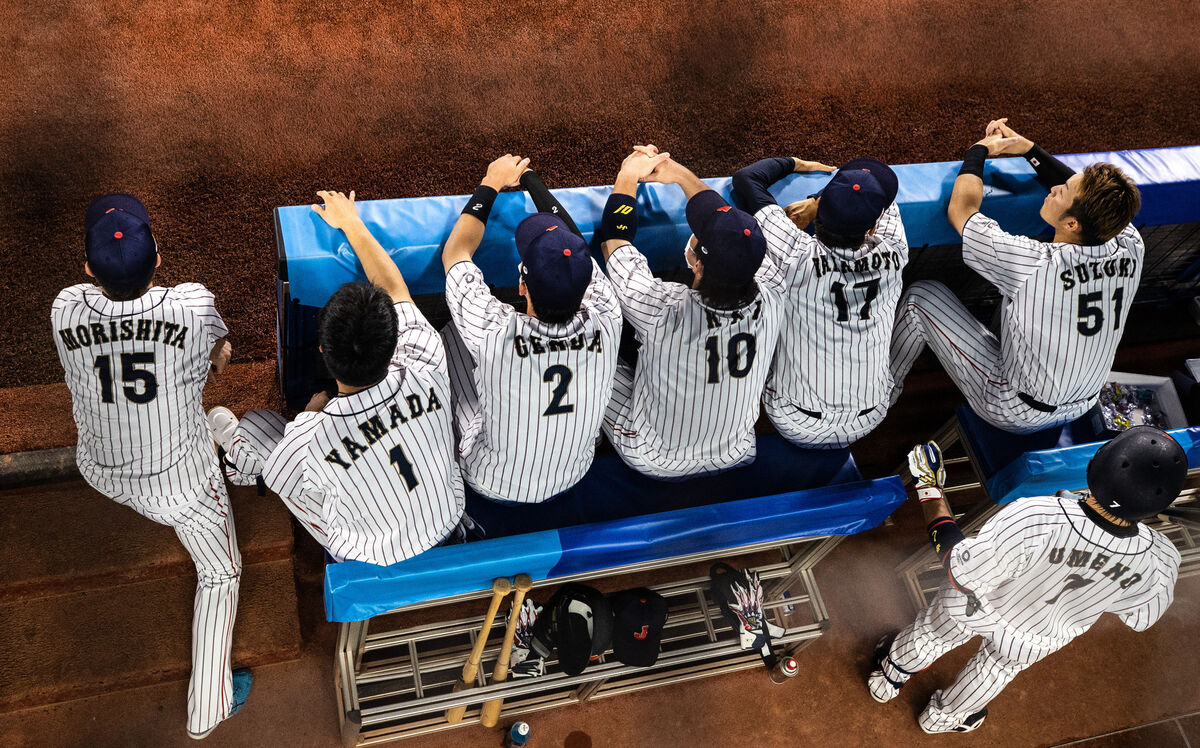
Less than 24 hours later and Japan’s men were claiming a sensational come-from-behind win against the Dominican Republic on the same turf in the ninth innings and the hosts booked a place in the semi-final last night with another late surge and tenth inning defeat of the USA in Yokohama.
Japan has never claimed gold in baseball. Now would be the time, and place, to change that.
CONNECT WITH US TODAY



Be the first to know the latest news and updates