Tricky conditions for returning sailors in biennial Dun Laoghaire to Dingle race
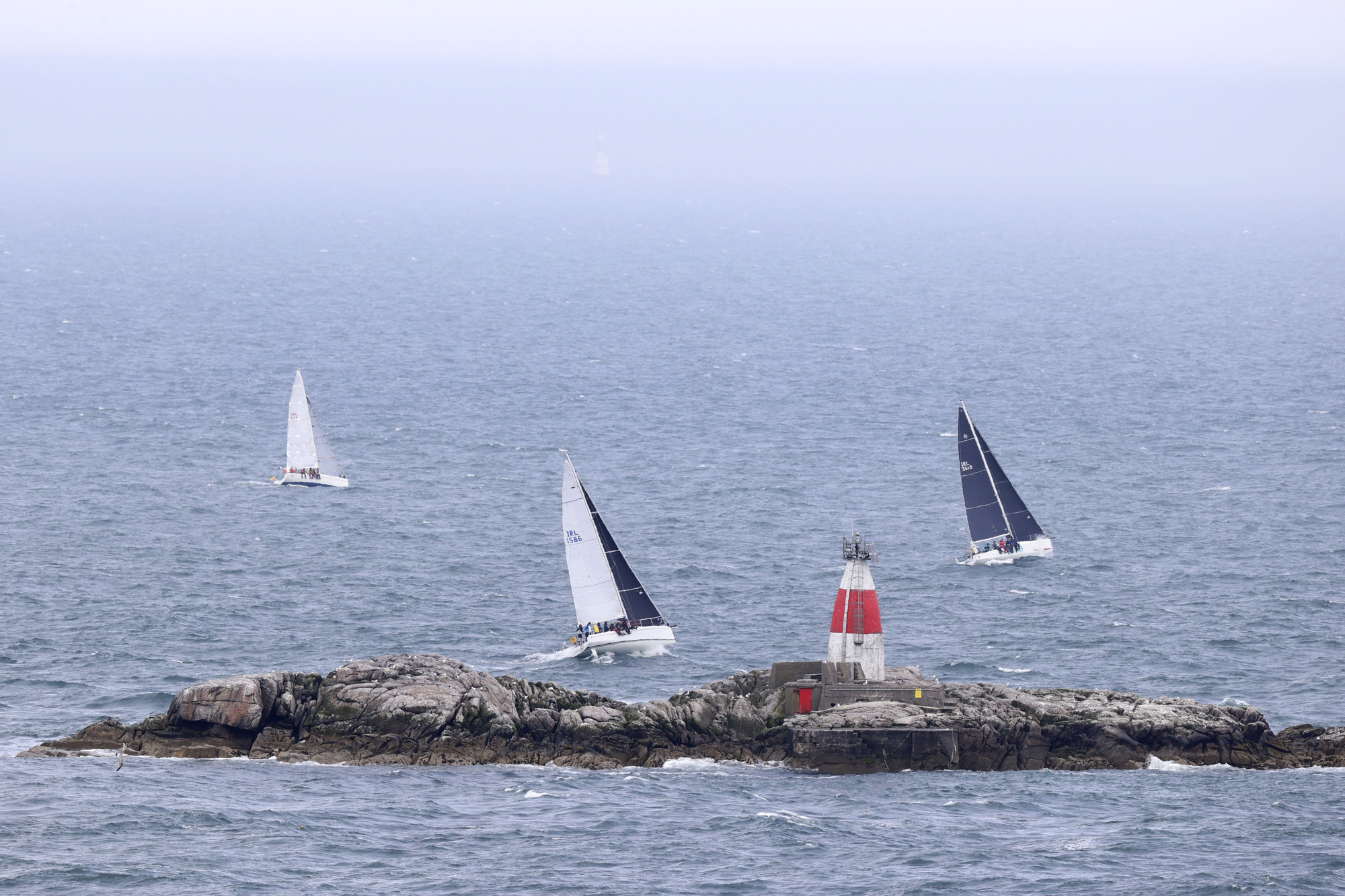
Leading yachts in the Dun Laoghaire to Dingle Race passing Dalkey Island and the Muglins Rock on Dublin Bay as they face fresh southerly winds at the start of the 280 nautical mile race to Co. Kerry. Picture: INPHO/Oceansport/David Branigan
Robust conditions greeted the first sailors back into domestic competition on Wednesday as the biennial Dun Laoghaire to Dingle Race got underway in a stiff southerly wind.
An opening night prospect of seasickness seemed inevitable for some crew after the prolonged Covid-enforced hiatus from offshore sailing.
And with 280 nautical-miles of upwind racing to go before reaching Dingle, it could be Friday or Saturday before all 38 starters reach port in Co Kerry.
But first, the fleet have had to negotiate the tricky sandbanks off the East Coast on the route past the famous Tuskar Rock off Rosslare before the turn south-westwards into the open waters of the Celtic Sea.
Despite having to zig-zag along the route, the forecast means the leaders re expected to make good time and the line honours winner should be known by early on Friday or possibly before.
While the race is decided on IRC corrected time, the race within a race for ‘line honours’ is also a goal. Conor Doyle’s Freya from Kinsale Yacht Club established an early claim on that prize by leading the pack at Wicklow Head just four hours after the race started.
However, Denis and Annamaria Murphy’s Nieulargo from the Royal Cork YC was close behind and provisionally leading the overall event on corrected time as well as in Division 1.
But with barely 20 nautical miles sailed, much can change and especially so if a forecast easing of conditions on Friday makes the closing stage into Dingle a close affair.
That will be Paul O’Higgins hope on Rockabill VI from the Royal Irish YC. The Dun Laoghaire skipper is hoping to make this year’s event a hat-trick of consecutive overall wins.
The changing of the tide off Wicklow Head meant the fleet were preparing for six hours of hugging the coast carefully to avoid the worst affect of the flood tide on the approach to Tuskar.
And the change of seastate may also bring some relief to any suffering from the effects of ‘mal de mer’ and hope for smoother sailing on the south coast.