20x20: ‘If you want something different for your daughter then you need to lend a little support yourself’
20x20: ‘If you want something different for your daughter then you need to lend a little support yourself’

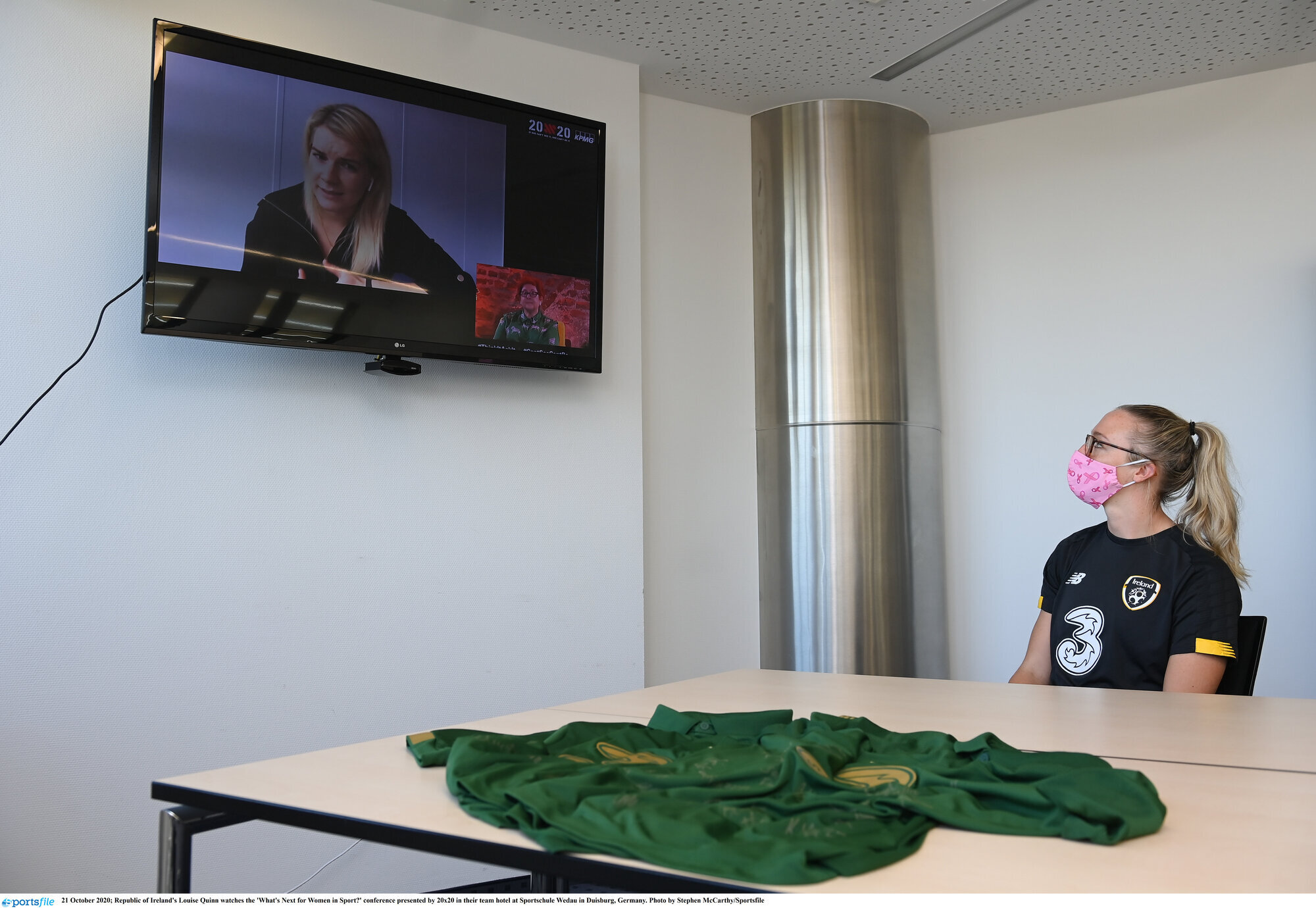
Ireland defender Louise Quinn watches the ‘What’s Next for Women in Sport?’ conference presented by 20x20 at the team hotel in Duisburg yesterday. Norwegian football superstar Ada Hegerberg, who won the first female Ballon d’Or in 2018, said the inclusion of women in that award was a pivotal moment for her sport.  Picture: Stephen McCarthy/Sportsfile

Brian O’Driscoll says it is time for men, and especially male athletes with a powerful voice, to stand up and speak up for their female sporting counterparts.


The rugby superstar did not hold back when he was asked ‘what next?’ as the 20x20 women’s sport movement wrapped up its two-year campaign to get a 20% increase in participation, attendance, and media coverage for female athletes.

“The next onus is on the male population — fathers of sons and daughters — to let them know that parity and equality is something for the future,” he said.

“I’ve had comments on social media like: ‘Oh, the feminazis have got hold of you!’ when you try to promote women’s sport or talk about more visibility for them. There’s still going to be kickback from certain factions of society who don’t want to rock the boat or change the status quo, but there’s a big onus on us.

“Justin Rose has promoted women’s golf events, Andy Murray has been a big voice for women’s tennis, and I think more people can step up to the plate.

He admitted that, like most athletes, he didn’t look outside himself during his playing career but has been given a new perspective since, not least by becoming a father.

“It’s easy to stay quiet and motor on, but if you want something different for your daughter and future generations then you need to lend a little support yourself. Get out of your comfort zone.”

O’Driscoll was among the world-class speakers — including Martina Navratilova, Ada Hegerberg, Sonia O’Sullivan, Leona Maguire, and Mary Peters — addressing the conclusion of the 20x20 campaign, which had to be held online yesterday due to the global pandemic.

Tennis icon Navratilova said female athletes are “more than halfway there [to equality]. The heavy lifting has been done, but we need to keep going because there’s still a lot more minds to be changed and a lot more barriers to be broken.

“When men start a sport or a league, if they don’t succeed right away, they get a new sponsor next time.

“When women fail with something new, it’s always: ‘Oh, it’s women. It won’t work.’ We don’t get a new sponsor. It’s that old thing that women have to be so good at everything immediately, otherwise we’re not validated.”

O’Driscoll agreed, saying: “It does feel as though women have to be at a different level to get coverage, that they have to be truly world-class.

“It’s easy to talk about Katie Taylor, but we talk about other levels of men’s sport, down through the grades a little bit. You don’t have to be a world-beater to get press from a male perspective. There seems to be different rules for women.

“Sometimes the argument men put up is that there’s not the same level of interest, by women, in sport. I’ve looked at last year’s stats for Gaelic football and hurling — 40% of the audience share was women.

“So women don’t like sport? Do you think they don’t want to support their own? Of course not. If we put it on, they will watch it.”

Soccer superstar Ada Hegerberg, who won the first female Ballon d’Or in 2018, said the inclusion of women in that award was a pivotal moment for her sport.

“That night, I felt I represented the whole game, and it was a good example of a little thing that can change a lot of attitudes.”

On her refusal to play for Norway since late 2017, she said: “There were things I didn’t accept in terms of being a woman with ambition. I didn’t think the bar was set as high as it should be. When I tried to have an impact on that, it didn’t work.

“If you need to change yourself, your character or ambition, that doesn’t work in my world. It was a tough choice, but an easy one in the end.”

Hegerberg said high performance is key to continuing to changing attitudes about, and opportunities for, women in sport — but stressed that, for this to happen, there has to be equality of opportunity at a young age.

“A question that I keep asking myself is what more can be done to make the product better from the start?” she said. “That all comes down to giving young girls the same opportunities from day one as young boys.

“If you start to teach a six-year-old girl to hit a pass, rather than teach her when she is 20, then the product will be a lot different.”

This was echoed by other speakers, including Manchester United women’s manager Casey Stoney, jockey Rachael Blackmore, Paralympic star Niamh McCarthy, and coaches Graham Shaw and Mick Bohan.

“Visibility is still pretty low in female sport,” said Stoney. “We need to move away from the narrative of ‘back-stories’ and talk about results and performances. Then we’ll know we’re winning.”

Blackmore stressed she is always treated equally in the weigh-room and on the racetrack, but admitted “there is still a slight stigma with girls when they are starting out.”

She believes that is why ‘women’s only’ races are a good idea.

“They were a massive help to me to get going, allowed me to showcase what I could do and get more practice starting out,” she said.

“There are also races confined to people who haven’t had a certain amount of winners, and it’s the same idea — to give people a chance.”

More in this section

Sport

Newsletter

Latest news from the world of sport, along with the best in opinion from our outstanding team of sports writers. and reporters

Cookie Policy Privacy Policy Brand Safety FAQ Help Contact Us Terms and Conditions

© Examiner Echo Group Limited