The smallest of margins can make the biggest difference

Is he a fast-paced thinker, is he very analytical, the life and soul of the dressing room, or a deep thinker? Is he self-motivated or requires an arm around the shoulder?
And if you think you are reading a column in the wrong section of the newspaper, and that this abstract thinking doesn’t belong on the sports pages, then you know more than many of the leading organisations in world sport.
The relationship between team management and player is only secondary to that between management and person. Person first, player second is one of the key tenets of the Crusader culture which I return to after this weekend’s Six Nations games.
I am going to be analysed as well, to discover what sort of learner I am. The coaches know who and what they are dealing with in terms of the playing group, they know if the player is a red dot, a yellow dot, a blue dot. And that shapes their thinking.
Again, person before player. Appreciating what way management needs to go about interacting with every player.
There are hundreds of examples of this sort of minutiae that makes the small-percentage differences in professional sport.
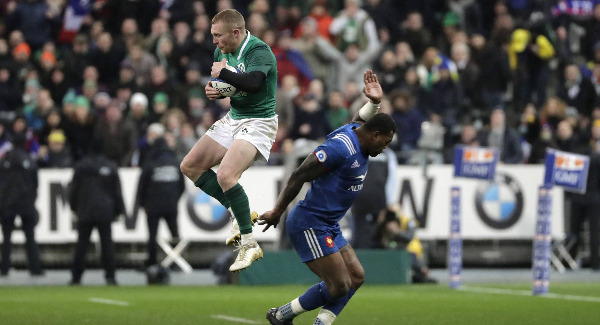
Johnny Sexton’s drop goal in Paris last Saturday has been accurately described as exquisite, but it was never happening if Keith Earls hadn’t secured possession from the earlier crossfield kick, which, in a small-gain phase of rugby, was massive.
Talk about some fella making his mind up to make it a great kick.
In GAA terms, it was a 50-50 ball, but Earls dominated that contest physically and psychologically with an insistence he wins that possession for his team.
Not only did he win it, but his capacity then to go forward with momentum on landing was no lucky strike. That’s counter-movement jumping (CMJ).
Only those who have been on the inside this past decade realise that over that period of time, Earls is the most explosive back in Irish rugby.
He would be incredibly powerful, with his weightlifting clean and jerk, and in terms of his hurdles, his explosive power is fascinating.
There’s a reason these guys train in a particular way and it’s massively rewarding for player and coach when you see that transfer from gym to pitch.
We saw that at a key moment in the Stade de France. Johnny has worked forever to guarantee that delicious connection for the drop goal, but Earls has too. One was as important, if not as obvious, as the other.
The further the game went on last Saturday, the more it felt odd for me sitting in Dublin. It was my country against five of the players from Racing 92 I had spent four-and-a-half years with, cheek by jowl.
Getting to know the person. It was a big day and I was very proud of them, from Machenaud, Chavancy, Vakatawa, and Teddy Thomas in the backs to Wen Lauret in the back row and young Cedate Gomes Sa, a young prop who has progressed hugely to be on the bench.
I was in contact with them last week, and it was quickly evident they were all over this challenge. To break that French resistance and defiance, Ireland needed to make it a two-score game but they never could.
Thomas’ try was a shock to the Irishness in me because it was the price Ireland paid for not putting France away when they could and should have.
But as a rugby moment it was delivering when it mattered off something I had seen practically every week in training at Racing’s Plessis-Robinson base in Paris.
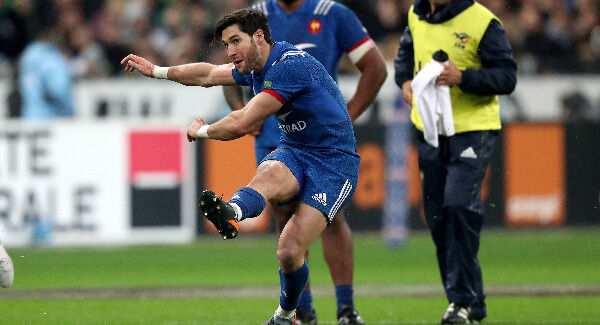
Like that Keith Earls moment, it’s a snapshot, and that is often as much as you get. People get to see so little of the real player on gameday, which is why it is such a rush for a coach to see those magic moments in front of a world audience.
Normally it’s without witness on a blustery Tuesday on the back pitch.
Ireland would have been frustrated with the ruck ball, which was slower than usual in Paris. As a result, Henshaw and Aki were carrying hard but gaining little.
Because the conditions made it too risky for throwing around the ball, the French defence could be compact and were able to shut down Ireland in midfield too much for Joe Schmidt’s liking.
CJ Stander carried a lot, 25 times, and yet we really didn’t see him. A lot of those carries were for small, hard yards.
Joe and the staff will have looked closely at that this week, because Ireland didn’t look like scoring a try — and to win championships, you are going to have to get them.
That’s the really interesting aspect from a coaching perspective. The little tweaks from week to week.
The video reviews, the dynamic between the coaches and the Irish players, and tuning in properly for what many on the outside will take as a gimme five points against Italy.
One of the many advantages of having Joe Schmidt coaching Ireland is there will be no pressure ‘upwards’ from player to head coach.
You can get that with some weak coaches at top clubs, but Joe’s not looking to impress anyone. He has set out his stall long ago.
When I went to Racing nearly five years ago, I left my playing career at the front door. Coaching is a completely different skillset.
It all goes back to teaching and there are methods to teaching to enable players learn. And no two players learn the same way, hence the personality traits I referred to earlier.
My conversation with five different players in the room will subsequently have five different variations of what was said. You have to facilitate everyone’s capacity to learn.
You may think you’ve had a brilliant meeting but the players may not be thinking that.
Joe is very good on that level. Ireland have a block of three home games to come before going to Twickenham, and they will prepare sequentially.
If you knock off the four of them in a row, fair play. Ireland will be expected to beat Italy and win the other two home games, but with the Scots especially, no one can be sure what is going to turn up.
Wales will be a 7-10 point game, but with Scotland, Ireland could put 40 on them — but just as easily could be involved in a one-score game.
Scotland are beyond enigmatic. For me, they seemed to fall in love with themselves after November, reading their own press, and thought ‘we will just show up now in Cardiff’.
They never, ever looked like they were going to beat Wales.
This is where strong leaders and rugby smarts play such a critical role, where a Paul O’Connell or Dan Carter come into their own. Two great rugby brains, sponges almost, and yet with completely different expertise.
That’s what is fascinating about rugby. If you got two soccer players in a room, they would be quite one-tracked in a conversation, but the difference in rugby between forwards and backs is so great, what Paulie needs to be really good at is completely different to what Dan needs to be.
Dan runs the team, Paulie runs the lineouts and forward play.
Mercifully, there are still a few old rugby truisms: You still need real props to scrum. If you don’t compete in this area of the game, you get eaten up.
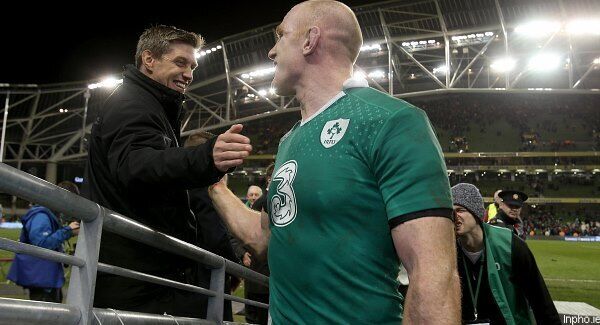
Playing with Paulie and working with Dan made every day with them worthwhile. I see that even clearer now. I cannot emphasise that strongly enough. These people are hugely driven.
Some think Dan is coming to the end, but the real Dan Carter doesn’t think like that. You are always a competitor.
I won’t lie. Seeing the improvements some of those French players have made in recent seasons gave me a shot of pride. I know I have a lot to learn, but I think I have something to give in a set-up too.
I know how rugby works, it’s my honours subject. Rugby isn’t played on a computer. You have to understand that.
You have to grow your subject matter during the week and be as best prepared as possible for Saturday.
Some days, like in Paris, it doesn’t go to script, but the good ones like Joe Schmidt don’t lose the plot over that. They use it as a learning experience to get better.
We are all doing that.
CONNECT WITH US TODAY



Be the first to know the latest news and updates