Sadness as Frankfield fairways close
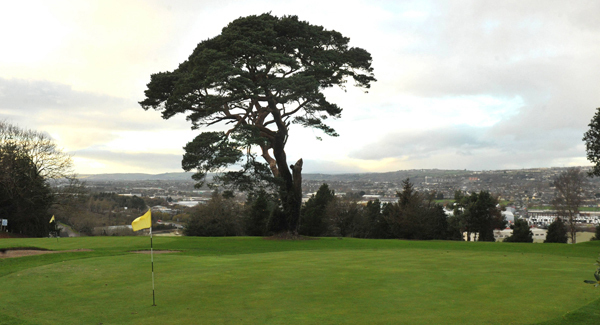
You will not notice as you drive along Cork’s south ring road this New Year and pass beneath Frankfield Golf Club but up above, for members and owners alike, the emotions will be as raw as the morning chill.

Sadness as Frankfield fairways close

January 1, 2015, marked the first time in 31 years that the hilly fairways of this southside course will lie out of bounds, its nine holes off limits, the club no longer affiliated to the Golfing Union of Ireland.

Rising costs, dwindling membership and sums that just don’t add up have caused Frankfield House owners, brothers Michael and Colman Ryan, to close the layout on which they had helped their father Mick mark out the fairways and plant trees back in the early 1980s. It is a course they can no longer afford to sustain, a lingering victim of the economic downturn that is still biting deep in the golf industry worldwide.


The popular driving range and academy remains open for business with PGA professionals David Whyte and co-owner Michael Ryan continuing to offer lessons while the bar and restaurant within Frankfield House continues to serve, with the Ryans using the money they will save from finance-sapping course maintenance to improve remaining facilities. Yet the anxiety persists beyond Frankfield.

Many golf courses are reporting the green shoots of a recovery but the underlying trend remains downwards with, according to GUI figures, the number of Irish golf club members at the start of 2014 almost 45,000 fewer than its peak of 210,028 during the Celtic Tiger a decade earlier.

The closure of Frankfield Golf Club will not put much of a dent in the figures for this past year’s statistics with the Ryans telling the Irish Examiner they were down to just 76 members from a peak of 460 in 2007 when they made the difficult decision to close the course, built on what used to be their 72-acre family farm.

“It’s not competitive and hasn’t been for a long time,” Colman Ryan said.

“The losses are getting greater, year after year and it’s just not sustainable. I’m not talking about a couple of thousand (euro) here, I’m talking 10s of thousands every year in losses.

“The maintenance is the killer because there are no half measures. If you don’t do it properly, it just doesn’t work. The costs for us are absolutely enormous and being on the side of a hill we can’t go on it with the big machines so that makes it twice as hard.

“The newest machine (for course maintenance) I have out in the shed is January 2000. So one of these days a machine is going to sit down and decide it’s not going to go anymore. And there’ll be no funds there to replace it. I know a lot of the other clubs are in the same boat, fellas tying these things together with bits of string to keep them going.

“We do all our own maintenance here in my own workshop. Every machine is maintained here so the costs had been cut absolutely to the bone.”

Naturally the deep disappointment at the course closure extends beyond the Ryans, whose mother Ina continues to work in the Frankfield House office in an enterprise that continues to employ full and part-time staff.

Speculation wasn’t in vogue when patriarch Mick converted his smallholding into a nine-hole golf course back in the early 1980s.

“My father bought this land in 1955 when it was basically derelict woodland,” Colman Ryan said. “He turned it into a 72-acre farm but by the late 1970s, the EU, or EEC at the time, had come in (with its Common Agricultural Policy) and you either got bigger or you got out. He tried to buy two different places around here and was outbid on both of them and the choice to get out was made then.

“At the time there was a market (for golf), a huge market, because there were only four golf clubs in Cork City — Cork GC, Douglas, Monkstown and Muskerry — and if you weren’t a member of those, you had to travel for your golf, down to Ringenane (Kinsale GC) and places like that, to nine holes in the country.

“So we’ve gone from that scenario with four golf courses around the city to where there’s now 22.

“That’s the problem now, more than 20 golf courses within 20 minutes’ drive of the city and almost all of them with the exception of ourselves and Raffeen are big, flat 18-hole courses and they’ve all dropped all their fees, everything. Now it’s a race to the bottom to try and get numbers, right across the board.

“We had a meeting back in October with our accountant and he wanted to know were we suffering from some form of insanity, that we were shovelling all this money into (the golf course) and there was no return.”

Colman’s brother Michael added: “We came to the decision and stepped back from it three years ago. Our solicitor pleaded with us to just try one more time, to give it a couple of years but it kept going the other way. So a couple of weeks back, we had a chat with again and he said, ‘that’s it, you have to close it, you have no choice.’ And it’s all based on the maths.”

Breaking the news to the members proved a tough assignment and the Ryans wrote a heartfelt letter to be read out at the annual general meeting in mid-December, although it is unclear whether their message was delivered in full at the AGM.

From being a unique and affordable opportunity for everyday golfers to tee it up with their mates, Frankfield was outflanked as developers ploughed millions into bigger, better courses.

“Many of these courses have since been taken over by NAMA or sold by receivers for a fraction of the development costs,” the Ryans wrote, “others have greatly reduced their fees in order to try and attract new members.”

And Frankfield’s course has now been squeezed out of business. It’s not exactly a Dickensian tale with the Ryans still sitting on a pile of land as property prices begin to spiral again but there is sadness nonetheless at the loss of a course ingrained in the family psyche and beloved by its members.

There is optimism for the remaining, viable elements of their Frankfield House business with Michael Ryan saying: “Myself and David (Whyte) will continue building the golf academy, kids’ classes and camps are big for us,” and Colman Ryan adding: “The only thing that’s closing is the nine-hole course. The driving range is the second biggest by volume in Ireland and that is going to continue with plans for a short game practice academy to go along with that now we have extra space to do that.

“We want to get better with all of that and we’re doing it by closing down the one thing that was uncompetitive.”

Business it may be but even as the Ryans try to look on the bright side there is no escaping the sadness with which their decision was made. And that is something on which to reflect if you happen to drive past those hilly fairways any time soon.

More in this section

Sport

Newsletter

Latest news from the world of sport, along with the best in opinion from our outstanding team of sports writers. and reporters

Cookie Policy Privacy Policy Brand Safety FAQ Help Contact Us Terms and Conditions

© Examiner Echo Group Limited