Northern delights: 'Two lads played their seven rounds over 24 hours straight'
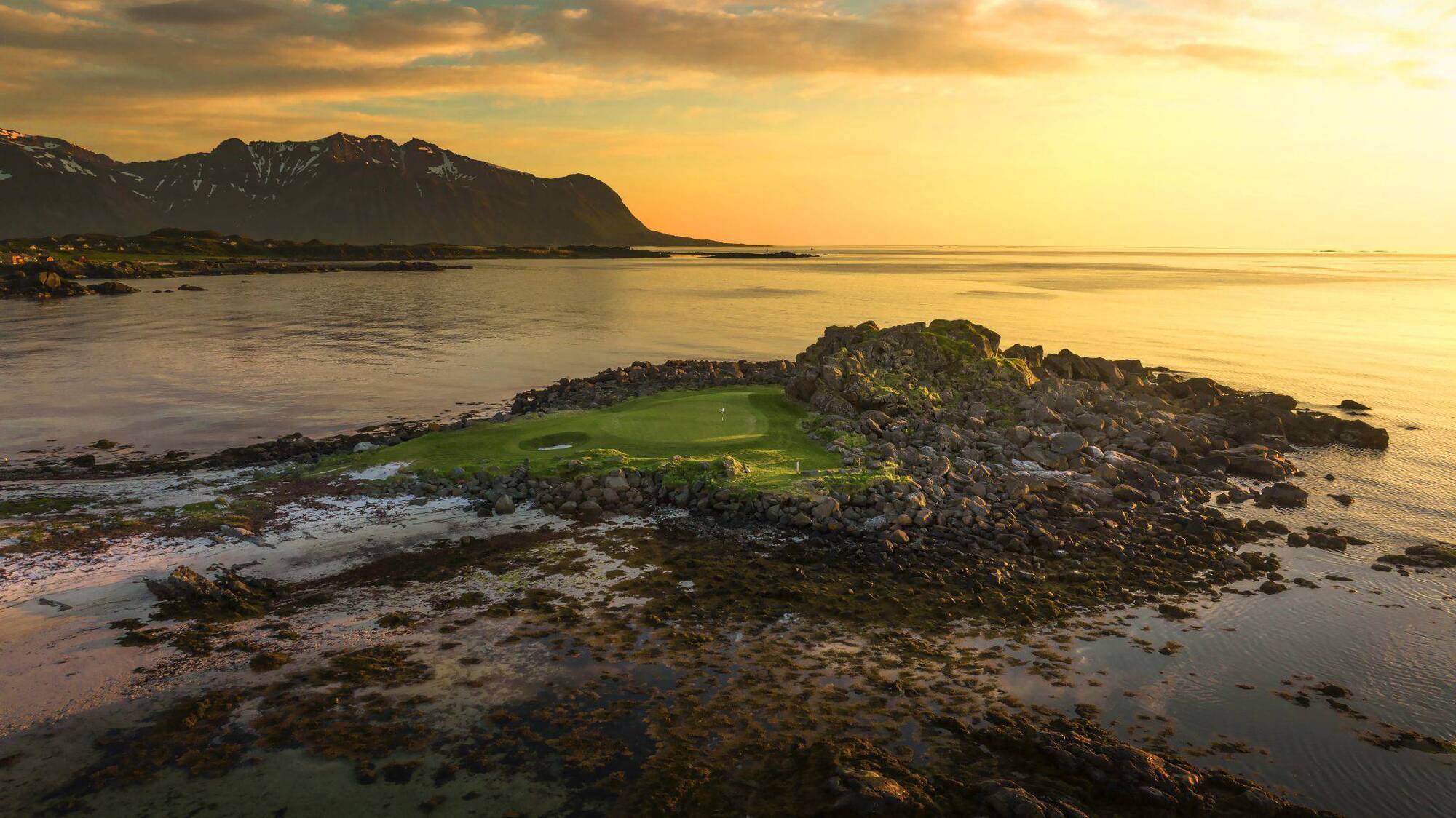
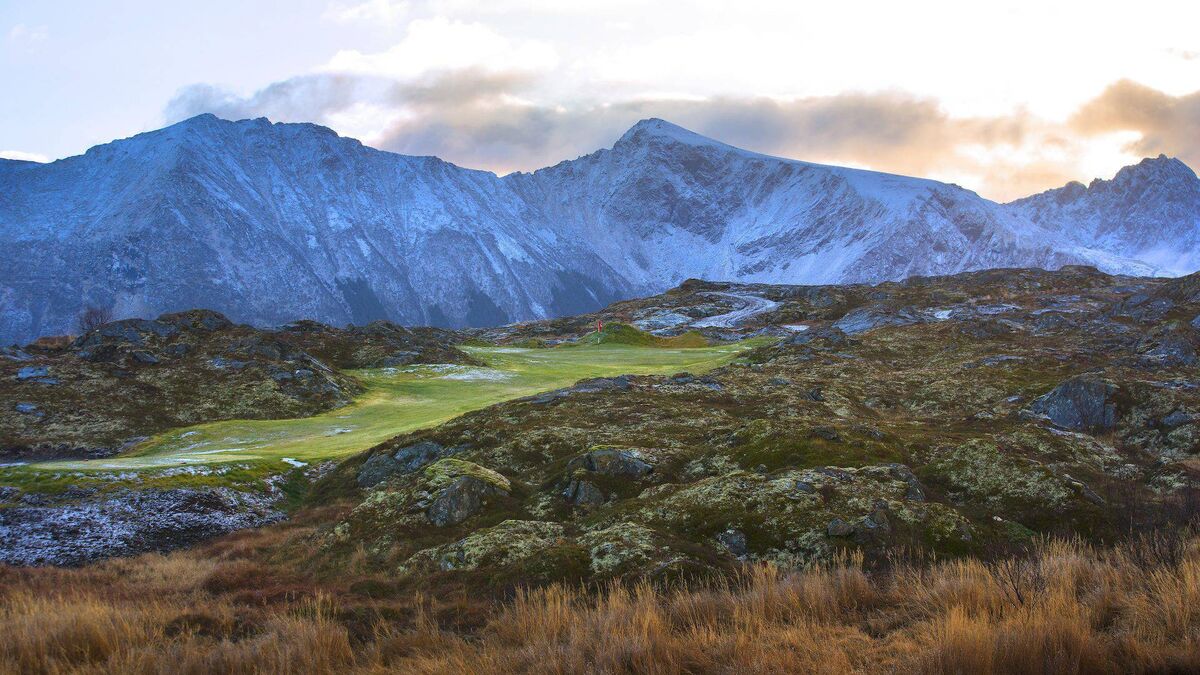
The second hole at Lofoten Links in Norway, the northern most golf course in the world
Jeremy Mulvihill is searching for the perfect phrase to describe his first impression of Lofoten Links, a pocket of coastline where modern day ambition and millennia of Norwegian natural beauty have merged seamlessly.
He pauses for a few seconds so as to ensure he does justice to the experience.
Eventually, he nominates the winner: “mind-blowing.”
He explains: “I had never seen anything like it. It was just 360 degrees of raw, rugged beauty. Anyone that comes here, something happens in your bones. You just know immediately that you are somewhere very special.”
Somewhere very special was Gimsøya island, on the Lofoten archipelago which juts out from the northerly tip of Norway. But that first visit inside the Arctic Circle in 2013 was also disconcerting for Mulvihill.

“I had a few interviews on Skype and was offered the job but I insisted on seeing the lay of the land if you will before accepting. By the time I got there, it was close to midnight in early May. I couldn’t understand how bright it was. I was walking the course around 2am. And that was my first experience of the Midnight Sun, which is the few weeks up in this part of the world where the sun doesn’t set.
“It was mind-blowing.” He accepted the job. Thirteen years later, Jeremy Mulvihill is still there, now the superintendent of the northernmost links course in the world.
***DROP***
LINKS golf has been part of Mulvihill’s life since childhood days growing up in Ballybunion, making the most of a world renowned golf course on his doorstep.
His father Con was a member and young Jeremy spent many summers caddying, playing, and learning from the legendary head greenkeeper Dan Blake about how the surfaces were grown and maintained.
College life beckoned but after a short stint studying electronics and communications he came to a realisation. The humdrum of a 9-5 office life would not be for him. “I wanted to be outdoors. I had a connection with the outdoors. And I knew that golf offered that opportunity.”
He veered onto a new educational path, hoovering up greenkeeping qualifications in the mid to late nineties. He had stints learning his craft at Monkstown and Ballybeggan before returning to an Atlantic backdrop, and Kerry links, at Ceann Sibéal.
“I was there for 10, 11 years and really enjoyed the experience. Then the economic crash came in 2008 and the writing was on the wall shortly after. I took a redundancy and moved back home and was tipping away with caddying and a bit of golf construction with Sol golf.”
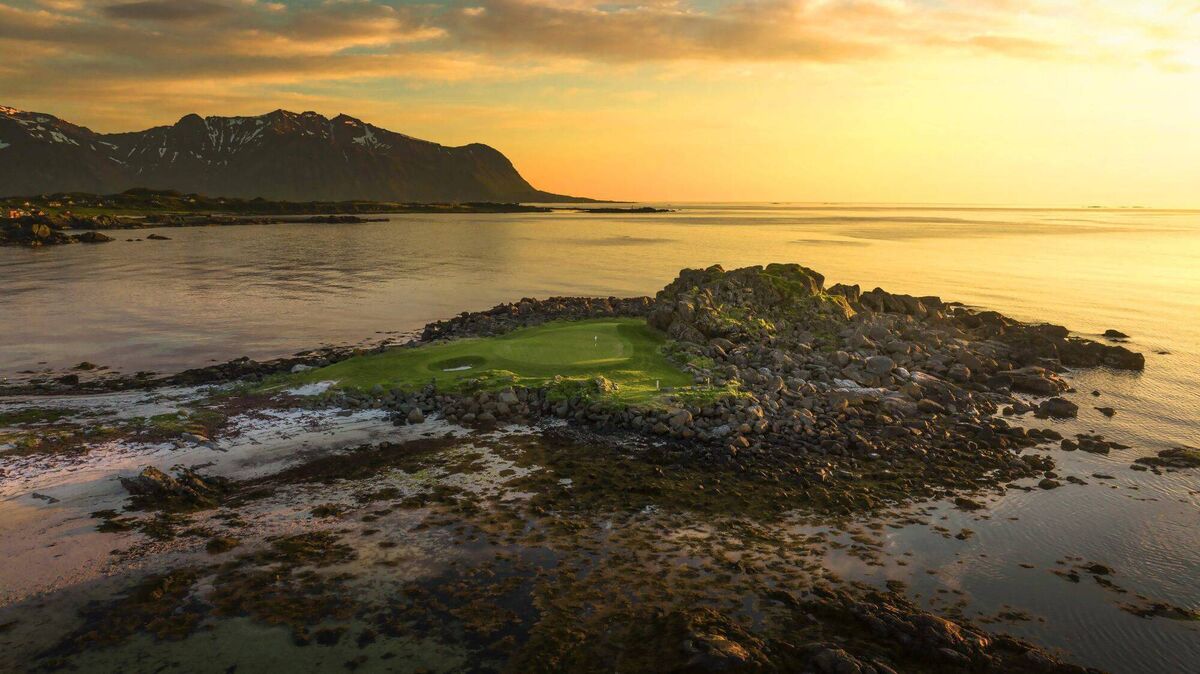
He was contemplating a move to New York when he applied for a job that would change his life.
The backstory of bringing golf to an island off the course of Norway is worthy of a Field of Dreams screenplay. A local farmer, Tor Alfred Hov, set his sights on building a course on the family land in the early 1990s. Tor never saw his dream realised - passing away in 1993 - but his son Frode Jov took the torch and has run with it.
Jeremy Turner, a British architect, provided the expertise and experience to eventually help build six short holes in 1998. Three other holes were added, but it was still far from the finished article. After all, who would want to journey to the edge of Norway to play half a course? Frode sensed the potential that could be realised with the creation of an 18 hole links course. With a new financial weight behind the project, investment and funding was sourced. And that is how Jeremy Mulvihill found himself looking out in awe at the ocean in the early hours of a May morning in 2013.
“I came on board as project manager and greenkeeper. The original task was to forget about the existing 9 holes there but instead focus our energy on 13 new holes. Looking back now, it was amazing what we achieved. Budgets were so, so tight. A shaper and a finisher were our two big investments.”
That meant that Mulvihill had to get creative in terms of his other hirings.
“I had about 15 lads working for me. Most of those were young fellas who were transitioning from school to university to study to become doctors, dentists and engineers.
“I’d say a few of them mightn’t have stepped on a golf course before this! It was tight and tough. The days were long and we worked like dogs. But we were always improving.”
Almost everything was sourced from the surrounding areas, the self sufficiency due to budgets and remoteness. But still they ploughed on, learning as they went. It is a mark of Mulvihill’s management skills that the project was delivered on time, and to such an impressive standard.
Indeed, Turner, who passed away in mid January, praised the Irish man’s “energy, devotion and commitment in pursuing his work that is well beyond the average. Moreover Jeremy is a pleasure to work with and a personality with whom our firm is proud to be associated.”
That first summer was a steep learning curve in other ways for Mulvihill. The 24 hours of daylight was literally an eye opener.
“I remember being on the beach having a BBQ and playing soccer at half two in the morning. The constant sunlight means you lose track of time. You struggled to sleep, you had all this energy, it was hard to close your eyes. Lads would be taping up coverings to the windows to try and darken their rooms. But then you would go to the other extreme in September and October when you’d be working in darkness for the whole day.”
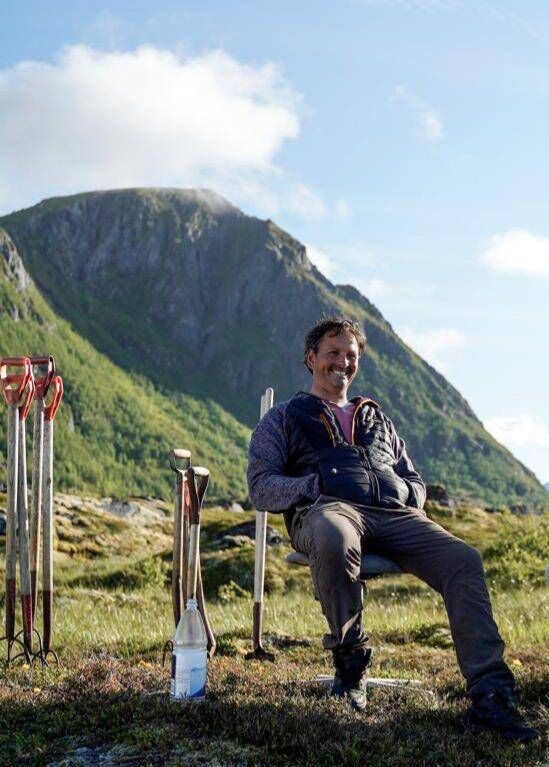
Such extremes are both the course’s biggest selling points - and challenges. The course is open 24 hours a day from June until early August but the golf playing season is condensed with things shuttered from October for nearly eight months.
That time when the sun never sets is magical.
“I remember two guys from the US bought their green fees for 24 hours. These two lads played their seven rounds over 24 hours straight.” (The current Guinness World record holder, Issac Rowlands He played for 32 hours straight!).
“It is impossible to describe, you have to play here to fully understand the sensation of hitting a golf ball at 4am in the full daylight.” Mulvihill struggles to select his favourite hole - but the first probably just claims the title before he adds: “the first three holes are up with the greatest holes in golf. 14 is spectacular. The real meat of the course is 6 to 16. When people golf here they tell me it was like something from Game of Thrones or Disneyland. You just accept and enjoy that you are in one of the most beautiful places in the world.”
When the season ends, the machinery and gear is stowed away and Mulvihill takes a chance to continue his green-keeping upskilling on projects in the Caribbean. Though the golf course is closed, Lofoten is still open for business and is successfully tapping into the growing market of those wanting to experience the Northern Lights from the comfort of their expansive collection of lodges.
The owners are also promoting the Viking heritage of the island which was home to two Viking boathouses, an amphitheatre, and Viking graves.
And more impressive plans are on the drawing board for the years ahead. “Currently we have 10,000 rounds of golf a year - the target is to grow that to 40,000,” Mulvihill reveals.
***
Mulvihill’s affinity for Lofoten stretches far beyond the boundaries of the course.
The people. The setting. The pace of life. His love for this place peppers every conversation.
“There are 200 people on the island with one shop and one church. There are no street lights. A traffic jam here is when some sheep are crossing the road. It is just so carefree. I imagine this is what Ireland would have been like in the fifties. Everywhere you look there is something different, something you might not see anywhere else: berries, flowers, rocks, moose, killer whales, every kind of bird.”
That combination of remoteness and natural beauty - along with the testing nature of the course itself - has propelled Lofoten alongside some of the most iconic ‘bucket list’ names in the sport.
Golf Digest ranks it 24th in the world - up from 44 the previous year; Golf World puts it fifth in their list of the top 100 Continental Europe Courses for 2025, while it was voted as Norway’s best golf course at the World Golf Awards last November.
He has had officials from the R&A blown away by the majesty of it all. Acclaimed golf architect Tom Doak is another fan who has walked the course with him and has left here in awe of the combined efforts of Mulvihill and Mother Nature.
But Mother Nature isn’t always the greatest team player. Mulvihill has seen temperatures drop to -24 in his time here. The freeze is so long-lasting that it delves two metres into the soil. Factor snow into the equation. Or the batterings from high winds and storms rolling off a snarling and merciless ocean.
The impacts of climate change are all too real.
“When the snow starts to recede we have had 10-12 inches of ice sitting on top of the turf. Then we would go out with flat shovels and start to lift the ice back where it was beginning to recede. You can see things starting to wither back and change colour. But things are changing rapidly. We’ve had much milder winters with less snow and ice - but we have had record rainfall which in turn creates problems with moss. We have also had an increase in more powerful storms.”
That latter scenario brings problems unique to Lofoten where six holes are at sea level or as Mulvihill explains: ‘where you step off the fairway, you are on the beach’.
The result of that can be a metre high blanket of seaweed, rocks, and debris - an unwelcome red carpet rolled out for Mulvihill and his team when they return to work in April.
Not that he minds.
“I’m the type of greenkeeper who likes getting dirty. I muck in. I am a problem solver. I love everything about my job. I am extremely proud of what we have achieved here basically with school kids when we started out - and I’m excited about the possibilities for the future.
“Last year was the best year I ever put down. We had more helicopters, more private jets, we even had a super yacht. We are seeing double digit growth every year.”
Recent investment is helping Mulvihill realise more dreams. New machinery, including a robotics project, is one of the big wins. Six greenkeepers from places as far-flung as Georgia and Poland formed his core team last year. Many are returning for 2026. Mulvihill’s decision-making on new hires isn’t based on the most impressive cv’s or references. He is looking for like-minded individuals who want to roll their sleeves up and learn.
“If you want to come here, you must have the attitude for hard work, and be a team player. Everything is done together. We live and work together for six months. Getting on is vitally important. It is a small team, but a fabulous one.”
Another season is just over two months away. For now, he is back home, walking the beach in Ballybunion, dropping into the golf club and meeting up with old friends for a few coffees in the Marine.
In a few weeks time, he will pack the bags as he has done for over a decade and board the bus for Dublin Airport. From there, he will fly to Oslo, catch a connection to Bodø before climbing into a little prop plane for the last leg of the journey out to the Lofoten archipelago.
“It often took me two or three days to get home with the weather,” he says with a laugh.
Ballybunion is home but Lofoten’s call gets louder and louder each spring.
“Everyone says Lofoten holds a special place in my heart,” he says.
“People say I would never leave it - that it is like my baby. And they might not be wrong.”


CONNECT WITH US TODAY



Be the first to know the latest news and updates