Six decades of design: The late Ron Kirby’s contribution to Irish golf

MAJESTIC: Dromoland Castle’s 18th green. ‘I designed that one from the bar with a glass of whiskey in my hand,’ Kirby told this newspaper in 2003
Last Thursday, the world of golf lost Ron Kirby, who died aged 90.
Kirby was a popular and highly-regarded golf architect who had a fondness for Ireland… especially the southern counties. His design work here embraces Mount Juliet (1991), Old Head (1997), Dromoland Castle (2002/3, alongside JB Carr), and Castlemartyr (2007). He designed Skellig Bay (now the site of Hog’s Head) in 2005, added some important holes at Corballis, and even ventured to Wicklow where he worked at Greystones Golf Club.
He was also tasked with designing a course for Abbeville, in 2005, which he did, but the project at Charlie Haughey’s former home ran into problems and never materialised.
Kirby plays an important, almost niche role in the evolution of Irish golf, designing courses predominantly focused on attracting overseas visitors. Just look at the names above. To call them resort courses would be a limited view but not necessarily untrue. If there is one thing these courses have in common it is their playability and friendliness, something that was at the heart of the man.
“He was more Irish than the Irish themselves,” Jim O’Brien remembers fondly. As the former General Manager of Old Head, Jim knew Ron and his wife, Sally, well. “He came over and lived here for several seasons during the design of Old Head, and very much fitted in and became part of the community. He got into GAA and rugby and would often call me up to chat about a game.”
Eamonn O’Donnell, Director of Golf at Dromoland Castle, concurs. “He was here with us on the Sunday of the Women’s Irish Open, last year, and he was the life and soul of the party. It was a really rewarding experience for him to hear the praise for the course from so many of the players and the Ladies European Tour. Everywhere he went he had people following him, asking for pictures and autographs. It was like the pied piper.”

It is easy to think of Kirby as a designer from the 1990s and 2000s – these were the years he made such an impact on Ireland – but he had a career spanning six decades. And he was still designing long after that… right up until his final days. Indeed, he was in Ireland only a few weeks ago.
O’Donnell explains: “He was here in the third week of July, with his son Ron Junior, looking at the renovation works to tee complexes on 9 and 16, as well as some bunker renovations on 11 and 18. He was incredibly excited to see the new tee boxes on 16 being put into play for the upcoming KPMG Women’s Irish Open. I had a lot of time for him and got to know him a bit over the last three years when the course was being upgraded. He was a great man for sharing tales of working alongside Jack Nicklaus and Robert Trent Jones Snr, amongst others.
“For me, he understood the different levels of golfer, namely the Pro, the mid and the high handicapper. He made sure a course was both challenging and enjoyable for everyone.”
That is certainly true at Dromoland Castle, where he visited a number of times recently and was involved with design changes that were submitted to the board. These changes ensured that the course has improved still further as it prepares to host the Women’s Irish Open from August 31 to September 3.
“And after he left here he went on to see Castlemartyr and Old Head, says O’Donnell. “He was full of energy. And loved what he did.”
“At the age of 90, Ron Kirby was still doing what he loved most,” says Danny Brassil, Director of Golf at Old Head Golf Links. “He made his last visit to Old Head this July, and was as excited as ever to share his wonderful stories and projects with us all. Born in the USA but an Irish legend.”
From humble beginnings as a caddie, caddie master and maintenance crew member in his hometown of Beverly, Massachusetts, Kirby became one of the most highly respected golf course architects in the world.
At the University of Massachusetts-Stockbridge, on a Francis Ouimet scholarship, he earned a degree in agronomy. He then began his career as a design associate for Dick Wilson, in 1958, before working for Robert Trent Jones Snr, designing courses in the United States, Europe and the Caribbean.
Kirby started his own design company in 1970, with consulting partner Gary Player. Eventually, he sold his company to Golden Bear Inc, and joined Nicklaus Design Services as Senior Designer for Nicklaus’s European projects. And thus he found himself in Ireland, in the late 1980s, working on Mount Juliet. It was there he met Roddy Carr, forming a friendship that lasted for decades – Ron and Roddy worked together on the design of Apes Hill Barbados, Kirby’s final 18-hole design which opened in November 2022.
As a result of this friendship, and a few years after Mount Juliet opened, Kirby found himself tasked with designing a course that, to this day, remains one of golf’s true bucket-list destinations. The evolution of Old Head involves many names in the design column (including Eddie Hackett and JB Carr), but it is Kirby’s routing and layout that has made this the course he will be best remembered for. His relationship with Carr Golf continued when the owners of Dromoland Castle provided a €5 million budget in the early 2000s and JB Carr suggested Kirby was the man for the project.
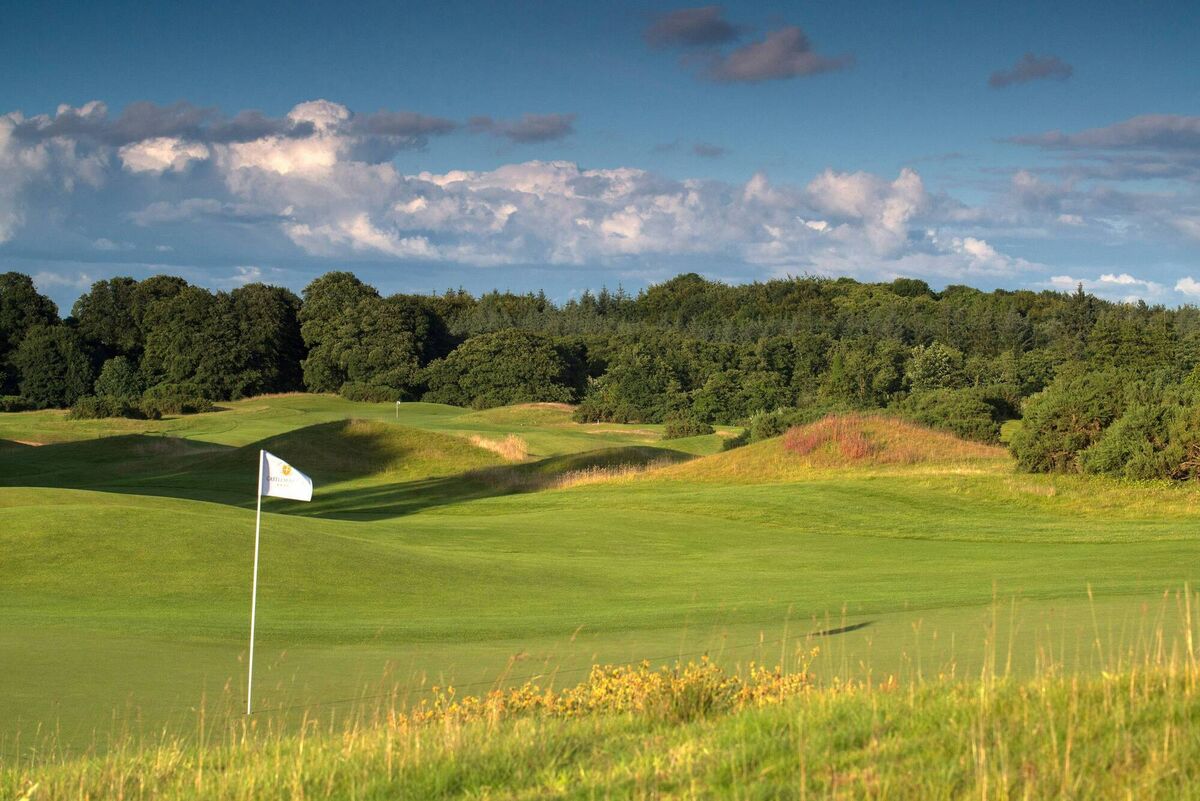
Castlemartyr is his last full design in Ireland, and one he told this newspaper's Simon Lewis he regards as “probably the most strategic 18 holes in Ireland”. He didn’t see the need for yet another Irish parkland so he created an inland links-like course instead.
“Here, we try to hide things, give them a little strategy, put pin positions so you can’t see everything, hide some bunkers. I’m really proud of it.”
The resort recently received an €8 million investment, under new owners, which included a complete renovation of the bunkers in 2022. Who was on hand to do the design work… Kirby himself, and he returned last month to assess the changes.
Ron Kirby had a hand in the design and construction of some 150 golf courses over his career. His portfolio includes London Golf Club, London, the Dolphin Head Course at Hilton Head, South Carolina, Sun City in South Africa, Gleneagles in Scotland, and La Moraleja Golf Club in Madrid. And yet he had a very special affection for Ireland and its people. He will be greatly missed, not just for the wealth of famous golf courses he leaves behind but also for the many friendships he forged along the way and the stories he shared so freely.
“I designed that one from the bar with a glass of whiskey in my hand,” he told the Irish Examiner’s Charlie Mulqueen, in 2003, pointing at the 18th green at Dromoland Castle.
*Ron Kirby’s autobiography ‘We Spent Half Our Lives on the Wrong Side of the Road’ was published in 2020.

CONNECT WITH US TODAY



Be the first to know the latest news and updates