Golf industry stays cautiously optimistic for 2023

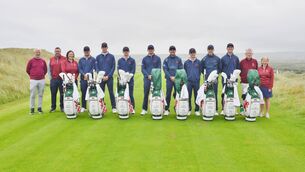
SEAPOINT: Leona Maguire watches her tee shot on the 10th during the Flogas Irish Scratch Series at Seapoint Golf Club in Termonfeckin, Louth. Pic: Seb Daly/Sportsfile
Almost two years on from the end of Irish golf’s great Covid shutdown and an industry leader sees reason for cautious optimism for the game here in 2023. Yet as golf clubs across the island go through their membership renewals for the new season, Carr Golf’s Alex Saul is also urging prudence for course owners and committee members as they plot their way through a year in which world events are still having a big impact on the way they must conduct business.
As chief commercial officer of Ireland’s largest golf services provider to golf courses, inbound tour operator and owners of Seapoint Golf Links, Carr Golf’s Saul has a unique insight into the macro- and micro-level decision-making processes that factor into keeping clubs afloat in all the different sectors of the Irish market.
The figures remain encouraging. The unprecedented 55% member growth experienced island-wide between January 2020 and December 2021 as the population came out of the stringent restrictions on our lives due to the public health crisis that engulfed us saw just a 2% reduction in net headcount in 2022 yet perhaps the cause for concern is that Under 30s failed to renew their memberships at a higher rate than the full adult categories such as five-day or seven-day members.
That points to younger golfers having a higher likelihood of competing time pressures and possibly being more susceptible to rising cost pressures forsaking their memberships at a higher percentage than older golfers in full-paying categories.
In terms of participation, Saul reports that while 2022 still saw record high levels of participation with Carr Golf’s network of client courses hosting 25 per cent more rounds in 2022 compared with the last pre-pandemic season of 2019, there is evidence that the gradual return to the workplace is freeing up space on midweek tee sheets and an expectation that the average number of rounds will drop this year having risen 35.3 per cent in 2022.
Talking to the Irish Examiner, the Carr Golf executive outlined his reasons for optimism and his thoughts on how to negotiate the numerous potential pitfalls for clubs as they bid to hang onto the post-Covid bounce in participation that golf enjoyed after lockdown in the midst of global economic challenges, not least the current cost of living crisis stoked by Brexit and the war in Ukraine.
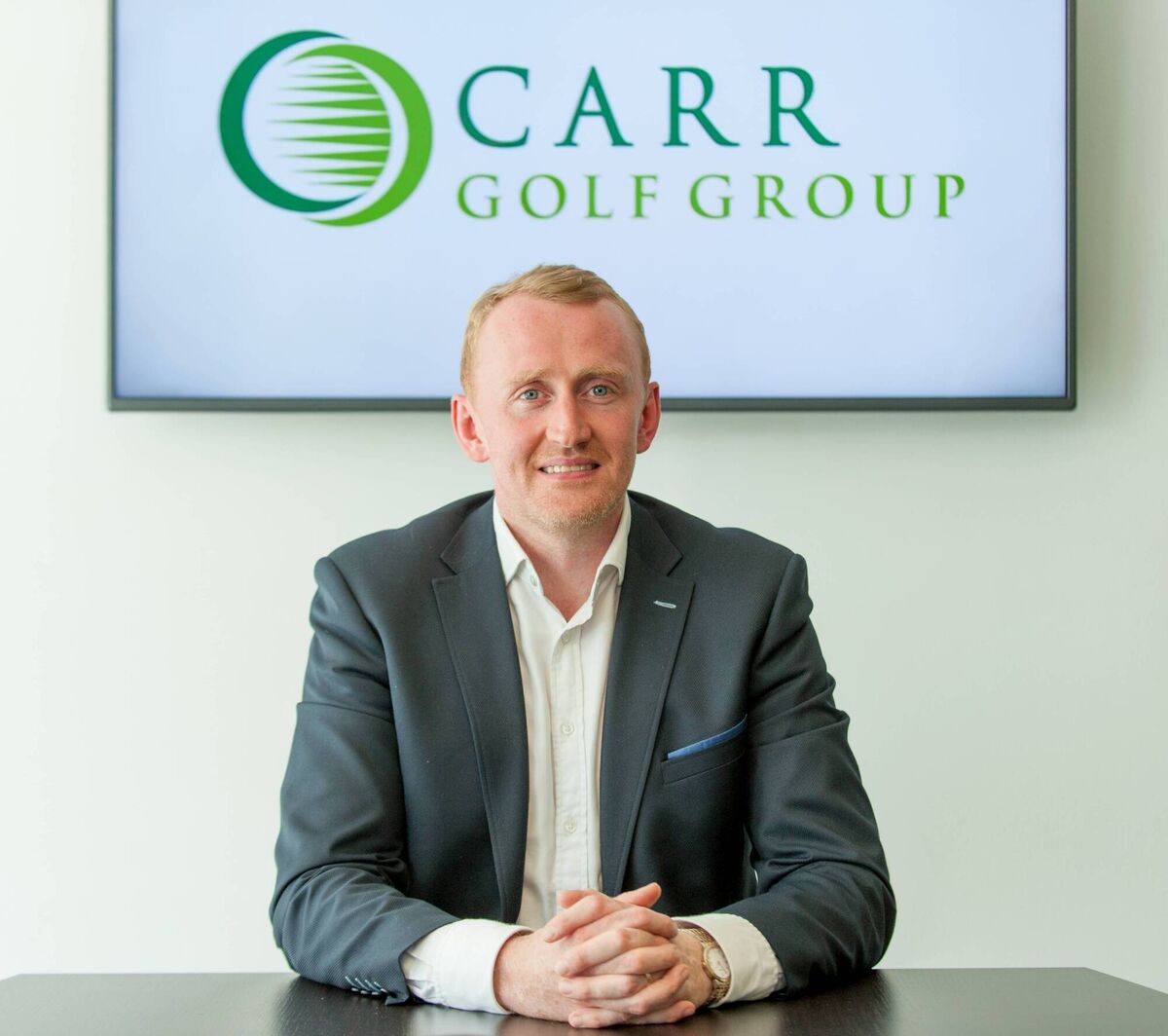
"I think as an industry we have to enter 2023 with cautious optimism,” Saul said. “We come into 2023 in a hugely beneficial position as an industry. We've had a lot of newcomers into our game over the last two years and the numbers are still incredibly high. Ireland as a golfing destination is still at the very, very top of the tree.
"We have a road map ahead of us that includes The Open Championship in Portrush in 2025 and the Ryder Cup in Adare in 2027. These are hugely advantageous things for the industry and that's why I say we have to enter with optimism, that we're in a place where we can continue to harness all of these benefits and advantages.
“But the caution is brought about by the macro challenges in what's happening across the wider economy. So it's being optimistic but prudent how we go about setting our business plans, having a clear strategy and continuing to deliver a quality product."
Retaining members should not be taken for granted with Saul adding: “We’re now entering renewal campaigns for a number of our clubs so the next two to three months are going to be really interesting to see where retention levels bottom out.
“The indications are quite strong but I know from talking to colleagues and friends across the industry, there’s definitely nervousness amongst operators and clubs as to will we see a tail-off?
“In an ideal world the conversation should be flipping and has flipped from a Golf Ireland perspective and from an operators’ perspective to ‘how do we add more value to members, to all these people that came into the game in order to retain them’.
“Sitting against that you’ve got all these inflationary pressures and as a golf club operator or a committee you’re faced with the inevitable price increases. If diesel is increasing, if fertiliser’s increasing, if sand costs and machinery, not to mention in the clubhouse, food costs, labour costs, gas and electricity, then you’ve got a choice. We can either maintain last year’s budget and drop standards or in order to maintain the standards we had last year we’re going to have to increase prices.
“And increasing prices in a scenario of potentially weakening consumer or golfer demand, that’s an interesting tension I think, that’s going to play out over the next few months.”
Saul shared Carr Golf’s strategy for plotting a course through tough times in its acquisition of Seapoint in the autumn of 2021. The company made a €1million investment to renovate the clubhouse and upgrade facilities at the east coast links and will this year host the Irish Legends Tour event on Europe’s senior professional circuit, all part of a strategic decision not to make the same mistakes made during golf’s previous existential crisis on these shores.
"The hope here is that the industry learned from the last time that we experienced these macroeconomic pressures. Coming out of the 2008 global financial crisis there was a race to the bottom. Golf clubs tried to hold their position through slashing prices and trying to increase their market share from other venues.
“That is catastrophic for the industry because qualities decline, revenues decline and ultimately you end up in a place where the product is undervalued by the consumer on the whole and it very hard to get that back.
"It's taken the industry in Ireland these 10 to 15 years to build that value of position back up. So our view then is you have to invest in your golf course.
"We acquired Seapoint 15 months ago, we've invested over €1m into the infrastructure there, a clubhouse refurb, infrastructure refurb, new machinery. We commissioned golf course design drawings with Ken Kearney, we're reviewing those at the moment and we've recruited staff from across the industry to drive customer service standards.
"It's our belief that in order to maintain our levels we have to invest in the product and the service.
"Bringing the Legends Tour event to Seapoint in 2023 is absolutely a strategic decision and it's very much about trying to put Seapoint back on the map, build that recognition back for the golf course.
"So that's the approach we've taken. You look at the likes of Portmarnock Hotel and Golf Links, they have committed to significant course improvements undertaken by Geoff Lynch. It's a significant investment which has taken place there.
"You look at the Neville’s (Hotel Group) ownership of Druids Glen, they're investing significantly and there are a number of owners and operators here who are investing in the product, investing in the infrastructure to ensure that the product is right. And if the product is right you have a chance."

CONNECT WITH US TODAY



Be the first to know the latest news and updates