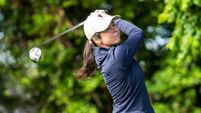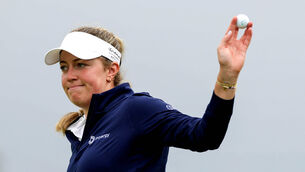
We know they’ve been in Team Europe mode lately, but what’s struck Mark Kennelly is how much they’ve remained part of Team Ireland. Ask the new CEO of their national governing body something you’d never need to put to John Delaney, but possibly could to his successors in the FAI — Do the best players from this country know who you are? — and he replies: “I don’t know.”
He’s met them all — Rory, Leona, Shane, Pádraig — but whether it has registered or remained with any of them that the bespectacled middle-aged man is called Mark and oversees the entire Golf Ireland operation, he couldn’t say — and couldn’t care. What he can say and care about is that they’ve chipped in for the cause whenever they can.
“One of the great things about golf in this country is that those aforementioned people are giving back to the next generation,” he says.
“When we had no golf for a prolonged period during the lockdown last year, both Rory McIlroy and Shane Lowry did lengthy Zoom sessions with our underage national squads, giving them tips as to how to progress their careers, and I was fortunate enough to sit in on some of them. Pádraig Harrington did one recently with our national training panels, and again, it was excellent.
“Leona [Maguire] has had a big input into designing some of the participation programmes we now have for kids. For instance, we have a scheme now called GolfSixes which is an inter-club competition played over six shortened holes appropriate to the level and ability of the participants. We’re not asking them to play off the championship tees if they’re only 12 or 13 — it discourages kids to take up or stay in the game if they’re taking 200 shots and more to go around an 18-hole course. Whereas Leona and her sister Lisa played a huge amount of par-three golf when they were very young, because it was appropriate to their stage of development.
“That kind of flexibility is very much part of our strategy about bringing new people, especially younger people, into the game. And Leona and the lads have remembered and shared how they started out. They’ve never forgotten their roots. If you’ve listened to them all being interviewed through the years, they’ve frequently referenced the support they got from the two unions and how they helped develop and nurture their talent.”
The only thing about it now is that with Kennelly at the helm, there are no longer two unions. The unions have united to form just the one; the artists formerly known as the GUI (Golf Union of Ireland) and ILGU (Irish Ladies Golf Union) are now the one symbol, called Golf Ireland. Kennelly didn’t conceive that baby — the GUI and ILGU made the decision to have one back in 2019 while a transition board oversaw its gestation in 2020 — but since it came into the world on January 1, Kennelly has been handed it, or at least designated as its primary carer.
There’s a reason why this week two years ago he was identified as the person to help two proud and historically conservative bodies work together. Much of his professional life had been devoted to trying to form coalitions and alliances — to find common ground.
After graduating from UL with a degree in public administration in 1990, only to find there were no jobs in that sector at home — “Because of the [Ray] MacSharry public expenditure cuts, there was a complete embargo on [domestic] public service recruitment for a few years” — he ended up in Brussels, working in the European Parliament. The Berlin Wall had just fallen, and there was a new Europe to integrate, east teaming up with west.
Most famously then he served as chief of staff to Enda Kenny’s department of the Taoiseach for seven years, during which time the Fine Gael leader formed coalitions or at least confidence-and-supply arrangements with everyone from Labour to even Fianna Fáil. He’ll be the first to say he didn’t quite have the scope and power that Leo McGarry had in President Bartlett’s West Wing, but again, that suited him.
“I think our system is better [than the USA’s],” he says. “In America, when a new administration comes in, they appoint all their top people to all the senior jobs. We’re fortunate in Ireland that we have a very strong civil service, and I was happy to work with and learn from the existing senior public servants.”
On top of all his skills and experience in diplomacy, he had another thing working in his favour. Not only was he a keen sportsperson and golfer, but a distinctly mediocre one, further and living proof of the genius of the handicap system that someone like him can get so much satisfaction and longevity from the sport.
His father and his father’s people weren’t mediocre when it came to sport, though. Colm Kennelly was the youngest member of the Kerry team that won the 1953 All-Ireland, and would have started in the famous 1955 final against Dublin too, only he bust his knee in the semi-final. Colm’s brother Brendan — yes, he of the lyrical lilting voice and poetic pen — played in the 1954 minor final on the same day Colm played in the senior final.
They were high achievers off the field too. “They both went to Trinity in the early ’50s, which was rare for Catholics to do,” says Mark. “I still have the letters of permission they needed from Archbishop McQuaid to attend there.”
By 23, Colm had played his last game of football for Kerry. With his degree in civil engineering, but with so little being built at home, he and his young wife headed off to British Guiana (now Guyana) on the northern coast of South America, where the departing imperialists wanted to leave some legacy and infrastructure behind for the natives.
When they returned to Ireland four years later, it was to Killarney, where Colm would become captain of the local golf club the same year it opened its Killeen course and go on to serve on club committees.
It meant a young Mark spent much of his childhood around the clubhouse and its fairways, and when of age, working in its bar and its office, pulling pints and handling bookings. And though he’s worked abroad and is now over 25 years living in Dublin, he’s always remained a fully-paid member of Killarney Golf and Fishing Club, just as he continues to serve as chairman of the Dublin branch of the Kerry GAA’s supporters club. In his office in Carton House there is a framed photograph of Colm Cooper. To some, that might seem heresy — Cooper hails from Dr Crokes, Kennelly from their fierce rivals, Legion. But the way he sees it, they’re both from Killarney, they’re both from Kerry, all part of the one team.
It’s a similar approach he’s adopted in this new job. This isn’t a merger, he points out, a phrase that might be commonly used by those discussing how the GAA might fully integrate the LGFA and camogie association. Nobody is being subsumed by anyone.
“It’s the creation of a new organisation,” he stresses. “That was an important principle for those who negotiated it.
“And it was what attracted to me the job. By building on the tremendous tradition of 135 years of golf being run by two separate unions and being involved in a decision that was made by those organisations themselves to wind up their operations. It was a huge and historic decision they took. There’s no longer men’s golf or women’s golf. It’s just golf. Irish golf, for the whole of the island. So we have a big responsibility to secure the future of the sport and to make sure our clubs are vibrant and viable and welcoming to all.”
If that wasn’t challenging enough in itself, it was compounded by Covid. For its first four months of existence, Golf Ireland’s participants had to contend with the fairways and greens being out of bounds. Its 70+ events competition schedule was blown completely off course. But just like the best of their practitioners, it has recovered splendidly. A season that would normally start in Halloween as usual. And this time with men and women running it, side by side.
You wouldn’t have had that before. Every GUI event would have had male-only match officials, referees, and organisers. Every ILGU event would have had women-only match officials, referees, and organisers. And events would never have been on the same day at the same course.
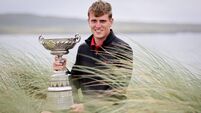
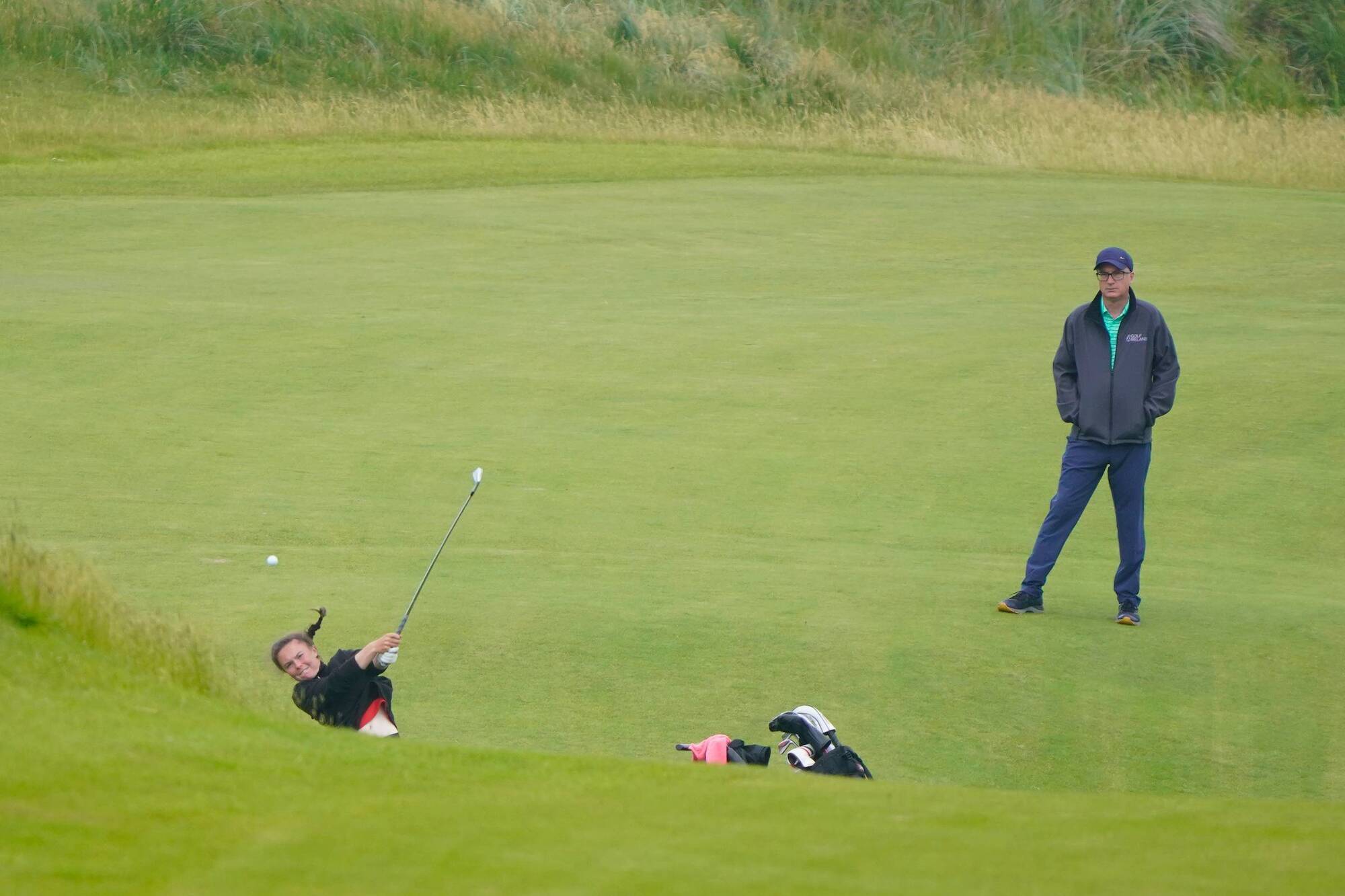
That’s all changed. In June, Ballybunion and the first-ever mixed volunteers team staged the first national event of the year, the Irish Women’s Amateur Close Championship. Last weekend, Limerick hosted the finals of both the men’s and women’s All-Ireland Junior Cup; Kennelly’s home club of Killarney won the men’s event, their first bit of national silverware since the Gooch made his Kerry senior debut back in 2002. At the men’s North of Ireland Championship in Royal Portrush, the chief referee for the final was Roma English, a former Irish international and honorary life member of the now-extinct ILGU. Spouses that could never help out at an event their partner was playing in now can.
“One of the big objectives last year was to bring the golfing community together, and it’s brilliant to see how people have embraced that and to see mixed teams staging events,” says Kennelly.
“There’s been tremendous cooperation and goodwill all round. And we’ve had that at committee level as well. Our national and regional executives have minimum gender requirements [at least 33% of each], but they’ve all exceeded that quota. Ulster is run by 16 people, and it turns out it’s eight men and eight women.
“We hope to see that spirit being adopted at club level. We want to get to a point where people from all ages and genders and backgrounds feel fully welcome in our sport. I’d be naive to say we’ve reached that point yet, but we’re definitely moving in the right direction. And I think when people at club level see how well [mixing] is working at event and regional level, they’ll want to embrace it too.”
As part of the push to not just be more inclusive, but promote the sport itself, Kennelly and Golf Ireland are lobbying both the Ladies European tour and the Government that there be a women’s Irish Open, as soon as possibly 2023.
“To me, it’s a glaring gap in the Irish golfing calendar,” says Kennelly.
“It’s fantastic that we have two global events on the horizon in the Open in Royal Portrush in 2025 and the Ryder Cup in Adare Manor in 2027, yet we haven’t had a women’s Irish Open for over a decade. It’s something we were discussing with the relevant parties before the Solheim Cup, but Leona’s performance at it has put it even higher on the agenda.
“At the elite level, the prospects for Irish golf on the women’s side are very strong. Stephanie Meadow finished seventh in the Olympics. Olivia Mehaffey has just turned professional, and we have a number of top players through the high performance programme [under director Neil Manchip]. We want Irish women and girls to see these top players, and not just the Irish ones playing on Irish soil. And we want Irish boys, especially from non-traditional backgrounds, to see a Leona on Irish soil and think: ‘Maybe I could break through too’.”
While Covid was tough on the sport, it had its upside. There was about a 12% increase in people joining clubs, mostly people in their 20s and 30s who had been playing field sports and either resumed or started golfing. Most of them have been retained, but for Kennelly, the challenge will be to make the sport more time- and family-friendly for them. In the past, golf’s biggest barrier was accessibility and cost. Not now.
“Maybe in the larger urban areas where there is very high demand for limited facilities, it’s a bit more expensive, but in most areas there are courses nearby which are hardly prohibitively expensive compared to joining, say, a leisure centre.
“And I always say the biggest difference in joining a golf club is that you’re joining a community of people; it’s not just a transaction. You become part of something.
“But what we’ve learned from the research is that the biggest barrier is the time commitment, especially for those who are raising a young family. The idea of it taking up to five hours to play a round of golf is quite off-putting to people. So we’ve to be flexible.
“You’re going to see nine-hole golf become increasingly popular.
“A feature of the new world handicapping system allows for nine-hole play, which you wouldn’t have had in the past. We’re going to have to provide that, where people can play for two hours instead of the usual four or five.”
The sport took a hit during Covid, especially the clubs.
When its courses were closed, they still had to pay for their maintenance. Then when the courses opened, their bars and restaurants had to remain closed for a while longer.
Golf Ireland was able to secure over €2.7m of resilience funds for its clubs from the Government, as impressive a yield as any governing body managed to do during the lockdown, so that has helped. So too the increase in membership that most clubs experienced.
This past month he saw three buses in Royal Portrush full of US visitors: a further sign that normality is returning.
And that’s the blend they and Kennelly are looking for.
The return of some of the old, mixed with some of the new normal. Where the next Lowrys and the next Maguires all play under the one umbrella, their events run by all genders.


Cancel anytime
CONNECT WITH US TODAY



Be the first to know the latest news and updates