McIlroy needs to stop thinking about Augusta
Rory McIlroy
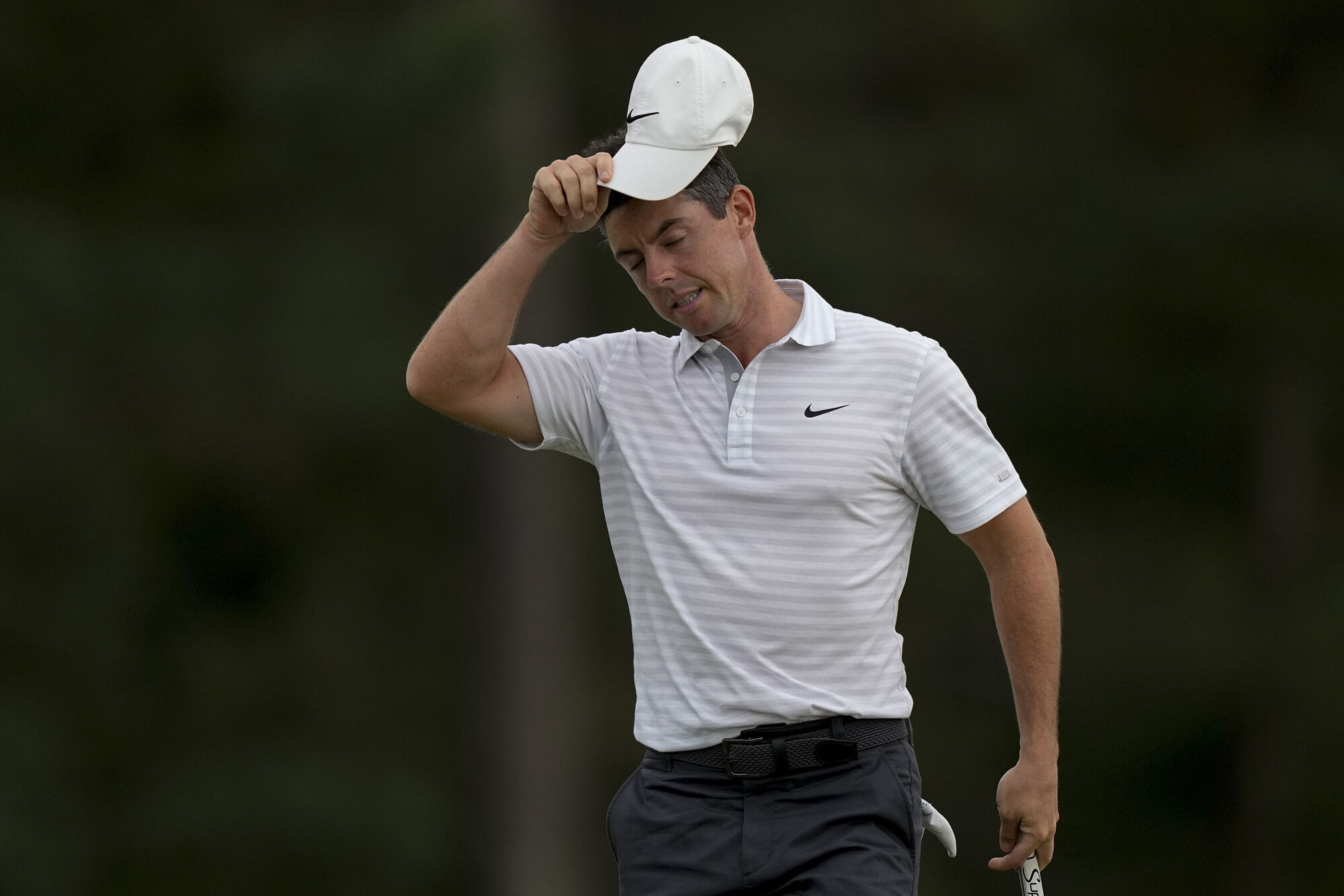
Rory McIlroy left Augusta National early without comment after missing the Masters cut for the first time in 11 years.
His body language said what he didn’t.
The spry bounce in his step that has largely defined the Holywood man’s career hasn’t been seen in weeks.
In its place is a slumped-shouldered gait of a man stalking the gallows. His follow throughs lean left or right, depending on which way his misses are going at that moment, club stuck on his shoulder like a workman’s shovel.
His usual smile is replaced by a grimace through tightly pursed lips – which a time or two revealed muttered curses to himself.
Paul McGinley offered a recommendation on Sky Sports that didn’t involve any sessions with swing coaches Pete Cowen or Michael Bannon.
“You know what? I think the best thing for Rory is probably a few weeks in the sunshine on a beach somewhere to clear his head and go at it again,” McGinley said. “Sometimes the harder you try in this game, the worse it gets, no matter how talented you are.”
Believing McIlroy talents were going to fare well enough to win the missing piece to his career slam this week on the back of his recent slump, swing issues and coaching change was wishful thinking. Even he spoke of a “bigger picture” on the eve of the tournament, as his process “journey” of fixing his current flaws is only in its infant stages.
What he didn’t need to leave with, however, were more Augusta scars. That coarse tissue is building up.
McIlroy’s experiences in 13 Masters are reminiscent of so many other obvious candidates the green jacket somehow eluded. It’s Ernie Els who springs to mind as most similar to Rory’s plight. Augusta left so many scars on a man named “the Big Easy” that it wasn’t easy to talk about.
When Els would compose himself enough to speak to me of his fates, he opened veins that revealed what an elusive Masters quest can do to a champion golfer’s soul. It was Ernie’s words I could imagine in Rory’s voice when McIlroy walked off the 18th green on Friday.
“I tell you, it’s killing me,” Els said after another failed bid in 2010 when he came to his 17th Masters in such high spirits off wins at Doral and Bay Hill.
“You put so much in and it’s almost like you’re playing and you’re waiting for the fall,” Els continued. “Somewhere down the line something is going to happen that’s not good. I’ve had too many of those experiences. It’s one of those tournaments. At least other majors we play different venues. So you’re not going to go back to the same holes, and go, ‘Oh … two years ago I did this there.’ That’s the thing.
“If it’s not going to happen, it’s not going to happen. What can you do? I’m just beating my head against the wall every time. … It’s done it to a bunch of people, and I’m probably one of them. I mean, go down the list – Weiskopf, Norman, Miller and many, many others. It’ll be something that’s a huge void in my career, but if I’m not going to do it, I’m not going to do it. I can’t worry about this anymore. I’m serious. I’m killing myself and I don’t want to do it anymore.”
For so long, Els talked about how time was always on his side. But time seemed shorter after 2004, when Phil Mickelson crushed his spirits with a long birdie on the last that hit like a hammer when the roars washed over Els prepping for a playoff on the adjacent putting green. When Els finished his 23rd and last Masters in 2017, he leaned back in the non-champion’s locker room and reflected wistfully on the one that got away.
“I just never got that harmony – harmony from the golf course, my harmony with it,” he said. “I was always going against the grain a little bit.” That’s been Rory’s story at Augusta as well. He came back from his only previous missed cut in 2010 and led for three consecutive rounds in 2011 – the youngest to ever lead from the jump at age 20. He started Sunday up by four and still led by three with nine to play.
We all know what happened then. It got away from him with a triple on 10, bogey on 11 and a double on 12. By the time McIlroy teed off the 13th, he was slumped over his golf bag in anguish. He came in with an 80, smiled bravely and said all the right things. Two months later he won his first of four majors so far, but that seed of self-doubt had already been planted at Augusta.
He’s never had that harmony with the place since. He has his moments of brilliance and his chances that tease coming successes, but like Els he always seems to be waiting for the fall, for that something bad to happen that derails him another year and adds another scar.
An old baseball player texted me his own remedy after listening to all the critics weigh in on what McIlroy needs. He’s sort of in mindset of McGinley’s sunny beach.
“No more instruction or video watching,” he said. “Rory needs to go out and get rip-roaring drunk. He’ll be fine the next day.” Probably not the best advice for a young husband and father, but the underlying sentiment isn’t far off. McIlroy needs to stop thinking about Augusta and the slam and the history and the scars and forget about missing the cut. He needs to find those natural gifts he possesses and the joy in the game that brings the bounce in his step. It’s in there somewhere. It’ll come back.
Like Els and others said so often, McIlroy still has time on his side. But the Masters makes no promises and owes no debts to anyone. His South Florida neighbors Els and Norman can attest to that.
He just can’t beat his head against the wall and let it kill him anymore.