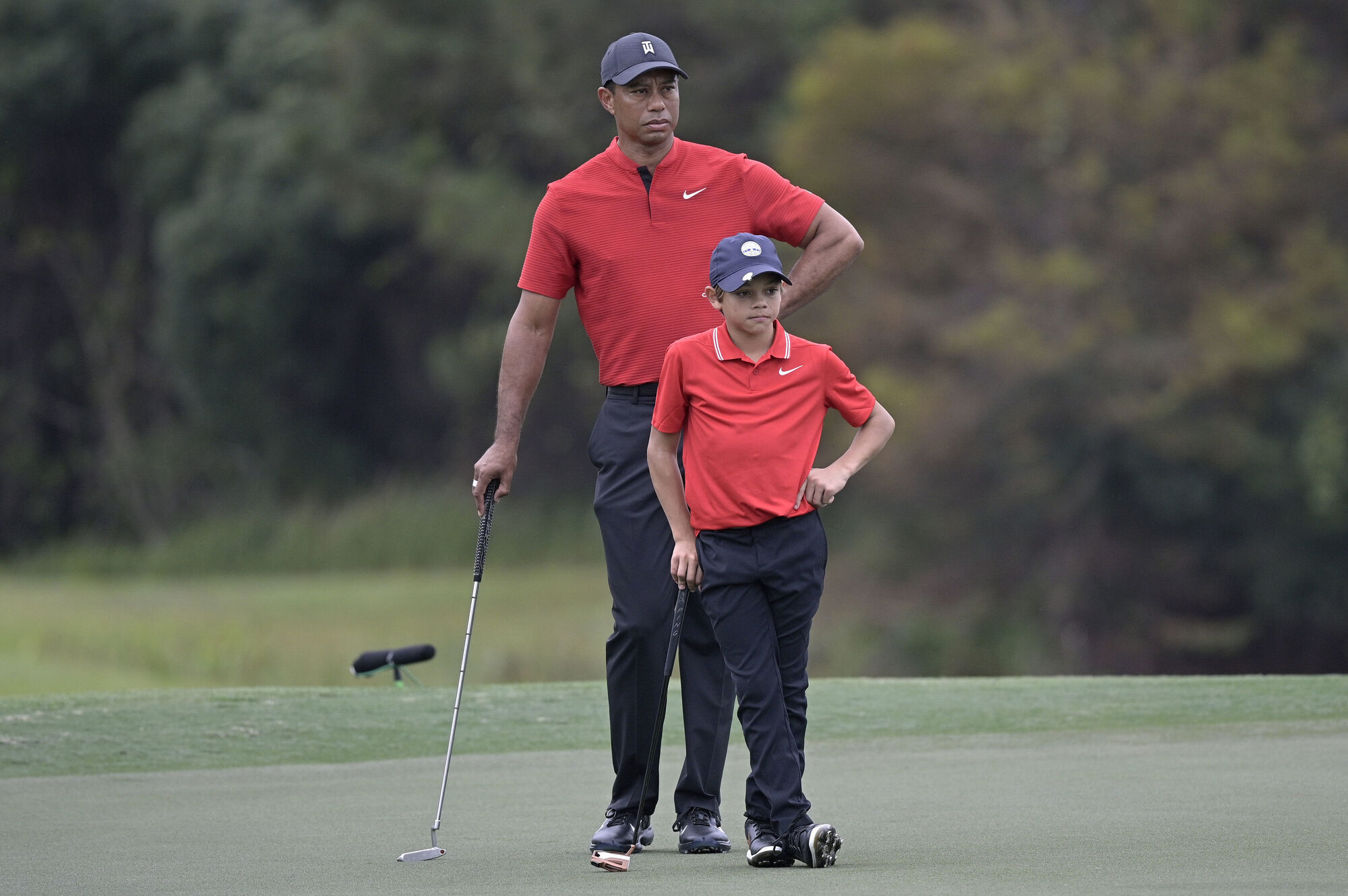
HBO aired the first part of its Tiger Woods documentary last night in the US, a deep dive exploring the intriguing story of one of the planet’s most famous sportspeople.
Jeff Benedict co-wrote the book on which the documentary is based, and he and his co-author Armen Keteyian are executive producers of the documentary.
“There are people in the documentary who are in our book, but they weren’t accessible to us for the book,” says Benedict.
“We approached them for the book but they declined to cooperate or be interviewed.
“Some of those same people, many of them very important figures in Tiger’s life, agreed to participate in the documentary and I think it’s one of the things that enables the documentary to go to the next level of depth.
“With the book, we went pretty deep, but one of the things about doing a film after a book is that you can use the book as foundational material, and it can be easier to penetrate deeper with a doc.
“For one thing, you can go back to the people who did cooperate with the book and they can tell you more than they did for the book, which happened in the film.
“Second, you can go back to people who didn’t talk for the book but who may be willing to talk for the doc, which certainly happened in this case.
“Third, the filmmakers did a wonderful job of finding archival video footage of Tiger which has never been seen before. Some of it is from golf courses — not of tournaments, just of him playing and practising with his father, and it’s phenomenal.”
The documentary features Woods’ early girlfriend Dina Parr, his longtime caddy Steve Williams, and Rachel Uchitel, one of the women with whom he was linked in 2009 when his marriage failed amid salacious tabloid headlines.
Benedict says the Woods familiar to fans 20 years ago — relentless, “almost machine-like” — is different now.
“His external aura has changed a bit as he’s aged and evolved. There was a time when his exterior was always the same, that intense, robotic, almost machine-like on the golf course. That’s what enabled him, from the mid-1990s to 2009, to be the most dominant golfer in the world.
“Now he’s different. He’s in middle age, a father with children developing into their own people and personalities, and he takes those matters seriously, so he’s a different guy. But as he showed two years ago, winning the Masters, he’s still capable of finding that magic again.
“When he gets in the zone we saw in the Masters in 2019, you don’t want to be on the course with him. I think that’s one of the interesting things about him, that on one hand if you’re a real young golfer who wasn’t on the tour with him around 2005 you might think it’s cool to be competing with him in 2021. That’s true, unless it’s the final day of a tournament and he’s in the hunt. He’s not the guy you want to be competing with then.”
CONNECT WITH US TODAY
Be the first to know the latest news and updates