Brendan Lawlor: ‘What Tiger Woods did for golf, I’m trying to do for disability golf’
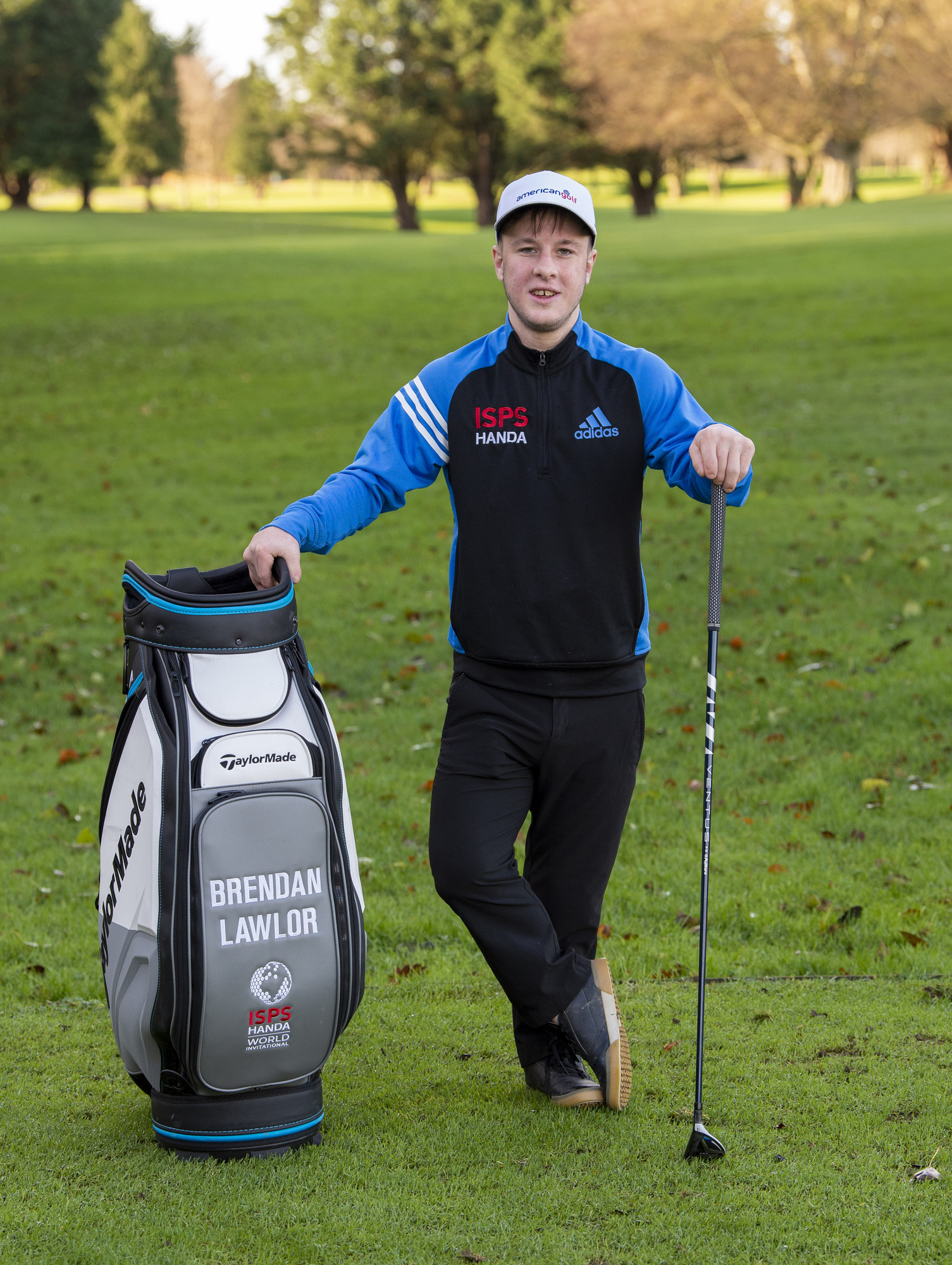
Brendan Lawlor become the first professional disability player to compete on the European Tour when competing at the UK Championship at The Belfry in August. The Louth man is hungry to return to golf’s biggest stage.
A November week in Dubai, the Western world collides.
Brendan Lawlor from County Louth steps onto the tee and spies a famous face in the group ahead. Talk for this golfer comes easily, even at 23, his first year as a professional.
So he makes his latest approach unencumbered, responding only to instinct.
“Well, Keith, my mam’s a big fan,” Lawlor announces.
But his breezy greeting meets a cold response: “It’s Brian.”
Right band, wrong boy. Brian McFadden walked on and, for once, Brendan Lawlor fails to scramble: “Then I felt like an absolute gobshite.”
Golf on the back foot is an uncomfortable stance. Round over, he got a shout outside the clubhouse. This voice carried an unexpected invitation: “Come on over here and sit beside Keith Duffy.” Lawlor gratefully accepted. Turns out McFadden had a mutual contact: Mark McDonnell, who manages Lawlor’s professional life, moved in the same circles as the former Boyzone star. So the pop star regaled the pro with his wildest stories, the latest flavour of this wild golfing journey.
McDonnell’s connections have played a big part in the story of Ireland’s first professional disability player. Modest! Golf, a boutique management agency co-founded by singer Niall Horan, signed Lawlor on the strength of his playing record with the European Disability Golf Association (EDGA). By the time Modest! secured his signature, Lawlor had won EDGA tournaments in three different countries. His victory at The Renaissance Club last year, a 36-hole event played in tandem with the European Tour’s Scottish Open and over the same layout, showcased an exceptional talent.
Billy Lawlor, his father, caddies at these events. This role provides the clearest view: “When he gets into the groove, there is nothing like it. Keep out of his way. Just hand him the club he asks for.”
But he sees all sides. And that tilt in Scotland exposed a vulnerability rarely visible.
“It doesn’t happen often,” his father confirms. “He was six over after the first round. He was angry. I’d never seen that before. He says: ‘I’m getting my Tiger stuff onto the bed and I’m going to work on my winning speech. I’m going to win tomorrow.’
“Three under after seven, he just blew them away.”
Positive self-talk rekindled self-confidence, his natural streak.
“What Tiger did for golf, I’m trying to do for disability golf,” Brendan states.
Consider his starting point and the Tiger analogy appears noble more than outlandish.
Lawlor stands 4’11, his truncated stature owing to Ellis-Van Creveld syndrome, an extremely rare bone growth disorder. At first, his doctors suspected no major issue even though he was born with six fingers on each hand. But his parents felt instinctive concern.
“We knew nothing until Brendan was born,” Billy informs. “They told us that everything was okay but it didn’t sound convincing. He couldn’t breathe the first night.”
The full extent of his problems soon became apparent. And time quickly turned against him. Surgery at six months offered the best chance of survival but, six weeks in, their preferred option was no longer viable.
Dad is candid: “He wasn’t making it.”
All was torment. From the medics came bleak projections: “They told us he’d be in intensive care for three to six months. They told us he would never swallow.”
Yet, 10 days after his operation, the critical stage had passed. Now tube feeding was a battle: four people had to hold him down. His grandmother, tired of the struggle, eventually succeeded with a bottle.
“You could see there was a fire in him,” his father avers.
No stage of the journey was uncomplicated. Brendan’s final year of primary, six months were spent out of school. His legs had turned out, giving him a bowed gait. Each knee required metal plates just so he could walk straight. He faced the prospect of repeating sixth class to make up the time lost to rehabilitation.
“My parents were debating whether to hold me back for another year,” Lawlor recalls. “I didn’t want that. I hated school. I wanted to get out as soon as possible. It wasn’t for me. I love to do what I want to do. I hate when people control my agenda.”
On he went to Dundalk Grammar, joining big brother, Liam, his senior by five years. Only the boy who relished life growing up in Louth Village faced an obvious dilemma.
Like his father, he is straight about serious matters:
Billy ponders the question momentarily.
“We were aware but not worried because of his personality,” he stresses. “Liam is a fine athlete, calm, level, composed. Brendan is the opposite. He’s fiery. He’s equipped with everything he would have needed to deal with something like that. He always had a big brother who was very confident, which always helps in the school situation.”
He makes a further point: “When everybody looks at you walking into a supermarket, that’s a lot to take. You need a lot of internal power to be different. He’s always had that internal power.”
While we speak, the family enterprise is humming beneath us on the ground floor. CTI Business Solutions has been running for 22 years, satisfying office demands of every kind.
Standing desks are the rage since the coronavirus struck. Lately, Billy has been busy sourcing PPE. The pandemic has turned CTI into a one-stop shop for many of his clients.
“Convention never was our family thing,” he explains. “My father speaks six languages. He worked as a teacher in Oman for a period. He’s 86 now. He is the one person that always told us: ‘Anything is possible for anyone.’ He had full belief in Brendan from day one.”
To this day, a three-hole course occupies their back garden. Bill looks after maintenance, mowing and manicuring, keeping it right for his grandson whenever he fancies some practice.
Brendan’s bond with his grandfather takes us back to the beginning: Bill’s old set of clubs, the boy not three years old.
“Grandad cut down a driver for me,” he recounts. “I used to hit that 80 yards.”
Then he was off to Channonrock, a local pitch and putt club. The bug had him: “If I wasn’t four-under after six, I was going back to the start. Wasn’t happy. I was that thick and ignorant.”
His regular playing partners included Ciarán Byrne, though he was destined for other codes: Gaelic football with Louth and six years in the AFL with Carlton Blues. During summer months, Lawlor landed into Byrne’s first thing. A two-minute walk took them to the course. They broke only for lunch and finished at 7pm. This regime yielded a string of medals.
“There must have been eight or nine winners in that group,” Brendan asserts. “We all brought each other on.”
His big moment was 2013. Aged 16, he became the youngest winner of a senior All-Ireland: “I felt that was it. I wanted to go on and start something different.”
Golf finally beckoned. Ardee started him off with a handicap of 28 and he bettered that mark by 16 shots in his first round. One-way traffic ever since: “I knew I had a talent. Then I joined Dundalk and started playing Irish amateur events.”
He tells a story that still gives him a kick. Entry to the North of Ireland at Royal Portrush is the preserve of scratch men, mostly. Some years afford a bit more leeway. Lawlor chanced the trip in 2016 when his handicap was near two. Tuesday of the tournament, first day, his name kept climbing the list of reserves.
At 3pm, 30 minutes before the final tee time, his call came: “Is Brendan Lawlor here?” “Fuck, yeah, I’m here,” he said to himself. “I’m here two days waiting.”
Over he ran, desperate to make the slot. Ahead of him, a bemused bunch. His cousin Fintan, also competing that year, heard the reaction: “Look at this wee fella coming up. What’s he doing here?” “Just watch,” Fintan advised.
Then the wee man split the fairway with his drive: “That was my first experience at a big Irish event. That would have been an iconic moment for me playing around the best Irish amateur golfers. And now the iconic moments for me are playing around McIlroy and Lowry. It’s mad.”
Time passes quickly in his world. 2020, for all its turmoil, made him an international star.
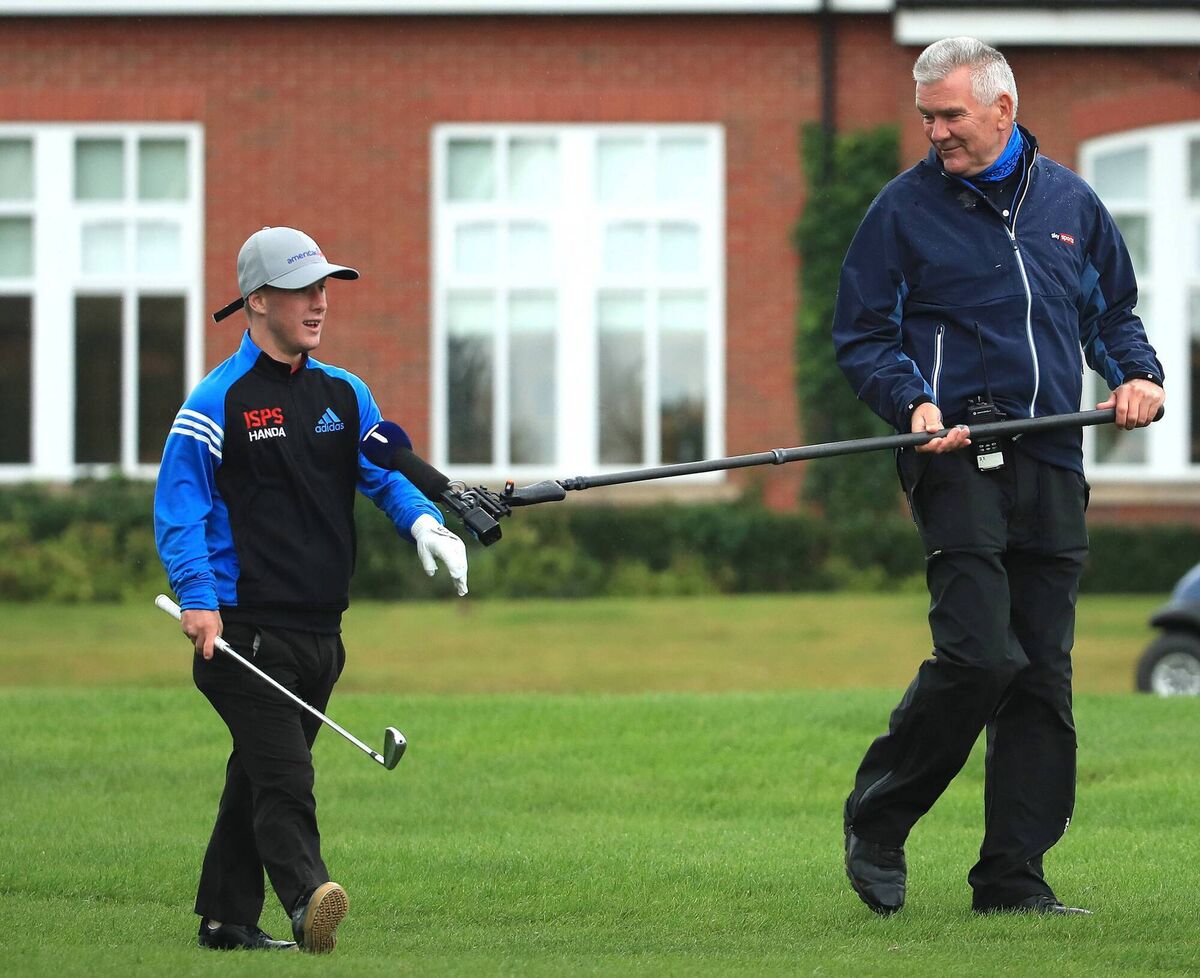
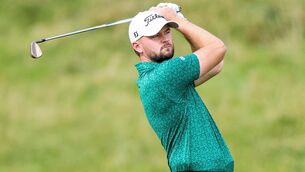
However his career unfolds from here, history will record Lawlor’s appearance at the ISPS Handa UK Championship last August. Suddenly the world knew him as the first professional disability player to compete on the European Tour. Overnight, his profile soared.
“The Belfry was ridiculous,” his father maintains. “The phone was like a microwave: ding, ding, ding. With the event being closed and no crowds, Brendan was a bigger story than he should have been. Every time we walked off a practice range, there was a camera and someone wanting to talk to him. So the pressure on him was phenomenal.”
Brendan conjures a brighter picture:
So he reaches year end, burning with ambition. What could he do? Already at ease playing from the back tees — Lawlor outscored England’s Andy Sullivan over nine holes in practice at The Belfry — making a cut on the European Tour is hardly inconceivable.
Billy comments with paternal authority: “In my opinion, as his caddy, he has all the magic he needs. He shot seven-under playing the [DDF Irish Open] Pro-Am at Lahinch in 2019.
“On a links course, he wouldn’t be out of place with anyone.”
The year turns and January approaches like no January before. Playing golf is a precarious way to make a living at any time and the modern professional game is only feasible where there is freedom of movement. So the next chapter looks the most uncertain.
Brendan Lawlor, born with an inherent physical disadvantage, seems especially ill-suited to compete in a sport that places increasing emphasis on power.
Then again, his mission is different. And his perspective has always been distinct: “These are opportunities of a lifetime. There’s no point not enjoying it. I don’t know where disability golf will be in 10 years. It could be sky high or rock bottom. I’m just going to try to do the best I can. This could end tomorrow.”
He delivers this line on an even note. If golf went in the morning, tomorrow would not be a sad day.
“I’d try and find something else to be good at,” he insists. “I wouldn’t focus on the negative.”
His growing band of followers would be disappointed, though. That recent trip to Dubai turned surreal at the Emirates Club. On the putting green, his playing partner came with news: “You’ve a fan over there.” “Who?” “He says his name’s Dwight.”
So this Chelsea supporter suddenly found himself approaching an unknown target: “I went up to him to say hello and he was like: ‘Brendan, how are you? I saw you on TV playing at The Belfry. It was incredible’. That was pretty cool. We were chatting for about 20 minutes.”
Dwight Yorke — Champions League winner, Manchester United legend — now another luminary in Lawlor’s orbit. Afterwards, they connected on Instagram, floated the possibility of a game some time.
“Let’s make it happen,” Yorke replied.
Billy Lawlor greets this latest tale with a knowing look: “He always had the confidence. The biggest gift you can have is to look someone in the eye and talk away. He was designed exactly for the trip that he’s taking.”
We lose sight of him following his ball in flight.


CONNECT WITH US TODAY



Be the first to know the latest news and updates