Carnoustie Country: An in-depth look at the 'most challenging links in the world'
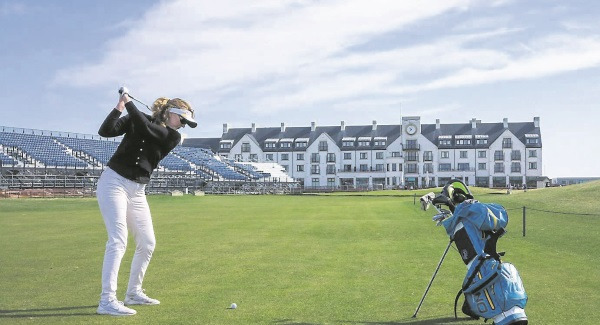
Carnoustie is more than just a golf course, writes
Carnoustie Country: it has a certain ring to it, donât you think?
Carnoustie⊠a name instantly recognisable by golfers everywhere for its fearsome reputation and some of the most memorable Open Championship moments in history.
Country⊠a word that suggests space, community, variety and a pride in what they have.
As the 147th Open Championship tees off this week, golfers around the world will tune in to watch the greatest Major played over a links where golf began in the 16th century.
This is the eighth time the Open has been played at Carnoustie and if the past two tournaments are anything to go by, weâll be watching some drama unfold on Sunday.
After all, Jean Van de Velde didnât just let the Claret Jug slip from his grasp on the 72nd hole in 1999⊠first he dropped it and then he kicked it into the Barry Burn⊠from where Paul Lawrie claimed it after a three-man play-off and the round of his life.
In 2007, three men all made a run for the trophy â Andres Romero, Sergio Garcia, and PĂĄdraig Harrington â and after an incredibly brave double bogey six (two visits to the burn) on the 72nd hole, Harrington went on to defeat Garcia in a three-hole play-off.

He returns this week to defend his âtitleâ.
Carnoustie is not in one of Scotlandâs main golfing regions. A bucket list course it is, for sure, but it is on the periphery of Fife (home to St Andrews and Kingsbarns), north of East Lothian (Muirfield, North Berwick), well east of Ayrshire (Royal Troon, Prestwick, Turnberry) and south of the Highlands and Aberdeenshire. It means that for many golfers it is a day trip course. In that regard, it is similar to our Waterville.
But Carnoustie Country, stretched across the glens of Angus and Perthshire, has so much more to offer.
You only have to look at the Dubai Duty Free Irish Open, two weeks ago, to appreciate what one tournament can do for a region. The beauty of Ballyliffinâs Glashedy course and the stunning images of Donegal were a tourism coup for the county. These images were beamed onto screens in 420 million households worldwide. The long-term benefits are enormous. And the same will be true at Carnoustie.

The message that Carnoustie Country wants to promote is that this is a destination in itself.
You may be inspired by what you see of the course on television but Carnoustie Country is not limited to Carnoustie⊠other courses abound and then there are the towns and villages, the coastline, the castles and the enterprises, big and small, that make the region what it is.
Dundee is the main city, and the fourth largest in Scotland. It grew as a trading port but a new chapter in its evolution began in 2001 when the city reinvented itself as a cultural centre.
Septemberâs opening of the V&A (Victoria and Albert) Museum on the quayside, at Discovery Point, will be one of the biggest steps in this endeavour. The architecture alone is worth the visit: it is shaped like the bow of a ship, hanging over the water, and it is made from two-ton slabs of stone.
Right beside it is the Discovery, Scottâs original Antarctic exploration ship, which was launched in 1901. It is a startling juxtaposition of old versus new and reflects the cityâs thrust for regeneration.
At the other end of the scale is the small town of Kirriemuir, 20 miles north of Dundee. The growing passion for flavoured gins can be found in an old blacksmithâs forge on the outskirts of town. The Gin Bothy does tasting sessions and even those who are averse to the drink will become converts after sampling some creative combinations. A âG&Tâ is perfectly acceptable but why not experience Rhubarb Gin with ginger ale and mint leaves, Raspberry Gin with lemon tonic⊠and the Chilli Gin will raise temperatures in more ways than one.

Kirriemuir is also home to two famous sons. In the heart of the town stands a statue of Peter Pan, a tribute to JM Barry, the author who was born here in 1860. The other statue is dedicated to Bon Scott, the original frontman for one the biggest rock bands in the world, AC/DC.
For those of the whiskey persuasion your first port of call is the Glenesk Hotel, in Edzell. And be sure to drop the âeâ: itâs whisky here and they have lots of it. The 360° Bar holds the Guinness Book of Records for the most number of whiskies for sale under one roof. The tally is over 1,000. The hotel presses up to Edzell Golf Club, which dates back to 1895. When a bomb was dropped on the course during World War II, one suspects the hotelâs whisky supplies were well utilised⊠which may explain why the bomb crater became a feature of the clubâs 4th hole.
Alongside Edzell, there are 33 other courses within Carnoustie Country. Carnoustie itself has two other courses on either side of Braidâs Championship links. How many people know the Buddon and the Burnside even exist? Only minutes away lie Monifieth and Panmure, where Ben Hogan famously mowed the 17th green to get its speed to his liking before his 1953 Carnoustie Open victory. The magnificent Montrose, which recently renamed its âMedalâ links to the â1562â to signify not only its age but also its place in golfâs history, is captivating and natural and brilliant. It sits on the coast, to the north of Dundee and 40 miles south of Aberdeen. It is drenched in gorse and demands your creative brain to play it well.
Apart from Loch Lomond and Gleneagles, Scotland is rarely discussed in terms of its inland courses but Blairgowrie has 45 mesmerising heathland holes, including the Alister MacKenzie 9-hole âWeeâ course, while Downfield, close to Dundee, is a lazy, tree-drenched and very cheerful affair. The two courses at Murrayshall are different entities, spilling over tumbling terrain and spread across 365 acres of quiet countryside. They come with a peaceful, luxury hotel (the house dates back to 1664) and an excellent restaurant.
You could easily base yourself at Murrayshall for a golf tour of Carnoustie Country or you could go straight to the heart of the matter and stay at the Carnoustie Links Hotel, an imposing, modern structure of 85 rooms (including 10 suites named after golfâs greatest champions) which rises behind Carnoustieâs 18th green. The new Links House clubhouse opened in April, next to the hotel. It has all the bells, whistles, and technology youâd expect of such a resource, including a high-tech indoor driving facility. Six bays allow golfers to play 14 different courses, including Carnoustie. If you want, you can replicate the exact conditions outside so, even in the wind and the rain, youâll know exactly what to hit on every hole.
Anyone can use the facilities and while green fee paying guests have complimentary access, just ÂŁ10 gets everybody else an hour to hone their swing.
When Carnoustie first received the nickname âCarnastyâ, following the 1999 Open, it wasnât something the club wanted to crow about. Then again, the course has a fearsome reputation and the club freely embraces its mantle as the toughest Open Championship course: the words âThe most challenging links in the worldâ greet golfers as they step onto the practice green.
How challenging is it? Well, following the first round in 1999, Hal Sutton said, âI feel like I just fought a war.â
Harrington, the last man to win at Carnoustie, elaborates: âIn terms of toughness, you couldnât go past it. Itâs the toughest, not only because of all 18 holes, it has the toughest finish in championship golf. Youâve got a very tough 14 holes and an extremely difficult last four.
Carnoustie is unquestionably a tough course and while it can be singled out as a lone bucket list destination, the
arrival of this weekâs Open Championship has given
Carnoustie Country the opportunity to showcase everything the region has to offer. It is well worth a visit.
Carnoustie Country is not limited to Carnoustie⊠other courses abound and then there are the towns and villages, the coastline, the castles and the enterprises, big and small, that make the region what it is.