USA have a score to settle with Poulter
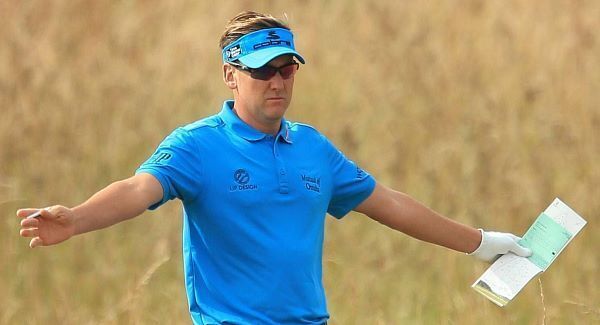
Poulter was the man who dragged Jose Maria Olazabal’s Europe back from the brink at the Chicago country club in 2012, as the Americans blew the 10-4 lead they had enjoyed midway through the Saturday afternoon session of fourballs.
The Englishman reduced playing partner Rory McIlroy to a virtual spectator as they defeated Jason Dufner and Zach Johnson, the victory adding to Sergio Garcia and Luke Donald’s win over Tiger Woods and Steve Stricker, to give Europe hope at 10-6 down heading into Sunday’s singles.
Europe won that session 8.5-3.5 to retain the Ryder Cup 14.5-13.5, Poulter the star with four wins from four to continue his remarkable success rate in the contest.
McIlroy may be world No. 1 and a valuable scalp for the Americans but beating Poulter is equally important.
“Right now, we’ve got a lot of players to look at,” Watson said during yesterday’s joint press conference with opposite number Paul McGinley. “But Poulter, I think Ian with his record, he’s an 80% victor over the series of matches he’s played in. We’d like to reduce that.”
Asked whether taking down McIlroy was worth the metaphorical “point and a half” to his team, Watson replied: “Certainly whenever you beat the stud on the opposing team, that gives your team a boost, not a question.
“But when it’s all said and done, it’s 12 guys out there trying to win a point each match. There are eight guys in the first four matches, and on the last on Sunday, 12 guys are trying to win a point. Basically all you have to do is win a point and a half for the entire matches, and you win The Ryder Cup. That’s the bottom line. That’s what I’m telling my players.”
Seven of those players — Keegan Bradley, Jim Furyk, Zach Johnson, Matt Kuchar, Phil Mickelson, Webb Simpson and Bubba Watson — bear the mental scars of capitulation to Europe at Medinah and Watson revealed he gave them one overriding message heading to Gleneagles this week.
“I made it very clear to them that this trip is a redemption trip. Those players that played on that team, if any players are on this team, it’s time to make amends and try to redeem yourselves from what happened in 2012. I think it’s a motivation rather than a negative.”
McGinley picked up on that, adding: “I think we learned a lot in Medinah too.
“I’ve been very privileged and lucky to be involved with teams that have been very successful but Medinah was a learning curve for me. We were really getting a walloping the first two days and that was the first time I was in that situation.
“I learned a lot from José Maria (Olazabal), the decisions he made and the structures he put in place, to give us the best chance of getting out of the hole we were in. So it was a big learning curve for us, and looking back on it now, it was a great experience.”