Colin Sheridan on following Mayo: I've no time for curses, cosmic injustice or romantic tales of noble failure
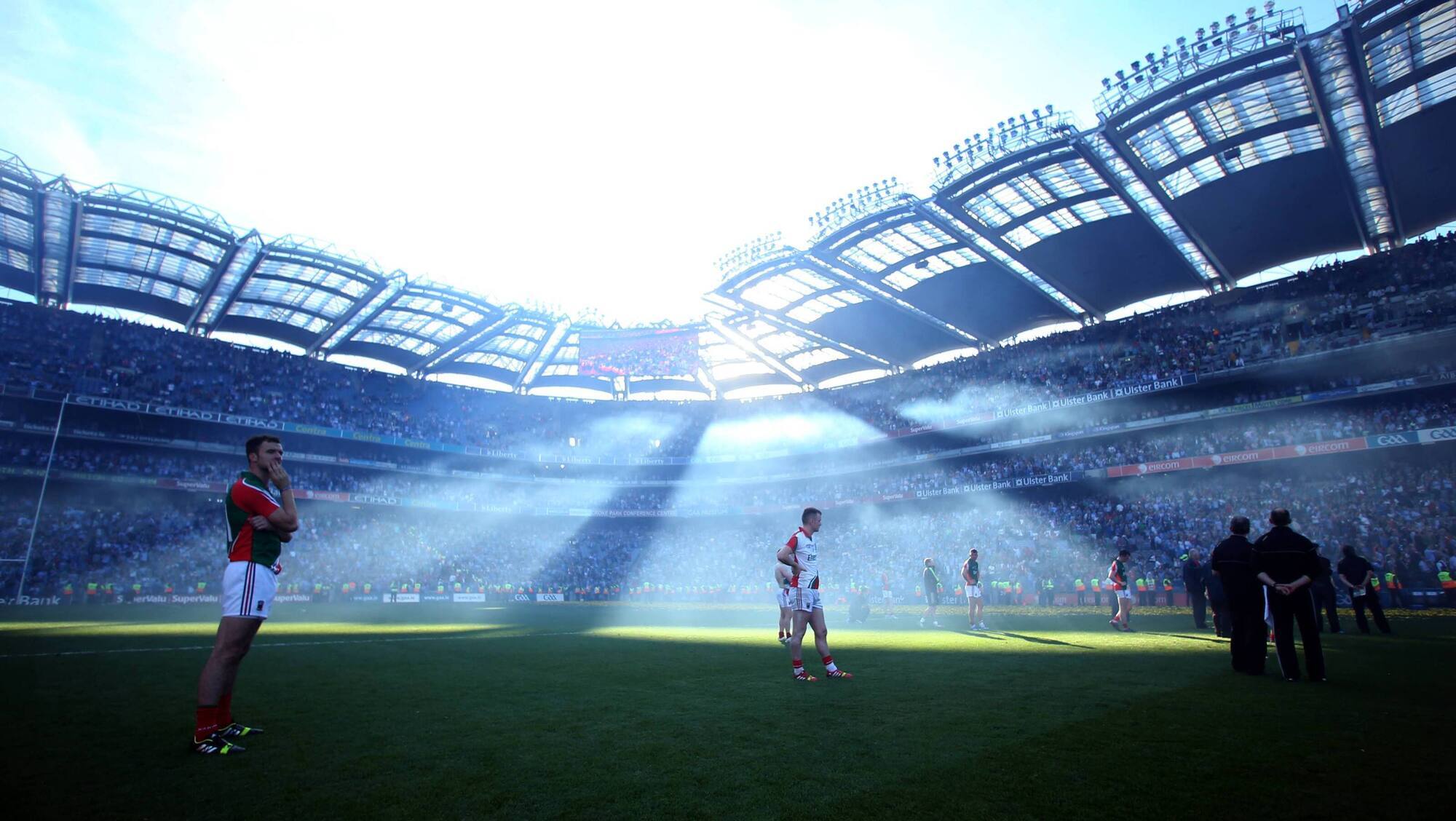
HARSH LESSONS: Mayo players dejected after the 2013 loss to Dublin at Croke Park. Picture: INPHO/Donall Farmer
The boulder, the mountain and Mayo Insanity, it is said, is doing the same thing over and over again while expecting different results.
If that is true, England football supporters need an intervention. Every second summer they convince themselves that football is, finally, coming home. Every second summer, it doesn’t.
Mayo supporters, however, can never be accused of such lunacy. We have never done the same thing twice.
Over the past four decades we have changed managers, captains, selectors and systems. We have embraced sports psychologists, GPS data, leadership groups, nutritionists and tactical revolutions.
We have tried to win All-Irelands without forwards. With a team of converted wing-backs.
We have embraced chaos and committed ourselves exclusively to control. We are not snobby nor selective in the routes we take. We have tried youth. We have trusted experience.
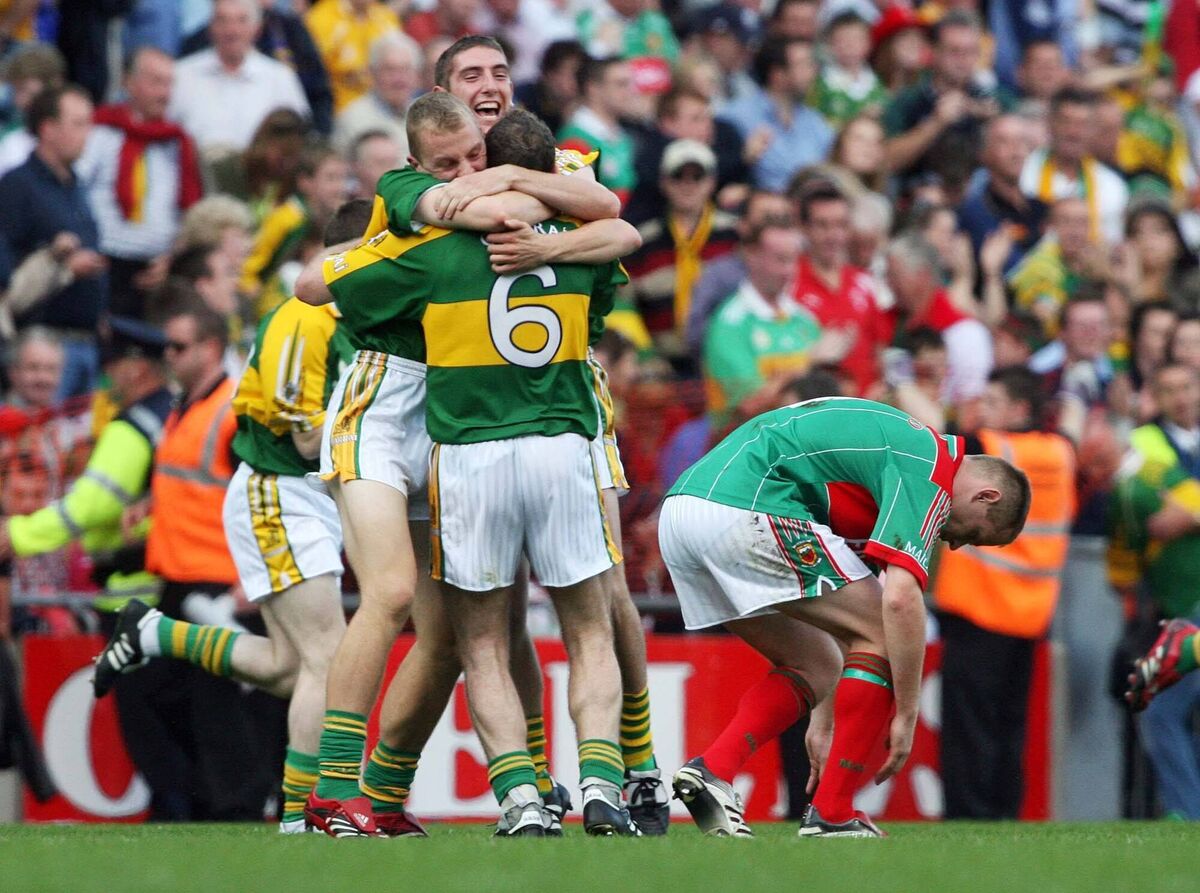
We have played with orthodox full-forwards, and then without them altogether. A decade ago, we seemed to have more midfielders than the Spanish football team. Now we populate the middle third with mongrels who treat every breaking ball as the last crumb to ever drop from a table.
Even our superstitions evolve.
We refuse to cancel holidays because changing plans would only jinx things.
One friend of mine places a sizable bet on whoever Mayo are playing. Before anyone reaches for the sermon that you should never bet against your own county, understand this: few people I know have suffered Mayo's defeats more personally than he has.
If Kerry win on Sunday and he collects a few schllings, I promise you he would exchange every cent of it for a Mayo vicotry. He is simply parlaying his mental-health.
So, while the approaches have differed, the results have remained stubbornly familiar.
Which brings me, improbably enough, to Albert Camus.
In , Camus revisits the ancient Greek story of the king condemned by the gods to roll a huge boulder up a mountain for eternity. Every time Sisyphus reaches the summit, the rock rolls all the way back down again. Endless labour. Endless frustration. Endless futility.
Most people see only the punishment, and the insanity of the infinite endeavour. Camus saw something else.
He became fascinated by the moment when Sisyphus walks back down the mountain. He knows exactly what awaits him. He knows the boulder will never stay where he leaves it. Yet he continues. The gods may control his fate, but they cannot control his response to it. "One must imagine Sisyphus happy," Camus famously concludes.
Not because he enjoys the work, but because he owns it.
It is tempting to view Mayo through the same lens. Every generation shoulders the rock. Every generation believes, with varying degrees of confidence and delusion, that perhaps this time it will stay at the summit. Every generation eventually watches it gather momentum and thunder back down the mountainside.
Sometimes it rolls gently, in the form of a narrow defeat. Sometimes it gathers terrifying speed, crushing hopes beneath the weight of a heavy loss. Occasionally it pauses, precariously balanced on the edge, as in a drawn final, teasing us with the possibility that this might finally be the year the mountain relents.
But that is also where the comparison begins to fail. Sisyphus had no choice, for he was condemned. Mayo always do.
Nobody forces supporters to renew season tickets, nor compels children in Balla or Belmullet or Ballyhaunis to dream of playing in green and red. Nobody obliged Andy Moran to take on one of the heaviest managerial jobs in Irish sport.
I had the privilege of collaborating with Andy Moran on his autobiography a few years ago. It was an unlikely partnership. Moran is ambitious, driven and relentlessly forward-looking. I am a warrior poet, inclined to overthink, and a firm believer that time is merely a social construct foisted upon us by our capitalist overlords. Yet we agreed instinctively on one point: we both rejected the over-sentimentalisation of Mayo football.
Read More
Neither of us had much time for curses, bad luck, cosmic injustice or romantic tales of noble failure. The point of that book was not to explain away defeats, but to learn from them. Moran never once argued that a Mayo team he played on deserved to win an All-Ireland and was somehow robbed by fate.
Quite the opposite. His post-mortems were often brutally honest. Mayo lost because somebody else was better. The challenge was to become better still.
There is remarkably little nostalgia about Moran. In the All-Ireland semi-final against Louth, with the game effectively won, it would have been easy to indulge sentiment and send on Aidan O'Shea for one final ovation. Nobody would have questioned it. Moran didn't.
Not because he lacked affection for a former teammate, but because his attention never wandered from the task. He was thinking about a final, not a farewell tour. Moran may well decide he needs O’Shea on Sunday. Necessity will be the driver of that decision, not sentiment.
That, more than anything, gives this Mayo team its identity. It carries little of the emotional baggage accumulated over decades. It is young without being naïve, optimistic without being burdened by expectation. It has arrived at Croke Park by an unexpected route, but then every Mayo team seems to find a different road to the same destination.
Which is perhaps why the old accusation of insanity has always missed the point. We are not repeating the same mistake. We are conducting the longest experiment in Irish sport.
Every generation changes the formula, hoping to trick the gods into a different outcome.
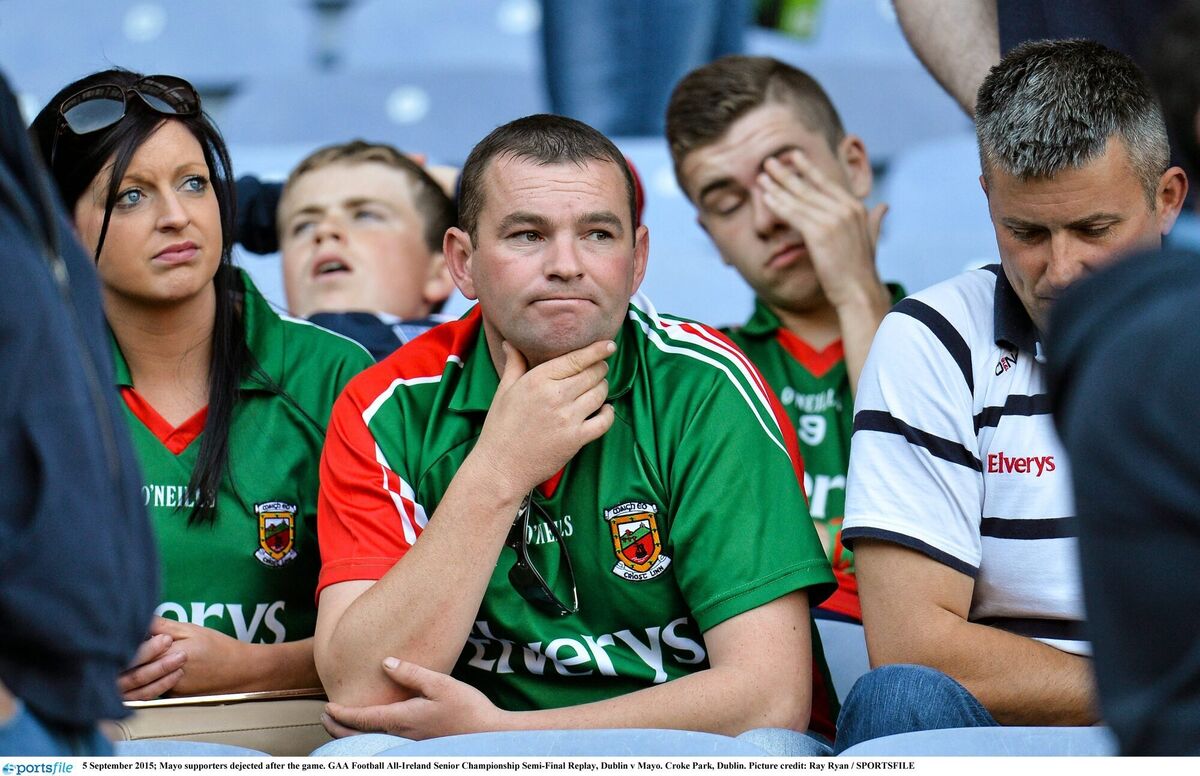
Maybe it ends on Sunday. Everything ends eventually.
Read More
And if it does end, Mayo and its multitudinous diaspora will justifiably rejoice. But, the sun will still set behind the Reek, regardless. The result will cure no ills, nor solve any crimes. It will not bring back the dead. It will merely suspend reality for a while. Suture a wound that time and torture has rendered vulnerable.
That loss will cause no ills nor commit any crimes. The wound will weep, and with it, the sons and daughters of a county hewn from centuries of revolt and reinvention will briefly pause, before putting their shoulder to the rock once more.
And they will push.

CONNECT WITH US TODAY



Be the first to know the latest news and updates