Éamon O'Shea: A virtuoso on the field — Denis Coughlan was a charming, knowledgeable and humble gentleman off it
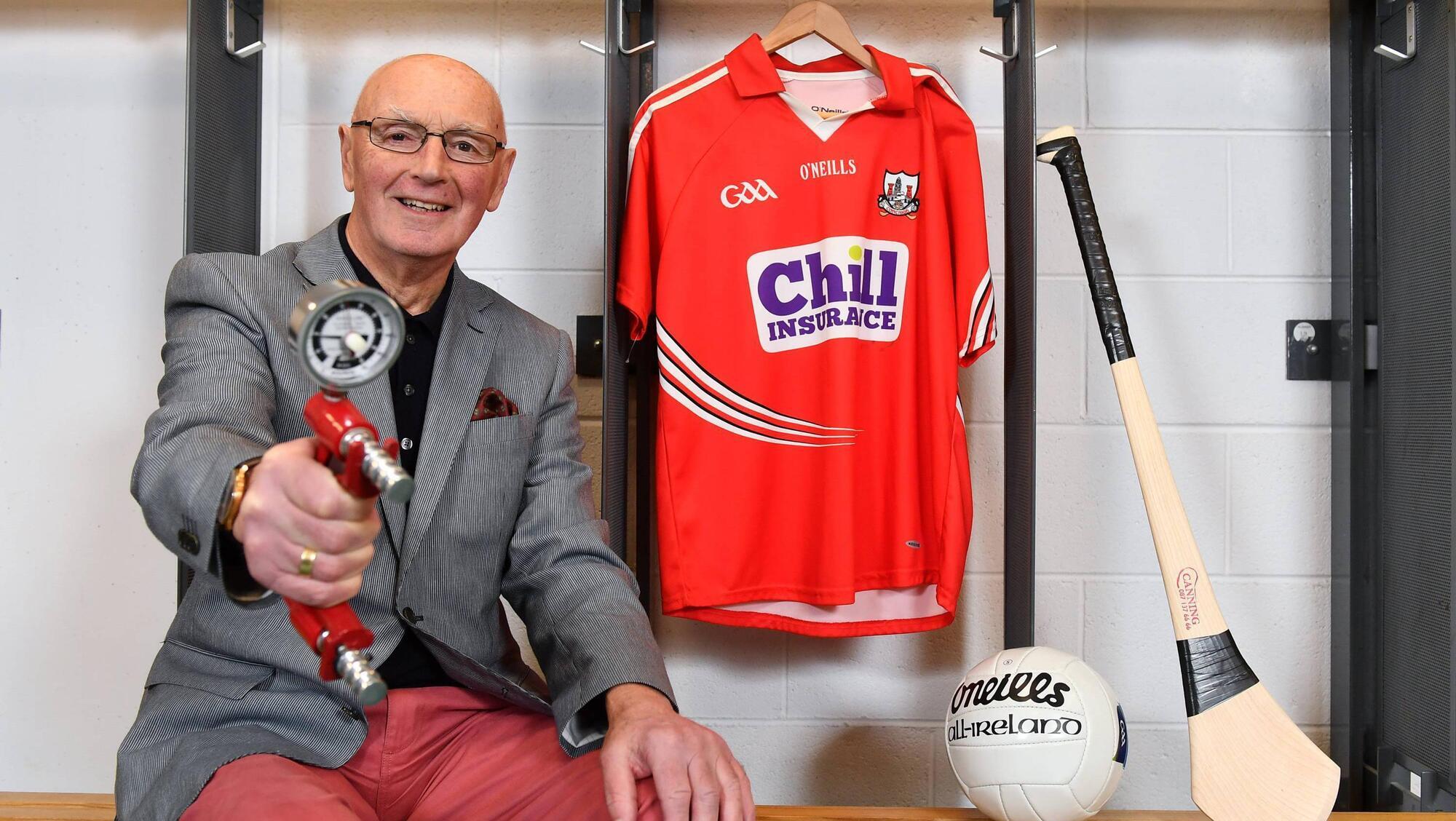
LEGEND: Cork dual legend Denis Coughlan, who has passed away. Pic: Sam Barnes/Sportsfile
T’S the summer of 1979 and I have been selected to play my first senior hurling championship match for Tipperary against Cork down in the Páirc.
The match sold itself and the place was bursting at the seams. Cork were on a four-in-a-row All-Ireland voyage and Tipperary had just won the National Hurling League.
I can still vividly recall the slow bus journey to the ground and supporters in their hordes welcoming us as we arrived at the old stadium.
Denis Coughlan was number 7 for Cork and I was number 10 for Tipperary. Denis had won multiple All-Irelands and had been Texaco hurler of the year a couple of years earlier.
He was an elegant hurler, great striker from hand and ground, excellent in the air, and had outstanding positional sense.
Read More
And he was my favourite Cork player of the previous decade — he had style and the understated panache of a virtuoso concert pianist on a night out.
And I was a callow youngster playing my first championship match for Tipperary. No wonder my heart was pounding. I watched Denis like a hawk in the parade.
He was bigger than I expected, possessing a long and confident stride.
My eyes went from one Cork player to another, from John Horgan at the front to Charlie McCarthy at the back of the line, as they walked beside me, but Denis seemed gigantic and heroic — like a comic-book Roy of the Rovers of my childhood.
And it turned out as most would have expected — our individual battle was no more than a skirmish. There was a 12-year difference in age between us and his experience and hurling meant that I was working off crumbs throughout the game.
The game was tense and low-scoring with Cork winning by one point. I somehow scored one point in the match — a feat so miraculous that I have no memory of how or when it happened.
I met Denis 30 years or so later at a function and we had good chat about the match.
He was charming, knowledgeable, and very humble about his hurling and football achievements, laughing as I told him how much in awe I was of him at the time. I am not sure he remembered much about marking me, but then again, there might not have been too much to remember.
We talked hurling in that Tipp-Cork way that manages to get to the intricacies and technicality of the game very quickly; where the focus is more on the game itself rather than the protagonists.
He had that clarity about the game that drew me towards him as a young lad growing up in Tipperary — only seeing him on television and maybe a couple of times in the flesh, but often enough to recognise the combination of presence and intelligence that characterised his performances for Cork.
And then came the news of his death last week. I did not know Denis Coughlan at all, except in a hurling way, but that was enough to take keen notice of the announcement. I knew him as a Cork hero and a fleeting opponent of yesteryear.
He was lodged in my mind, in that place reserved for eternal youth — of memories and images that can be opened and closed as the occasion demands, at any time.
The “Player” section of our mind where we can dip into when we need to retreat from current realities and let our past and future lives intersect. And where our heroes can roam freely.
But equally, as the poet Ogden Nash beautifully tells us, ‘old men know when an old man dies’. And that is certainly the case as you grow older. You become aware of death and loss in a way that you could never have dreamt of as a younger man or woman.
I cannot give you precise dates when I started to notice death more, but nowadays every loss is noted and counted and carefully placed in the ledger.
But not in way that leads to fatalism, dread, resignation, or pessimism. More as a cause of celebration and gratitude, of having known someone and shared a tiny part of life with them, for even a fleeting moment.
For to understand death, we must also seek to understand life and what living is for and for whom.
Thomas Lynch, the undertaker and poet, got it right when he said ‘the meaning of life is connected inextricably to the meaning of death’. The former prepares us for death; the latter make sense of the former.
The day that Tipperary were knocked out of the Munster Championship this year I heard a whisper that Liz Howard was not well.
I knew the precise meaning of that whisper but quickly became absorbed in the game, and anyway Liz would always be around, or so I thought. Just over a week later, I heard the news that she had died.
I did not know Liz well, but she had the gift of omnipresence, especially when it came to camogie and Tipperary hurling, both interests of mine, so our paths crossed many times.
She was a formidable woman who immersed herself in the GAA and, most importantly, cleared a pathway for a stronger and more sustained role for women in the Association.
Liz was a strong advocate for living life to the full. She was fully engaged in the now. The last communication I had from her was last February on her way home from the Fitzgibbon final.
She was looking forward to the new season and, as always, thinking about Tipperary and our chances for this year.
During my involvement with the Tipp team, Liz was very supportive, although she cut no slack when she believed standards were slipping. But in times of trouble, she never went missing. Many players benefitted from her advice and support over many decades.
So, as we in the broader GAA community mourn two genuine we reflect on their contributions to the game, on and off the pitch. And especially thank them for their immeasurable generosity of spirit.
In the end, it’s the giving and the taking that endures, the mutualities, reciprocities, and beneficences that make life worthwhile.
Everything else is irrelevant.

A collection of the latest sports news, reports and analysis from Cork.
CONNECT WITH US TODAY



Be the first to know the latest news and updates