Near mythical Harty Cup is a breeding ground and rite of passage
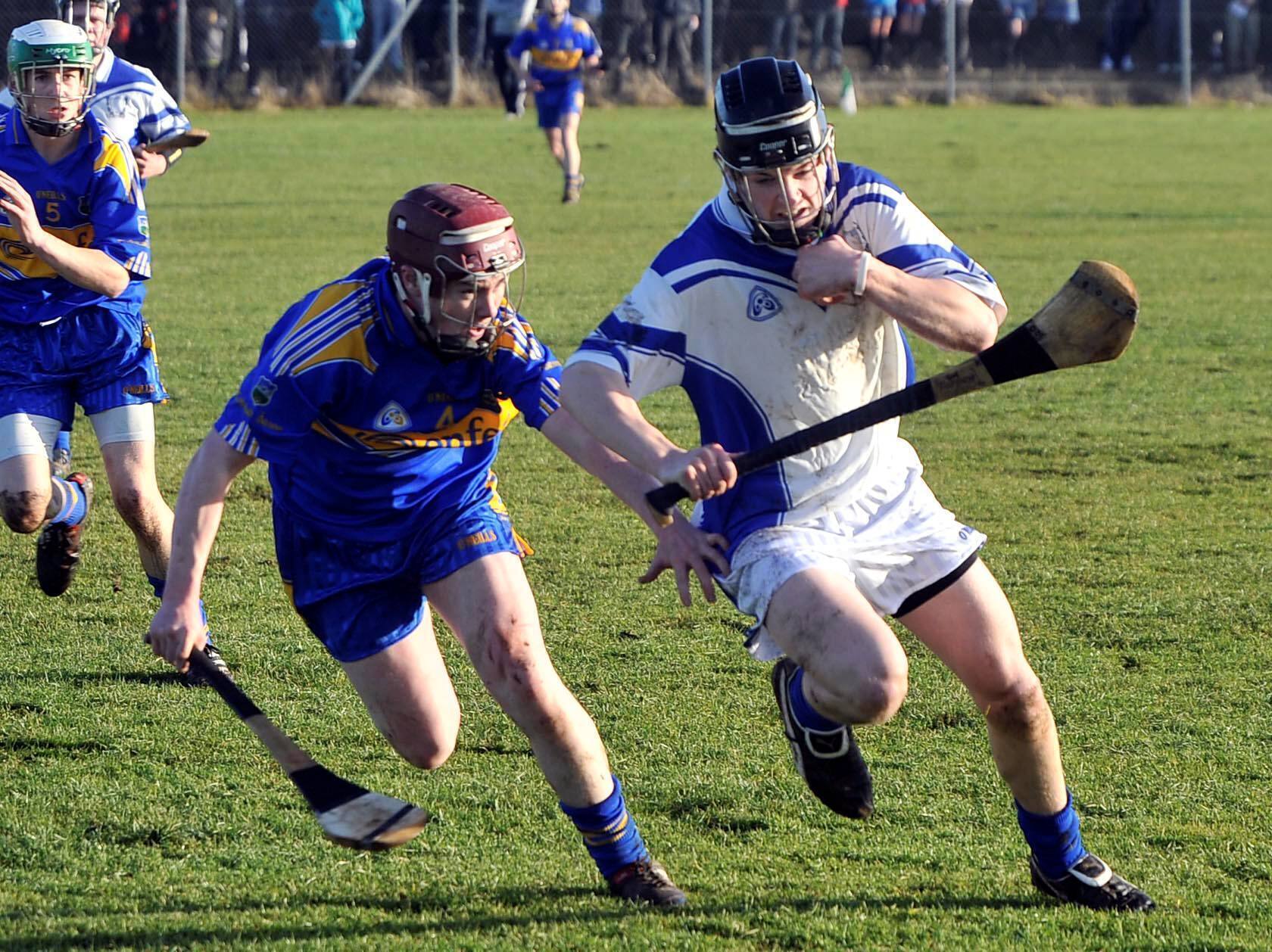
Aibhe Power of Thurles CBS tracks the run of Tony Kelly of St. Flannan's Ennis in a 2010 Harty Cup match at Cloughaun, Limerick. Picture: Dan Linehan
Before the Covid hurling championship began in 2020, one of the concerns was that a winter campaign on dodgy pitches in unforgiving weather conditions would limit the product as a spectacle. Would it even be conducive for hurling? How would a winter game impact on the elite players?
Elite players thrive in any conditions, which Tony Kelly proved with a series of devastating displays across that winter. Kelly had previously shown how effective he was in more testing conditions when driving Ballyea to county titles in 2016 and 2018, and to an All-Ireland club final in 2017. And in that 2020 championship, Kelly routed the theory that he is more suited to a harder sod on a boiling summer’s afternoon.
“I prefer hurling this time of the year, I always have,” said Kelly on OTBAM in November 2020. “I prefer hurling in the winter. It was born out of Harty hurling with St Flannan’s College. I loved playing Harty in October, November, December, January, February.”
Playing with Flannan’s helped shape one of the game’s greatest players, but the Harty Cup has long been a breeding ground and rite of passage for platoons of ambitious young hurlers.
The Harty has always had a near mythical status because of the emotions it triggers, with its capacity to invade the hearts and minds of those far beyond the playing pitch, the emotions getting stronger with every step.
As a young 1st Year student entering Thurles CBS at the end of the last decade, the Harty Cup captivated Robbie Ryan as soon as he walked in the door. “Harty fever has caught you, and now all you want to do is play in it as soon as possible,” says Ryan in the ’Dr Harty Cup’. “It’s an unforgiving test of character as a player.”
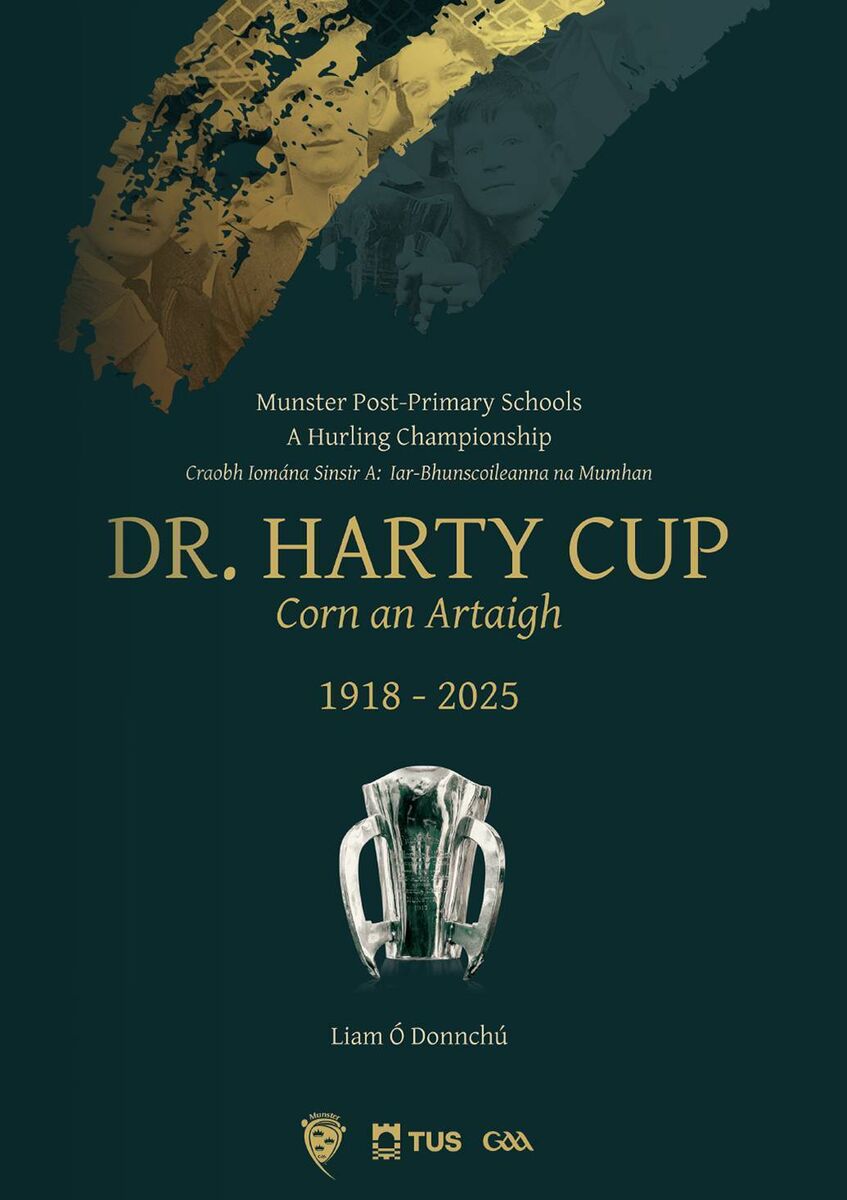
Ryan, who captained Thurles CBS to the Harty title back in February, is just one of a number of players interviewed in Liam Ó Donnchú’s excellent tome, which runs to over 600 pages, charting the development of the competition from its beginning over a century ago.
“Even though it’s played in the worst weather conditions, and on the worst playing surfaces, the Harty has retained its magic from day one,” says Ó Donnchú. “It’s still a real jewel of Munster hurling. It’s a coveted piece of silverware.”
Ó Donnchú’s interviews extend as far back as Tony Wall, who won successive Harty Cups with Thurles CBS in 1950 and 1951. Ó Donnchú is also an alumni of the CBS. He grew up in Thurles during the 1960s when the school couldn’t crack the Harty code, losing three finals during a decade which was dominated by Limerick CBS, who won four in a row between 1964-67.
“The whole county came alive,” writes Eamonn Cregan in the book. “A crowd of 11,500 attended the 1964 final in the Gaelic Grounds.” Limerick CBS beat St Flannan’s that afternoon. They beat Thurles CBS in the 1966 decider.
“There was plenty of All-Ireland medals around Tipperary at that time,” says Ó Donnchú. “There was loads of county medals around too with Thurles Sarsfields but a Harty medal was a real treasure. You’d be in awe if someone even showed you one. They were absolutely precious items.”
As well as the experience of the competition hothousing players for bigger tests to come at inter-county level, success in the competition is also a conduit for more productive days for those counties on the bigger stage. “It’s a huge thing for a county to win a Harty,” says Ó Donnchú. “And it’s a great injection for hurling in that county.”
The trends and patterns have always proven as much, especially for breakthrough or famine-ending successes. A number of the Mount Sion CBS players that won the school’s only Harty in 1953, including Martin Óg Morrissey and Frankie Walsh, were part of the Waterford team that won the 1959 All-Ireland.
Of the Waterford team that reached the 2017 All-Ireland, seven of the starting 15 - Stephen O’Keeffe, Noel Connors, Barry Coughlan, Philip Mahony, Pauric Mahony, Barry Coughlan, Jake Dillon – were part of the Harty Cup winning side, or sides, that won successive Harty Cups with De La Salle in 2007 and 2008.
Three more Waterford players which featured in that 2017 final – Tadgh de Búrca, Colin Dunford and Patrick Curran – also won Harty Cups with Coláiste na Déise/Dungarvan Colleges in 2012 and 2013.
Nine starters on Clare’s 1995 All-Ireland winning side – Davy Fitzgerald, Anthony Daly, Jamesie O’Connor, Ollie Baker, Fergal Hegarty, Stephen McNamara, Fergie Tuohy, Conor Clancy and Ger O’Loughlin – had won Harty Cups with St Flannan’s.
Ardscoil Rís’s emergence as a modern hurling superpower was also critical to Limerick’s modern success. Six players which featured in the 2018 All-Ireland final - Declan Hannon, Shane Dowling, Cian Lynch, Aaron Gillane, Mikey and Peter Casey – had bagged Harty’s with Ardscoil.
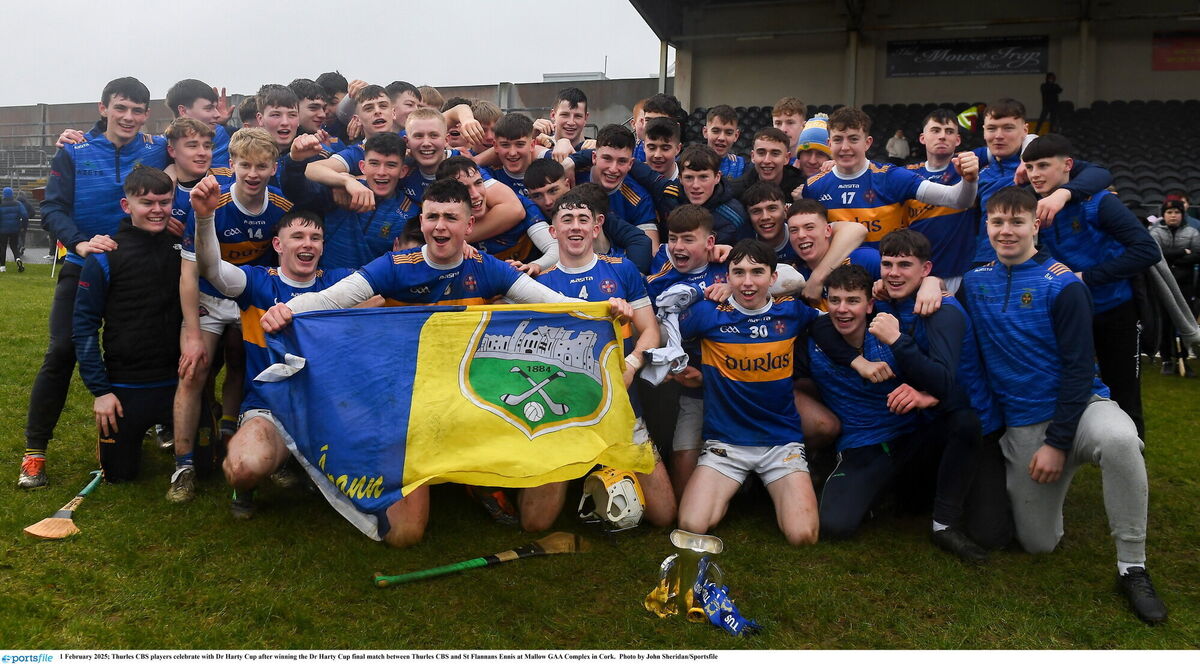
Much of Cork and Tipp’s success in the past was framed around Harty Cup success, a theme evident again with Tipp this year; Oisín O’Donoghue won a Harty Cup with Cashel Community College in 2023. Darragh McCarthy was part of the Nenagh CBS side that also won the title in 2024. Thurles CBS made it three in a row for Tipperary this year. Nenagh CBS are favourites for this year’s competition.
“All of that Harty success had made a huge difference to the mood in Tipperary before this year’s championship,” says Ó Donnchú. “In our minds, Tipp people couldn’t see any senior success coming in 2025. But that Harty success had given us some hope.”
The competition is vastly different now to what it was. A traditional knockout format was eventually replaced by a round-robin and group system in the early 2000s. The proliferation of new schools, amalgamations, along with the emergence of new powers, has made the competition more competitive, inclusive and harder to win than ever before.
There have been six first-time winners in the last 18 years – De La Salle, Coláiste na Deise, Ardscoil Rís, St Joseph’s Tulla, Cashel Community School, Nenagh CBS.
New schools have emerged with a vengeance. Old powers are desperately trying to get back on top. The wheel just keeps on turning. History is continually being rewritten as new chapters are added to this incredible story.
“From talking to the past players, what really sticks out is how much playing in the Harty Cup meant to them, how much they loved the competition,” says Ó Donnchú. “They are all happy, joyous memories of youth and idealism, of great friendships that were built up and still endure.”
The Harty Cup also gave those players a real understanding and appreciation of what it takes to win, and of how hard the competition still is to win. Over a century on, the Harty Cup is still teaching those lessons.


CONNECT WITH US TODAY



Be the first to know the latest news and updates