Eight Gaelic football championship observations: Dublin have free-taking and kickout issues
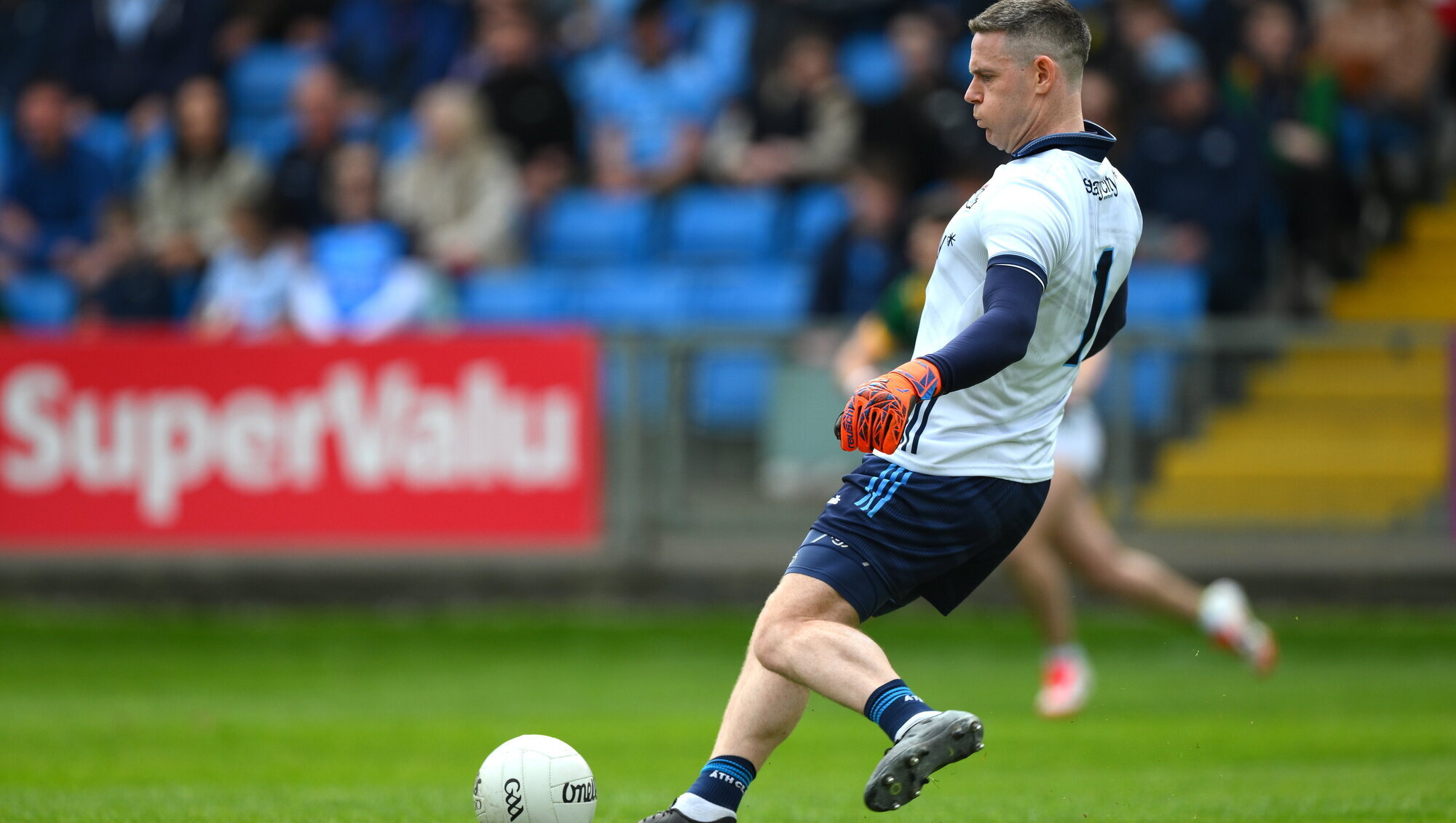
WEAKNESS: Meath scored 11 points from Dublin's kickout during Sunday's Leinster SFC semi-final. Pic: Ray McManus/Sportsfile
Armagh arrived first. Two Garda motorbikes cleared Monaghan Street for the black-and-orange-themed bus to drop them out in front of St Tiernach's Park. Tyrone descended around twenty minutes later. They were missing one.
It was a curious thing to see Mattie Donnelly stroll into Clones alone after a while, with a host of young Tyrone fans on the steps watching in awe. The 34-year-old was named to start the Ulster semi-final clash with Armagh but this was a pretty clear indicator that would not be the case. Sure enough, before throw-in, Malachy O’Rourke made three late changes. Donnelly did not play.
As it turns out, Donnelly was sidelined with a bug. The Trillick man is in the midst of a rotten spell of luck. In 2023, he suffered a horror injury when he broke his tibia and tore his PCL while playing for his club in a sevens tournament. That came after torturous hamstring issues that saw him delay surgery so he could squeeze another couple of seasons out of inter-county football.
Despite that, he was a bright spot in an otherwise underwhelming campaign last season. No Tyrone player had more assists than he did. In fact, nobody in the team had more assists than he did in the league this year.
Donnelly’s credentials as a legend are proven. He is an All-Ireland winner, an All-Star, a former captain who made his debut in 2010. Only Peter Harte can match him for longevity. Malachy O’Rourke’s appointment signalled a new beginning for the 2021 champions and yet for some reason, Donnelly was still there in Clones on Saturday, straining at the leash on the line. Desperate to be in the thick of it.
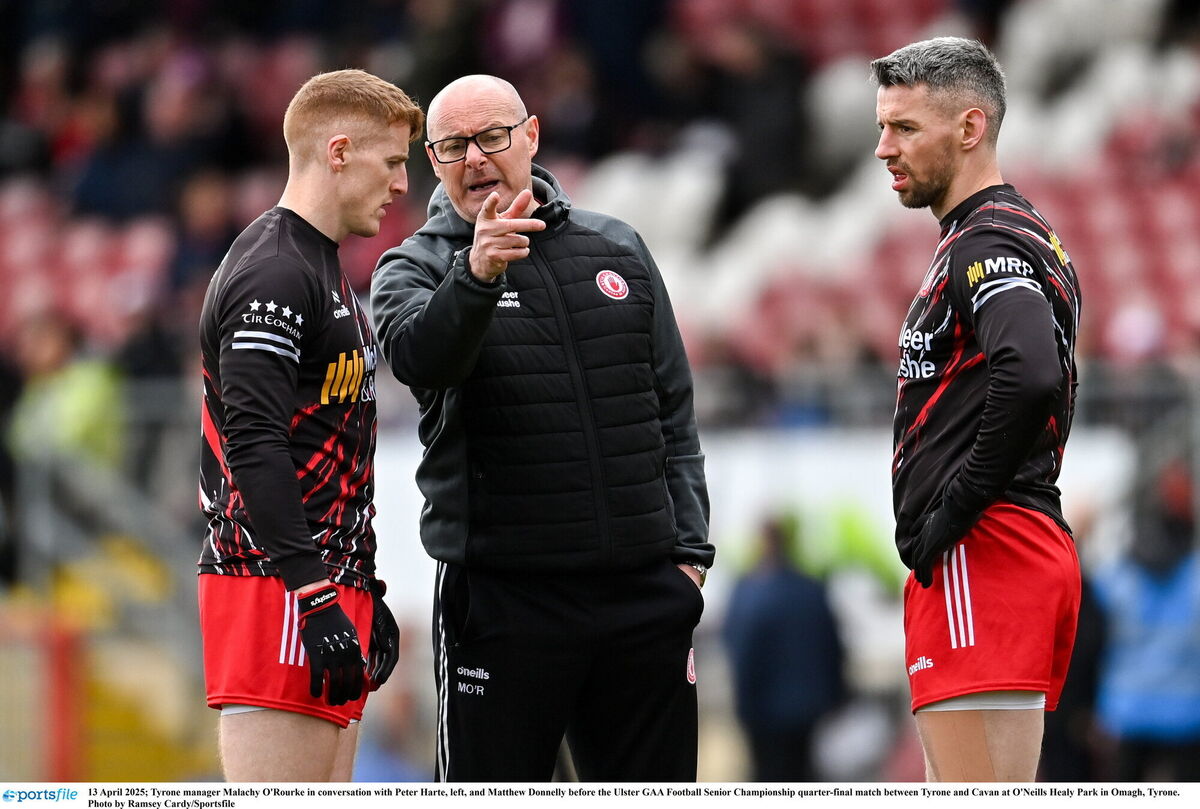
He was completely captivated by the contest on the pitch, just like the rest of us. That’s what we pursue. Gaelic football’s natural high, the purest sensation that 21,288 came searching for. It is easy to forget, amidst the definitive hot takes and the seismic results, that sport is supposed to be about that buzz. We like to pretend otherwise. Entire industries are built on the assumption sport is about outcome. Winners, losers. Determine them, dismiss them.
The spoils? It’s about the scrap too. Winning has a shelf life. The taste is sweet but they always want more. Kieran McGeeney poured himself into securing Sam Maguire. It was the ultimate triumph by a man who broke the mould as a player, took the hard road again to do it as a manager and produced a stunning triumph. And still he is back. Still suffering.
2024 is last year now. Mellowed with success? Did you see how sweet the strike was as he volleyed a sideline flag onto the field in frustration and twitched the biceps as David Gough flashed a yellow card? The nerves, the anticipation, the uncontainable chaos; it still takes hold.
The payoff is in the actual football. The complete thrill that comes with watching players trying to pull an opponent out of a pre-match parade, immense kicking, goalkeepers slide-tackling with their chest, a nerve-shredding finale. A proper game full of quality and absurdity. That racing pulse is a prize. May the rest of the season be brimming with it.
Here are eight observations from the Gaelic football championship.
From the moment he made his dramatic return, Michael Murphy brought it all. No one expected anything less.
Sunday was vintage Murphy. He won every kickout that was aimed at him. He kicked two points from play from two shots, while missing one free. The 35-year-old made his mark too. There was a robust kickout tackle on Danny Magill. The BBC commentary team mentioned that words were exchanged between the full-forward and several Down players at half-time. Murphy emerged for the second half and clipped Patrick McCarthy high, receiving a yellow card.
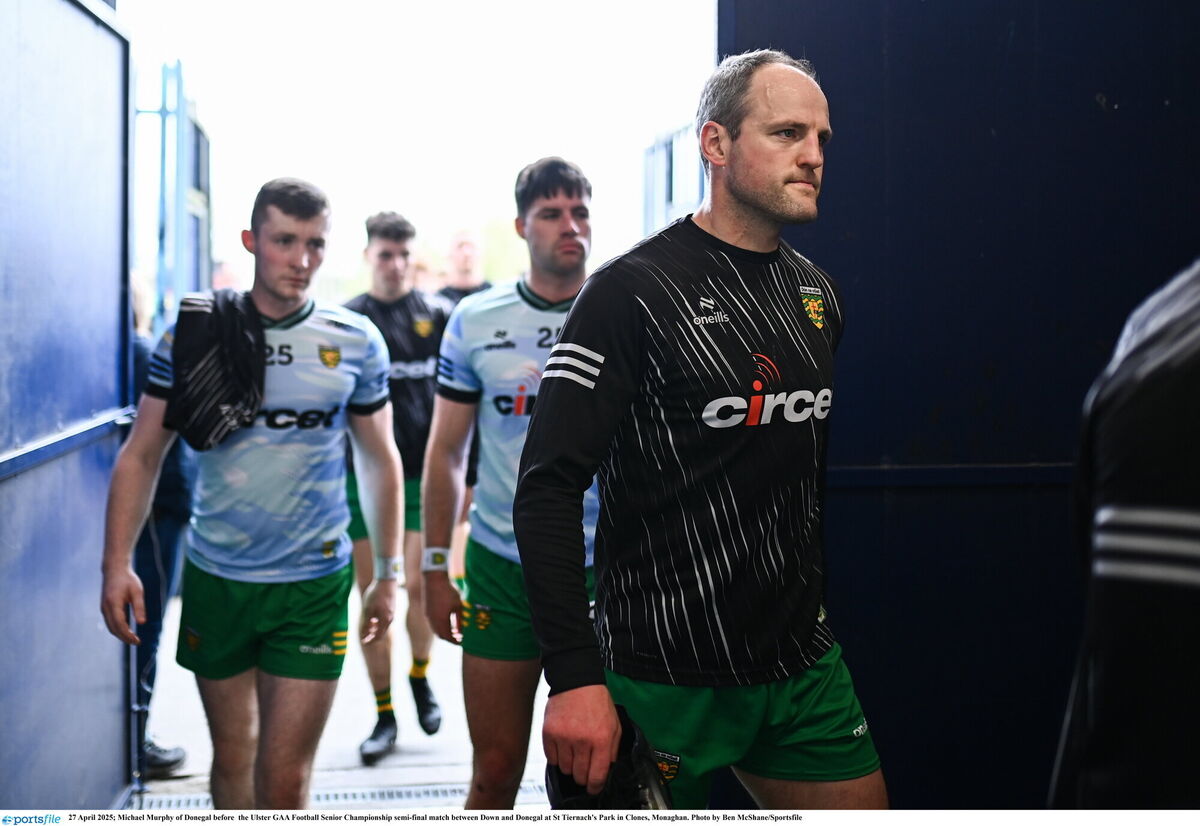
The shock return has worked out well so far. His standing in the county is demonstrated by the match programmes from Donegal’s championship games so far this year.
Before the Derry game, Caolan McGonagle took part in the Q&A. His answer for childhood hero and best player he played with was the same. Murphy is six years his senior. Daire Ó Baoill went for Murphy as the best player he played with too. The same question was posed to Odhrán Doherty with the same result. On the next page, Down’s Ryan McEvoy cited Murphy as the best player he has ever played against.
There was no such uniformity in the responses to favourite film, mercifully. McGonagle (Happy Gilmore), Ó Baoill (No Country for Old Men), McEvoy (Rocky IV), Doherty (Step Brothers).
Three minutes before the turnaround, Kildare were one point up with Ryan Sinkey racing in on goal. He blasted a shot low towards the bottom right corner. An outstanding Niall McDonnell save stopped it. Louth won the rebound, Sam Mulroy kicked a two-pointer and suddenly, Louth led for the first time.
In the second half, Kildare closed the margin to just one point with ten minutes left. This time, Darragh Kirwan rifled a shot. McDonnell made a vital save again.
This was one of a number of big moments McDonnell has produced when his county needed it. Two point up against Cork last year in the final few minutes of their preliminary quarter-final tie, Eoghan McSweeney burst through the centre into the large rectangle. McDonnell stood tall and Louth secured a famous win.
In the second half last Sunday, as Dublin were 11 points down, they were awarded a kickable 45.
“They are calling on Cluxton to come up,” said Marc Ó Sé on commentary. “He is staying put. No. He is coming.” The kick suited his left-foot. After some hesitation, he didn’t take it. Instead, substitute Cormac Costello had a go, slipped, and sliced the ball into a Meath man’s hands.
It was a 10-point tie with 20 minutes left. Dublin were awarded a two-point free but again, Costello skied it. For years, this wasn’t a problem. In the 2023 All-Ireland final, Stephen Cluxton kicked a 45 and a free. Paul Mannion utilised his sweet left, Costello and the exemplary Dean Rock scored frees as well. They didn’t miss.
Fast forward to their next championship defeat. The game was level in the 65th minute when Dublin won a routine free on the right-hand side. It was a straightforward kick for a left-footed kicker. This is the moment Dublin will look back on, stressed Micheal Murphy at the time. Costello hooked it right. Galway scored twice to advance.
Against Wicklow, Niall Scully attempted a long-range free and missed. In the league, Costello, Con O’Callaghan, Gavin Sheridan, Luke Breathnach and Evan Comerford all registered wides. In the end, last weekend a famous victory in O’Moore Park concluded with a Colm Basquel foul and Eoghan Frayne swinging over his eleventh point, seven from frees.
The clock was ticking down and Kildare needed a goal. The hooter sounded, Alex Beirne floated a handpass towards goal, Craig Lennon caught it and booted the ball away. However, the Man of the Match put it behind his own goal for a 45. The excellent Shane McEntee immediately identified the problem: That meant play on.
Last month, the hooter was adjusted so that after the hooter sounds, the end of the first half or full time is signalled by the referee on the next occasion that the ball goes out of play for a score, wide or sideline. The rule also stressed that if a 45 has been awarded but not taken, before the hooter sounds, the free can be taken and can result in a score if any other player does not touch the ball.
What about after the hooter sounds? Louth discovered the answer to that question last Sunday. Lennon’s error resulted in a 45. It dropped short and another 45 resulted.
This explains why Brendan Griffin was correct today 🙌🙌 pic.twitter.com/5rkXhID9bP
— Mortimer Murphy(Murt) (@MortimerMurphy1) April 27, 2025
There is a lesson for teams here too. It’s complicated, we get it, but right now players need to know these rules. Monaghan’s sideline frustration after the Ulster quarter-final was avoidable. Games will be decided on smart decision-making in these crucial moments. It was almost comical to watch some of Lennon’s team-mates celebrate his last-gasp clearance while others put their heads in their hands.
The last time Dublin lost a Leinster championship game before Sunday, California Gurls by Katy Perry and Snoop Dogg was top of the charts. Angry Birds was a global phenomenon. Germany hammered England 4-1 on the same day. (A tip of the cap to anyone who can recall England’s goal-scorer).
Last weekend was the first time since 1995 that both Leinster semi-finals were not played at GAA headquarters.
Dublin’s defeat to Meath means they are now third seeds for the Sam Maguire Cup draw on Wednesday. It also leaves the association with an unexpected clash.
Right now, the round 2 games are scheduled for May 31/June 1. That is the home fixture for the third and fourth seeds. It is also the weekend that the Christy Ring, Nicky Rackard, and Lory Meagher Cup finals are scheduled to take place.
Where will Dublin play their crucial home fixture against provincial runners-up? A drop-off in support and the fixture clash could see them opt for Parnell Park. Once, this felt unimaginable. Don’t forget that in the first year of the Super 8s, Dublin played their home and neutral game at the Jones' Road venue. In 2019, Donegal’s motion that no county could use Croke Park as a home venue was defeated comprehensively.
A brave new world.
Last week, the GAA distributed a document developed in consultation with the National Referees Panel and the Football Review Committee. It listed additional guidance on a number of rules, including a reminder that a player may only carry the ball for a maximum of four consecutive steps.
Predictably, the clampdown ensued. Kildare’s Ben McCormack delaying a bounce, Down’s Pat Havern hesitating, a whole host of players in the Armagh versus Tyrone clash.
“The steps have always been a problem,” said All-Star defender Barry McCambridge when we asked him about it post-match.
“People have always taken more than four steps, but it’s actually very hard to enforce.
“But if you’re going to take six, seven or eight steps, then you’re going to get a scoring chance more than likely, and a lot of time the referee would give leeway when you're fouled, so it’s hard to know.
“You can see they were really going after it, there were five or six overcarrying calls here, when last week there wasn’t.
“But there were times when people were taking 25 steps and that can’t happen.”
Gaelic football needs to promote one-on-one defending. Otherwise, teams will opt to drop deep and rely on numbers. One-on-one defending is essentially impossible if the steps rule is not enforced.
The best example of the net benefit came in the second half. Ethan Rafferty clipped a short kickout and immediately, Tyrone pressed. Paddy Burns over-carried and Darragh Canavan was presented with a tapover free.
Consider the change in behaviour this promotes. Tyrone now have a real reward from pressing high. Armagh now have a real reason to get better at legally taking on their opponent or to kick it long, so they don’t lose the ball close to their goal. Win-win.
At the top of a long list of major concerns, Dublin’s kickout will rank highest. They were pummelled. They lost 16 and won 12. In a game where possession from a kickout usually ends in a shot, the output from both will be alarming. Meath scored 11 points from Dublin’s kickout. Dublin’s return was two.
How much of this is down to Stephen Cluxton? That depends. How deep do you want to go?
For some, breaking ball is purely a question of hunger. Who wants it more. Teams can’t afford to bank on that as the primary factor. Breaking ball is dictated by strategy more than it is desire. The main issue for Dublin wasn’t Cluxton; it was the entire system.
In the end, both teams lost more breaking ball than they won on their own kickout. Conditions dictated that. Opposition can crash and break the ball right back. No one wants to send the ball back towards their own goal.
Consider Dublin’s first kickout. It was directed towards several big men, including Con O’Callaghan and John Small. But Meath have them out-numbered six versus four. Once the ball goes to ground, they’d stacked the deck.
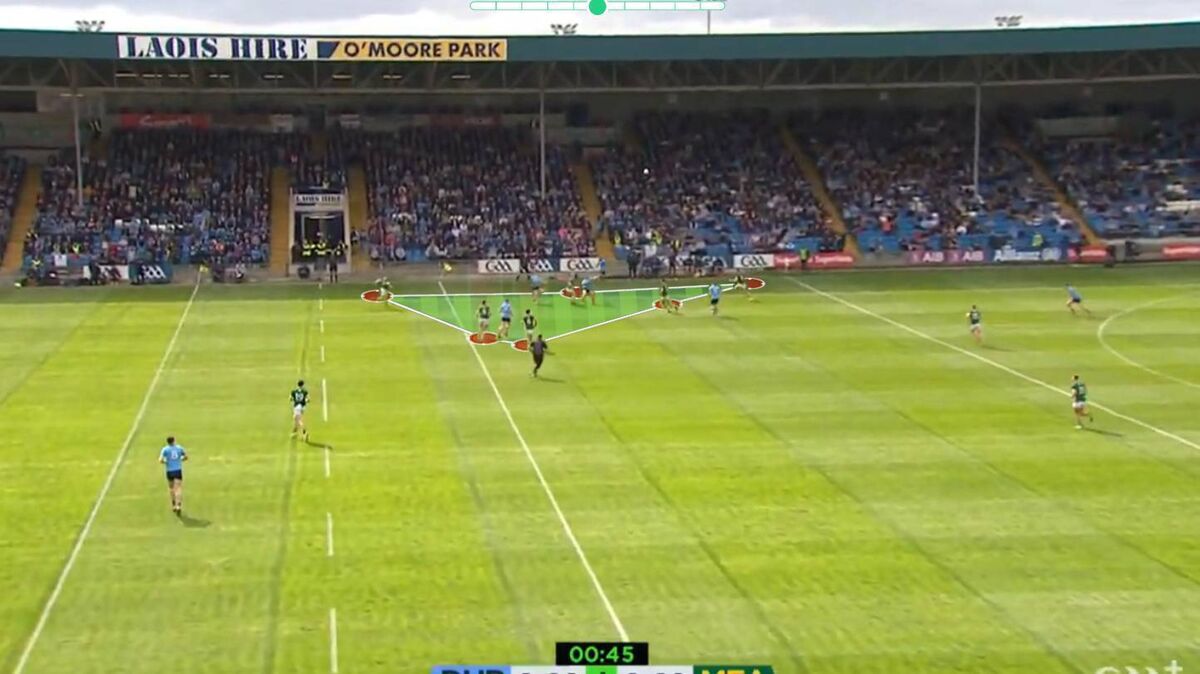
Cluxton tried to keep Meath’s forwards honest and went short with his second. The wind meant they are able to cheat and break to the landing zone early. Dessie Farrell’s outfit had to give them a reason to press high. However, his short restart was intercepted. They lost another two breaks before he finally got a short kick away.
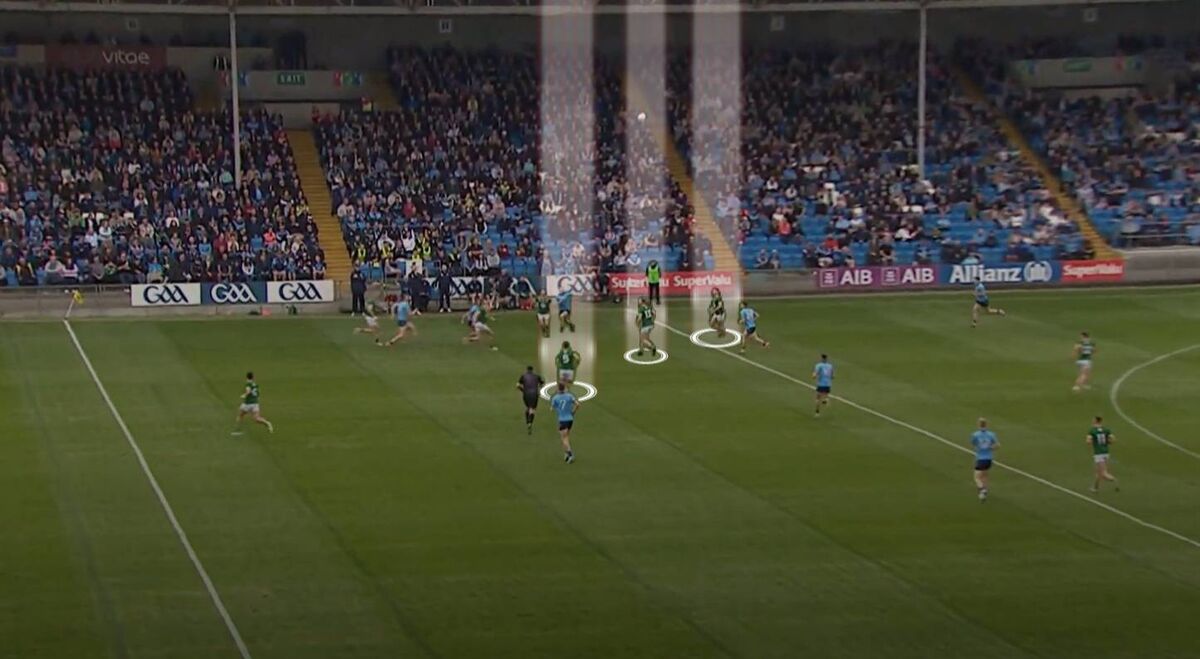
This is the challenge for coaches under the new rules. Too often, Dublin defenders were caughto on the wrong side of the break. If Cluxton was going long, they need to nail the details in their structure. One jumper up, team-mates boxing out in front and behind the break. Hurling has borrowed plenty from Gaelic football down the years but football can learn from hurling here.
The All-Ireland champions dug out a remarkable victory last weekend by sticking to their strengths. They landed the final three points thanks to ironclad resilience and tactical brilliance.
All the figures matter in Armagh’s attack. How they set screens, the selfless runs, the creativity in their set plays. In the Ulster quarter-final, Rory Grugan created four points and scored two. Last Saturday, he assisted five and scored three.
“He's first class,” said McGeeney post-match. “He's different gravy. I've been saying that for years.”
Jarly Óg Burns’s equaliser came from a familiar tactic. Armagh loaded seven players inside the opposition 21 with the rest outside the arc. That left space in the middle for Burns to exploit.
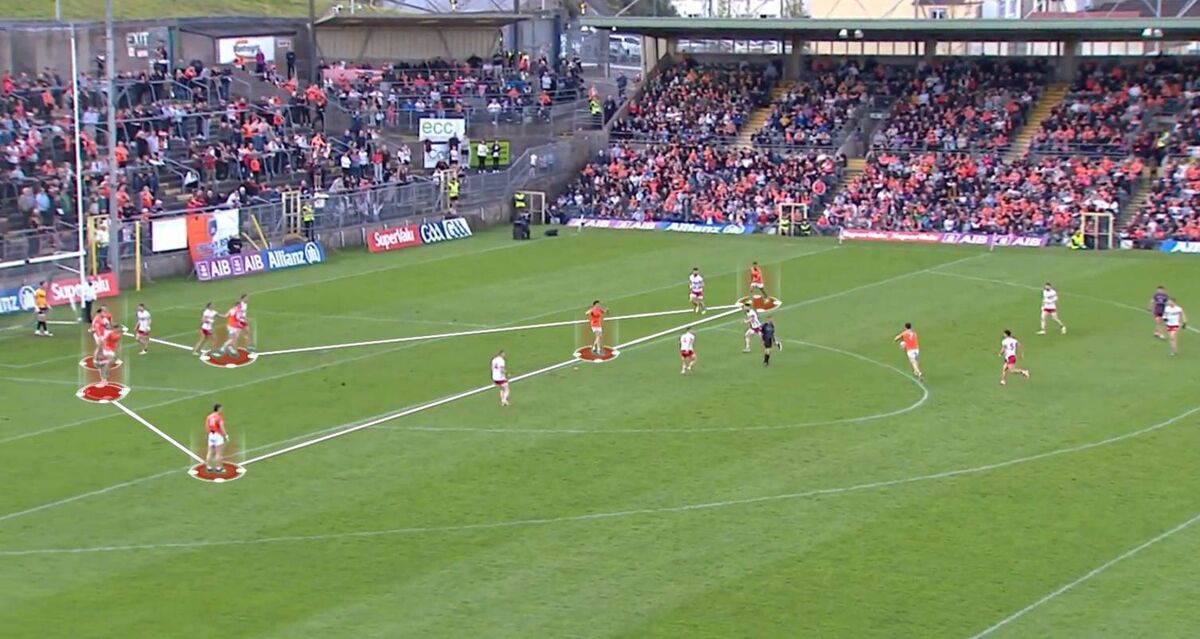
For the final score, Burns won Niall Morgan’s mishit kickout yet injured his shoulder in the process. Again, Armagh controlled all the pieces on the board. A member of their backroom team entered to treat him. Before he did that, he first helped Burns back into his own half. This move seemed to enrage Tyrone’s sideline at the time however when it was mentioned to Malachy O’Rourke, he fixated on other key decisions.
It allowed goalkeeper Ethan Rafferty to come up and join the attack. Armagh overloaded one side of the pitch with all bar three players.
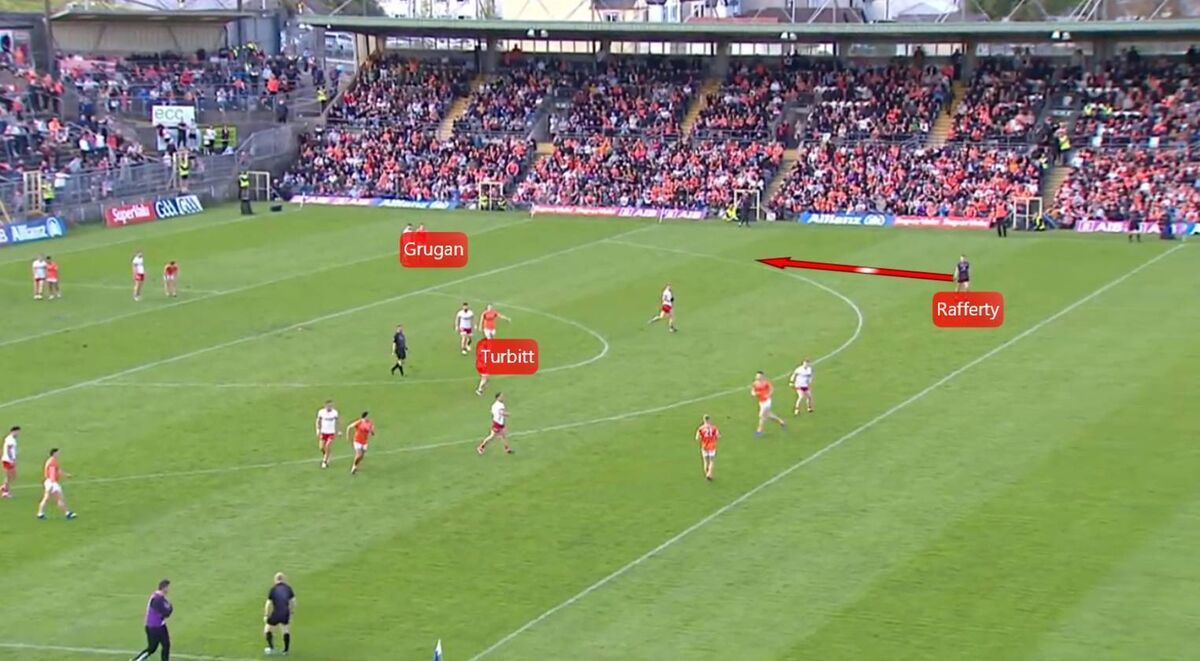
Rafferty broke into the space, their main creator Grugan received possession and their primary finisher Conor Turbitt used his lethal movement to drive into the space. Checkmate.


CONNECT WITH US TODAY



Be the first to know the latest news and updates