The seeds of Ennis: How Cusack Park became Clare's cauldron
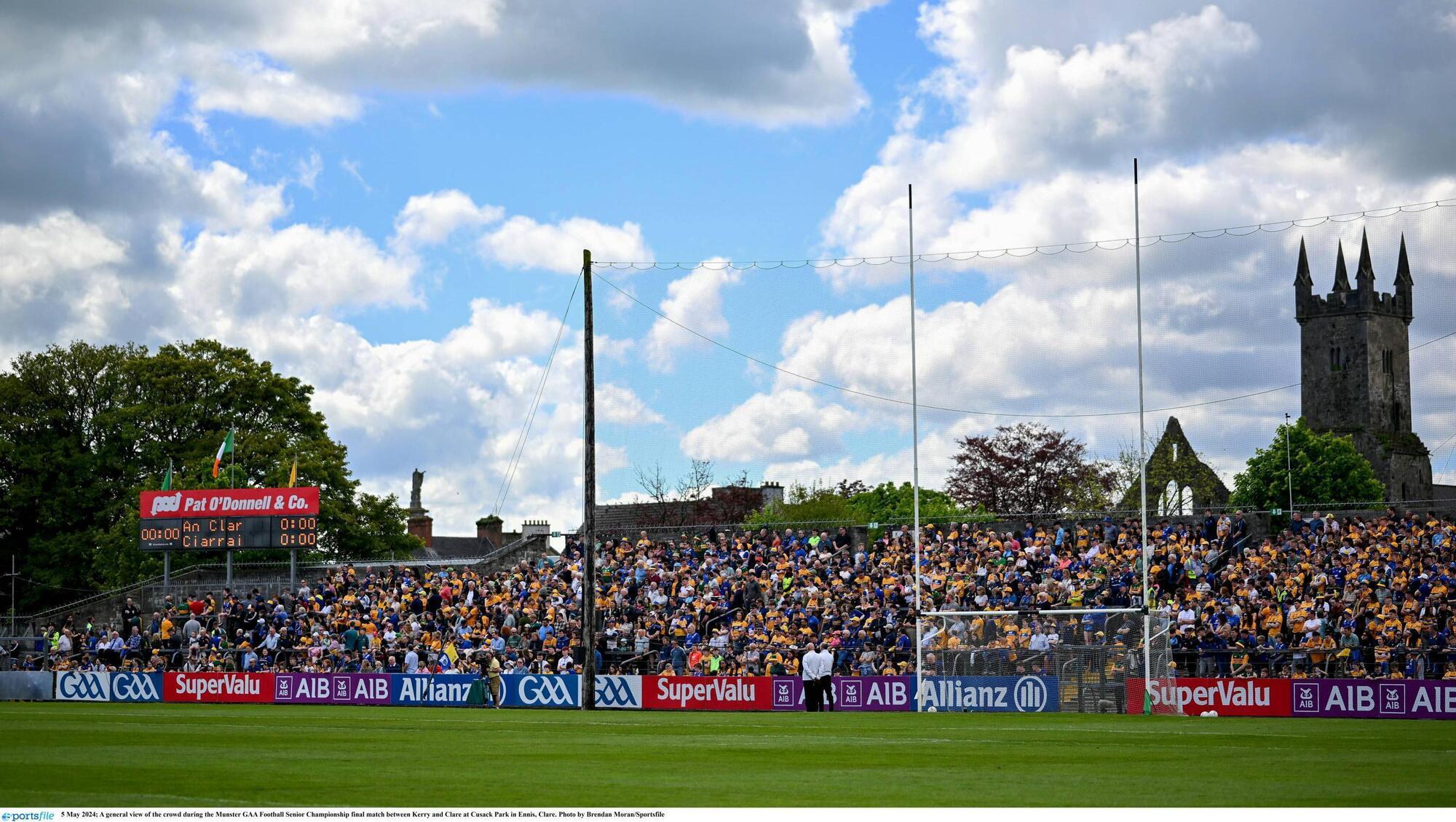
THAT ENNIS ENERGY: A general view of the crowd during the Munster GAA Football Senior Championship final match between Kerry and Clare at Cusack Park in Ennis, Clare. Pic: Brendan Moran/Sportsfile
Just the mention of it evokes championship as much as almost any venue now.
Last year’s All Ireland hurling final was only hours over when already conversation turned to the rematch between the counties; if you thought it was hard to secure one of the 82,300 tickets for their July encounter above in Croke Park, good luck trying to find one of the 21,000 going for their April meeting in Cusack Park.
It’s not just tickets that have been like gold dust; every hotel bedroom in the Ennis area for this Easter weekend was snapped up by early February, ever before the Cork bus transformed into an outright juggernaut during the league.
In all it has been estimated that Sunday’s game will bring in close to €2 million to the local economy; like a Euros or World Cup, there are thousands of visiting fans descending on the town who won’t even get into the ground but just want to soak up the buzz around the place.
And yet it wasn’t that long ago when Ennis couldn’t even be mapped as a senior inter-county championship venue. Maybe for an early-round football game, or a qualifier, played in front of empty terraces, or as neutral venue for an U21 All Ireland football final.
But not for hurling. Not the Munster senior hurling championship anyhow.
The county may numerically and traditionally have had a preference for the small ball over the big one, but prior to the advent of the round-robin, the undisputed greatest moment the old ground had served up and hosted was Martin Daly’s last-gasp wonder goal in ’97 that tripped up Larry Tompkins and his grass-eating, sand-dune-flattening Cork footballers at the first hurdle.
Hurling had no equivalent. How could it? In the Loughnane years the only home championship match his team had was against Kerry, a month before Daly’s goal. Cusack Park in the summer was merely where his team trained – with notorious intensity – not played; it was where they got ready for Thurles and Cork and Croke Park.
Before Loughnane (the manager) they had the odd championship game there. Back when Galway were in Munster, Clare beat them there in ’67. In ’71 they had a draw with Limerick, then beat them there in ’72. In ’86 they beat both Limerick and Tipp there. In ’90 Limerick trounced them there, only for Clare to atone for it in ’93; that was the day Ger O’Loughlin, the artist better known as Sparrow, went for 1-5 after being recalled to the panel only weeks earlier.
That though, the ’97 game against Kerry excepted, would be the last time in 25 years the place would host a senior Munster championship match.
There were some days the backdoor had the place rocking. Like when the two Tonys – Griffin and Carmody – went goal-mad against Waterford in 2005. Or the following year when they made Joe McKenna want to quit the Limerick job. Or when Dalo in 2012 marched the Dubs down Francis Street only for Tony Kelly as a rookie to send them packing up the road again. But such days were few and far between. Outside of a few fiery Munster U21 finals against Tipp in ’99 and 2008, there wasn’t anything to approximate a Daly ’97 moment, and nothing to equal or eclipse it.
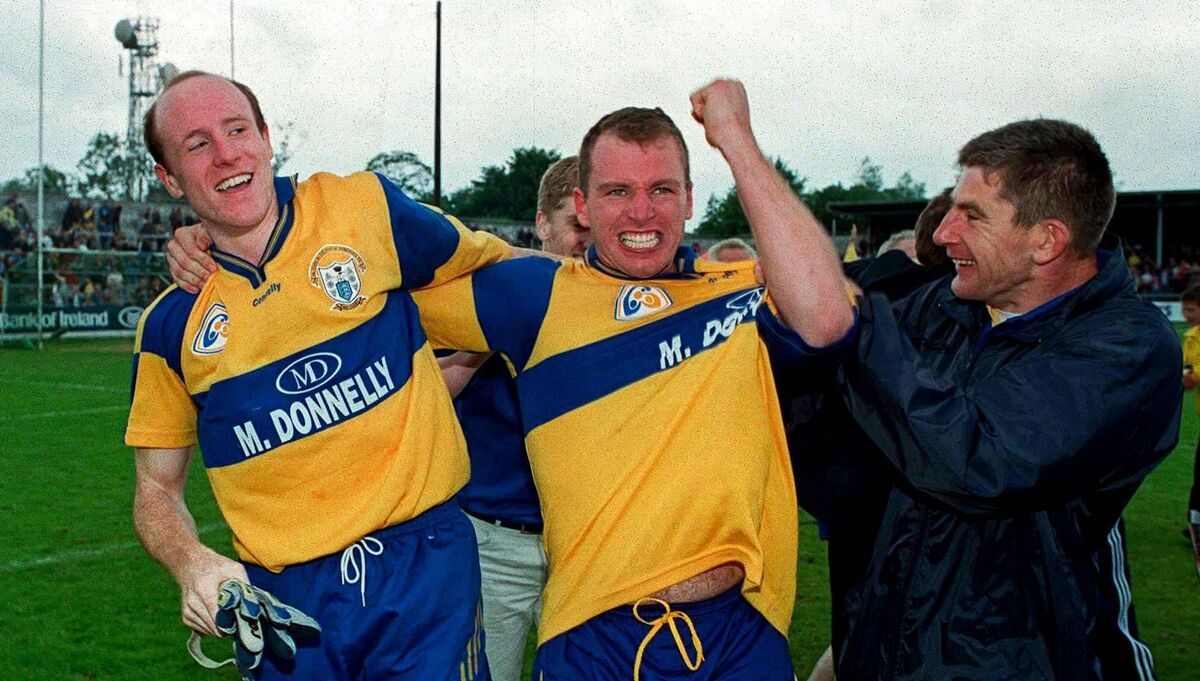
The round-robin with its two guaranteed home games has changed all that. Fair to say, it has been as good to Ennis as Ennis has been to the round-robin.
Waterford in 2018 were the first side to experience what it’s like to face a Clare team playing Munster championship in front of their home crowd. Derek McGrath’s side had entered the game as All Ireland runners-up and left Ennis as a shadow of that side.
“Intimidating would be the wrong word to describe Ennis because that suggests you’d be afraid but there’s certainly an intensity about the place with the way it’s set up,” says McGrath now.
“There’s this idea that the pitch is small but it’s not; it’s actually big and plays big but it seems tight because you do have the crowd right in top of you.
“And there is a tribalistic element to the Clare support. It’s like they come from all over the county, places like Doolin where they love their trad that Dalo would talk about it, and then stream into the town, thirsty to see the team reflect who they are as a people. Even Ennis itself, with all the pubs spilling onto the street where the ground is, there’s just this feeling of convergence. And the team feeds off that energy.
“I remember that day in 2018 Gerry O’Connor and Donal Moloney who’d be normally reserved enough were really wound up; I questioned a decision without saying a word and the boys it’d be fair to say admonished me – the gloves were off! But that was indicative of that good tribalism Clare can generate in Ennis. And if they do get a run on you it can be difficult to stem them.”
Since that day the Clare hurlers have had a string of Daly ’97 moments. Diarmuid Ryan’s winning point in 2023 to again break Cork hearts in the last minute. Mark Rodgers’ 65 last year to break Waterford’s, prompting yet again a playing of the venue’s anthem: Freed from Desire.
The pitch itself is in immaculate shape. Two years ago the new leadership at the helm of Clare GAA, David Hoey, who hurled for the county in the 2002 All Ireland final, was appointed head groundsman. This week he has seen to it that the pitch is cut every day. The heavy rainfall that descended on Ennis on Friday morning would have been duly drained by pumps brought in on Saturday.
His appointment is indicative of how Cusack Park and Clare GAA itself has been revamped despite its inherent limitations. The capacity of the ground has been increased from 18,800 a couple of years ago to 21,000. Where before there was wired fencing to keep patrons off the field, they’ve been removed to allow the kids on. Where for decades Clare GAA never tapped into the corporate potential residing in the Shannon Industrial Zone, Zimmer Biomet have now secured the naming rights to the ground for an estimated €100,000 per year. The surface of the pitch suits the type of hurling the team wants to play: fast. As for the terraces? Packed.
Sure there’s nowhere else to be.


CONNECT WITH US TODAY



Be the first to know the latest news and updates