How Slaughtneil fulfilled Thomas Cassidy's vision and proved they belonged
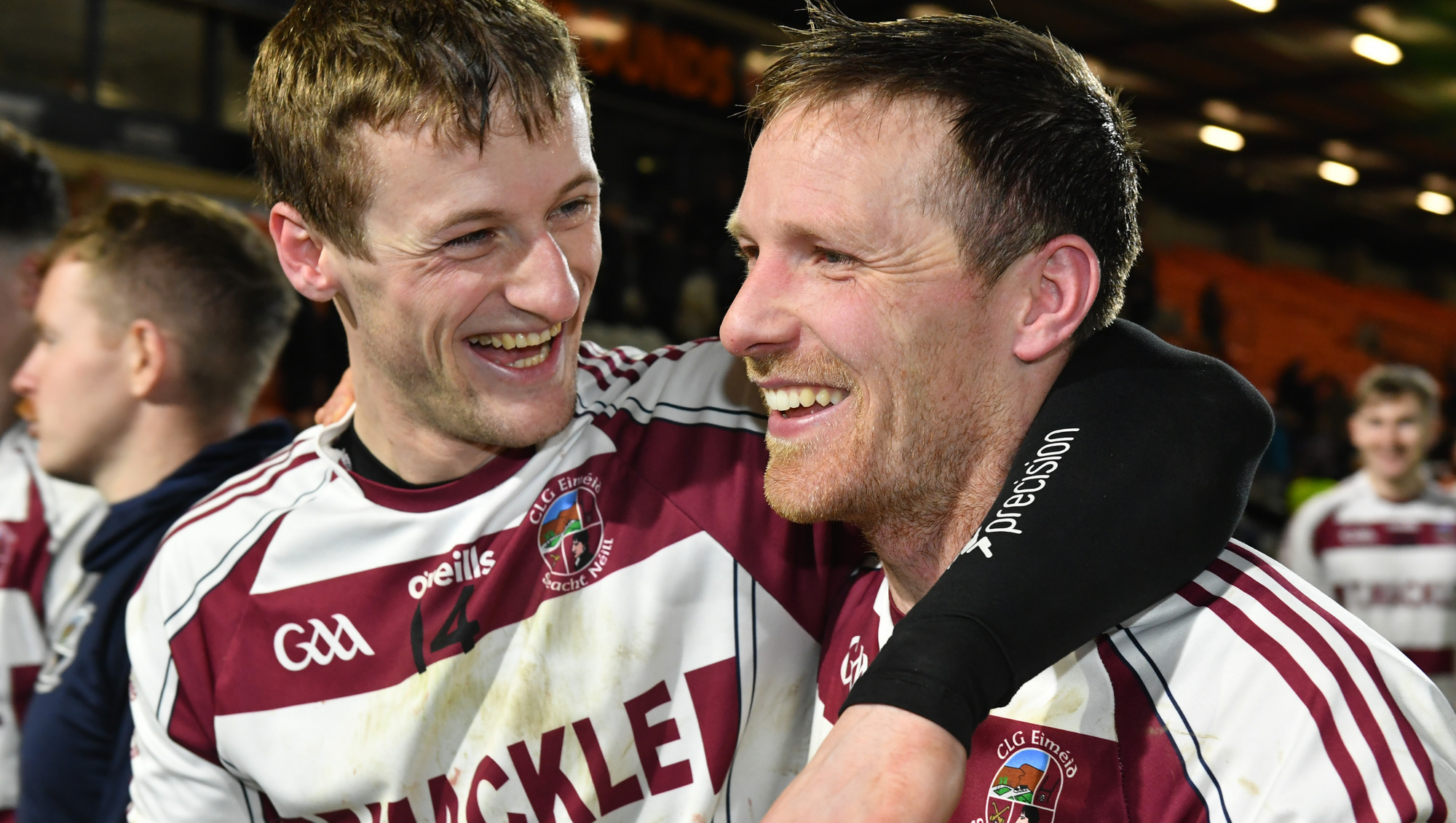
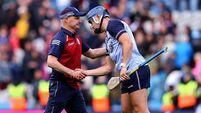
Brendan Rogers and Se McGuigan of Slaughtneil after the Ulster final win. Pic: ©INPHO
It’s a generous three-hour spin from Emmet Park to Newbridge but Slaughtneil hurlers have always been mad for road.
The five-time Ulster champions have played more championship hurling outside their own county than Sunday’s other three semi-finalists combined.
Winning 12 Derry titles in a row helps push them front and centre in club hurling’s shop window more than most.
That dominance wasn’t a flick of the switch when they toppled previous kingpins Kevin Lynch’s in the 2013 semi-final.
Yes, it was a significant changing of the guard but concrete had been pouring into the foundations over the two previous decades.
Limerick hosted the All-Ireland Féile in 1995. It was Slaughtneil’s first ever taste with a group that would go on win two Ulster minor titles before bolstering their 2000 winning senior team.
It was the last senior title before the current dominance. The late Thomas Cassidy was manager. He was also in charge of their U12 winning team on the same day.
It was the club’s first U12 success, with Chrissy McKaigue as captain, a full 16 years before he skippered their first Ulster senior winning team.
In an emotional speech that night, just days after Cassidy’s passing, McKaigue pointed to the floor of Slaughtneil hall as he hoisted the Ulster silver into the air.
It was the very floor where Cassidy introduced him to hurling. The ultimate tribute. You had to be there. You’d have struggled to have found a dry eye in the house.
The purchase of indoor hurls, with a plastic base, changed the course of the game. Cassidy’s vision of growth was clear at a time when hurling wasn’t fashionable.
Mentors took to the road. Car loads ferried them to the North Antrim Indoor league, testing themselves against Ulster’s top clubs. Slaughtneil were as good as what was out there and they doubled down on their efforts.
There were helping hands, including Michael Glover, married into the area from Belfast. An Ulster GAA coach by day and full back by night, it wasn’t long until Cassidy assigned him the U14 team.
Glover’s mantra was geared towards as many games as possible. Loads of coaching. The hurl was an extension of the body.
“We started going into Antrim more often,” he said. “We played in every competition that was available.
“Gerry Doc (Doherty), Mark Lowry and Kevin Shack (McEldowney) were involved.”
They went everywhere. A Wednesday night or a Sunday morning would’ve often taken in a challenge game in Down or Antrim, a 15-a-side extension of the indoor league.
“We always tried to encourage the players to play on a better level,” Glover recalls of the passport for improvement.
And it worked. Slaughtneil were underdogs going into the 2006 Féile final against Ballinascreen.
Sé McGuigan put in an exhibition at midfield. Karl McKaigue was on the team. Current goalkeeper Oisín O’Doherty played up front with his nine-year-old brother Cormac between the posts.
Slaughtneil won by a point. A breakthrough. A first Féile in 11 years. What they were doing was working.
A two-point defeat to Newtownshandrum ended their All-Ireland hopes in Cork. Sheer disappointment and Oisín O’Doherty’s tears told Glover of his young charges’ ambitions. Even at that age, an All-Ireland wasn’t bonus territory.
Their Féile dominance continued in Derry. One year they doubled up with the football title at a time when neighbours Glen were hoovering up titles.
Glover recalls an Ulster Féile final in Dungannon when they upset the odds against a fancied Loughgiel team in the Division One decider. More progress.
The years in Antrim wiped away any inferiority complex but forced Slaughtneil to up their game.
The underage production line continued but when Glover hung up his hurl at the end of 2010, he surprisingly found himself in the senior manager post.
Ger Rogan took over as Derry manager. Part of a delegation, unsuccessful in finding a successor, Glover was coaxed on board.
“My job was to ensure we mentally got over that Kevin Lynch's block,” said Glover, of the dominant force at the time.
“We had to prepare a team that was going to beat what they had. They played a brand of hurling that was hard to break down, very physical, so we had to learn to beat that.”
After blooding in some of the starlets he moulded, they beat the Lynch’s on the way to the 2012 league title. A breakthrough? Not yet. After six weeks in the long grass, Kevin Lynch’s turned Slaughtneil over when it mattered.
What next? The answer was simple. Go again. And they did. Slaughtneil haven’t lost a championship game in Derry since.
Their semi-final win over Kevin Lynch’s in 2013 was the changing of the guard.
After beating Ballinascreen in the final, Slaughtneil went toe to toe with Loughgiel, All-Ireland champions 16 months earlier. A Cormac McKenna goal put them 1-5 to 0-1 ahead before the Shamrocks reeled them in.
Slaughtneil played without the handbrake. They respected the Antrim teams but didn’t fear them. Cushendall needed a replay to beat them the following year and extra-time in 2015.
This was what Slaughtneil’s days on the road and Thomas Cassidy’s vision was all about. Playing teams outside of Derry was no longer alien. They belonged.
Days after he lost his battled with illness, the team covered with his fingerprints tore into Loughgiel in the 2016 final.
There was no let-up this time. Slaughtneil refused to be denied.
There has been a consistent influx of new players. A minor or two every year but the collective hasn’t changed. A mainstay in Derry and top dogs again in Ulster.
They’ve played four All-Ireland semi-finals but lost them all. Cuala taught them a lesson. They walked the walk for spells against Na Piarsaigh, Ballyhale and Ballygunner. Next up is Sarsfields.
Thanks to the men who moulded them, the spin to Newbridge won’t faze them. It's more like a Féile weekend for adults.


CONNECT WITH US TODAY



Be the first to know the latest news and updates