Essence of the west shines through a tragic week in Galway
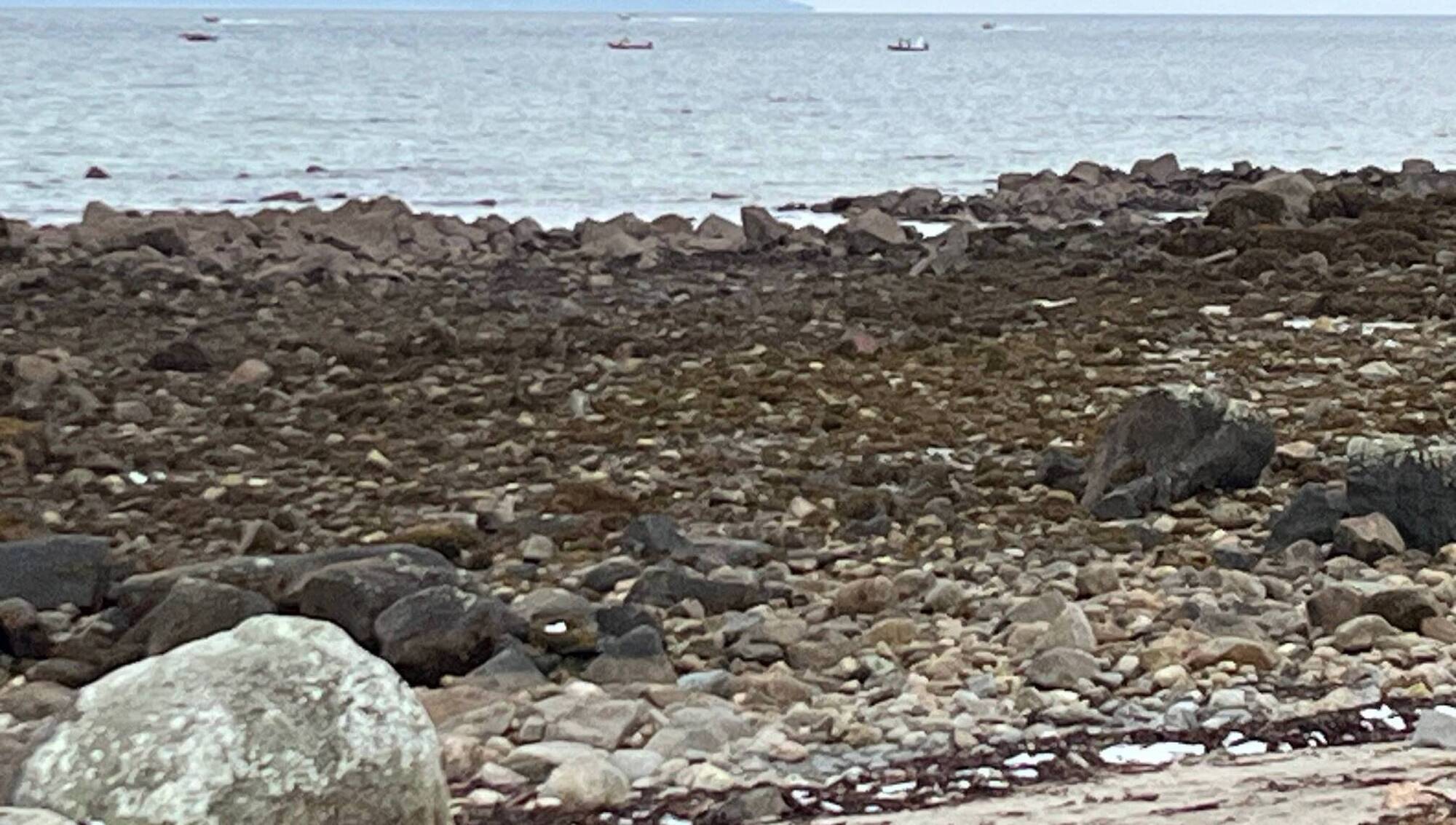
Search crews returning to base at Silverstrand near Barna in Galway after a body was discovered in the search for a swimmer missing for over a week. Picture: Media West (Ireland)
They met at the pitch. One of the largest search operations ever mounted along the west coast saw groups splinter and explore specific zones day after day. Those wishing to join as the endeavour stretched on came to the club.
What unfolded along the Galway coastline over the past weeks was extraordinary. On November 12, two swimmers went missing in dense fog at Silverstrand near Barna. 74-year-old songwriter Johnny Duhan drowned and was recovered that day. He was an immense talent who lived locally. Eleven days later, the body of 32-year-old Máire Ní Fhátharta was recovered after an enormous effort by various agencies, RNLI crew, local boat owners and volunteers.
It was made up of a rich tapestry from the local parish and beyond. They went out at morning and night, braving high and low tides. Everyone was assigned a group to join, anyone willing to get involved along the way was asked to come to Barna’s church or GAA pitch equipped with high-vis gear and a torch. Updates were circulated on social media with every imaginable community group playing their part. An integral facilitator in all of in that was the local clubs.
“We organised everything through our WhatsApp groups,” explains Barna chairperson Gráinne McDonagh. “They just turned up, every single day. My own brothers were there every night. It was absolutely everyone. They just pulled together.
“This happened in our area. I’ve never before experienced a tragedy like this before and hope we never see anything like it again. A double drowning. The club members wanted a way to help. We put it up one day about needing sandwiches to feed the searchers.
“So, I dropped it into the parents’ group and the girl organising it rang me later to say they actually have enough, it got to a stage where they had too much food. This wasn’t just our club either. It was every club. Everyone was looking for a way to help and it took off.”
How a shattered community united to bring one of their own home was a sight to behold. Hundreds walking in a line along the 45km stretch of sea and land. An online fundraiser raised over €225,000 to help cover the costs. All excess will be donated to voluntary organisations that aided the search.
Máire Ní Fhátharta was a daughter of Peig and Johnny and of An Spidéal. She worked as an Irish language planning officer in the village. Her family described her as a caring, hilarious, goofy and driven individual who impacted many. “We are under a cloud of sadness here and Máire is gone,” posted An Spidéal GAA club this week. “But all the support shown by the people of the area here and further from home was very heart-warming.”
They were only every going to come together. It is all they know. This has long been the bedrock upon which the west of Galway endures. Resilience is a requirement in the face of rural depopulation, higher poverty rates and prolonged failure to invest in essential services. The source of their spirit is not this hardship. It is the pride of place despite all of that, the ability to continually, collectively overcome and prosper.
Two-time All-Ireland Seán Óg De Paor hails from An Cheathrú Rua. He headed east after primary school to finish his education. In his terrific autobiography, Lá an Phaoraigh, he recalled being mocked for speaking Irish, his hurt at the perception Connemara football was superfluous to the needs of the county and how people talked down to him because of his background.
He remembered 1982, when he was in fifth class and a meeting was held in the local hall to bolster both the Irish language and Gaelic games. It pulled teams from the Gaeltacht, “ó Charna go dtí An Spidéal.” A primary school competition was established where generations of children came together and competed against each other. They needed this cooperative competition to raise the standard.
In 1996, De Paor’s An Cheathrú Rua became the first Gaeltacht team to win a county title. Two years later a host of players from the west backboned Galway’s All-Ireland title triumph. Seán Óg de Paor brought style and substance to that side.
An Cheathrú Rua have fallen on hard times in recent years. They suffered back-to-back relegations from senior down to junior. On Saturday, they take on Ballymote in the Connacht Junior championship final having secured their return to the intermediate grade this year.
That return was driven from their roots. A determined group have gone undefeated all year. Their manager is Maghnus Breathnach of neighbours An Spidéal. The coaching team is made up of several club stalwarts including Padraic de Paor, Seán Óg’s cousin.
So much of that group are connected to friends and families impacted by this tragedy. Every day the club shared an update and meeting point for its searchers. They met at Halla Éinne, beneath the black and red club flag hanging from the front.
This sort of ethos is far from unique to the GAA. Look at the last month. It radiated from all corners. The Galway Sub Aqua Club took to the water from day one. They were joined by the Athlone club soon after. Then they kept coming. From Longford, Cork, Dalkey, refusing to stop until they’d finished the search.
Humans have always had an endless ability to do good and demonstrate such generosity, especially in tragic circumstances. GAA clubs give them a way to show it.
“We saw it with covid too,” says Barna chair McDonagh.
“I feel it all the time as chairperson. With everything, whether it is a guard of honour or anything you ask them, it is all hands-on deck. I wonder what would happen if we didn’t have clubs like this. Everyone knows what is needed, we have hundreds of people in our WhatsApp. It is community-based, it would be so hard to gather people without something in the heart of it.”


CONNECT WITH US TODAY



Be the first to know the latest news and updates