Wayne Sherlock interview: Is there such a thing as caring too much?
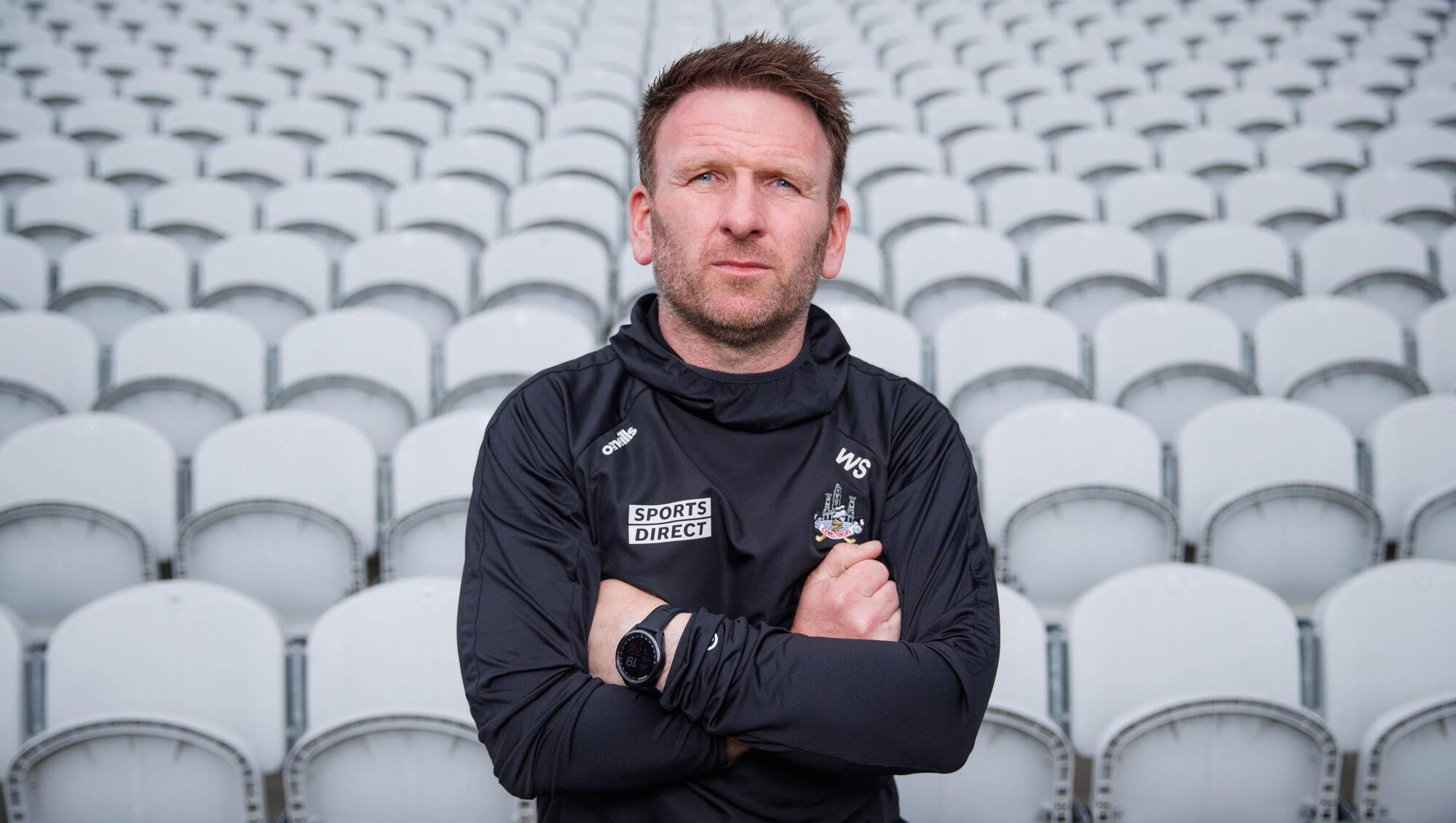
STRAIGHT SHOOTER: Cork selector - and general legend - Wayne Sherlock. Pic: Tom Maher, Inpho
FUNNY how it works. The last time Cork took to Croke Park as All-Ireland champions turned out to be Wayne Sherlock’s last championship appearance for them.
At the time of that 2006 All-Ireland final, no one could have foreseen that it’d be his last big day in red and that his county would have to wait at least 18 years to regain that status.
And if you had told Sherlock then or even a few years ago that he’d back in 2024 as a selector and backs coach to try and help end that famine, he’d have laughed: Gwan away, boy, no chance!
That dressing room was loaded with good speakers, deep thinkers. Obvious prospective managers and coaches.
Him? He’d have seen himself much like others who took to that field would have viewed him. “A very quiet and earnest fella,” as Donal Óg Cusack put it in his autobiography. “A total baller,” as Tommy Walsh once purred.
“I can’t say when or if I ever got the coaching bug,” admits Sherlock. “I loved playing too much and wish I was still playing.
“I was involved alright with Blackrock but that’s because you always give back a bit to your club. But I never said, ‘I’m going to get involved with Cork.’
“Then Pat Ryan rang me when he was taking over the U20s and told me who was else was involved [Fergal Condon, Brendan Coleman and Donal O’Mahony, all now selectors with the senior team]. That was a big thing for me. I knew they were genuine fellas. No egos.”
Ryan identified that Sherlock was consistent with that profile. And that players would respond to him because he could relate to them. Wherever in the pecking order they’d be, at some stage he was them. An All Star, then inexplicably a fringe player.
All of it informs him now. The bad as well as the good, so it can make Cork and their experience better.
In that 2006 final he was brought on with 25 minutes to go for team captain Pat Mulcahy. In Cork’s three previous games he didn’t get a single minute. In their opening game against Clare, he did – a single minute.
Yet going into that match he was 'flying' in training and challenge games, according to Brian Corcoran in his autobiography from that year. Early in 2005 Sherlock was injured and by the time he’d returned Cork had an established six backs that were all either All Stars or Young Player of the Year. But to Corcoran, the selectors had to find some way to accommodate Sherlock. “I don’t know how they can leave him out.”
Sherlock won’t disagree with Corcoran’s assessment. He didn’t know either how they left him out. And for that he’ll fault himself as well as them.
“Ah, it was horrendous,” he says. “In 2006 I was probably playing the best hurling I’ve ever played in my life. Had never played better. But I didn’t approach anyone and ask why wasn’t I playing because I didn’t want anyone to think ‘Oh, he’s pissed off’ and possibly upset the panel. But I was probably overthinking it.”
So should you have approached someone? “One hundred percent! But I also knew that if I asked that question they couldn’t have looked me in the eye and given me an answer.
“That’s why I always say to players: Come to me if you have an issue with anything. It might be a corner back wanting to work on something. Or it could be a corner forward. ‘Why am I not on the 26?’
“That’s the one thing about Pat and all the selectors – we’re an open book. Now, you have to be completely honest with them. ‘You need to work a bit more on X.' It could be a small thing. ‘This fella is going better in training, he showed the last time we played this next opponent he matches up well with them.’ But you have to be able to give a player a reason why he’s not playing.”
The season following 2006 provided another harsh lesson for the coach he’d become.
When Sherlock chose 'Time To Say Goodbye' for the team playlist on the eve of the 2006 championship, Dr Con Murphy joked with Corcoran that Sherlock was maybe trying to tell them something. It wasn’t quite time then but during a training session towards the end of the 2007 league Sherlock walked up to Gerald McCarthy and informed him that it was.
“With Gerald it was because I wasn’t let play with my club in a league game. I’d been left off the team for a game or two before that so couldn’t fathom why I couldn’t play with the club to keep sharp.
“At that stage I was nearly 29 and just wanted to hurl. I loved the game too much not to be able to play matches. So that’s one thing we do now: if a fella isn’t on the 26, they can play away with their clubs.”
Sherlock would be too earthy to claim to have a coaching philosophy. But if you were to summarise it for him in his own language it’d probably be: No Bull – Balls Out.
“With the players we have I look at their positives. Seánie [O’Donoghue] has unbelievable pace, power. But sometimes he would have stood off and let his man win the ball. I told him ‘I want you attacking the ball 100 percent.’ Niall O’Leary the same.
“I don’t like defenders who are cautious. ‘Oh I can’t go here. I’ll let them win it first, then try and get it back off them.’ I want them to go balls out. Win the ball first. And if they miss it, so be it. Don’t be afraid to make a mistake.”
There are exceptions, mind. “[Aaron] Gillane is unbelievable. He wants to be behind you. If you leave him behind you, he’s impossible to defend; he’ll just catch it behind you. If the ball is in the air, you have to be behind him.”
That’s a recurring theme over the conversation: his respect for opponents. Last month he was in Kilkenny for an underage camogie blitz his daughter was playing in and bumped into the same Eddie Brennan he marked in an All Ireland final 20 years ago. And for half an hour they chatted away like a pair of old friends.
“You play corner back and people think all kinds of things. I never scutched a fella in my life. Eoin Kelly from Tipp is in Cork a good bit and it’s brilliant anytime I see him.” There’s an even greater bond with teammates, especially with those who got over the line with him. He wants the team of 2024 to have that connection. And for that to happen it’s best to have cultivated a bond before sight of any cup.
“You can have a situation where a team management will go, ‘Oh this fella isn’t playing well.’ Well, why isn’t he playing well? It might be something going on at home, something at work.
“I’d say there were some members of management over the years I had that never knew where I worked [it’s Thermo Fisher in Currabinny these days, for the record].
“That’s why I’ll always ask a fella about how are things at work, college, home. Because then fellas come to trust you: He doesn’t just care about hurling, he cares about me. And it’s a genuine care.” No bull.


A collection of the latest sports news, reports and analysis from Cork.
CONNECT WITH US TODAY



Be the first to know the latest news and updates