It just needs one team to properly undermine this All-Ireland football format
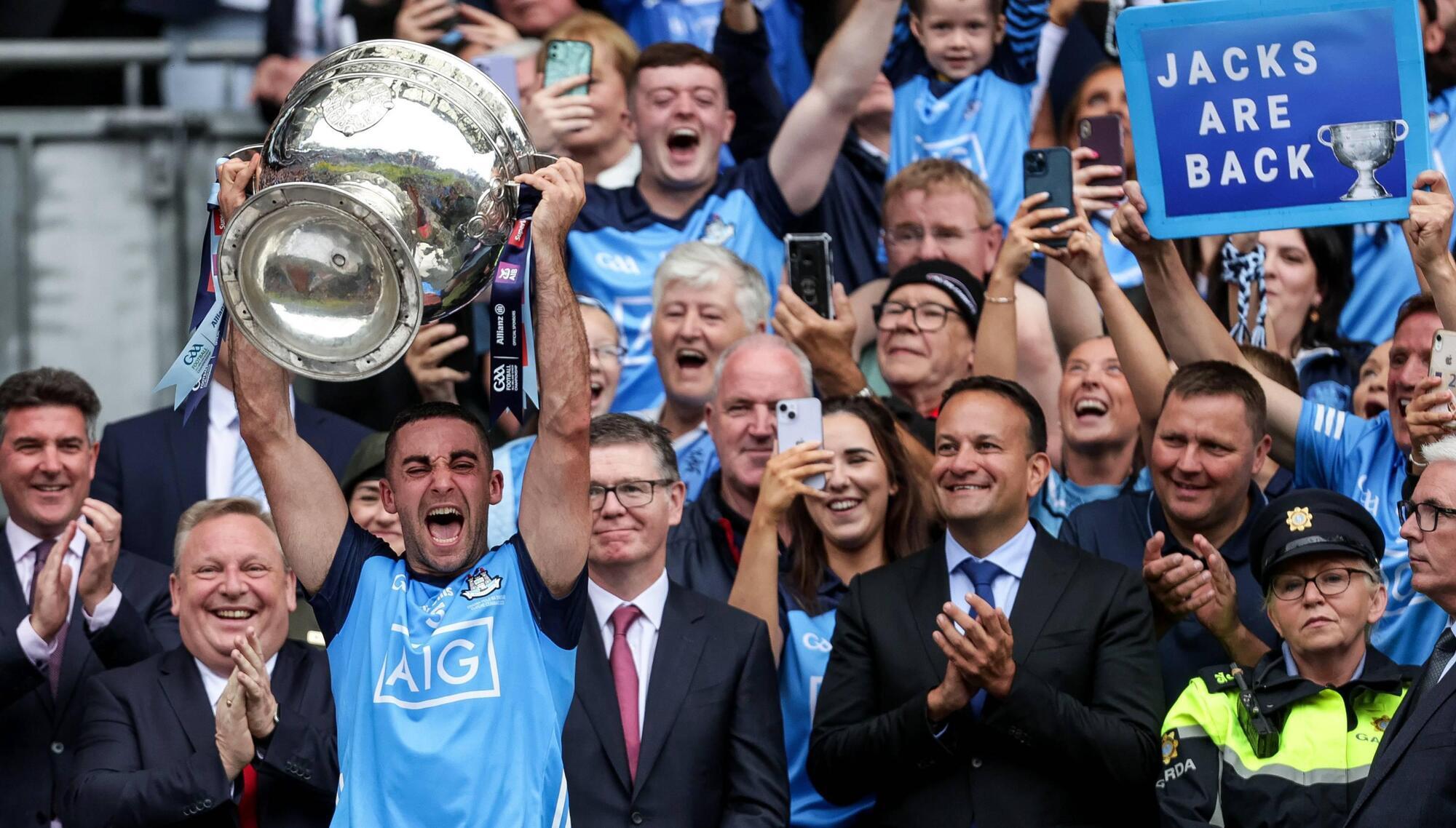
Dublin’s James McCarthy lifts the Sam Maguire Cup. Pic Credit: Laszlo Geczo, Inpho.
In his last and 20th pre All-Ireland final press conference, Brian Cody was asked about the prospect of achieving a first.
Had Kilkenny beaten Limerick two years ago, they would have become the first county to lift the Liam MacCarthy Cup having lost more than once along the way.
Exacting revenge on Galway for a Leinster final surprise in 2012, Cody had led Kilkenny to All-Ireland glory in that year’s Leinster championship.
However, in 2022 the Cats were on the wrong side of round results against Galway and Wexford.
“Ah sure look, you learn a lot of lessons from matches like that,” he said. “From any match you play, you are going to look back on. We have all looked back on the finals that we lost over the last number of years.”
Leinster defeats were few and far between for Cody in his 24 seasons as Kilkenny boss. Those 2022 losses represented 20% of just 10 defeats. Over half of those reverses came in the 2018, ’19 and ’22 seasons.
Kilkenny belied their early championship form to beat Galway in a Leinster final and later compete with Limerick in the ultimate decider.
If there was a football equivalent, it was Tyrone in 2018 when courtesy of the Super 8 format they were able to put behind them defeats to Monaghan and Dublin to meet Dublin again in that season’s All-Ireland final.
The following season, Mayo and Tyrone made the last four despite losing twice before Covid forced the GAA to discontinue the two quarter-final groups of four phase.
Like it was in Kilkenny in 2022, that margin of error – two defeats – was just about forgivable but it didn’t sit too easy with the traditionalists. Should a team qualify from any of the four groups this year having been beaten three times, the game will be up on the championship’s current guise.
After all, four provincial winners and three of the four runners-up won their opening games, it is entirely possible that one of the third-placed teams will progress to the All-Ireland preliminary quarter-finals with two defeats in the group stages having earlier been knocked out of their respective provincial championship. Last year, just three of eight provincial finalists won in Round 1.
It may just be that Group 1’s Armagh or Derry make the last 12 having been beaten three times. In the case of Derry, it’s possible they could lose a third consecutive championship game this weekend against Armagh and need only beat Westmeath to reach the knock-out stages. Division 1 champions or not, if that comes to pass it shouldn’t sit easy with administrators.
In Group 2, away victories for Dublin and Mayo this Saturday would set up the prospect of Cavan and Roscommon duking it out on the final day for third spot each having lost thrice and in Roscommon’s situation, like Derry, not yet having won a championship fixture.
Meath could be subjected to another hefty defeat in Group 4 on Sunday but even if Kerry do hand them their backsides it will all come down to facing Monaghan at a neutral venue in the middle of next month.
Fixture makers will argue that is the beauty of the competition, that so few teams are out after the second round. Last year, Clare were the only county confirmed as casualties after the second round but this a system that over-rewards mediocrity.
Tomás Ó Sé’s idea of two-defeats-and-you’re-out, which had been the structure for the Kerry senior football championship between 2002 and ’19, is a better one than the current format.
All 16 teams would be guaranteed two matches instead of three as is the present situation. The eight first-round losers would face off against each other to make the last 12 where they would face the losers of the games between the first round winners with the victors qualifying to face the counties who have won twice in All-Ireland quarter-finals.
Not only would it decongest this compacted All-Ireland SFC series – reducing the number of games from 35 to a more manageable 27 – every game would mean something unlike now when the only thing supporters are sure of is their team has not yet revealed itself or isn’t yet dead.
It’s either applying that change or insist only two teams qualify from each of the four groups because the current format is too slow a burner and the poor attendances underline it. If the GAA are determined to avoid dead rubbers, operate a bonus points system so that there is more on the line come the final round.
Competition integrity is a buzz phrase at the moment but if even one of the last 12 happens to be a county that's lost more games than it has won, there is a problem.
One that will likely need solving at Special Congress in December.


CONNECT WITH US TODAY



Be the first to know the latest news and updates