Galway show the course for navigating choppy waters that accompany stadium funding
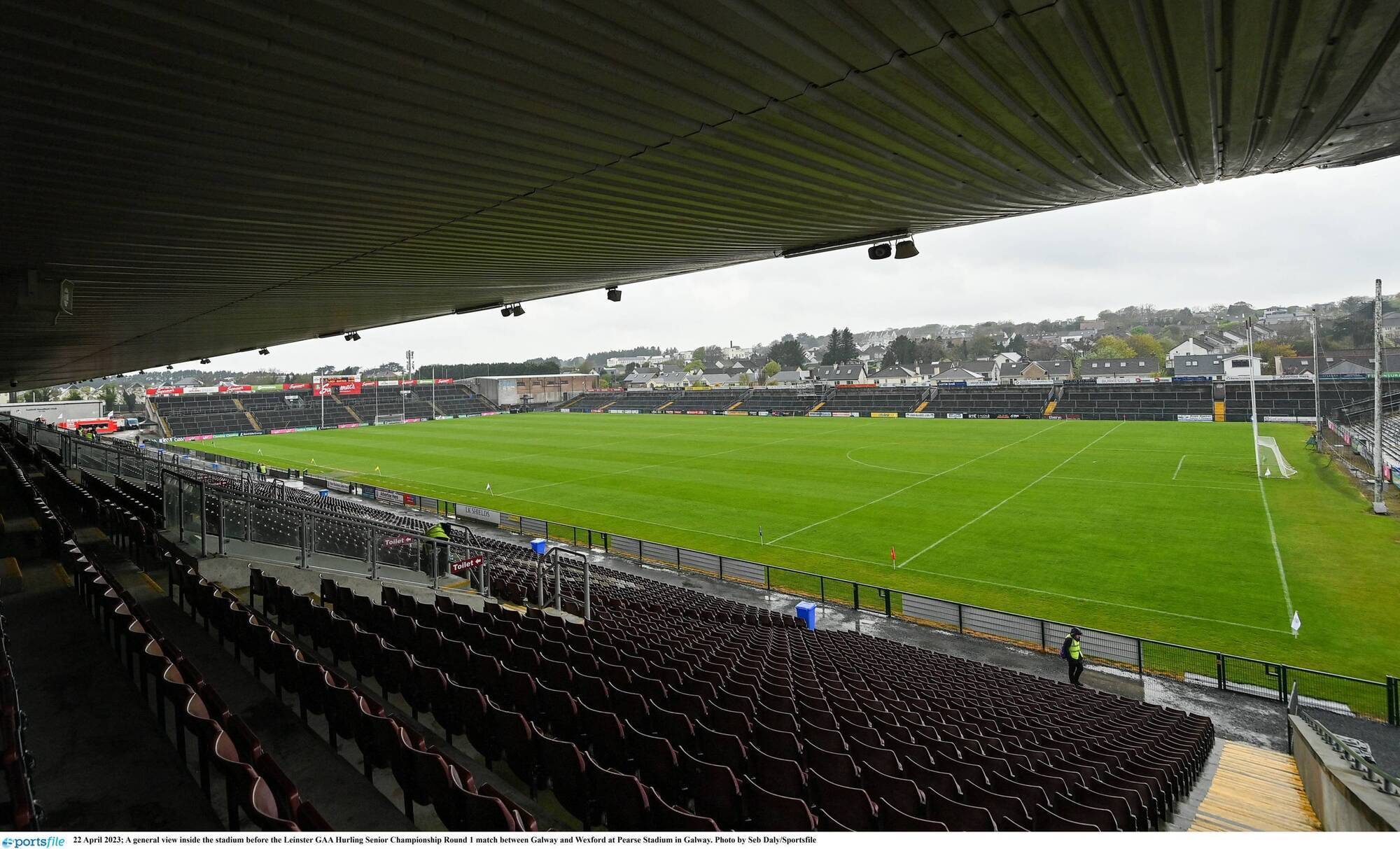
WHAT'S YOUR APPROACH? A general view inside Pearse Stadium in Galway. Pic: Seb Daly, Sportsfile
After Ed Sheeran’s 2018 tour passed through Pearse Stadium, Galway GAA officials were left with one overriding takeaway: Never again.
63,000 people came through the gates over two days, but the payout wasn’t worth the cost. The pitch took a year to recover. The grounds did not have major facilities for food and bars like Páirc Uí Chaoimh or Croke Park do, restricting the margins. The logistics took an age to arrange. Then they had to listen to Ed Sheeran.
“From my perspective, the value of concerts is highly over-rated,” Galway chairperson Paul Bellew told the delegates at their annual convention last month.
“Our stadiums are GAA stadiums. Without getting into other county situations, if we were ever to move matches which are for our games to accommodate concerts is just anathema to me.”
The singer was in Páirc Uí Chaoimh around that time too. Cork are one of those unmentioned counties that will move matches to facilitate concerts, Bruce Springsteen’s May trip meaning the Cork footballers will be in Páirc Uí Rinn for their opening round-robin fixture in the Sam Maguire Cup or the Tailteann Cup.
Galway, like Cork, are a dual county battling financial realities on numerous fronts. Over the next 18 months, they will spend the guts of €2 million on infrastructure projects. The training centre at Lough George recently underwent a floodlights development, the hayshed in Tuam Stadium is already down, Pearse Stadium needs floodlights too.
That hard lesson learned from a stadium with debts now in excess of €30 million applies here: none of this will come through borrowing. In this case, they seem capable of delivering on it. Plenty will pour in from the ‘Win A Home’ fundraiser that yielded €1 million profit. Some will be sports capital funding.
Bellew flagged another problematic train coming down the tracks at that convention too. Part of the Pearse Stadium project involves selling naming rights. They have two or three candidates, he explained, however “because of the name of the stadium, there are concerns".
It emerged this week that US company Dexcom were in the running before opting for the Sportsground instead.
Like the other 11 counties who have sold their naming rights for stadiums named after someone, Galway were unwilling to lose the nod to Pádraig Pearse. They have their own hefty annual repayments to deal with thanks to the abandoned Mountain South project, a once-planned Centre of Excellence in Athenry that became a costly disaster.
Ultimately, the bottom line is the bottom line: The broad brushstrokes of this week’s controversial deal make eminent sense. A lack of compromise between commercialism and history does not.
There is a broader point in all of this, one that should influence our national consciousness and how we consider large-scale sport infrastructure-funded projects.
Facilities, by definition, must serve a specific purpose. With several counties poised to plough on with their own ambitious redevelopment projects, including across the border in Killarney, a fitting starting point is to determine what specifically we need the ground to be.
Out west, they have decided that investing singularly into one sizeable capacity stadium makes little sense. Better to spread it across the likes of Athenry and Ballinasloe as well as Pearse Stadium and Tuam.
Service clubs who will play there during the county championship while having adequate grounds for the county. It’s sensible rather than sensational. Ever more so when you factor in integration.
Which brings us to the final pillar of Galway’s plan. Delegates were told on that December night that integration is the final frontier. That means equality. Equality means shared access with sister organisations.
“It is going to require support elsewhere,” Bellew warned, before urging Irish sport to collectively get creative.
“We have had large-scale investment in other sports in Galway in the last few weeks with a playing membership in this county that proportionally is nothing. I think it is time we put the chest out and really started looking and speaking to our politicians.
“This isn’t a criticism, but to me we have to come together with the LGFA, with camogie and with other sports. I have no issue saying this. We can use municipal facilities. Why not do it? There is a lot of talk about an airport site out there, people wanting to buy it. We’d put it to good use. That is something we need to think about and be serious about and come up with a proper plan.”
Croke Park have maintained the responsibility for the debt is Cork’s alone. Responsibility is power and pressure. That merely reinforces why the worst thing that can come from all of this is the idea it is a sad saga when in reality it should be a warning.
It is coming up on 20 years since JP McManus met with Limerick county board officials who were struggling with a €7.5 million hole after a complete overhaul of the Gaelic Grounds. Under the Mackey Stand after a Munster championship match, McManus handed over a €5m bank draft and ran off to catch Galway versus Kilkenny.
Others don’t have that luxury. The times are changing and so too must our thinking. What worked before won’t work now.


CONNECT WITH US TODAY



Be the first to know the latest news and updates