Dublin will miss calm and calculated Costello
His departure announced in April, us GAA correspondents and writers have had six months to digest the fact there will be no more thought-provoking offerings from Costello.
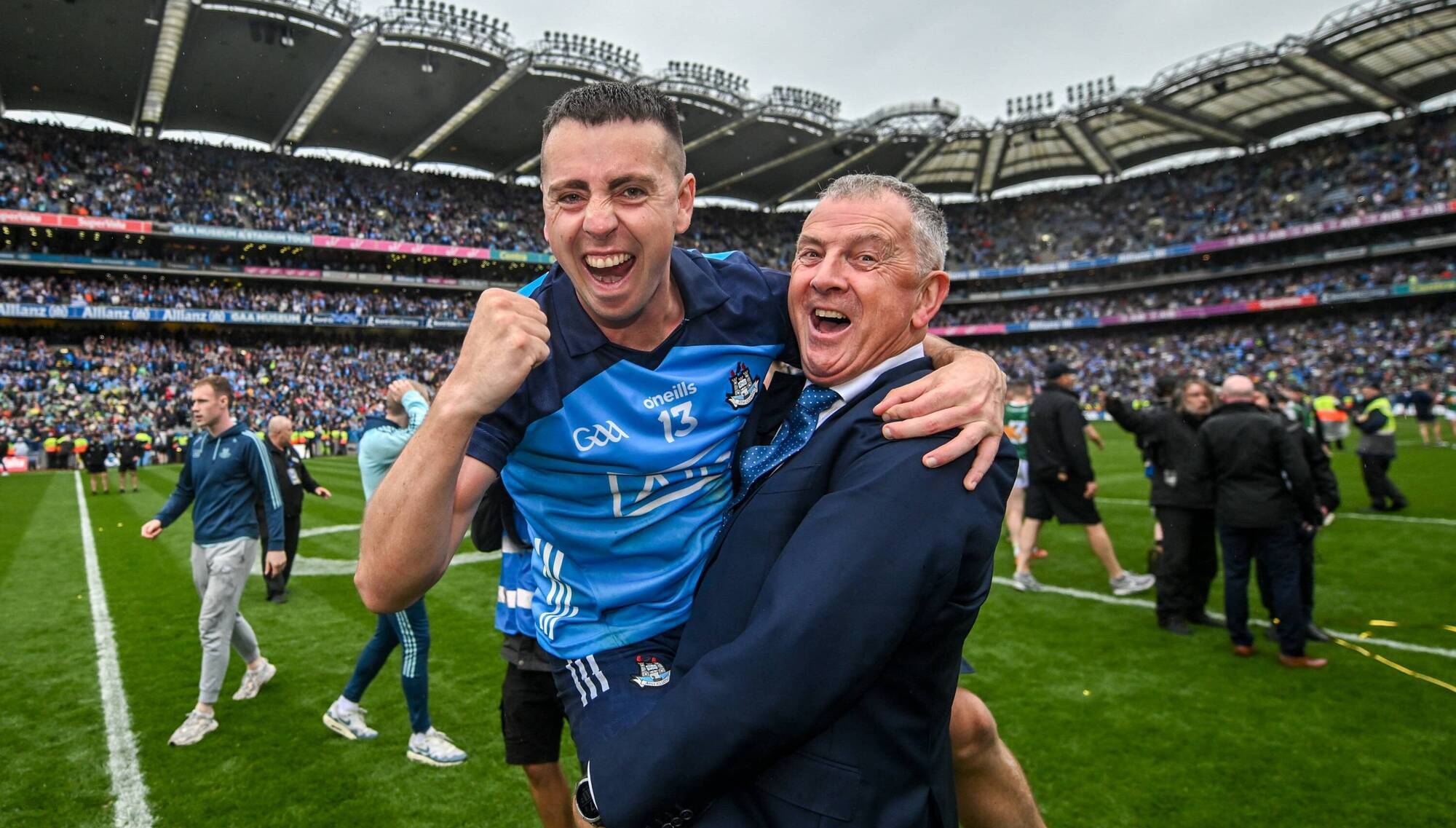
John Costello celebrates with his son Cormac Costello after Dublin’s most recent All-Ireland triumph. Picture: David Fitzgerald/Sportsfile

John Costello celebrates with his son Cormac Costello after Dublin’s most recent All-Ireland triumph. Picture: David Fitzgerald/Sportsfile

GAA state of the nation addresses come in three forms. The director general’s pre-Congress report, the president’s speech on the second day of that annual gathering, and John Costello’s annual report to Dublin convention.

Released on the first or second Monday of December, the outgoing Dublin chief executive’s observations and musings on the season past made for essential reading and a page lead in the following day’s newspaper.


Costello was chiefly concerned about his own flock and spent a lot of the 2010s using the platform to hit back at those who had found fault in the success of the Dublin senior football team. However, he was never short of opinions about the organisation in general and his consideration for it extended beyond the county’s borders.

His departure announced in April, us GAA correspondents and writers have had six months to digest the fact there will be no more thought-provoking offerings from Costello. Finishing up next month after 29 years, unless his successor Finbarr O’Mahony affords him the opportunity to pen one more treatise, that will be that for the Whitehall Colmcilles man.

Lasting as long as he did in an institution that is not without its challenges — and only second to Cork in terms of a games programme — would alone be a testament to Costello. That in the final third of his time in charge he has overseen Dublin’s football greatest era, if not the greatest of any county, will form the tenet of his legacy.

James McCarthy was right to praise Costello as he accepted the Sam Maguire Cup in July. His calm control over the behemoth has been crucial but his savviness too. Establishing Dublin’s residency in Croke Park from 2011 onwards in the form of the spring series was inspired.

So long as they are winning, that cosy relationship with GAA HQ will always be a factor. Last year after they were drawn against Dublin in an All-Ireland SFC quarter-final, Cork contacted Croke Park and Dublin about the possibility of commencing a home-away agreement between the counties. In their response, Dublin stressed Parnell Park was their home, effectively putting the kibosh on the idea.

Were he still secretary in Cork, Frank Murphy would have admired Costello’s chutzpah, something he hasn’t been averse to demonstrating from time to time. In the famous “Blue Wave” strategic plan (2011-17), Costello sought provincial status funding for his county, who for the majority of his time in Parnell Park were in receipt of €1 million per annum in games development funding from the Government.

That document also set out the objective of winning an All-Ireland senior title every three years, a goal surpassed by a scintillating run of nine All-Irelands in 13 seasons, although the aim of claiming an All-Ireland senior hurling title every five years was never realised.

One of Costello’s greatest decisions was appointing Pat Gilroy, who as manager criticised that football target as unpractical. Costello took a punt. Jim Gavin was U21 manager having brought Dublin an All-Ireland title at that level as coach in 2003. Gilroy was player-manager with St Vincent’s but as he said himself in 2013: “I had never really managed a big group on a stand-alone basis, apart from that year and a half with Vincent's.” 

After the earwigs were startled in the 2009 All-Ireland quarter-final against Kerry, there was no histrionics in his subsequent annual report, only some misdirection as he questioned the worth of winning Leinster. “Affording the provincial winners parity and the ‘luxury’ of being able to lose one game, like all of the other competing teams, could be examined if we are hell bent on preserving our provincial structures,” he wrote.

As the GAA world wondered who would succeed Gavin following his surprise resignation in December 2019, Costello’s announcement at county convention couldn’t have been more low-key. Taking out his phone for faux dramatic effect, he confirmed that Dessie Farrell had earlier agreed to take the role.

It was in keeping with the “oh, by the way” extension of Gavin’s spell in May 2015, which was signed off six months in advance of it being announced by the then manager prior to their Leinster opener against Longford.

Costello sure put the “b” in subtle. Dublin’s annual accounts may be lacking in detail and outside of his December remarks he would reserve his thoughts for the floor of Congress, but it was clear below the serene surface was a lot of paddling.

As the GAA’s accounting year concludes at the end of the month, Costello will undoubtedly want to make the transfer of power to O’Mahony as peaceful as possible. A new jersey sponsor to replace long-time backers AIG should be in place for the Christmas market, so lucrative off the back of an All-Ireland triumph. The Hollystown centre of excellence project is coming along. There are strong indications Farrell will stay on but if so it won’t be confirmed so much as assumed.

After 29 years, it shouldn’t be surprising that the understated yet highly effective nature of its leader should rub off on the county but for one the size of Dublin it is quite the accomplishment.

Email: john.fogarty@examiner.ie 

***

Rotating Munster final venues makes sense 

Last month, Cork chairman Marc Sheehan proposed the idea of the Munster senior hurling final being played at Páirc Uí Chaoimh, LIT Gaelic Grounds and FBD Semple Stadium on a rotational basis.

That was, of course, outside home-away agreements which are in place between those three host counties. As their stadia aren’t considered large enough to stage provincial deciders, there are no such deals when Clare and/or Waterford reach the final.

The word is the response to the idea put forward by Sheehan, which isn’t all that earth-shattering given that Munster GAA regulations allow for any of the three venues to be a neutral venue for a final, has received a mixed reception in other counties.

Clare clearly had an issue going to Cork for this year’s Munster final yet when it came to facing Dublin in their All-Ireland quarter-final they made it clear to authorities that they were prepared to head Leeside.

Surely it makes sense for the provincial council to share the honour among its three largest grounds, which are all capable of hosting such a prestigious event. As they look to service their hefty stadium debt, anything Cork do or say about putting games in Páirc Uí Chaoimh is viewed in that context, but as the most modern venue in Munster and the improvements in getting there and the quality of the pitch, its suitability doesn’t need to be underlined.

It's 11 years since the last final not involving a home-away agreement was played in Páirc Uí Chaoimh. Notwithstanding its reconstruction, Limerick and Thurles have hosted five since.

***

The Glen won’t want anyone’s pity 

Of all the feelings Glen Rovers must have right now, what will anger them the most is the reality of being pitied.

Sure, there will be hurt and perhaps a sense of humiliation in being the group to lose the club’s senior status after 97 years but what will rile them most are the sympathies.

Reading some of the social media reaction to their relegation play-off defeat to Kanturk on Saturday, you’d swear a book of condolences had been opened for the Blackpool club. The Glen are not too proud a club to realise this fall requires soul-searching and perhaps a bloodletting of sorts, but they will not want anyone feeling sorry for them.

Much like Austin Stacks when they were relegated in Kerry last year having won the county title the season before, they will have to get over the shock first. Speaking at that time, Stacks chairman Shane Lynch spoke of “upset and sorrow” being felt in the club. Glen Rovers’ house is just as private, their pain just as acute.

There will be no consolation that it took a monumental effort from Kanturk, who made just one substitution which was enforced, to beat them. In contrast, Rovers brought on five replacements as they fought to stave off the drop.

In Cork’s regrading of its championships three years ago, it was only a question of time before a hurling giant suffered the ignominy of demotion. When the tears dry, The Glen have to get planning. It may be a different code and county but Stacks have shown that just as no club is too big to go down no club is big enough to automatically come straight back up.

On too few shoulders the Glen have relied these last few years. If they are to make their status as a senior A team as short as possible, the load simply must be shared.

x

More in this section

Cookie Policy Privacy Policy Brand Safety FAQ Help Contact Us Terms and Conditions

© Examiner Echo Group Limited