GAA teases out options for achieving management gender balance
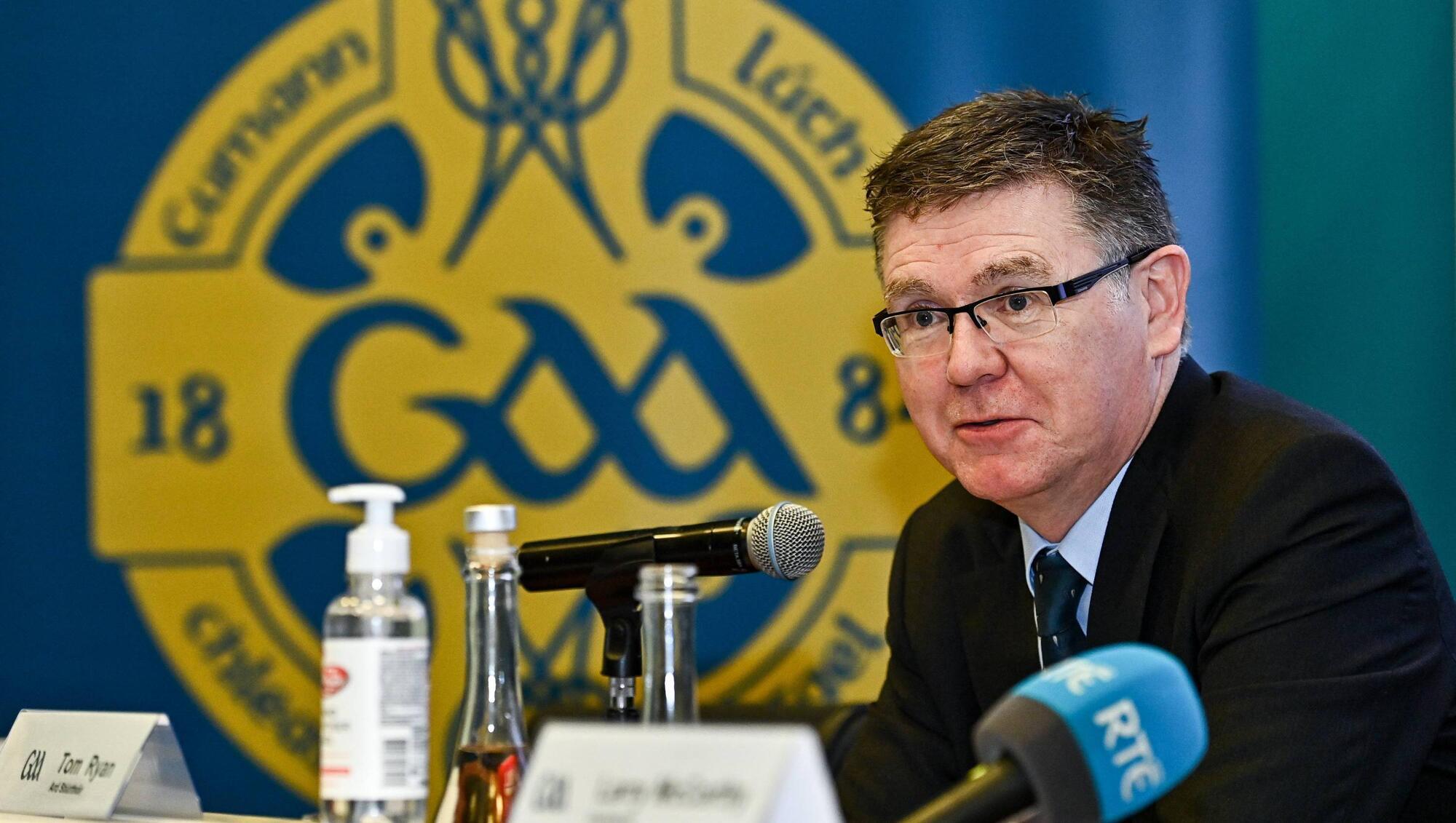
Ard Stiúrthóir of the GAA Tom Ryan
Removing the GAA director general position from the association’s management committee (Coiste Bainisti) is among a number of recommendations aimed at achieving funding-dependent gender balance on the board.
As sports bodies’ state funding is contingent on 40% gender quotas on its governing bodies being reached by January next year, the GAA are considering proposals to ensure they continue to receive €3 million per annum from the Government, which does not include capital and club funding.
Currently 16%, three women on a 19-person body, only one of them - nominee Anne Looney - has voting rights on Coiste Bainisti.
Ladies Gaelic Football and Camogie Association chief executives Helen O’Rourke and Sinead McNulty are non-voting members.
Recommended in the “An Coiste Bainistíochta Board Diversity” document, which was presented by GAA director general Tom Ryan to Central Council on Saturday, is defining management committee members as those with voting rights, assigning votes to the LGFA and Camogie representatives while stipulating they must be voluntary and assuming they are female, while ending the Coiste Bainisti membership of the director general and director of finance, GAA president-elect and immediate former president.
Going forward, one of the trustees would be female as well as one of two Central Council-appointed directors and on a rotation basis three provinces would appoint female directors as opposed to now when directors have been elected.
A period of four years to implement the changes is anticipated with the gender balance target achieved at the outset.
Other options are also outlined. Curtailing male representation to attain the quota would involve removing voting rights from the GAA president-elect, the two trustees/Congress and four provincial representatives while giving voting rights to O’Rourke and McNulty and two independent appointees next year. The board would reduce in size to 10. While simple, there is a warning that the board possibly being too small and the influence of the provinces on it being diminished.
It is envisaged the female membership could be increased without impinging on the male representation by augmenting the size of management committee to 22 members with the LGFA and Camogie representatives giving voting rights as well as seven new independent appointees. However, it is highlighted that the appointees’ presence would be disproportionate.
The briefing paper states the quota has to be met: “A school of thought may persist within the Association that gender diversity at board level is not a target fairly imposed upon the GAA. The argument here being that our sports are male, and our leadership is drawn predominantly from former players, and is largely elected democratically.
“Those arguments notwithstanding, this ignores somewhat the prevailing mood and the responsibility of the GAA to adopt and change and strive to improve.
“We provide games for girls up to the age of 12. We have almost 80,000 full female members. Approximately 23% of our total membership is female. We promote ourselves as a family organization and attendances at our games are approximately 50/50. Almost 30% of club officers are female. All of which illustrates that we are an Association with as much relevance to, and accountability to women as to men. And it is appropriate that our board composition should reflect that.”
While the document acknowledges the GAA could make a case for non or late compliance and they are both included as options, it warns of the reputational damage that might be done to the GAA were it not to implement the quota.
“There is widespread support for this initiative and failure to align ourselves to that support would belie our motto of ‘Where we all Belong’.
“The mixed message would be judged particularly harshly at a time when we are engaging with our sister organisations the LGFA and The Camogie Association about fundamental integration.”


CONNECT WITH US TODAY



Be the first to know the latest news and updates