Time for lifetime bans for GAA violence, says legal expert
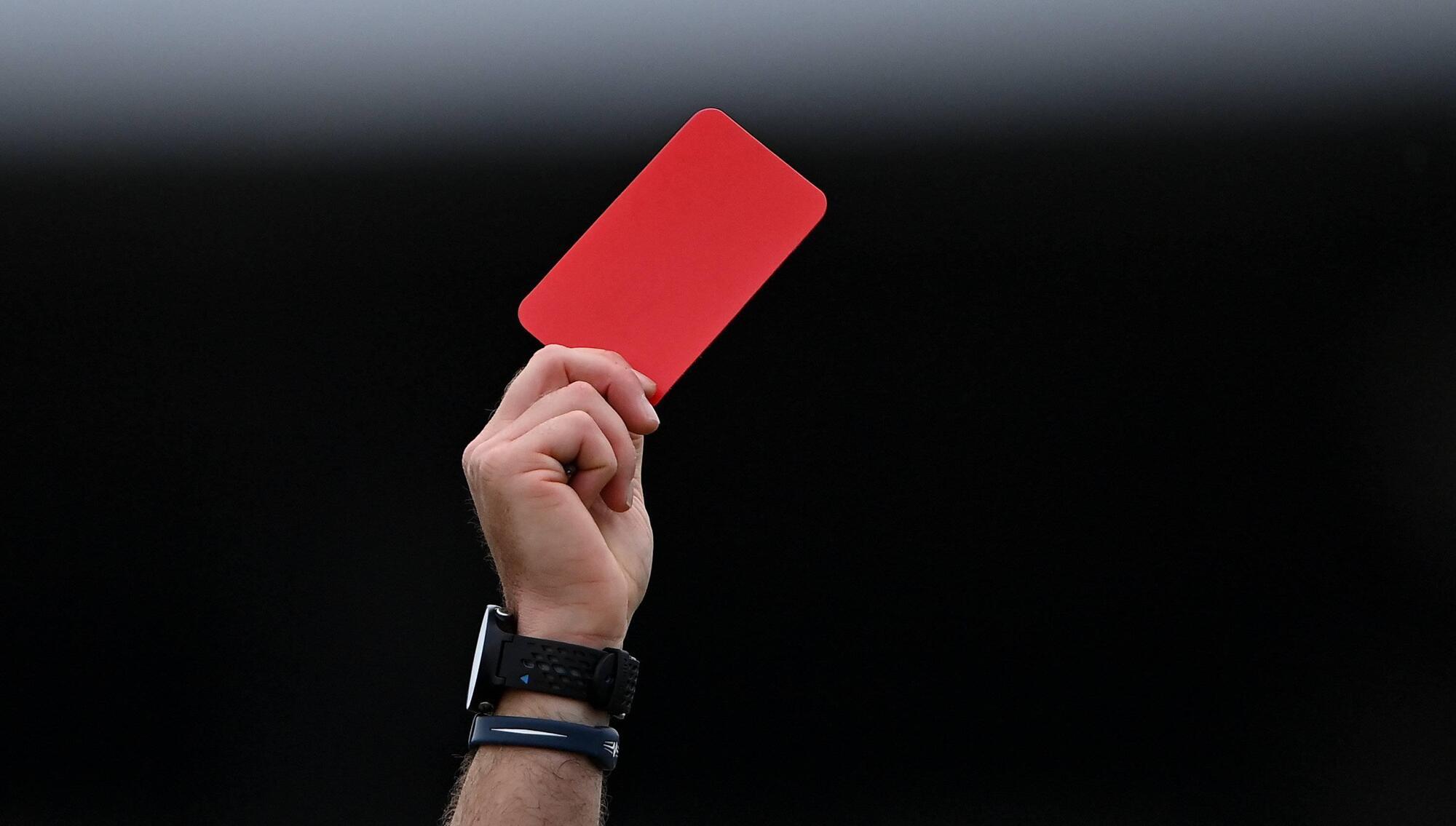
Niall Geaney, who has offices in Cork and Limerick and is a member of the FIA’s Formula One cost cap adjudication panel, intimates the GAA now has to adopt a zero-tolerance approach to physical attacks on referees.
Time for lifetime bans for GAA violence, says legal expert

ZERO TOLERANCE: The GAA should consider issuing lifetime bans to those members who assault match officials, says Niall Geaney. Pic: Piaras Ó Mídheach/Sportsfile

A leading sports law solicitor has suggested the GAA considers issuing lifetime bans to those members who assault match officials.

Niall Geaney, who has offices in Cork and Limerick and is a member of the FIA’s Formula One cost cap adjudication panel, intimates the GAA now has to adopt a zero-tolerance approach to physical attacks on referees.

“The disrespect shown to such officials again needs to be dealt with very severally by the GAA or we may find ourselves in a situation where it will be difficult to get officials to do the job for fear of reprisals,” sad Geaney.

“Match officials reports are a key element for post-match analysis and possible post-match decisions and as such match officials need to be protected to the highest degree by the sports organisations.

“Perhaps we need to consider extending the 96-week repeat infraction to a lifetime ban.”

Geaney continues: “You will have seen in the case of soccer where lifetime bans have been handed down for hooliganism in both the stands and as against match officials, and perhaps we are at that early point in the GAA of bringing in such a rule now to send a clear message that such actions are not acceptable.

“We currently have category 4 infractions with the maximum of 96 weeks.

“However, perhaps it is time to look at longer or even lifetime bans. I know Davy Fitzgerald, Brian Crowe, and the Wexford County Board have suggested this in the past and perhaps this is necessary.”

Acknowledging the investigation currently taking place into last Saturday’s violent scenes in Parnell Park, Geaney spoke in general terms about fighting among supporters and what problems they pose for the organisation.

“The GAA may indeed be subject to civil actions if a supporter is injured in the stands. When a supporter buys a ticket to a match, they enter into a contract with the GAA. There is an accepted level of risk attending a game.

“For example, a football hitting a supporter, which the supporter accepts can happen. Same applies to a person attending the Irish Open being hit by a golf ball or a motorsport supporter being hit by a passing car — all acceptable risks.

“However, the supporter cannot foresee a physical assault being a responsible act which may occur at a match and as such they do not accept that level of risk.

“As such, if they are subjected to a physical assault and can prove that they were not adequately protected by the GAA, then they may be able to bring an action against the GAA for any injuries sustained.

“No level of indemnity clauses or waivers would be accepted in my view to allow for a physical assault to be deemed acceptable to a supporter in the stands.

“Therefore, I cannot see an opportunity where a rule change can in any way protect the GAA from such scenarios.

“As regards criminal actions, the concern here would be if a stadium operator has now put in place the necessary requirements for a safe place to watch a match from and as such has breached the health and safety legislation then possible criminal sanctions could follow against the stadium operator.”

Geaney notes recent cases taken by players before the courts and settled prior to proceedings regarding behaviour deemed by the plaintiffs to be “disproportionate and as such akin to assault”.

Geaney firmly believes such violent acts need to be dealt with seriously by the courts as well as the GAA.

In a paper co-written with UCD law student David Egan earlier this year entitled “When GAA Players Cross the Line: Player Liability for On-Field Injuries to Fellow Players”, he noted criminal cases involving sports violence are becoming more prevalent in this country.

He also cited a Director of Public Prosecutions case from 2015 which established that “in Ireland it is accepted that an assault on the pitch is no different in principle to a ‘street assault at night’” and highlighted negligence is the preferred action in attempting to establish civil liability for a sports injury as assault — “criminal intent” of intentional trespass, is difficulty to prove.

At the same time, Geaney is wary that overly penalising minor infractions could ultimately damage the sport. “The Irish position is simply — there are limits to the extent of force which might lawfully be used in the course of a match and participation in the sport does not grant a licence to discard the restraints of civilisation and act beyond reason.

“That said, my view is that prosecutions should only be taken when players go well beyond what is deemed as such normal conduct within a particular sport.

“Otherwise, we risk a scenario where every player will be thinking secondly before a tackle, which might destroy the essence of the sport. This is a challenge all contact sports currently face.”

More in this section

Cookie Policy Privacy Policy Brand Safety FAQ Help Contact Us Terms and Conditions

© Examiner Echo Group Limited