Eamon O'Shea: There are 50 ways to strike the ball — learn them all
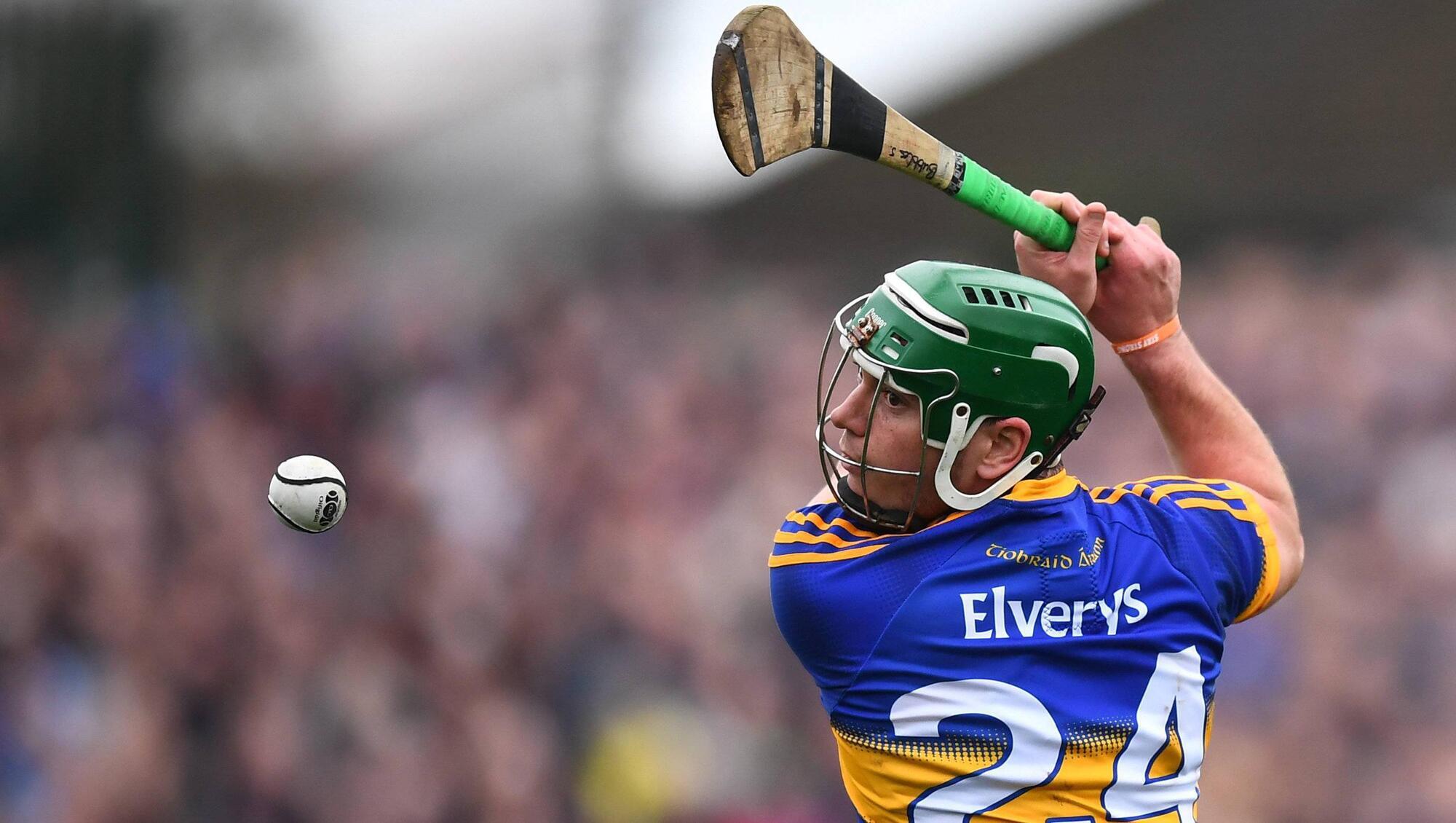
John O'Dwyer of Tipperary in action
PROPER reflection while coaching hurling, camogie or football is easier said than done. One rarely has the time for navel-gazing when you are in the thick of it. Reflection, however, is necessary if you are to be an effective and successful coach.

This brief reflection focuses on the why, what and how of coaching. Let’s start with the why do you coach. Most people answer that question by saying that they want to contribute to the development of others, by expanding the player's/athlete's skillset, thereby helping them attain sporting goals in an individual or team context.
But, do we always live up to that ideal of putting the player first? Sometimes the coach is too centre stage and too quick to give answers to the player or athlete. The best way of ensuring that coaching is more about the player/athlete is to listen more and talk less. I have certainly been guilty, especially in the early stages of my coaching life, of talking too much and of being too prescriptive. Over time I have learned to listen more and, consequently, have had more influence on performance. Listen attentively to what your players say - particularly to their self-limiting beliefs and biases. That is the first step to helping them become better players, individually and collectively. So many players never reach their potential because of an absence of genuine self-belief.
Some people respond to the why question by saying that they coach to win. But very few coaches are serial winners. Most coaches lose as many matches as they win. You will be routinely disappointed if you coach only to win. Coaching carries intrinsic rewards unrelated to winning, even if the latter keeps you in any given job for longer.
Winning is always likelier if you have very good players to coach, but such teams are hard to find. Therefore, do not let losing put you off coaching or dampen your enthusiasm to improve players and teams. 'Failing better' is an essential part of life, so gather yourself and keep going when the results are not going your way. Advice given by the late Brian Mullins should really form the preamble to any coaching manual in any sport: stand your ground, don’t give up, keep going.
Ethical coaching does not deny the joy that winning brings, but neither does it promote winning at all costs over equity and inclusion, especially at the younger age groups. Of course, ethical coaching is not easy – am I prepared to sacrifice short-term glories for long-term life lessons? Even the more saintly among us know how difficult it is to put on a substitute you know will detract from the skillset on the pitch and perhaps contribute to losing the game.
But maybe your team plays better in the long run for a coach who does not adhere to a win-at-all-cost mentality. Maybe belonging, fairness and participation matter more than we realise. The bonfires rarely burn for ethical decision-making, but such decisions can burn brighter for longer and make a difference to people’s lives.
The second question focuses on the word. What is coaching about? What should be my focus?
In hurling, improving the player, improving the team and teaching the grammar of the game is where I put most of my efforts. Grammar is essential as it allows players make sense of the game and provides a vocabulary for self-expression. It speaks to the essence of the game and comes before any thinking about structure or formations. To work effectively as a coach you need to understand the demands that the game puts on motor skills and cognitive abilities, so that you can prepare players technically to perform skills in pressurised situations.
In hurling and camogie, the connection between the hurley and the ball is most important, making striking the key challenge. A golfer has a set of clubs, but the hurler has only one hurley, so teach him/her well to get the right strike at the right time when pressure is most intense.
As Paul Simon might not have said, there are 50 ways to strike the ball - learn them all. Building belief and confidence in your players is a major part of that technical learning process. Individual practice through repetition is most important for developing multi-faceted striking. But this must be augmented through real game exposure in collective sessions. You can do that by making sure that your training sessions consist of different types of games (short, long, condensed, expanded, unequal, unfair, refereed, not refereed) where striking skills can be tested and executed under extreme pressure.
Coaching is also about developing relationships and connections on the pitch. No matter what tactical formations you favour, distances between players on the pitch are very important. You cannot support a team-mate if you are too far away; too close and you clog up the pitch and the play. Teaching connections requires an understanding of geography and geometry so that you can attack through developing width and identifying pockets of space. Defending, you are doing the opposite – making the pitch smaller.
The game of hurling is now played in different zones of the pitch, and coaching requirements are very different for each of these zones. It is precisely for this reason that elite teams now require more than one coach at their sessions. Most teams do not have the luxury of multiple coaches, but this does not mean that issues of space and geometry can be ignored.
The decisions a player makes off the ball are the calculus of the game - opening space and closing space - make all the difference to the way balls are delivered and received. Your brain gives you first mover advantage - not your feet. I am always intrigued, watching under-age games especially, when I see mentors follow the ball up and down the pitch, without any concern for what is left behind or the next most likely destination of the ball.
Hurling is a game of chess, albeit a little more physical. Limerick have recognised this and that is why they are currently the Grand Masters of the game.
Finally, the question needs to be addressed. Pedagogy is critical to good coaching. Messages to players need to be delivered in different ways, because people learn differently and at varying pace. Some players respond to oral prompting, others react better to visual presentation, but all require an individual connection between coach and player for messages to stick. I like teaching hurling through the senses because the game has clearly recognisable patterns and sounds that resonate with players - but you need to find your own teaching style.
Whatever your approach, supporting players to find their own solutions to the form and structure of the game is liberating and creates a sustainable platform for performance. If the player becomes too dependent on the coach, then the latter is not doing their job properly. Success is when the player and team are no longer dependent on the coach. Ultimately, the coach must let go of the player, just like good parents allow the child to grow into an independent adult.
Let the player play with the freedom to fail as well as the freedom to succeed – instinct and intuition matter, especially in children and younger players. Competition and fun are powerful allies. So too are structure and chaos. Structure is good for technical and tactical development. Chaos is essential for decision-making, leadership and innovation. Players find flow through the intoxicating mix of risk and creativity and the bliss point is when the coaching session is operating at the frontier of high skill and high challenge.
It’s not easy to find that point and, even when found, it does not last for long (trust me), but that’s the ultimate coaching experience, irrespective of the age or standard of players at your disposal. Keeping things simple can help that process. Less is more and complexity should be avoided where possible. And, contrary to popular opinion, heuristics may sometimes be the best response in a complex environment, so do not routinely discount rules of thumb and intuition in the sea of data now available to coaches, even at club level.
Finally, and most importantly, slow down, listen, watch and learn all the while as a coach. As Cavafy in his Homeric-inspired poem, Ithaka, concluded: Do not hurry the journey at all – better it lasts for years, so you are old by the time you reach the island – wealthy with all you have gained on the way - not expecting Ithaka to make you rich. Ithaka gave you the marvellous journey - without her you would not have set out – she has nothing left to give you now.


CONNECT WITH US TODAY



Be the first to know the latest news and updates