Martin Fogarty mystified by hurling's case of the shorter stick
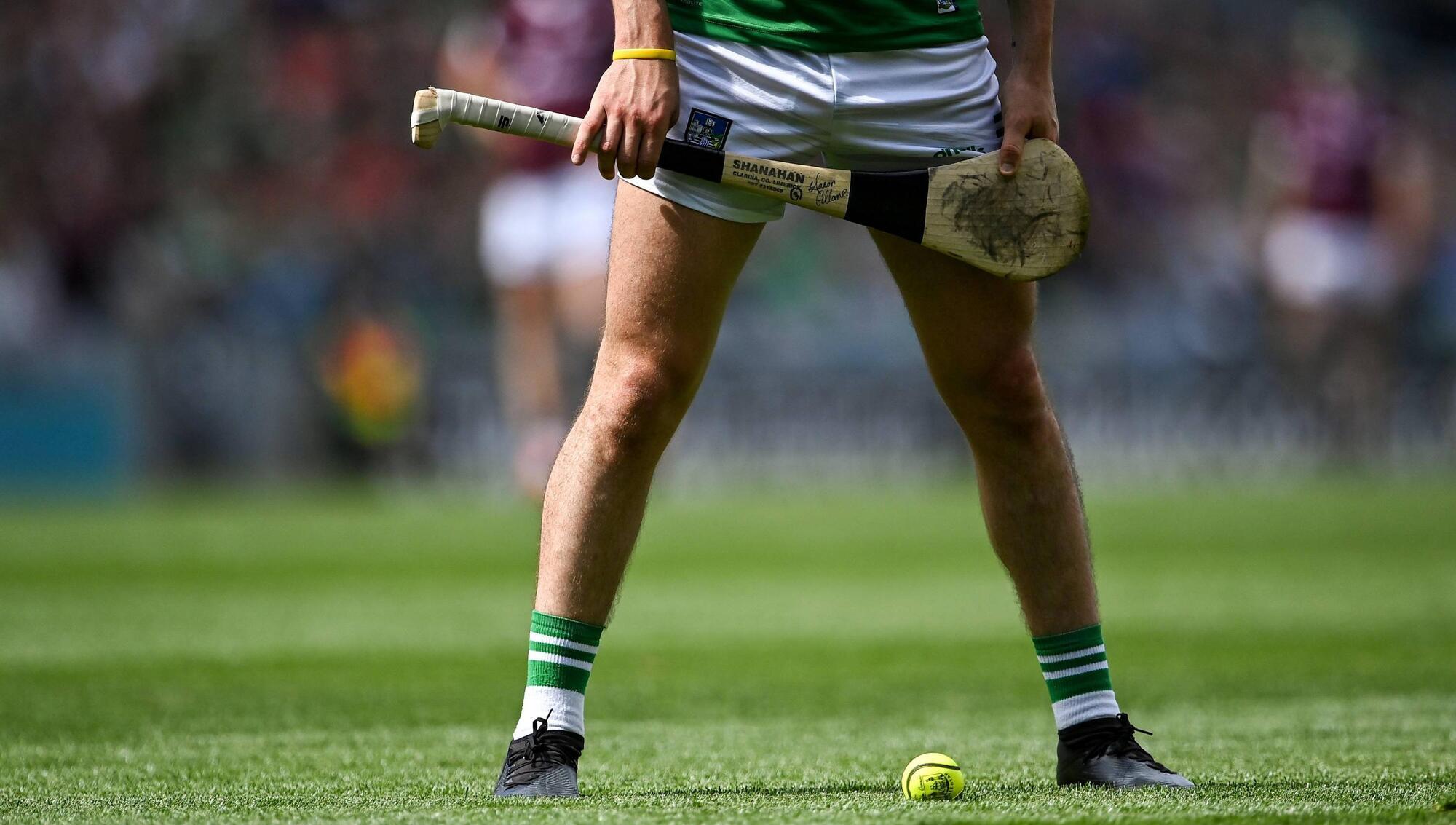
SHARP SHOOTER: Aaron Gillane of Limerick prepares to take a free during the GAA Hurling All-Ireland Senior Championship Semi-Final match between Limerick and Galway at Croke Park in Dublin. Photo by Piaras Ó Mídheach/Sportsfile
It’s with a sigh that Martin Fogarty absorbs the proposed topic of conversation. The curious case of the diminishing hurley, the growing number of leading inter-county hurlers using shorter pieces of ash. Discuss.
“I have very strong feelings about it,” says the former Kilkenny selector and ex-national hurling development manager. “I was walking with my grandson in the woods yesterday and I met a fella from the neighbouring parish. He’s 5ft10 and had a 30-inch hurl. I would have taught his father and I said to him laughing but making a point at the same time, ‘Can I give you a bit of advice? Grow that hurl.’
"Back in the day, I remember the hurl subsidy was for 36” down, which was a minor hurl so some of the boys used a 36” or less because they could get it cheaper. But for the majority it was always a 37”. (Henry) Shefflin and the boys all used 37''."
Aaron Gillane doesn’t. In an interview this past summer, he insisted he played with a 33” hurley but he’s been known to line out with one as short as 31”. Noel McGrath is another who now appears to be using a smaller piece of ash.
Where once a hurley was fitted according to the distance from a child’s hip to the ground, now the recommendation is it be measured from the wrist. Fogarty has always understood the need for small children to play with shorter hurleys – “it needs to be light so that they can wield it and if that means going shorter then so be it.
“But I see a huge problem now as they grow older because they continue with hurleys that are too short for them. It looks wrong for a fella over 6ft and his hurley not coming much before his knee.
“You see these rucks in the game these days and you wonder if they could be avoided if the right-sized hurleys were being used and fellas didn’t have to stand over a ball to lift it. I know everyone wants to rise the ball these days but with an extra couple of inches you’d be able to do more of that too.
“The advantage to a short hurl is you won’t be hooked as easy and often it’s lighter but the disadvantage is it’s not as easy to hook with it. The example I use is the JJ Delaney hook on Seamie Callanan (in 2014). With a 36” hurl and fully extended, he barely got the hook in. An inch shorter and the cup would be going to Tipperary — though Eoin Murphy disputes that. He says not only would he have blocked the shot, he’d have caught it!”
Callanan features in another example of Fogarty’s argument for the longer hurley. “Look at that great goal he got off the ground against Wexford (in the 2019 All-Ireland semi-final). A ground strike from 25 yards out, bang, back of the net. I’ve seen 100 guys missing similar opportunities.
“People can say what they like about ground hurling, any coach who doesn’t train their players to be proficient striking the ball on the ground isn’t actually coaching. With these shorter hurls, they can’t even reach the ground. Youngsters are rising it and running into trouble whereas they could be playing it on the ground and creating space for themselves.”
Before Covid struck, Fogarty had plans in place to put together a prototype telescope hurley to demonstrate in workshops the benefit of having the traditional-sized hurley. But the fashion for the shorter one now, he fears, is not helping the game. “It worries me to the extent that players aren’t as effective as they could be,” says the Castlecomer man.
The oversized bas is another issue Fogarty addresses. The vast majority of those currently being manufactured are illegal as per the GAA Official Guide Part II, Rule 4.5 – “the bas of a hurley at its widest point shall not be more than 13cm”.
In his work as development manager, Fogarty took photographs of well-used hurleys and the area of the bas where the ball was being struck most.
“There was an inch if not two of wasted bas. This massive bas is only adding weight to the hurl. A bigger sweet spot is mentioned but I’ve looked at the hurls and it’s still the same spot that’s being hit. The larger bas is awkward.”
If Gillane is a proponent of the shorter hurler, the likes of his Limerick team-mate Diarmaid Byrnes, both of whom line out for Patrickswell in Sunday’s Limerick SHC quarter-final in Kilmallock, is the opposite. “I had a conversation with somebody last week about ‘The Limerick Way’ but the Limerick way is every way,” explains Fogarty. “We did the same as them – we went short when we had to and long when we had to.
“I often say you never see Tiger Woods driving with a putter. Within reason, the longer the stick, the longer the strike. I once experimented as a young fella with a 42” but couldn’t swing it. Theoretically, though, an extra bit of length will give you an extra 10 yards.”

CONNECT WITH US TODAY



Be the first to know the latest news and updates