Anna Galvin: We can’t be waiting five years for integration to happen
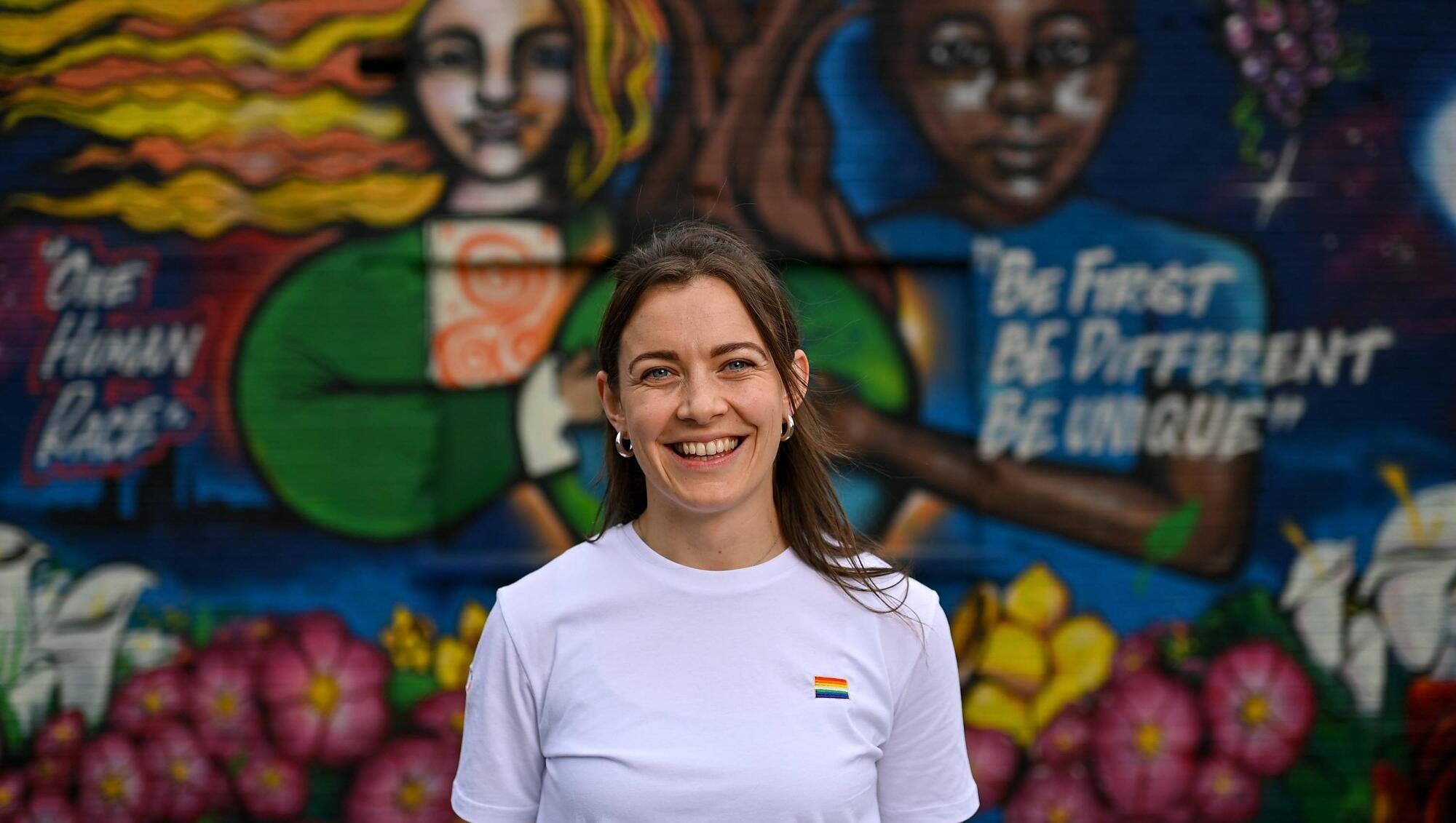
BELIEF: Kerry captain Anna Galvin: “We’ve often felt that we haven’t performed on the big days. We let ourselves down but the belief that we’re good enough has been there all the time.” Pic: Ramsey Cardy/Sportsfile
Lunchtime in Dublin City centre and the mood is splashed in a blur of noise and busy chaos, coloured with all the kaleidoscopic hues and granules reflecting the endless variety and patterns of city life.
Trinity College often appears like a segregated room, away from the bustling corridors and busy streets, an oasis of calm from the madness and frenzy encircling the grounds. The campus is packed with tourists, visitors and students but it’s still a tranquilised version of the speed, pace and atmosphere beyond the four walls.
Lunchtime is usually an opportunity for Anna Galvin to take a stroll across the college’s vast expanse of 47 acres, filled with leafy squares, cobblestone paths and historical buildings. Wandering down to the rugby pitches was always a preferred place of solitude but the manicured pitches have been a patchwork quilt of sunbathers and picnic goers during the recent spell of good weather.
As Galvin basks in the warm ambience of the place, losing herself in Trinity’s rich collage of culture and history, she will often find her mind drifting to another of Dublin’s famous landmarks just up the road, captivated by the glare of Croke Park’s magnetic and luring power.
“It’s nice that there is such a divide between in here and up there (Croke Park),” says Galvin. “They are two totally different worlds. But both are stunning places.”
Galvin will lead Kerry out there tomorrow but getting to that point has been a much more difficult journey than just strolling across the river Liffey and through the multitude and maze of streets leading to the magic amphitheatre.
It’s taken Galvin and Kerry ten years to return to the All-Ireland final stage, but the road has metaphorically become longer again since Galvin moved to Dublin a couple of years ago. The bus usually drops her outside the front gate of Trinity but the logistical planning and routine is far more complex on the days Kerry train during the week.
Galvin will drive from Finglas to the Red Cow to drop off her car before getting the Luas back into work. After finishing early, Galvin will get the Luas back out to the Red Cow again before heading south for training. From the time she leaves Trinity until she arrives in Tralee or Currans, the trip will have taken three and a half hours. Before training even starts. When it finishes, she heads east again.
“You can’t park in town,” says Galvin. “You never know what the traffic is going to be like, so you just do what you have to do. When you’re stuck in the middle of it all, you can’t let yourself think about it too much because you’d be asking yourself, ‘Am I mad? The days like these when you’re heading to Croke Park make it a little easier to manage.”
Galvin has a warm, friendly and engaging personality but her holistic view on life and the journey it entails sits neatly in tandem with her job as an occupational therapist with Trinity’s Disability Service team.
“The premise of OT is that by engaging in the activities that you love and are meaningful to you that you can improve your health and wellbeing,” says Galvin. “I live by that, and by that ethos. Playing football brings me so much happiness. It gives me such satisfaction.”
The philosophy of the service is to move from a transactional model of provision - where students are passive recipients of supports - to a transformational model of resource usage, where they take an active part in planning their educational journey. Galvin and her colleagues also help those students to access all aspects of college life.
“For the students, you just try to find what works for them that will bring them that meaning and joy, and try and draw that out and help them to be able to manage their lives through that ethos,” says Galvin.
“At the moment, there is a really high volume of people registered with the disability service with mental health challenges which is reflective of what people are going through these days.
“There is a wide range of students with disabilities, people who are autistic, who have ADHD, physical and sensory disabilities. But it’s very much less about what disability they were registered with before, and more about what they want to do on a day to day basis.”
Galvin loves her work but her football career has also given her the ideal insight into how acquiring that unspoken equality will often be a challenge. She is no different to a host of other male and female GAA players living and working in Dublin who traipse up and down the country each week to represent their county.
Yet Galvin’s situation opens another window into how difficult that challenge can be for female players, especially when ladies footballers don’t get expenses, and particularly at a time when the cost of living and travel has never been higher.
She describes herself as lucky to have an aunt in Finglas, with whom she lives. That is a financial choice but it’s also heavily interconnected with the path Galvin has chosen to follow through her sport.
“It is draining to have to think about even trying to find accommodation up here,” she says. “We also have to be wise with who we live with because of the standards that we are looking to keep to be able to play and perform at the level we want to.
“If you were 27 and living in Dublin you’d be delighted to be living with a gang of friends going out regularly. But I nearly have to avoid doing that. We need our rest. We need to be able to cook proper meals to compete at this level. It’s a privilege that we are good enough to play for our counties but it still requires a different focus when you’re living far away from that county.”
It’s harder again when the ladies game repeatedly find obstacles in their way. Alongside Maurice Fitzgerald, Seán O’Shea and Shane Conway, Louise Ní Mhuircheartaigh’s photo adorns the front building of Kerry’s Centre-of-Excellence in Currans. That image suggests inclusivity, but having been based in Currans last year, Kerry have had much less access to the Centre this season.
Kerry GAA released a statement in May outlining discussions with Kerry LGFA around the future development of one of the two undeveloped pitches in the complex for specific use by the Kerry LGFA and Kerry Camogie. It read that “the Kerry LGFA have been accommodated with training facilities”, with the word “accommodated” a key word in the debate.
The “viable integration” of the LGFA and Camogie Association is central to the GAA’s new Strategic Plan, but the challenges will continue until that actually happens. Earlier this year, Gearóid Hegarty spoke about the massive baseline chasm between how men and women GAA players are treated.
"That’s from fixture clashes to access to facilities to female players being asked to pay to play,” said Hegarty. “They have to ask themselves; Can I afford it?”
In today’s society, that question now extends far beyond even the players.
“When I look at the minor and U16s playing for Kerry I really do hope things will have changed for them by the time they get to senior,” says Galvin.
“My parents were driving me all over the county and country, but the cost of living for young families is very difficult now, especially in a county like Kerry where it’s so spread out for training.
“It’s so hard for parents to be able to maintain that level of commitment from themselves financially and time-wise, because it’s just so expensive. People who have daughters playing might just think: ‘Why would I encourage them to stay in this? How is this sustainable for them to stay in this game?
"It’s going to get harder to keep girls in our game if there is not some support put in place, where once they get to that inter-county standard they will be compensated for their hard work and time.”
Last month, Galvin was one of seven players across Gaelic football, ladies football, and camogie who – following a request from The42 - volunteered for an exercise where those players tracked their expenses on a weekly basis in a diary over the course of a month.
All costs related to their inter-county commitments were accounted for in the diaries, including money spent on fuel/travel, nutrition and medical/recovery expenses. Galvin recorded the highest monthly total of €1,792.
Tracking the number of hours they spent commuting for their inter-county teams, Galvin’s tally was 44 hours. Her total mileage cost alone for the month was €1,577. The male players were reimbursed for their travel expenses. The female players were not reimbursed for any expenses.
Galvin is more inclined to focus on the enjoyment than the financial hit, but the cost extends far beyond just hard cash. The emotional and physical toll is colossal. Galvin normally gets back to Dublin at 12.30am. It takes her a while to wind down before going to sleep. The constant driving is merciless on her back. And her mind.
“I take my time on the roads because I spend too much time on the roads to be flying up and down,” she says. “I take my naps when I need to. I would literally be pulling over on the side of the road to sleep. There have been times where I’m thinking that I could go to sleep. Then there were times where I maybe tried to push through, but you have to be smart. I just stop when I need to and carry on then.”
That type of commitment is unsustainable, but it’s unrealistic for ladies football or camogie players to maintain that financial input without getting any sort of support. In the meantime, the players need an outline of what the timeline is for the overall integration.
“We voted for integration and that’s brilliant but realistically, I don’t know what action has gone on since then,” says Galvin. “What positive steps towards that integration has actually occurred? We can’t be waiting five years for this to happen.
“The GAA has such a platform and such an opportunity to show leadership in these areas and sometimes I feel they don’t take that opportunity. We have to keep the pressure on and keep pushing because things move so slowly. We need to move this on so that rock we’re pushing up the hill won’t be as heavy.”
It’s often felt like that for Kerry since they were last on this All-Ireland final stage in 2012. Cork were a machine. And Kerry were mown down. Galvin was only 17. The whole day passed her by in a flash.
“I don’t remember much but I do recall being taken aback by Croke Park, and the whole atmosphere there,” she says now.
Kerry had closed the gap on Cork the following season, losing to their neighbours in an All-Ireland semi-final by four points. But Dublin beat them in an All-Ireland quarter-final in 2014. And Kerry have been chasing lost ground ever since.
“We’ve definitely been very disappointed in our performances over the years,” says Galvin. “We’ve often felt that we haven’t performed on the big days. We let ourselves down but the belief that we’re good enough has been there all the time.”
It just wasn’t showing. Prior to this year, Kerry had only won 5 of 15 championship matches. They were in a relegation semi-final last year. But a flatlining curve has finally started to move north.
“We’ve got stronger and fitter,” says Galvin. “We would have let games that were well within our grasp slip. We’ve got better at managing that but we’ve got better too in not getting too caught up or bogged down at whatever time is on the clock. We’re still a young team but we have a lot of experience now.”
They’ve also been expressing themselves far more. After only scoring 1-12 in the Division 2 league final win against Armagh, Kerry have scored 16 goals in six championship matches since.
“We’re really enjoying playing the style of football we’re playing now,” says Galvin.
A long decade has finally come around. The rookie back then is the captain now, but learning from those players that went before her helped form a huge part of the player Galvin has become.
“Those girls stuck at it for such a long time,” she says. “The work they put in was incredible. They kept coming back every year. It was very unfortunate that they didn’t get their rewards, but I learned so much from their dedication and determination. Some of us that are still around from that time will be playing a little bit for those girls too on Sunday. And trying to get up those steps for them.”
Football and work consumes her days now, but Galvin loves to escape the frenzy – when she can – by walking the beach. Growing up in Caherdaniel village on the tip of south Kerry, she was spoiled by the beauty of Derrynane beach.
“I’m slowly making my around the beaches of Dublin,” she says “to see if any of them can compare to Derrynane.”
Making the time for those walks with her boyfriend, Adrian O’Sullivan, hasn’t been easy either. He has been the Dublin senior camogie manager for the last two years. It was all the trickier again with both teams training on alternate nights this year.
“Adrian sets a very high standard for his players as well so he knows what is expected and needed,” says Galvin. “Because we are so heavily invested in our own teams, there is a huge level of understanding there.”
The focus for Galvin and her team-mates now is trying to get over that line and end a 29-year wait. Back then, Kerry ruled this terrain with an iron fist, having won nine All-Irelands in-a-row between 1982-90. It’s a radically different landscape now but the quest had often become so desperate because of such serial disappointment and unfulfillment.
“So often on the bus home after matches, we’d be having the same conversation,” says Galvin. “And then we’d be asking ourselves ‘Why are we continuing to have this same conversation? It was heart-breaking. So hopefully Sunday can mend some of that hurt.”
And with that, Galvin is off back to work, strolling over the cobblestone paths, losing herself in the happy blur of calm and casual bustle inside Trinity’s gates. As the madness continues to rage outside the four walls, another massive edifice beckons up the road, the glorious amphitheatre that will house a totally different form of chaos tomorrow.

CONNECT WITH US TODAY



Be the first to know the latest news and updates