TJ Ryan interview: Podcasting, his playing career and intercounty management
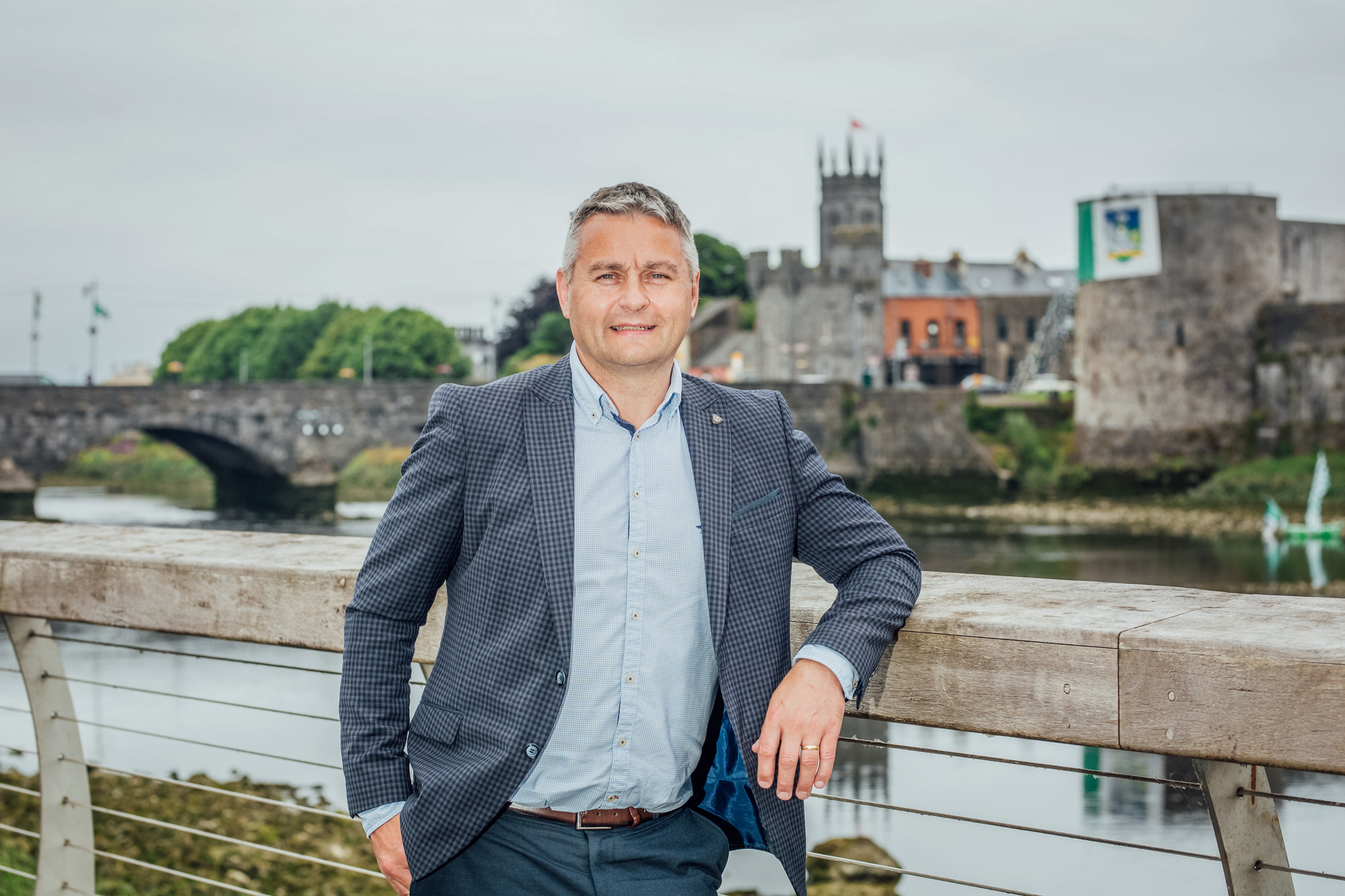
TJ Ryan: "We shoot the breeze and hop some balls off one another at the start, then talk about the matches we took in at the weekend and it seems to have worked." Pic. Brian Arthur
One more story about [Stephen] McDonagh. We were in Thurles, playing Waterford the same day…
We’ve a load of topics here we’re not going to get to!
Ah, look, this is the end of it, right! Anyway, I was full back, McDonagh was two and [Damien] Realo was four. Quiet enough fullback line, like.
We were marking Eoin Kelly, Paul Flynn and John Mullane. Mac was marking Mullane inside in the corner. A row broke out way out the field. So Mullane goes to take off. McDonagh catches him by the shoulder [and points to a spot right beside them]. ‘John, plenty of it here if you want it!’
[Room erupts in laughter]
Very good! Very good!
It’s the way they tell them. And the way they tell it as they see it. No gimmicks, no gizmos, just some yarns to go with their insights and a whole lot of personality.
They’ve become one of the great three-men acts, a bit like Shaq, Barkley and Kenny over in the States on TNT breaking down the latest in the NBA like a few guys on their barstools rather than in a studio that resembles the control room in Minority Report. More than being former players and former coaches, they seem to personify, or at least appeal to, that most idealised and elusive of identities and constituencies: Hurling Man.
Especially him. As much as he’s informed by having served time on the line, when you hear him you often forget that he was the manager before Kiely and all the baggage that could come with that. You just recognise TJ, a great Limerick hurling man. Just like so many people have come up to him at games this summer and identified and lauded him as TJ “from the podcast”.
I meet him in the same place where he talks to Dalo and Landers: his office in a Limerick industrial estate where he’s the sales director with Cube Printing, a design, print and packaging company that employs 40 people.
On the wall is a mission statement that could easily apply to the podcast as well as the job his successor has done with Limerick: ‘Committed to Exceeding Expectations’.
It has exceeded all expectations, especially his. Initially he popped down to the Examiner offices in Blackpool, Cork, thinking it would likely be a one-off. He didn’t really know Daly.
“We’d marked each other and had a cut off each other back in the day but that was about it”; so singular is an operation like a senior county setup, any presumption that their paths crossed when Ryan was Limerick senior manager while Daly was overseeing the county’s academy would be wrong. But instantly they clicked.
Maybe it’s because they and Landers are of a similar time. Almost every county player now seems to go college. Daly didn’t, going straight into the workforce and the bank. Ryan has no third-level qualifications either; everything he learned was on the job, all practical experience accrued in that university that’s life.
For two years alright he was up in Galway, hurling with Jamesie and Christy O’Connor while supposedly studying agricultural science, but as he puts it, “I just wasn’t cut out for it.” When he was working one of those summers in a warehouse and the boss mentioned there was a job full-time for him if he wasn’t going back to Galway, he jumped at it.
They married early too, at least by the standards of today. Dalo was 27 when he walked up the aisle with Eilish. Ryan wasn’t even 24 when he and Louise tied the knot; they’d already had Colin a year by that stage.
But more than that, they hail from the revolution years of the 1990s, back when it was do or die, managers like Loughnane and Griffin and Tom Ryan could talk for Ireland to the media and their players weren’t afraid to tell their story and plenty of others as well. At a time when players now are so tightlipped, natural raconteurs like Daly, Ryan and Landers help fill the void for Hurling Man, woman and child.
“I suppose the three of us have similar backgrounds and interests. The concept that was sold to us was just be ourselves and be like three lads having a drink after a game. So that’s the way we look at it. We shoot the breeze and hop some balls off one another at the start, then talk about the matches we took in at the weekend and it seems to have worked.
“There’s a huge appetite for GAA up and down the country. And people like to hear war stories and yarns from the dressing room. Because there’s only a select few of us who have been fortunate enough to have lived that life, who’ve been in that room, on that bus, made those decisions. And they’re not getting those stories from the boys that are there now.”
The podcast’s success has also coincided at a time when the appeal and importance of The Sunday Game has waned. Ryan has sympathy for the constraints that programme is under but just as he’ll openly declare that his own time as Limerick manager had run its course, he feels the show’s highlights programme isn’t working either.
“We were institutionalised Sunday Game people in our house growing up. Like, it could not be missed. But you can miss it now.
“To be fair, they’re severely restricted at certain times of the year with so many games on and it’s difficult to hit on every talking point. And that can mean it’s very rehearsed. If you’re under pressure for time, you might be pushing me on because you have two or three other things to get to, whereas in the podcast we have that time and it’s very much unscripted.
“But if you take your typical circle of GAA people, say, 20 of my friends. How many of those really want a very technical tactical breakdown of the game? Now, I love the tactical side of it myself. On the pod we’ll talk about puckouts ourselves for a good five minutes. But it’s only five minutes over an hour. Your average viewer, listener, they want a general overview on why the game was won or lost, the possible consequences, as well as a fun element and some stories.”
And if it’s stories you’re looking for, Ryan & Co is the place to come. The backdrop of his office and for the podcast is an overview shot of the Gaelic Grounds, consisting of 24 tiles, with each square and section a trigger for a bucketful of memories, mostly good, a couple bad.
The edge of the square, for instance, the one opposite to where Brian Corcoran scored off his knees upon his comeback in 2004. Earlier in that game Ryan pushed the handle of his hurley into the nose of Cork debutant Jonathan O’Callaghan.
“I was lucky I wasn’t put off that day. There are two or three incidents in my career that I’m not proud of and that’s one of them.”
A fairer representation of Ryan the player and opponent was another interaction he had with a Cork full forward, a clubmate of one Mark Landers’ actually. After Joe Deane scored a goal off Ryan in a first-round championship game in Thurles in 2000 that effectively ended Limerick’s summer the same day it began, a photographer thankfully captured Ryan playfully putting his arm around a laughing Deane.
While not quite of Ring-to-Mackey fascination, what was said between the pair? Best to get it from the horse’s mouth itself, and a whole tale rather than just a line while we’re at it.
“Well, that day had probably been one of my better displays at full back. For the first and only time in my life I had hurled the shit out of Joe. I don’t know how true this is but I heard afterwards that the Cork sideline were talking about taking him off only Jimmy Barry Murphy said, ‘You never take Joe Deane off.’ I had been totally in the zone. Even the one or two balls that Joe had won out in front of me, I had been able to take them off him.
“Anyway this ball came in and again I won it, burst out and cleared it. Joe didn’t even bother to follow me. But Seán Óg Ó hAilpín caught it, drove it towards our square and Joe doubled on it, into the net.
“So I ran back in onto Joe and he made some quip, ‘Jesus, TJ, don’t be going out the field, clearing balls!’ And I was there, going, ‘You little bastard, you! The one time I leave you!’ Sure that’s all I could do or say. That was it for us for another year.”
That shared moment, that connection, still lasts though. A few months ago the two counties again met in the opening round of the championship, only this time it was in Páirc Uí Chaoimh, Limerick were the reigning All Ireland champions, and thankfully there would be other games that summer for whoever lost. Walking into the stadium who did Ryan meet only Deane, grinning at him again like he did all those years ago in Thurles, prompting Ryan to again only laugh and throw an arm around him.
The way he sees it now, even the tough days were good days. Like Thurles that day. Even the All-Irelands in ’94 and ’96.
“As they say, it’s better to have loved and lost than to have not loved at all. I mean, I was only 20 in ’94. Growing up as a kid in Garryspillane it wasn’t even on my radar that I’d play for Limerick. And then in my first year we’re winning Munster and going up to Croke Park…
“Personally I’m delighted I played when I did. We had a great time. We had everything the boys have now except the All-Ireland medals. We had a great group, great craic, trips away, nights out.
“Even something as simple as the drives to and from training. Nowadays everyone has their own car. In our time those of us from a certain part of the county would all be in the one car. Myself, Frankie Carroll, Pat Heffernan, Mike Reale, Mike Houlihan from time to time, John Kiely when he was in with us.
"Jap Ryan from my club was the driver. It was the best car you could be in. Paddy Reilly playing on the tape deck. Our favourite tune was Rocky Road To Dublin. We’d regularly sing along to it because that’s what we were on.
“Part of it too was that it would be our only communication with each other until we were next in the car. The only phones then was your landline. But it was the craic, the slagging. Frankie would be in the front with Jap. Jap was a straight shooter. If you didn’t play well he’d have no hesitation in telling you.
"I remember us coming back from a league game in Waterford. Five minutes in Jap broke the ice right away. ‘Frankie, you weren’t good!’ The way he delivered it, I gave a bit of a snigger in the back. Well, he turned around sharply. ‘What are you laughing about? You weren’t good either!’”
As for their training, a modern Jap would likely cut it down to size too; it was great for the time, maybe not so much now.
“We definitely thought we trained hard. And we did run hard and we played hard. We’d Dave Mahedy showing us the technique of running properly, things no other county were doing then. But if you measure it against the guys today, you couldn’t say we trained hard. Did we go to the gym three times a week? Watch our nutrition like they do now? Condition our minds the way they do now? No.”
Their use of the ball was also rudimentary. As a back Ryan had one job.
“Lump it, past the halfback line. Get them turning, get them under pressure.”
But Ryan would see up close the game change. In 2011 with the county at its nadir it turned to Donal O’Grady, one of the pioneers of the possession game, to be its senior manager. Ryan was one of his selectors and found it an education
“Just being around him, his knowledge of the game, I would have picked up an awful lot there”.
After John Allen stepped in and then stepped out again, O’Grady and Ryan were appointed joint managers, only for O’Grady towards the end of that 2014 league to depart after his dissatisfaction with some comments from the county board.
Ryan stepped up and into the breach and immediately galvanised the panel. In Munster they’d beat a Tipp team that would reach both that year’s league and All Ireland finals, demolish a buoyant Wexford team in an All Ireland quarter-final before pushing Kilkenny all the way, losing by just two points in a monsoon.
That would be as close as they’d get and as good as it’d get. There would be some other good days, like a first-round win over Clare in Thurles, but after a subdued qualifier loss at the same venue to Clare in 2016, Ryan was out the door before anyone suggested it to him.
“I have no hang-ups or qualms about it because I can have no complaints about it. I departed with no axe to grind with anyone. I enjoyed it, I wanted to do it and I was fortunate to work in a company who gave me the time and flexibility to give it my best shot, but the simple truth is we as a team and as a management team and I myself simply weren’t good enough, end of story, and it was time to go.
“We played really well in 2014. We could have beaten Cork in the Munster final the last day of the old Páirc Uí Chaoimh. And I thought we were really on the money in that game against Kilkenny. Even that last ball that dropped into the square, Declan Hannon made a brilliant run and the ball could easily have fallen to him and it’d be a goal.
"But that’s sport. That’s life. In ’15 and ’16 a lot of our leaders like Donal O’Grady, Wayne McNamara, James Ryan and Gavin O’Mahony were coming to the end of their cycle and change was inevitable so it made sense for me to go then. I’d given it my best shot and was happy to pass it on to someone else.”
All the more so when that someone else was a member of the old gang and choir that would sing along to Paddy Reilly in Jap’s car, and had soldiered with Ryan and Garyspillane to help them win their precious one and only senor county title in 2005.
"That autumn of 2016 John Kiely popped down the road from his house in Galbally to meet Ryan in his house in Garryspillane. You could call it a handover but it was less formal and clinical than that. It was a basically a chat among two old friends as to what these boys and their county needed.
“In fairness John was his own man, he didn’t need much from me, but we would have had a good chat.”
About players. And about his support team. Ryan in his last year had gone down to Tralee to recruit Joe O’Connor as the team’s S&C coach to build further on the good work of Mark Lyons before him; it was a no-brainer that O’Connor should be retained. Conor McCarthy, who Ryan had enlisted as a match-day logistics manager and liaison officer, was similarly kept on by Kiely.
Probably no one has a greater appreciation as to the job Kiely has done than his predecessor.
“He has aligned all the stars perfectly. A lot of it is his communication. Coming from a teaching environment, he’s able to communicate better than someone like myself could.”
It’s reflected in the growth of someone like Gearoid Hegarty. Ryan saw enough to draft him in to the senior setup from the footballers’ and give him his debut.
“He was a big, raw, rangy ball winner who I saw could win primary possession for Limerick and play a part. But did I see a future hurler of the year? No point in saying that I did. I couldn’t.”
What’s transpired has been just as Dolores sang: a dream to him. Again, there’s no hint of envy or regret that it didn’t happen on his beat. He had his shot and simply wasn’t good enough back then. Funnily enough, he feels he’d be a much more qualified and better inter-county manager now, having subsequently coached St Thomas’s to three consecutive Galway county titles and all he learned from working with David Burke and his brothers.
Not that he’s looking to get back in at county level though. He’s happy enough and has enough on as it is. He’s been chair of the Garryspillane Bord na nÓg for the past decade, even when he was managing the county. He’s over the U15s which his son Cormac plays for. He can take in games around the country, from seeing Colm playing with the Garryowen seniors to meeting up with old friends now that the pandemic has eased.
When Thomas’s lost to Ballyhale back in January in an All Ireland semi-final and went away for a few days afterwards, hiring a bus and heading to Carrick-on-Shannon, the invite was extended to Ryan even though he was no longer involved. Ryan duly joined them in Carrick, just as he would join Kiely and Paul Kinnerk on the county board’s request in New York over the winter for a fundraiser.
He’s lost plenty of matches in this sport but few friends.
Instead he keeps making them, sharing stories from yesteryear and others yet to unfold.
CONNECT WITH US TODAY



Be the first to know the latest news and updates