Hurling tactics: Hunting for the small margins that could land the biggest prize
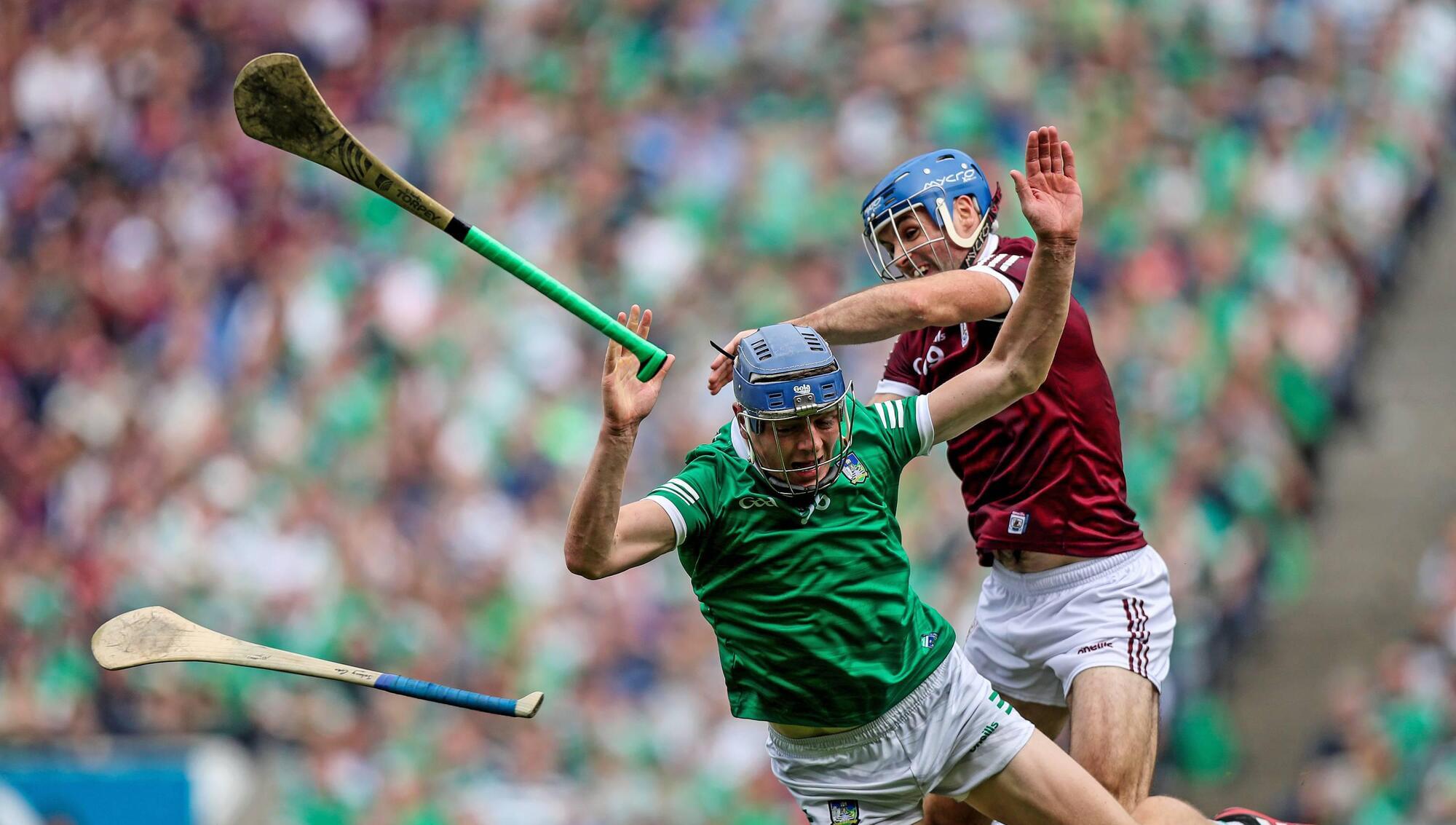
Reaching for the extra inch: Limerick's David Reidy with Johnny Coen of Galway. Pic: INPHO/Evan Treacy
The past fortnight will have been tough weeks for Ian Costigan and Sean O'Donnell who work as performance analysts for Kilkenny and Limerick respectively. It began with an intense review of their team’s semi-final performances for the coaching team and players and then they were straight into a deep review of the opposition awaiting them on Sunday. The main question any coaching team needs to know from their analysts is “What do I need to know?”.
There are reems of “stats” available, hours of clips highlighting players and tactics, but a coaching staff with two weeks to prepare need only know the essential information that shapes their final preparation. The role of the analyst tends to be one of a filter mechanism – reducing the information to clear tactical points for the decision makers.
So what are the key factors that will decide this final?
Aerial dominance in defence has been the backbone of the Kilkenny team for under Brian Cody. Defenders who can win those high contested puckouts and clearances are favoured above all else. This selection choice works perfectly when Kilkenny forwards are capable of applying immense pressure on opposition defenders – aimed at forcing opponents into aimless high clearances that will be caught and returned with interest by the Cats' defence. These hard-working forwards also impact opposition puckout plans – If they can disrupt the first few short puckout moves of the opposition then the next choice for the goalkeeper is to go long – on top of the Kilkenny defence.
The battle between the Kilkenny forwards and the Limerick back eight when Treaty men gain possession inside their 45 metre line will be a key factor. In 2019, Kilkenny applied superb pressure on a Limerick side looking to work the ball through their defensive lines. Limerick were disrupted by the likes of John Donnelly crashing into defenders, forcing mistakes, rattling cages.
When a team is facing difficulty in working ball out from defence then it must try and rely on long puckouts and long deliveries. On that day Limerick’s long puckouts - usually the foundation stone of their wins, fell asunder. Nickie Quaid targeted his big forwards, Gearoid Hegarty and Kyle Hayes, 11 times. They won only three of those deliveries.
Three years on and Limerick must believe they are a far better outfit. Lessons were learned that day and no team has unsettled the Limerick possession play out of defence since. Paul Kinnerk will know if his team can move the ball forward to midfield before delivering quality low ball to their forwards then they will remove the aerial dominance of Kilkenny's defence.
It will be equally interesting to see how Kilkenny look to pressure the key link man for Limerick, Will O'Donoghue. The Na Piarsiagh man is the hurling equivalent of Xavi or Busquets, using his great positioning and quick hands to support defenders and move possession through to advanced positions. Kilkenny have to bring a plan to disrupt and break the links.
Following the defeat to Wexford in Nowlan Park it was levelled at Kilkenny that they were a one-dimensional team who delivered aimless long ball from defence to attack, a group stuck in a time warp. Two games later and Kilkenny have shown they are more than capable of mixing styles and improving percentages when attacking. Despite this apparent improvement their attack is still built on forwards winning their own ball through aerial prowess. For Kilkenny to succeed on Sunday they will need to find an aerial advantage in some part of the Limerick defence.
TJ Reid is usually the man who rotates around to find that competitive edge and he will have to look at the Limerick back six, each man an All-Star hurler, and back himself to beat them under Eoin Murphy’s puckouts. When Reid begins to catch or break ball over a defender then Kilkenny know they have a route to victory.
Galway’s Darren Morrissey lost the high ball competition with Reid in the second half of the Leinster final and Kilkenny turned the screw time and again. Reid’s legs don’t move as fast as they used to but his strength and wits are still razor sharp. If he catches the sliotar he has vision to set another forward away or often he is fouled, gifting his team a score. Reid has assisted 10 shots in Kilkenny’s last two games. Compare that to Kilkenny’s two defeats this year where he only created two assists. Reid got the curly finger at half time in Salthill, not up to speed after his late return to the county panel, and against Wexford Matthew O'Hanlon held Reid to scraps in a thrilling duel. Limerick do not usually pick man markers, trusting their defence to hold their positions, so Reid knows he will be able to test out all six defenders. If he can overpower Mike Casey at full back or Declan Hannon at centre back then Limerick will need to react quickly. Eoin Murphy will bombard Reid and the likes of Eoin Cody will be moving off the ball in anticipation of a Reid catch.
The impact of David Reidy in the All Ireland semi-final may have given away one of the great secrets behind the success of this great Limerick team. Reidy is the “super sub” who regularly arrives to finish the job. Reidy has a greater impact than any of the lauded starters in the business end of the matches. Reidy returned 0-3 from 3 shots in the semi-final and won a free to assist 0-1, key scores in the biggest moments.
No hurler has been involved in more shots in the last 15 minutes of games in the last three seasons in any county, not just Limerick. Reidy is a quiet assassin with no fanfare or media plaudits. Brian Cody will need to be alert to the substitution of Reidy and ensure he has fresh legs capable of matching the Dromin-Athlacca man’s movement.
The biggest performance indicator in most sports is shots taken. If you want to guess who won a game without seeing the actual scoreline then the shot numbers per team has been proven as the most effective guideline. This final sees two teams who have defied this metric continuously over the past few weeks.
In Kilkenny’s last two wins they have taken 79 shots and conceded 91, yet outscored their opponents by 17 points! Consistently conceding more shots than you take is a worrying trend for any team in the long run, eventually your shooting accuracy will not save the day. Limerick have also been on a similar run but not to the extent of their final opponents, Limerick have taken 166 shots in their past 4 games, whilst conceding 177, yet outscored their opponents by 13 points.
In their last four games they have conceded more shots than they have taken.
These numbers show us that the final is being played between the teams who have made the most of their chances, not by teams who have dominated opponents. Last season, Limerick outshot their opponents by an average of 12 shots per game. The defining factor for this great Limerick team from 2018-21 had been their ability to create far more chances without being an above average finishing team. This season has seen their finishing quality get them over the line in tight games.
When you look back to the famous semi-final battle between the teams in 2019 you see Limerick had 40 shots, Kilkenny 32. Kilkenny scored 24 points, Limerick 23. Kilkenny made the most of their 32 shots – returning 0.75 points for every shot, whilst Limerick imploded, scoring only 0.58 points for each shot. There are no signs that one team will dominate the shot numbers in the final so the victor will likely be the team that takes their chances.