Croke Park can be an intimidating place on All-Ireland final day, especially if it's your first - Padraic Maher
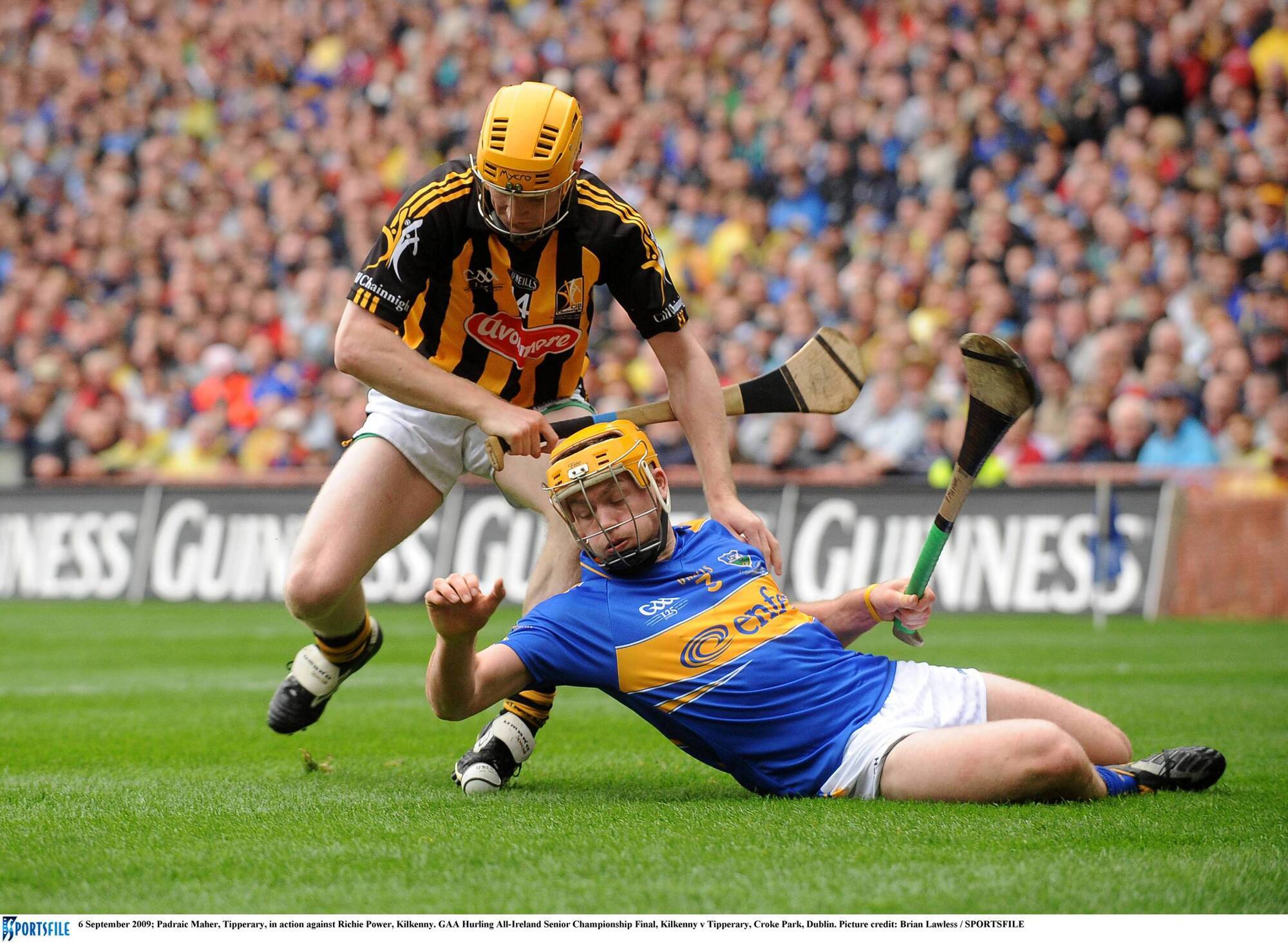
NERVES: Padraic Maher, Tipperary, in action against Richie Power, Kilkenny, Croke Park, 2009. Pic: Brian Lawless / SPORTSFILE
The first one can be intimidating. Going from my own experience, for my first in 2009 I was pretty young and we were playing Kilkenny, who were going for four All-Irelands in a row.
They’d been in Croke Park so often, won so many games there - you’d have to be aware of their level of experience, and that in turn brings another level of pressure.
And that pressure exists before you even get to Croke Park. In the hotel before the game the markers are different: the manager’s few words are that bit more passionate, or maybe more personal. There are supporters around the hotel cheering you when you head out to get the bus. On the journey itself you see how many more people in both counties’ colours there are on the streets compared to other games. That’s a time when it’s important to stay cool if you can - you can be a good while on that bus!
I found a huge difference even in 2010, having been there before, not to mind later in my career. Playing in the All-Ireland finals of 2014 and 2016, for instance, the level of pressure was nowhere near the same as in the first final, because there was nothing you didn’t expect. Nothing came as a surprise.
For Sunday’s game Limerick are certainly at that level. They’re very comfortable in Croke Park, they’ve won big games there, they know they can do it and they’re familiar with the surroundings. Any debutant knows he has lads with him who’ve won three of the last four All-Irelands.
A few of the Kilkenny lads have far less experience of the biggest day, but they play a lot of their games in Croke Park anyway. The crowds may not be as big for a Leinster semi-final or final but they’re still used to the surroundings. The semi-final win against Clare, in front of a decent crowd, that’ll help them adjust to different aspects of the final too.
Not meeting the President, though. Don’t forget you’re out for the All-Ireland final at maybe three minutes past three according to the clar an lae, but the game isn’t on for nearly half an hour after that. That’s where you have to lean on your preparation, because there’s a tension you only get on All-Ireland final day that you have to be ready for.
You’re mad to get going, if it’s your first All-Ireland it’s the biggest game of your life, you’re revved up to the max - but you’re being held back to shake hands and go on a march around the field, so you have to manage that. And experience helps there as well.
I’m sure the lads playing in their first All-Ireland will be well warned about what to expect, but it’s still a jolt when you first come out into that noise, for example. You mightn’t think there’s a difference between fifty or sixty thousand people for an All-Ireland semi-final and over eighty thousand at the final. There is.
That extra twenty thousand people makes a difference to the volume. I can remember running out for All-Ireland finals and the sheer noise that hits you coming out of the tunnel, it’s almost a physical shock as you run onto the field, like a slap.
And no matter how experienced you are, that’ll take thirty seconds or a minute to take in. The noise floods your head and it’s like the whole place is shaking.
(And there are other things to watch out for. Often the GAA has unexpected things out on the pitch - big flags or groups of people or giant sliotars, stuff to make a pageant out of the day, and that can be a little disorienting too.) The noise is on a different level, though. Those extra twenty thousand people aren’t sitting in their seats flicking through the programme. They’re as hyped up as anybody, hugely excited and psyched up, roaring - so the energy in the stadium when you come out is very high. It’s the biggest day in the GAA calendar and you know it immediately from the atmosphere.
Time becomes a factor again when the ball is thrown in. You’d often hear lads say that an All-Ireland was over before they knew it or that they didn’t realise how fast it would go. That’s true. Most people will recognise that an intense, competitive game seems to go past fairly fast anyway because you’re concentrating so hard, and that’s true of an All-Ireland as well.
Again, the experienced player has an advantage because he’s been there. Sports psychologists are fond of telling people to ‘live in the moment’ and not get wrapped up in what just happened, and that’s how you have to deal with an All-Ireland final.
For example, an experienced player can use the pre-match parade. Not to be waving at the neighbours up in the Cusack Stand, but as a final minute or two of preparation.
At that stage all the other formalities are over with and it’s the last respite before the game actually begins. Because of that you can use that time to prepare yourself mentally: I enjoyed it because you could gather your thoughts and reinforce a couple of bullet points in your own mind.
You know that it’ll be war in a minute or two, but the experienced player can just use that parade to get themselves right.
A last tip: stay away from the scoreboard. Everyone is warned not to look up at it but when an All-Ireland final - and particularly your first All-Ireland final - is winding down it’s only human nature to sneak a look. That’s a mistake, because you can end up wishing the time was up or that there was more time left, and either of those will take you out of the game, even if it’s only for a split-second.
And staying in the game, staying in the moment, is what experienced players do.
- As told to Michael Moynihan
CONNECT WITH US TODAY



Be the first to know the latest news and updates