Hurling Tactics: What will Limerick learn from Ennis?
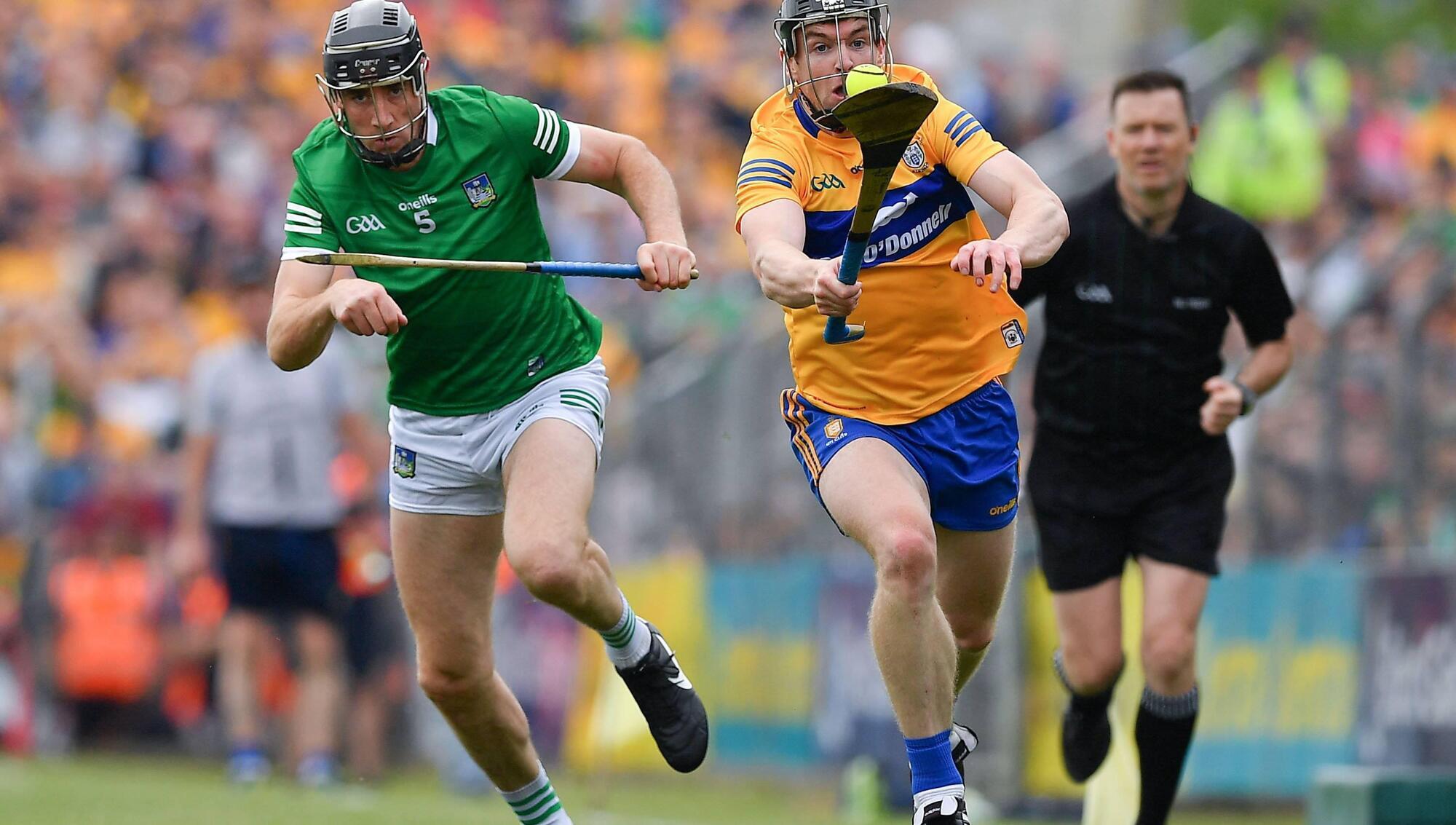
Tony Kelly of Clare is tackled by Diarmaid Byrnes of Limerick during the Munster GAA Hurling Senior Championship Round 4 match between Clare and Limerick at Cusack Park in Ennis, Clare. Picture: John Sheridan/Sportsfile
In 2020, Clare played the Munster semi-final against Limerick in Semple Stadium and were given a 10-point trimming. Two years later they faced the same opponents in Ennis and played out a draw. Limerick had 14 players involved in both games, Clare had 12, so what has changed so much to narrow that gap in two years?
The biggest difference was the atmosphere. Ennis was a cauldron with passionate fans roaring on each physical contest, compared with the dreadful silence of the Covid-era game in 2020.
Another major difference was the structure of the Clare team. Brian Lohan’s third year as manager has seen his team evolve to have a completely new half back line led by a reinvigorated John Conlon. Peter Duggan’s return has also given Clare a strong figurehead in attack. The round robin game had Limerick missing Cian Lynch to injury and Aaron Gillane rested. The differences between the match-up in 2020 and 2022 were significant.
Sunday will have a sold-out Semple Stadium with an atmosphere much like Ennis, Duggan and Conlon will keep their positions, Lynch remains injured, so the return of Gillane to lead the Limerick attack is likely be the only major change from the last meeting. Yet the bookmakers give Limerick a five-point handicap lead. They must see Gillane’s return, along with tactical adjustments by Kinnerk and Kiely, as significant enough to overwhelm Clare’s challenge to their Munster throne.
What will Limerick look to adjust and learn from Ennis going into this final?
When assessing the change in post-match numbers between the two games in 2020 and 2022 the eye-catching stat was that Limerick's overall shot number had been reduced from 51 to 30. Clare’s shot numbers had remained similar and Clare scored 24 times in both games, but Limerick went from scoring 0-36 down to 1-21, 14 fewer scores. The gap had been closed by Clare’s improvement in defending against Limerick.
The main improvement was in the Clare full-back line. Hayes, Cleary and Flanagan were aggressive from the start and were attacking any delivery to the inside line. In the 2020 meeting, Limerick generated 25 shots from inside the 45m v Clare, in Ennis this number was reduced to 12. Limerick played 17 deliveries to their full-forward line but won only two. A landslide victory for the Bannermen’s last line of defence that was reminiscent of Lohan in his pomp.
Limerick will come back with a different approach – Gillane will return, a natural full-forward, unlike Kyle Hayes who filled that role in Ennis. Otherwise, Limerick might try and create more space in that inside line. One of their corner forwards can drift to midfield and allow a two-man inside line. Kiely might even consider a Hayes/Gillane inside line that would be hard for any defence to match physically and would allow high ball deliveries that Conor Cleary can’t cover on his own.
Limerick also must push back on their squad - some inside forward needs to step up – Boylan, Flanagan, Mulcahy and others need to be able to win deliveries against the aggressive Clare backs or else be replaced by the next man up.
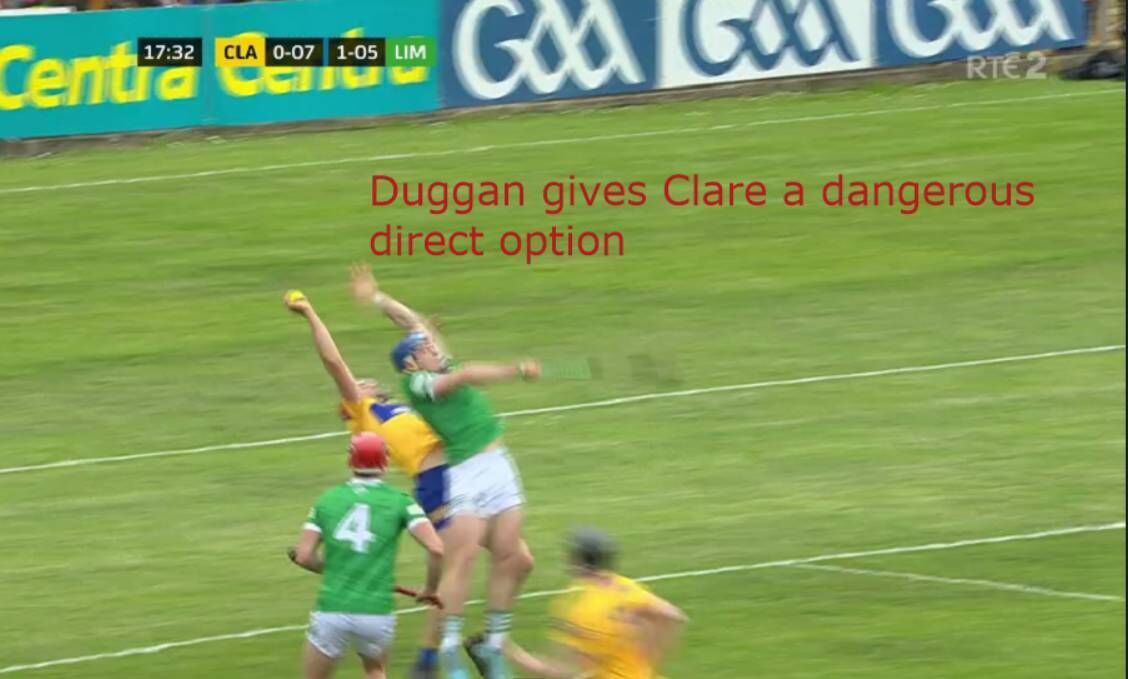
The return of Peter Duggan has gone better than any Clare fan could have expected. The Clooney Quin man has changed the face of the Clare attack. His fight and determination added to his size and skills make him a handful for any defender. Clare always know at any moment they have an “out ball” to their full-forward line that will not return too easily. Duggan has also allowed Clare move Tony Kelly and Shane O Donnell away from the full-forward line when needed.
What was obvious from the first delivery between Mike Casey and Duggan was that Limerick were not going to have an easy counter-attack, Duggan broke the ball, chased down the opposition defenders and disrupted the normally highly effective Limerick transition to attack. On one occasion a hurl-less Duggan chased 50 metres back to midfield to help win possession back, leading to a Clare point.
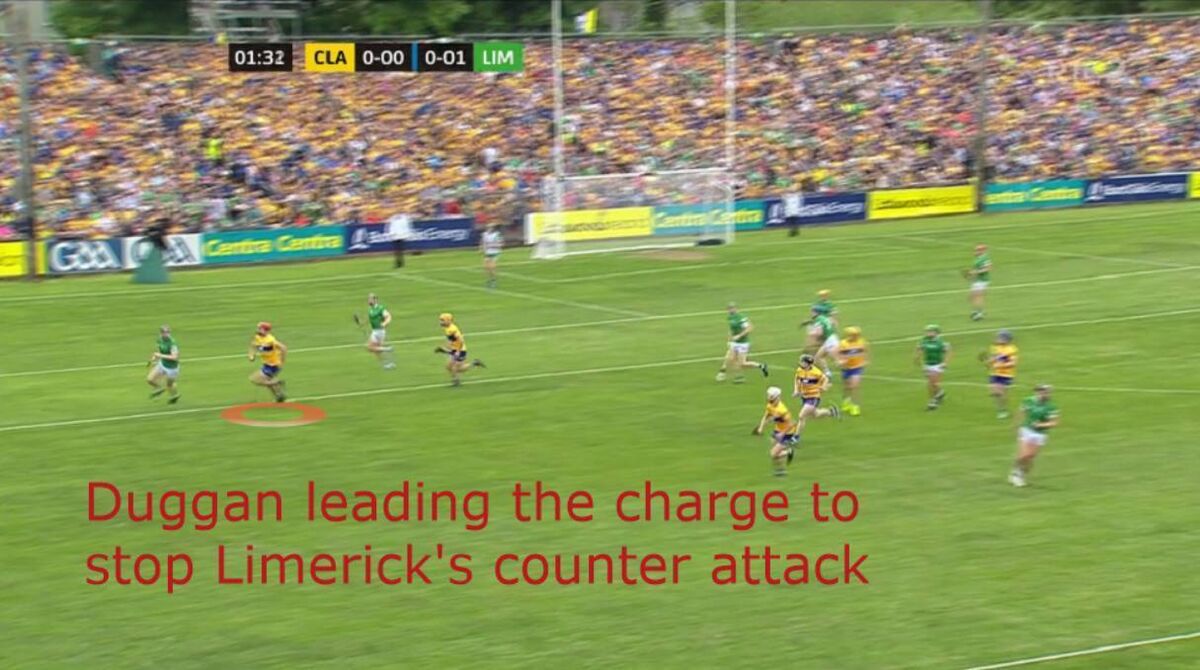
I wonder if Kinnerk and Kiely have considered whether Dan Morrissey might move back on Duggan and try match him physically. Morrissey was less comfortable at times in dealing with the roaming David Fitzgerald and a rotation of defenders might suit Limerick.
Limerick might also look to review their counter-attacking play from the full back line. Nickie Quaid could be used as a vital passing option when Duggan is closing down space and disrupting the full-back line. A backwards pass from Finn or Casey to Quaid can allow Limerick move the ball laterally, away from the pressure of Clare’s high energy forwards.
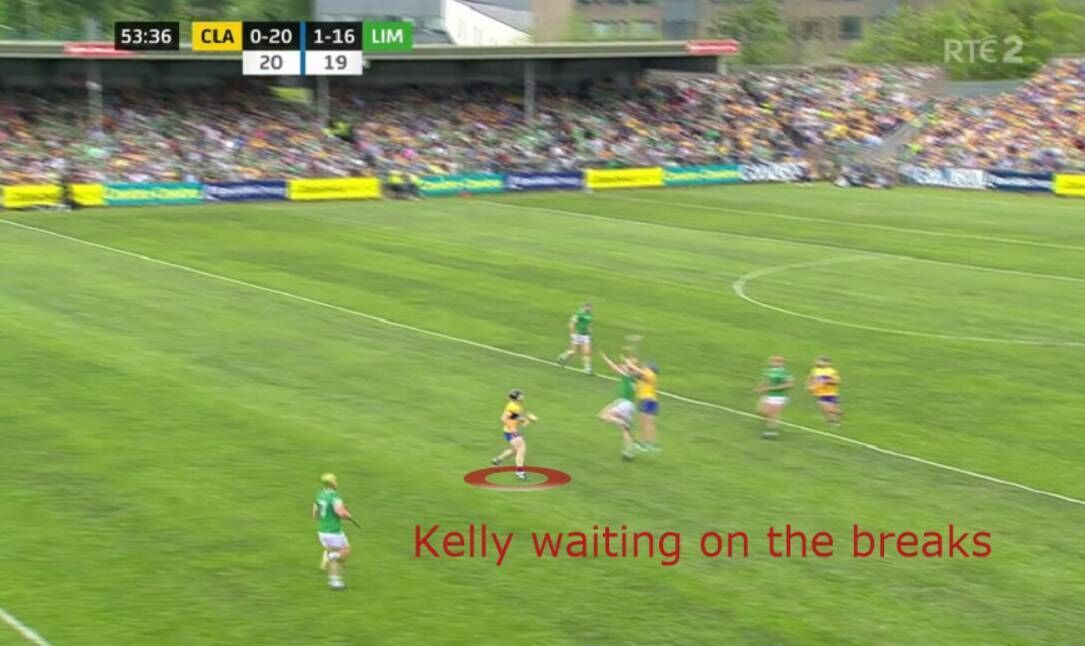
Limerick controlled the 2020 encounter by winning 19 of Clare’s 35 long puckouts. They had numbers at the breaks as Clare allowed the Limerick half forwards drop in front of the Limerick half-back area uncontested. This year Clare came prepared for a battle on the breaks, Clare won 12 of their 20 long puckouts – 11 of them on the breaks. One man won nearly half of those breaking balls – Tony Kelly. The Ballyea man won one puckout clean, five breaking balls and on three occasions he was the second phase receiver on Clare’s short puckouts.
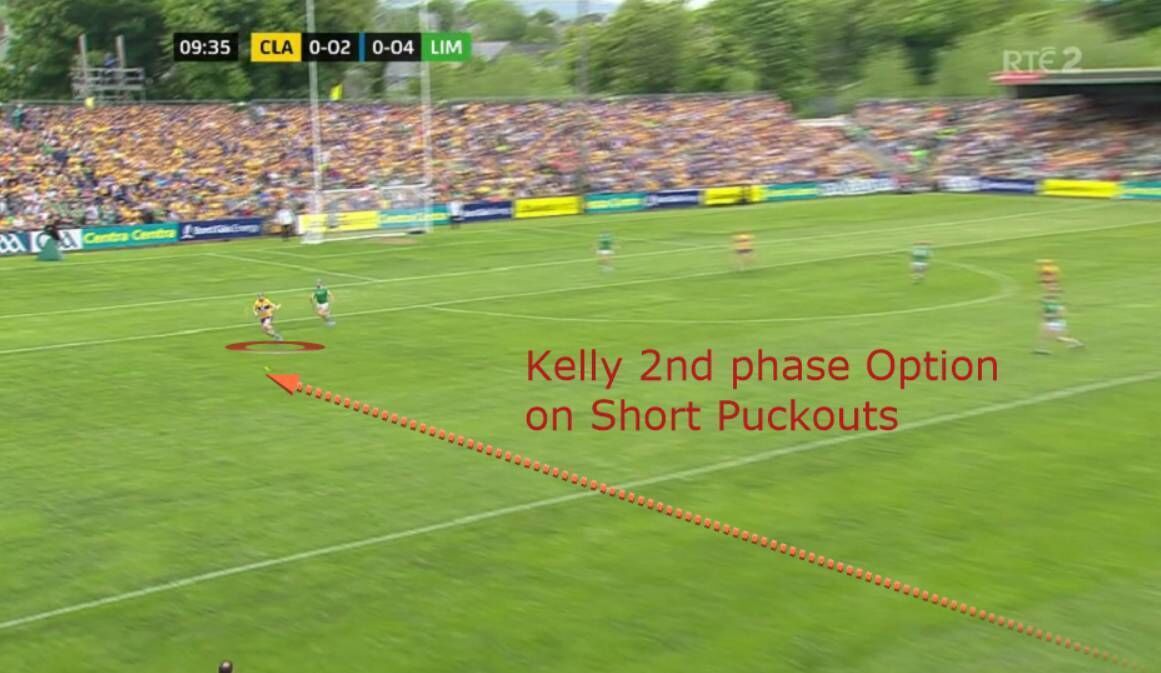
I expect Limerick to focus heavily on having Kelly wrapped up on puckouts, removing his threat on the breaks, shadowing his runs for second phase passes. Over the years Limerick have been confident in their back six's ability to mark any player, keep players in their set positions, not moving defenders around to match opponents' strengths. This has been Kelly’s gain. His freedom to change position gave him matchups against Byrnes, Finn and Nash. Kelly was asking questions of the defenders, were they as free as he was to move between the lines? Could they hand marking duties over as fast as he could move around the field?
Kelly is well versed in timing his runs to arrive at breaking ball just in time. He is talented at disappearing in crowds and losing markers. Limerick will have to focus on a plan for this problem.
Brian Lohan’s regeneration of the Clare team had seen him overhaul his half-back line, putting three tough, physical hurlers who can all attack if needed in Conlon, Ryan and McInerney. Lohan has bolstered this area of the field by placing three hard-working selfless hurlers nearby in Malone, McCarthy and Taylor. This well-organised half back area has allowed Clare’s full back line to play aggressively knowing they are well protected.
Clare would be unwise to expect Limerick to bring the same game plan and setup as they brought to Ennis. Paul Kinnerk is a shrewd operator who will enjoy the challenge of overcoming Clare. Limerick’s three-week break certainly involved a deep analysis by their superb video analyst Sean O'Donnell. The issues raised by the round robin game will have been discussed and training tailored to bring a new plan to Thurles.
Can Clare defy the bookies' expectations and keep Limerick within reach? Will Limerick generate the shot numbers they had in 2020? A mouth-watering battle awaits.
CONNECT WITH US TODAY



Be the first to know the latest news and updates