PM O'Sullivan: Jackie Greene remembers '55, when Clare walked into a Limerick ambush
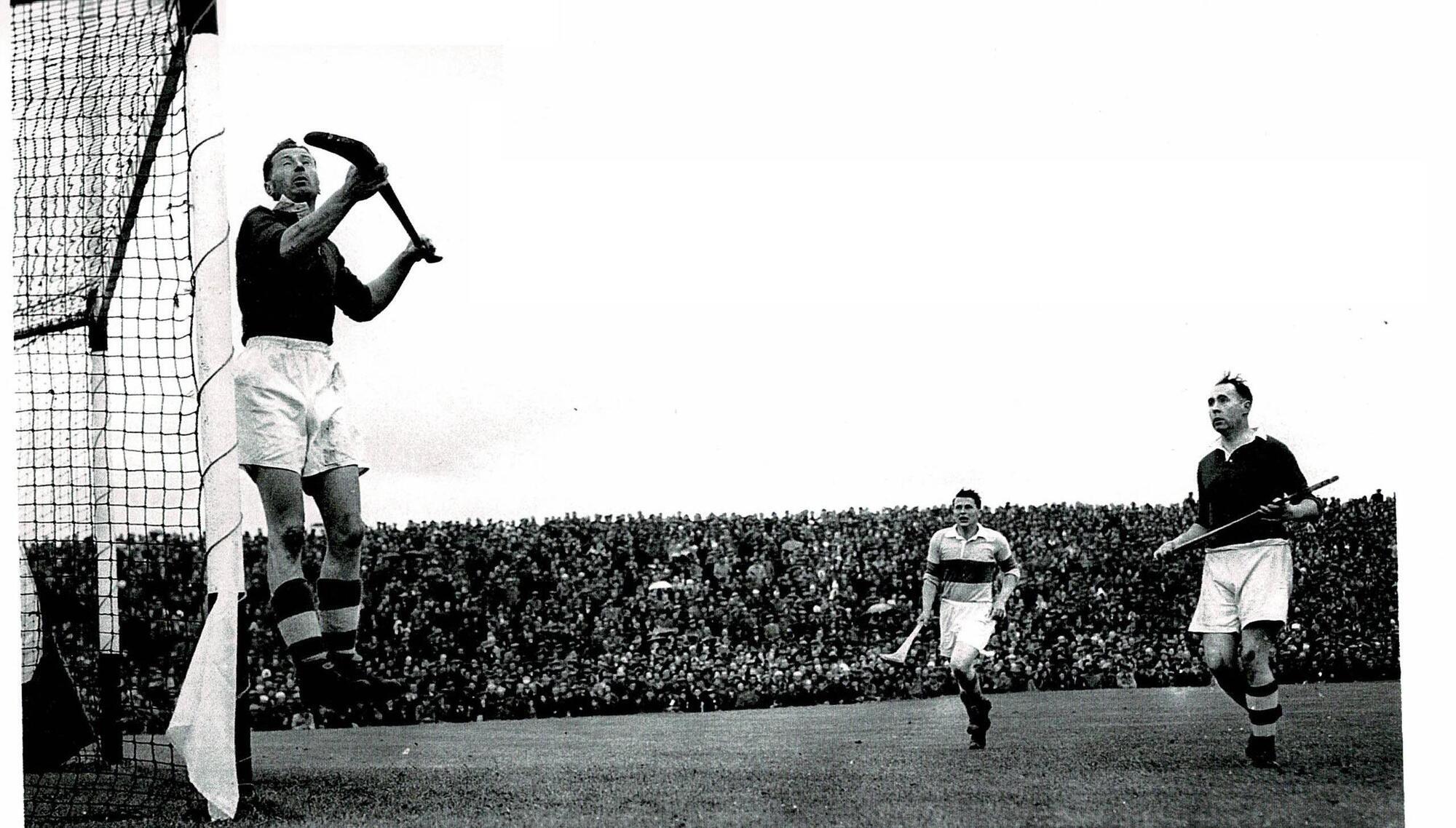
Jackie Greene hurling

Who is Jackie Greene?
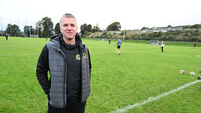
Meet the halest 91-year-old I have ever known. He sits in his Terenure office, pleasant out, no stranger to merriment. He watches and absorbs, comes every day to work. Retirement never attracted him, retirement from Jackie Greene Construction, a company founded in 1976. He built Fortfield Square, the estate in which the office building stands.
His granddaughter Rachel, 19 and just finished First Year Maths at UCD, sits in for our interview, helpful with images and the like. She chuckles when I ask about her college course: “I’m like him… Happy dealing with figures.” Her grandfather beams.
This man was 45 in 1976, retired 20 years as an intercountry hurler. Back in 1956, he had just captained Clare to defeat against Limerick in a Munster semi-final. Six points proved the margin, 1-15 to 2-6. Clare were still getting over a crushing Munster Final defeat the previous season to the same opposition.
He is not a man for pretence, for lilies gilded or memories varnished. “I can’t say I recollect a whole lot about 1956,” Greene states. “We were beaten. That was about it.”
But he remembers plenty about 1955. Next Sunday’s contest means history repeating itself, 67 years later. Limerick and Clare swing back up on the Munster Final wheel. These counties are paired for the first time since 1995, for only the sixth time ever.
What better scenario? Tickets bulleted out the door.
Next Sunday is likewise history inverting itself. The Limerick team of 2022, priced 2/7, are heavy favourites with the bookmakers. The Clare team of 1955 were even more strongly fancied. No one knew Wexford’s hurlers would capture the mid-1950s. The Banner men seemed fairer candidates, as they stepped across that summer.
Greene was their full-forward. He can muster a dry smile: “People just got totally carried away. We walked into it. We had beaten Cork in the Munster quarter-final, and Tipperary in the semi-final. Between them, Cork and Tipperary had won the previous six Munster Championships, the previous six All-Irelands. People thought all the hard work had been done.”
Presumption etched one of the county’s sorest tales. Five burning weeks in 1955 defined Clare hurling for a generation. Cork were beaten by a point on June 5, 3-8 to 2-10. A fortnight later, Tipperary fell by the same sliver, 1-6 to 0-8. “A tough and dour game,” Greene recalls. “All you could say was that we won it.” Three weeks later, Limerick were at home in the Gaelic Grounds.
Flan Quigney’s (2012) is a tremendous compendium of supporters’ perspectives over many decades. The 1955 Munster Final gets repeatedly referenced. A diary entry by Michael Minogue from Tulla holds representative: “July 10th: Did not travel to the Munster final but, like many other Clare fans, expected a non-event when Clare faced Limerick on a blistering hot day. Limerick 2-16; Clare 2-6. When this result came over the airwaves Clare supporters who stayed at home were stunned.”
Jackie Greene glosses: “The problem was they simply thought they couldn’t be beaten. To make it even worse, they conceded home venue. They were so full sure of winning, said it was handy for Clare supporters, a trip to Limerick. A trip to Limerick…”
His voice italicises: “I will tell you this much: it was insane, conceding home venue in a Munster Final. I don’t think it was pressure. I think the approach and the attitude was all wrong. Completely. That was the general belief, that they only had to turn up.”
He draws a moral: “Because it is a funny thing with hurling. If you don’t start right, and with the right attitude, it is very hard to get back right in the middle of a match. If you haven’t the right approach at the beginning, and things go against you, it is hard to recover.
“When you boil it all down, you have to have a certain amount of skill. But if you haven’t got the determination and effort, you’re getting nowhere in hurling. You definitely have to have determination and ability, those two things, together, to give yourself any chance.”
The aftermath soon soured. “There were big recriminations,” Greene acknowledges. “There were people inventing stories players had gone off to Lahinch, the Saturday night before the match. But that was only fellas making up rumours, setting them going.
“Some fellas came out with outlandish stories. Because they were looking for an excuse, and they accepted those stories. It’s handier.”
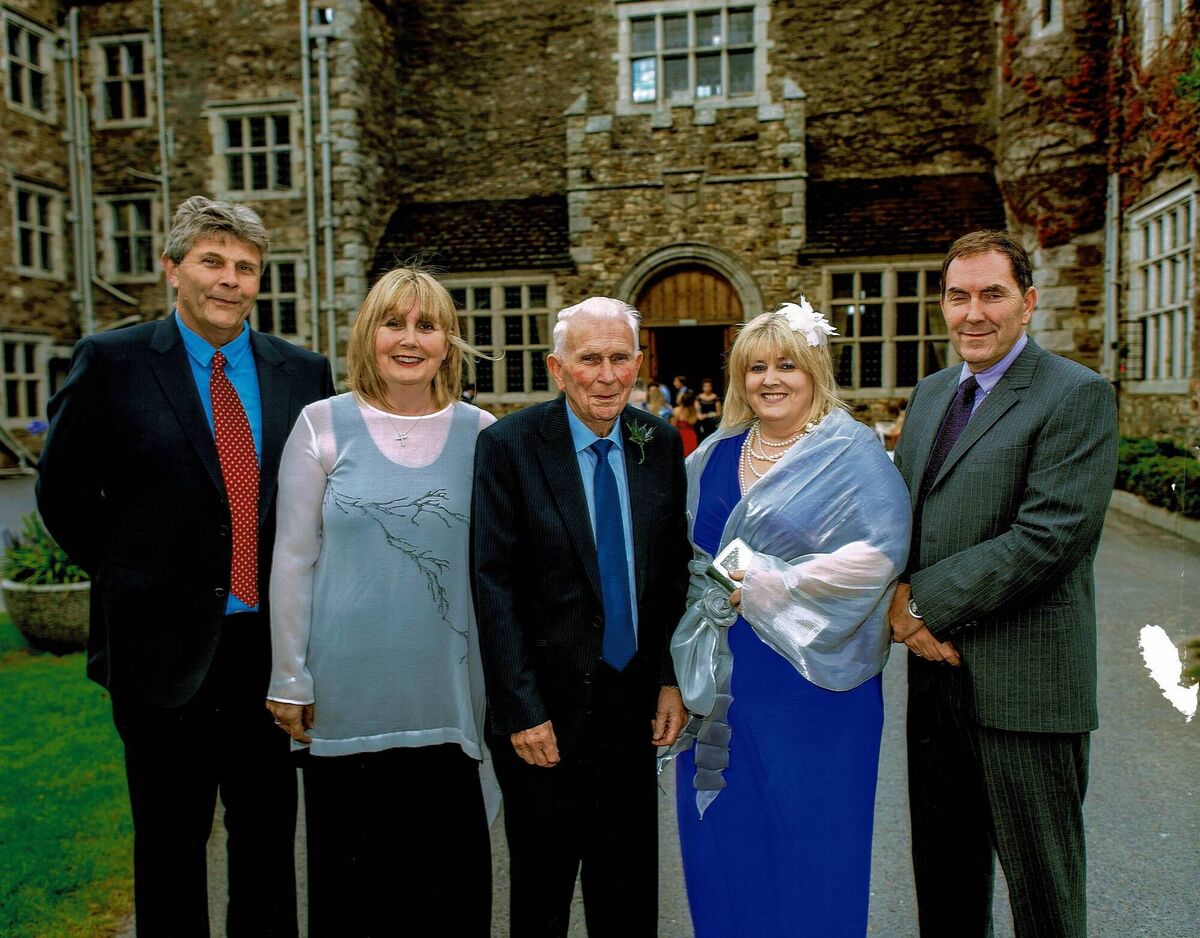
Who is Jackie Greene? Born on January 21, 1931, he grew up in Newmarket on Fergus. He remembers billeted soldiers during The Emergency years, fishing for eels and roach in a local lake, the glamour of a travelling cinema that would stay a week or so. His grandfather, Patrick Greene, had been Principal in the village’s primary school. His father, Michael Greene, served as Chairman of the GAA club.
Newmarket on Fergus saved 1955, locally, by winning a Senior title for the first time since 1936. Greene was so versatile and accomplished that he lined out centre back. “I probably preferred the forwards,” he summarises. “But I didn’t mind, really. Centre back was okay as well. Centre back was good.
“Winning that County Final, after 19 years, meant a lot. There were big celebrations, but we always celebrated after important matches, no matter the result!”
I can see by the man of 91 how the boy of the 1940s and the young man of the 1950s grew into capability and a quiet confidence. He agrees: “Generally speaking, I did take things in my stride. You’d always be a bit concerned about certain things. Of course you would. But generally I wouldn’t be worried, if you know what I mean.”
Between 1947 and 1949, Greene spent three seasons with the Clare Minors. The 1949 Munster Final involved searing defeat to Tipperary, champions by a point via a last gasp goal. Jimmy Smyth, 20 days older and one of the heralded greats, was a teammate. They proceeded together to Senior. Greene made his championship debut in 1951.
Mark a major talent. Read between the lines. Like other hurling counties, Clare picked an all time XV to mark Centenary Year in 1984. Greene got selected at full forward.
The face value unlikeliness of this choice says much. He had been retired for nearly 30 years, gone from the intercountry arena at 25 years of age. How brilliant a hurler did Greene need to have been, in this context, to remain so high in connoisseurs’ estimation?
Pat Corry, who is at work updating the Newmarket on Fergus GAA history published in 1974, provides an intriguing insight. Corry estimates that Jackie Greene hurled for Clare in 52 competitive games, scoring 26 goals. However worthy in its own right, this figure needs to be adjusted. Greene lined out as a back in 20 of those games. The truer ratio is 26 goals out of 32 appearances as a forward, a remarkable haul by even the loftiest standards.
Greene inclines at the information: “I always knew I scored a good few goals. I was quick to react. That would be my recollection. Quick to react, off the break. In and around the square ― as you had to be, that time!”
He won a Railway Cup in 1955 as Munster’s full forward. That outfit shone with luminaries: Tony Reddin, John Doyle, Jimmy Smyth, Pat Stakelum, Willie John Daly, Josie Hartnett, Christy Ring.
Greene details the moment: “It meant a lot to win the Railway Cup. Of course it did. It would be different for fellas that got seven or eight of them, but I only won one. I was only there the one year.
“But I suppose, when you think of it, you are talking about the Railway Cup. It wasn’t ‘this is my team, we have to win tomorrow’. It wasn’t ‘this is Clare, we have to win tomorrow’. You felt different. But it was great to win.”
Greene underlines that team’s most famous name: “I thought Ring was the best of them all. He just had that split second of time to react. On top of that, he was determined, very determined, and he trained hard all the time.
“He wanted to win, no matter what the game, even if it was only a challenge match. He still wanted to win. Ring was a force of nature. No matter what, he wanted to win.” He elaborates: “I played on Ring twice, for short periods. The first time was the Cork game in 1954. Our corner back was put off. So they pulled me back, and I was on Ring for about 20 minutes. Next thing, the Cork full forward was put off. So I reverted back up.
“Another day, down in Limerick, I was playing corner back and he was corner forward. Probably 1956. I was on him for quarter of an hour, 20 minutes. Next thing, he moved out the field, I don’t know why. So, for two short periods, I marked him.”
Mise: “You held your own?”
That dry smile: “You could say that. But it wasn’t terrible long.”
We spin through a capsule verdict on each of those Railway Cup teammates. “I hope you have some bit of an interest in hurling,” I say to Rachel, turning sideways. Her reply is perfectly pitched: “Well, I am very interested in my granddad! So it’s all the same.”
Jackie Greene beams.
The young man went to work in a clerical job for McInerneys, the construction firm. He began to learn about that world. You would never know by this elderly man that he built a hugely successful company, now in its sixth decade. “I didn’t go to Dublin until 1952,” he notes. “Previously I was in Edenderry. Once in Dublin, I went to night school in Bolton Street and qualified as a quantity surveyor.”
His life changed: “I gave up hurling with Clare at 25. It’s very simple: I got married, and we had children, and I had no car. Getting up and down to Newmarket was just out of the question. The only way you could go was by train, and you’d get no train on the Sunday night after a match. You’d have to miss Monday. So that didn’t work too well.
“I never hurled with any club except Newmarket. I was with them, on and off, for another year or two after 1956, but it tapered out. As I said, my work situation didn’t allow it.”
Yet The Banner pulse never slackened: “The All-Irelands in 1995 and 1997 were fantastic. Clare kind of threw away the one in 1996. Limerick caught them, the famous [Ciarán] Carey point in the last second. That should have been a draw. They’d have won the replay. They could have won three in a row.
“I think they were robbed in 1998 [over the refixture with Offaly]. That team was marvellous to the centre of the field. Their forwards maybe weren’t quite as good as other teams’ forwards. But they were excellent from one to nine.
“It definitely was emotional seeing Clare win an All-Ireland. Without a doubt. I thought I was never going to see it.” He continues: “I moved in all sorts of circles in Dublin, all the counties, including Clare circles. I used to go to their annual dance and dinner. I used to go to their golf day. I am still a strong supporter of Clare. I always will be.”
Greene does not query the favourites’ status for the weekend: “Limerick are first class. They are seriously good. They are like the old Kilkenny team, the team that won so much in the 2000s, under [Brian] Cody. Limerick have got 15, and they have got another five on the sideline to come on, and they are very good as well. I think Limerick are exceptional.”
He runs measured on his own crowd: “The Clare defence have improved a fierce lot this year. That improvement has everything to do with them making the Munster Final. And the forwards are starting to fire as well. I have never really met Brian Lohan but he is obviously doing a superb job. He is a driven man.”
I finish up by asking about the captaincy in 1956, the role’s nature. Greene is once again plain: “It was an honour, but it didn’t incur much. I was happy for Newmarket people. You hadn’t a big function to do. You went in for the toss and decided what way to go. Very little, really.”
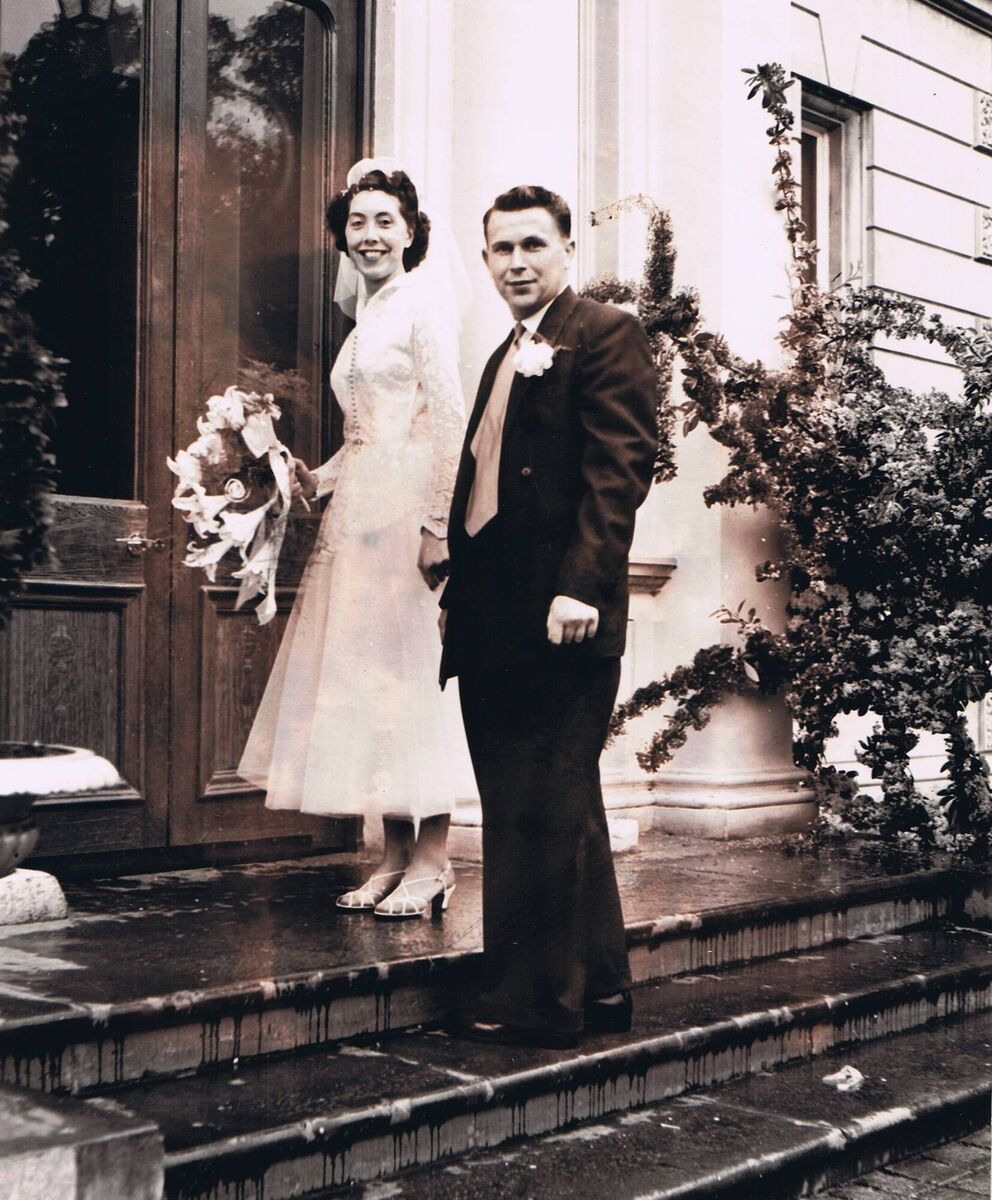
Then a question: “That was the 17th of June, wasn’t it?” I nod. He says: “I got married the 18th of June.” Seeing my surprise, he laughs: “That was the way of the times.”
Turns out Jackie Greene and Maeve Curran, a native of Ennis, were married that Monday in the Church of the Holy Rosary on the Ennis Road in Limerick. They honeymooned in the Isle of Man. A fresh life had begun, away from the murmur of the River Fergus.
Here he is, at 91. Jackie Greene, at 25, got married.


CONNECT WITH US TODAY



Be the first to know the latest news and updates