The Kieran Shannon interview - Conor Fitzgerald: 'I genuinely think the run of this Limerick team saved people’s lives'
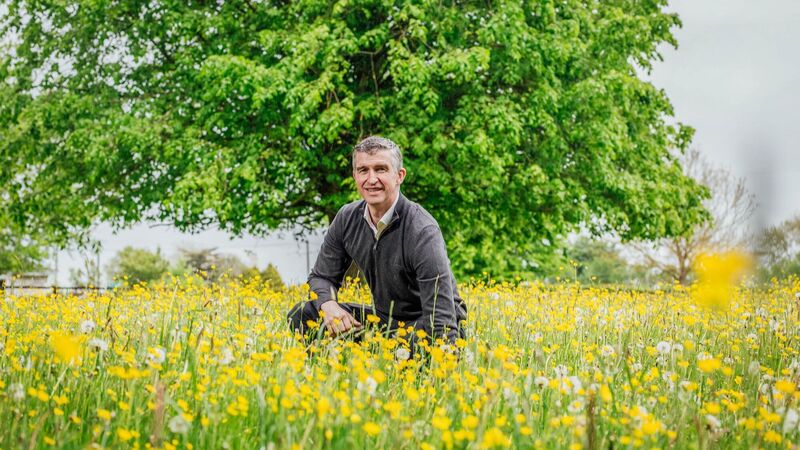
Down to earth: Conor Fitzgerald pictured at his hotel, The Woodlands in Adare, Limerick.
In this tale of his city they’ve been the best of times, they’ve been the most challenging of times.
Last August when Covid prevented the Limerick hurlers having the usual banquet in Dublin or even bringing the Liam McCarthy cup back to Shannonside, John Kiely and his team instead headed back that Sunday evening to Adare and the more casual environs of the Treehouse outdoor dining area of the Woodlands House Hotel.
It was fitting that Adare ended up being the team’s choice of destination that night, just as it was apt with normality now restored that last week the Limerick footballers finally received their 2020 McGrath Cup and Division Four league medals at a function in the same hotel.
The Woodlands is run by the Fitzgerald family, including one Conor Fitzgerald, who throughout the noughties played for both the finest football team the county has produced as well as its hurlers.
Kiely’s captain, Declan Hannon, is a son of Adare, and would have had the joy and comfort of Fitzgerald soldiering alongside him when the club won a third-straight county championship back in 2009.
But more than the scene and setting was so right because of how ingenious it was and how unfathomable it would have been only a few years earlier: the Limerick hurlers celebrating a second consecutive All Ireland in an outdoor dining area on the grounds of the Woodlands back home.
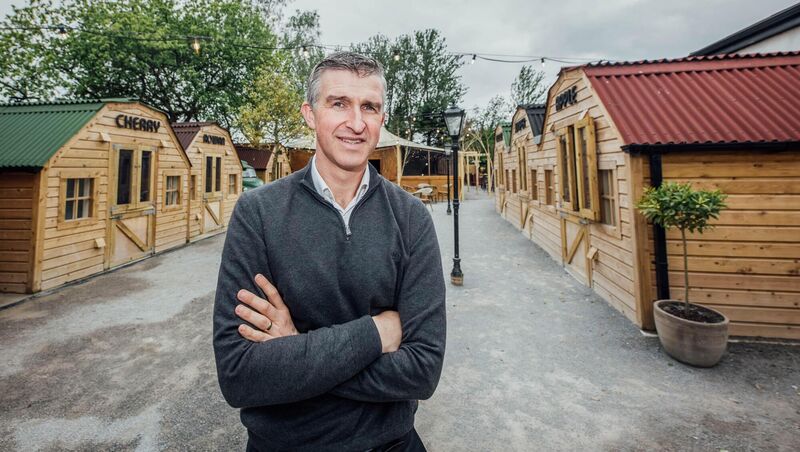
Before Covid the Treehouse did not exist. Years back alright they had an outdoor area where they might lay on a barbeque for a wedding group on their day two but it had become overgrown. Fitzgerald and his family had long meant to do something about it but been too busy to get round to it. Lockdown offered no such excuse, instead an opportunity. Boredom as much as necessity was the mother of invention.
“It was our saving grace during Covid,” says Fitzgerald, who follows in the tradition of the likes of Liam Griffin and Brian McEniff in being a GAA hotelier; from the age of seven he was giving his parents Dick and Mary a hand, bringing out and putting away bottles out the back. “As a family we’re used to working and going the whole time. So during lockdown we were nearly going mad. While it was lovely to have some downtime to spend with our families, it was good for only so long.
“We bought a container and instead of having it in the yard, we put it the car park because it was empty. It was the first time that we’d locked the gates of the Woodlands. So we moved the container to there and started to clear away the rest of the area.”
Other aspects of their business had been uprooted only for them to adapt and reinvent.
“Covid was extremely challenging for our business and industry, there’s no point saying otherwise. We’ve lost so many people as an industry to other sectors because understandably they didn’t know if catering was viable anymore and they had bills to pay. But after the first lockdown we made the conscious decision to keep our core management team and about 40 to 45 staff on the books. As a family business we wanted to provide that comfort to others and we knew it would eventually come around again, which it did. That has really stood to us now that we’re so busy again with three or four weddings a week but initially it meant we didn’t have a whole pile of work to keep them going. Something like the Treehouse changed that.”
By February 2021 it had opened, meaning that all the locals that used to enjoy the outlet of walking along the hotel’s grounds with its organic gardens, woodlands trail and pet farm could now avail of having beef burgers to go with their coffees and ice creams on their pitstop. By Easter it was flocked. And by late August Hannon & Co were able to have pints in its outdoor bar, dinner in pods in its log cabins or even just nibbling on some chips out on its lawn, another All Ireland delivered.
Sometimes Fitzgerald has to pinch himself. For him, to again lean on Dickens, this is an epoch of incredulity, that his county has spawned a team of such belief and provided such hope in at least one season of darkness and otherwise winter of despair.
“I know Covid dampened the [2020 and 2021] celebrations a bit but I genuinely think the run of this Limerick team saved people’s lives. Just what it did for the well-being and sanity of people, especially that winter of 2020. Whatever about Limerick going to win that All Ireland, I don’t know what people would have done if there weren’t matches to watch by the fire every weekend that winter.
“As Limerick people we’re living in some of the most special times of our lives. I mean, people lived for years and never saw Limerick win an All Ireland. So to now suddenly see them win three…it’s an extraordinary time in our lives. We’re living in a golden era for the county. The people of Limerick can never have been prouder, to have such a group of players do what they’ve done for our county.”
Fitzgerald himself was part of some extraordinary days for Limerick as a player, even though they didn’t quite culminate in the climax its people and his teammates yearned for.
In 2000 he along with the likes of Brian Geary and Brian Begley and Stephen Lucey had the distinction of being involved in both the football and hurling U21 All Ireland finals. The footballers lost to a Tyrone team that was possibly the greatest the grade has ever known. The hurlers beat Galway with Fitzgerald on the bench. The subsequent two years they won it again, with Fitzgerald starting and starring at corner forward. By 2003 he was playing senior for both teams, kicking scores off a then All Star in Anthony Lynch in an unforgettable win in Páirc Uí Chaoimh, then a few weeks later taking a Waterford team loaded with All Stars and rock stars for 1-4 in front of 35,000 in Thurles. By 2010 he was still at it, involved in a fifth Munster senior football final, pushing Kerry to the hilt. Limerick football had never known a run like it. Limerick hurling even now hasn’t had known a streak of underage success like three U21 All Irelands in a row.
Yet they never found what they were looking for. A Munster title. A Liam McCarthy.
How does he look back on it all? Depends on the day, the code, what period you’re talking about.
With the hurling there are only glowing memories of the underage days. Going into Br. Philip Ryan in Sexton Street on Saturday mornings from when they were U14 and being part of what must have been the first development squad in the country. The confidence they got from how he talked to them and the exercise programme he’d give them to do on their own. That magical journey with the 21s under David Keane, starting with a scrappy 1-9 to 0-9 win over Clare in Ennis all the way to smashing Galway in Thurles to complete the three-in-a-row. The future should have been theirs but it wasn’t.
“It’s a strange one really. On one hand you’d be very proud of what we achieved at underage and the times we had. But there’d be a real hurt that we didn’t kick on at senior level. We underachieved, there’s no point in saying otherwise. We had enough quality to push on but we didn’t.”
Their time coincided with Cork and Waterford each having exceptional teams at the time, as did obviously Kilkenny. But in hindsight he finds there were certain other things they could have controlled better that could have made them compete better, regardless of the teams O’Grady, McCarthy and Cody had built.
“If you look at that Cork team, they had a very good cohort of players that were very well coached, very well managed, and very well conditioned. In hindsight I don’t think we were as physically developed. We had some big men like Begley and Lucey and Geary but outside of them we were kind of blown out of it.”
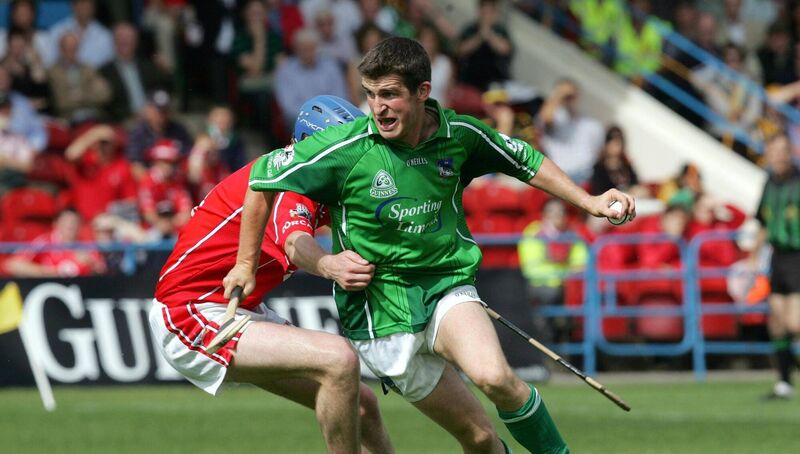
He wouldn’t agree with the narrative that they enjoyed themselves a bit too much off the field to enjoy victory on it.
“We would have enjoyed ourselves as much as the next county would have but the stories grew because we weren’t winning. Maybe too many of us came on stream at the one time and the blend wasn’t quite right. I don’t know.”
What he did know was that in 2004 when then manager Pad Joe Whelehan declared any dual player would have to drop one sport or the other. Fitzgerald and his pals opted for the football.
“People often ask how come you didn’t pick the hurling. But we were making such strides with the footballers it made sense. We were getting the very best out of ourselves and the setup was fantastic so it would have been very hard to leave.”
Again the pot had first began bubbling at underage with the likes of Brian Kelly and John Landers looking over development squads. At minor they were coached by Pat O’Shea and reached a Munster final against his native Kerry.
“Pat was incredible. He taught us things like how to lose men by going backdoor that someone from basketball or Kerry football might have known but someone in Limerick would never have been exposed to.”
At U21s and senior then another son of Kerry in the form of Liam Kearns versed them further in the nuances of the game.
“Liam was ahead of his time in terms of analysing matches and the opposition. Before we beat Cork that time by 10 points in Páirc Uí Chaoimh he had us so ready for that game. I was likely going to be marked by Anthony Lynch. He was an All Star at the time, superb footballer. But Liam was able to show me and convince me that he wanted to play in front the whole time, that he wouldn’t like it if I went backdoor on him or took him across the field.
“In 2004 we beat Armagh to make a league semi-final. Armagh had played in the previous two All Ireland finals. That was the calibre of team we were playing every week, having a few years earlier started out in basically Division Four. Going into the 2004 Munster final against Kerry in our own minds we were ready to beat them.”
They nearly did so too.
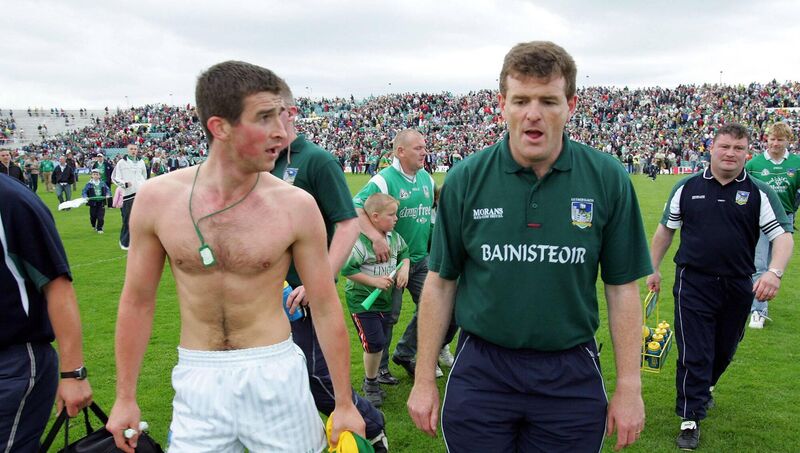
Only Darragh Ó Sé’s fingertips, hauling down three Eoin Keating long-range deadballs from off the crossbar in the closing minutes, denied them their Clare 1992 moment. The band kind of broke up for a few years after that but by 2009 and 2010 they were again kicking on heaven’s door, inspired by the coaching of a couple of other Kerrymen, Mickey Ned O’Sullivan and Donie Buckley. On three occasions they were within a kick of a ball of beating the two best teams in the country and reaching their promised land. Yet every time some misfortune seemed to visit them, with the referees awarding their more celebrated opponents a suspect penalty or not awarding them a red card.
“When you ask me how do I look back on those days, it depends on the day. Sometimes you think of what could have been and it really hurts that we didn’t get over the line. On other days you think of how lucky you had it. Because they were the best days of our lives really.”
Even some of the tough days were good days. In 2003 he lost a Munster football final to Kerry, a hurling qualifier to Offaly, and a football qualifier to Armagh in Hyde Park all in the space of a week, only to meet his future wife Aislinn Connolly, daughter of the John Connolly, at the Galway Races on the way back down from Roscommon.
“We had great times, out together, training together, competing against the top teams together. As a group I would say the footballers got every last ounce out of ourselves.”
Now he sees a similar dynamic at work with the current team. He knows Billy Lee well from him being a selector to Kearns back in the day. If anything, Lee had to start off at a much lower base than Kearns ever had. At least Kearns inherited players that had been in Munster minor finals, beating Cork en route. The players Lee inherited, or to be more accurate, persuaded, had no such pedigree or track record. Limerick football when he took over was in intensive care yet there was the sign of a heartbeat.
An academy was established and still runs every Saturday morning in LIT, with Paul Kinnerk overseeing it and the likes of old warriors and now fine coaches Stephen Lavin and Muiris Gavin on the ground. Fitzgerald brought a group of U14s up to U16s as a manager himself a few years ago. Some of them are now on the current senior panel. He even called on the help of some of his old adversaries on occasion, bringing in the likes of Kieran Donaghy to work with some forwards.
“The academy was put in place because we had to. Limerick football was back in a very bad place. So at one level we started at underage like we did way back in our time because that’s where you have a better chance of getting people involved.
“But on the other, Billy Lee had to get a team together so we’d have a team for the following year. For years we were one of the last three teams in the country along with Wicklow and London. And he’s managed to do that. You’ve to give him a lot of credit for that but also senior players like Donal O’Sullivan and Ian Corbett who stuck at it all through the years.”
He can see how they’re winning respect and recognition, how often conversation in the hotel turns to how well the footballers are going. Beat Tipp this weekend and they’re in a Munster final, just like the hurlers.
The days of someone playing dual at senior for Limerick are gone with him (“It’s impossible. Even when I was doing both I found you had to focus much more on your skills in hurling to keep your eye and touch in. I’d often bring both a hurley and an O’Neill’s down to the field but I’d say I spent twice as much time at least working on my hurling than my kicking”).
But dreaming of Limerick playing on the big days in both are back.


CONNECT WITH US TODAY



Be the first to know the latest news and updates