Meeting the quiet Colonel who marshalled Gavin's Dublin army 
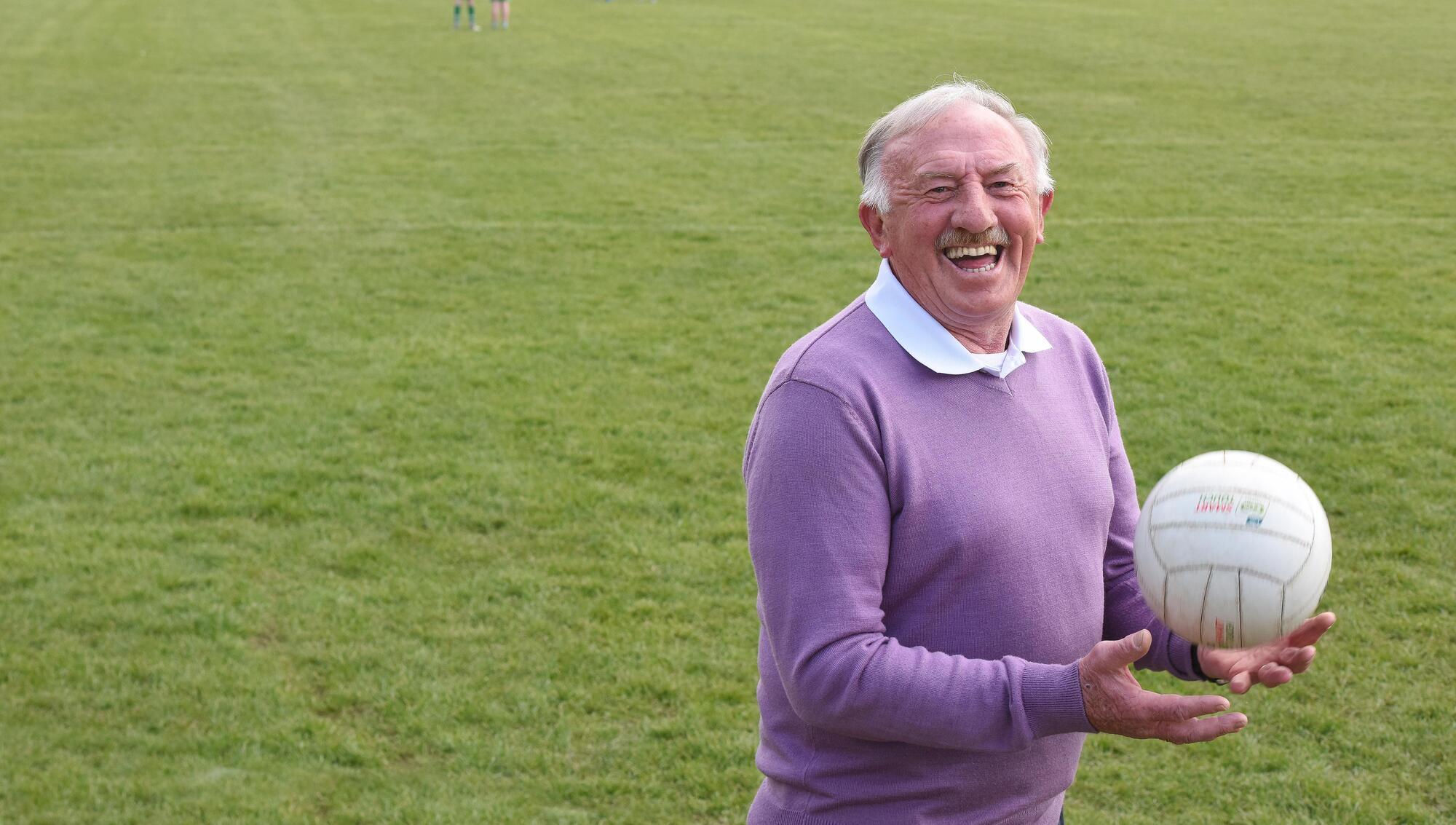
You may not know the name, you may not recognise the face but John Courtney was a central cog in the well-oiled backroom that helped Dublin to dominate Gaelic football for six seasons.
Meeting the quiet Colonel who marshalled Gavin's Dublin army 

Marching to his own drum: John Courtney, a backroom member of the six-in-a-row Dublin team photographed at Sarsfields GAA club in Newbridge.

Outside the setup he was one of those anonymous, mystical figures that formed part of Dublin’s gigantic, uber-professional backroom. Within it they all knew and loved him as the Colonel, there to serve them and the cause in whatever way that was needed. For free, even though he was a Corkman living in Kildare, and what seemed like would be forever.

In the Irish army John Courtney was literally a colonel. In Jim Gavin’s any title to describe what he did and brought would be too restrictive, inadequate.

If he had one it was probably opposition analysis lead. In the US sports Gavin loves he’d be termed an advanced scout: while Dublin were playing a league game up in Clones, Courtney could be over in Salthill, taking in who Dublin would be playing the following week.

But he was so much more than that. He’d help the groundsman, kitmen and video guy bring in their various equipment. Set up the tables and lay out the knives and forks for the post-match meal. Be a target or retriever for Stephen Cluxton as he went about his pre-training kicking workout. Be an umpire for AvB games, inwardly thrilled to have such a prime view of matches that equalled or surpassed – and steeled them for – their epic battles with Mayo and Kerry, yet outwardly inscrutable and silent, a trait that could irk Con O’Callaghan who’d dispute a wide was actually a point but one that endeared him to Cluxton.

Bernard Brogan was another he’d forge a mutual admiration society with. Courtney had never seen anyone quicker to get a shot off. Brogan in turn respected Courtney’s knowledge and love of the game, but even more so his geniality.

Shortly after achieving the five-in-a-row, the group had an in-house function where on Gavin’s request a different player paid tribute to each member of the backroom. Brogan volunteered to give Courtney’s eulogy, oblivious that it coincided with the Colonel having stepping out of the room for a puff of his pipe. When Courtney’s wife Nuala informed Brogan of Courtney’s absence and return, Brogan duly came back onstage so the Colonel could hear for himself just what the troops thought of him. Brogan’s willing to repeat those sentiments once more here.

“He was such an authentic, brilliant guy to have around,” says Brogan. “You got so much confidence from the nuggets he’d pass on, whether it was him standing in front of the group and breaking down the opposition’s key threats or letting Clucko know where their penalty-takers preferred to go for. Or it could just be a one-to-one chat. ‘This fella will buy a dummy solo. Conor McManus troubled him last week by going on the loop.’

“More than anything he was a just a great character with the army presence and mannerisms he had. If you met him in the hallway he’d bring the two heels together and give you the salute, then you’d do it back and you’d each exchange a nod and a wink. Everyone in that dressing room had fierce time and respect for the Colonel.”

****************************

The Army made him. Well it and Glanworth and Cork.

Fifty years ago this month he started in the Curragh in the same cadet class as Seamus Coughlan, his fellow countyman who’d win an All Ireland in 1973. Courtney had won a minor All Ireland himself in ’69, beating Derry in the final thanks to a couple of fisted goals from Declan Barron. Courtney lined out beside him, wearing number 13, meaning when the two teams attended a function the following day with their opposite number across the table, Courtney broke bread with a certain Martin O’Neill.

It took Courtney a lot longer than Coughlan to progress to the senior team. It wasn’t like there was any pathway or system or even panel. A call-up was often dependent on a bit of providence or a run with the club as much as talent. In the autumn of 1976 he finally got a few games with the seniors after Glanworth won the intermediate championship but it would be a full 10 years on from his minor All Ireland before he’d feature in the Munster senior championship.

“Back then you had 19 players plus a sub goalkeeper for a match,” he says. “There was no proper panel as such. You got a letter on a Tuesday from Frank Murphy that said you had been selected to play for Cork the following weekend.

“When you were there it was fantastic. I’d get goosebumps when they’d throw me a jersey in the dressing room. Billy Morgan and Frank Coogan were brilliant, giving you advice and encouragement. But after that there was nothing. You played, had a meal, then went home and waited for the next letter.”

In 1979 there was finally a constant stream of correspondence. Courtney played midfield alongside the late Vincent Coakley in the league final defeat to his great army friend Dermot Earley of Roscommon, then started again in the Munster final where he was entrusted to take a penalty against Kerry at the peak of their powers. But he missed that penalty and the following year the Dear John letters from Frank stopped.

“I heard that there was a school of thought that sure we could get a guy like John Courtney down in Cork rather than having to bring one all the way down from the Curragh. And of course they could. As well as that it was very difficult combining county football with working in the army.”

Every other weekend there’d be some job, some excursion. The ’70s and ’80s were a hairy enough time in his line of work, both at home and overseas. As a cadet he saw the transfer of IRA prisoners from the detention centre in the Curragh to Portlaoise prison. Later the helicopter crew he trained would pursue gunmen on the run. He commanded a border patrol unit the time of the Don Tidey kidnapping. His first year after being finished with Cork he was off to the Lebanon, near the Israeli border sandwiched between the Christian militias and the PLO. “There was a lot of shelling. We had fellas on patrol that were hit. Serious times.”

Being in the army though meant developing into a leader, and subsequently being in demand to manage football teams. After he won a county championship in 1980 playing alongside Earley for their adopted club Sarsfields, Earley let him know that his friend Jack Boothman was on the lookout for someone to take Wicklow. Courtney instantly won them promotion before the Lebanon called.

Upon his return he’d lead Gracefield to an Offaly senior county championship, meaning that when the county position became vacant after Eugene McGee stepped down, he was offered it. Right man, wrong time.

The team’s core had already been to the well and the promised land often enough for their liking. Then that Christmas he found himself in a hospital, visiting Matt Connor and learning after his car had hit a tree that he would never walk again. They’d gamely put it up to Dublin in their subsequent Leinster semi-final but after Courtney made some critical remarks of the referee, he could detect the county board were happy enough if they parted ways.

A few seasons later he was snapped up by Kildare but again it was a strictly one-year stand constrained by tensions with the county board.

“People talk now about the power county managers have but back then with the exception of the likes of Mick O’Dwyer and Kevin Hefernan they had little power or profile,” says Courtney. “County boards ruled the roost. There was no sponsorship and it was hard to garner the finance and appreciation needed to properly support the players.

“In Kildare we had a great goalkeeper called Micko Wilmot. He worked in a meat factory and if he was to come to training he’d lose out on a lot of overtime. I remember travelling up to Omagh to play Tyrone. The bus had no heating and then it broke down. I came back and raised a storm but the willingness to improve the conditions for the players just wasn’t there.”

That was him pretty much done with county teams. He spent most of the nineties and early noughties on the club scene, guiding multiple teams to further silverware. Like Sarsfields; Courtney was wearing their banisteoir bib the time of their famous Leinster championship trilogy with Na Fianna. Or Éire Óg in Carlow who he helped to another Leinster title in 1996.

He did make a brief exception for one county and a couple of friends. Peter Dukelow, another army and football-mad Corkman, was managing Kilkenny and after some persuading from their mutual pal Earley, Courtney agreed to take them for 10 sessions.

“I loved it down there. First night down in Danesfort, I was buzzing so much, I was caught speeding by a guard. He pulled me in. ‘You were doing 78 in a 30k zone.’ I said, ‘Yep. You got me.’ He said, ‘Where are you driving to?’ I told him I was heading back to Newbridge. ‘And pray tell me,’ he said taking out his notebook, ‘what brings you down to these parts?’

“So I told him I was training Kilkenny, only not their hurlers but their footballers.

“Well with that he rolled up his notebook, put it back in his chest pocket and said ‘Drive on. You need all the feckin’ breaks that you can get.’”

Key figure: John Courtney is welcomed by the President of Ireland Michael D Higgins and his wife Sabina during the Dublin squad's visit to Áras an Uachtaráin in 2017. Photo by Piaras Ó Mídheach/Sportsfile

*********************************

Fifteen years later he’d get a big break. After his previous involvement with a county team been with the lowest-ranked in the country, he got the offer to work with what would become the best.

In November 2012 Jim Gavin rang. Courtney, by then retired from the military, had known and befriended him from their time with various defence forces representative football teams. On one tour of Australia Courtney was manager, Gavin the captain. A few years later Gavin was the manager and Courtney the chairman.

“He said, ‘Look, I’m going to be Dublin manager and I want you in my backroom. Would you be prepared to do that?’ I said ‘Yes’ before even knowing what I’d be doing.”

By January he was in the thick of it. Being back in Cork, scouting Conor Counihan’s team in the McGrath Cup in advance of the opening game of the national league. Who were their best man markers? What defenders attacked up the field? What forwards did and didn’t track back? Where did their kickouts tend to go? As a Corkman Courtney loved Counihan’s 2010 team, especially Daniel Goulding’s languid style, but it wasn’t accidental that subsequent Saturday night in Croke Park that the team that had won the previous three Division One titles were beaten by a side that would win the next four.

Over the years Dublin would upgrade that template but certain protocols remained constant. His old Sarsfields teammate and Galway full back, Stephen Kinneavy, would always accompany him (“He never missed a match in nine years. Kinneavy would always mind and never bother you at a match. The ideal wingman.”). Then on the way back from wherever they were – Ballybofey, Castlebar, Tullamore – another old friend would call.

“Jim would always ask, ‘Where are ye now?’ and then ‘Well, what was the match like?’ So I’d talk to him about it for half an hour and he’d be happy out. Because he’d have gotten a feel for the next match. Prior to that he never wanted to know about who we’d be playing the following week, only the match right in front of us. Once it was over it was ‘Right, next team up.’”

The following morning the unashamedly old-school Courtney would be up by six to buy the Examiner and another one of the nationals to contrast their match reports with his own observations. He’d watch the game back if there was a video of it. Then he’d start writing, first by long hand, then on a computer, before sending a draft by 6pm to Frank Roebuck, Gavin’s old schoolteacher and clubmate (“If I had a diploma in analysis, then Frank would have a masters”), including a breakdown of the starting 15 and subs he expected the opposition to roll out against Dublin.

Roebuck and later Stephen Behan would collate and distil what they’d got from the other analysts and statsmen and fire it onto Gavin by first thing Tuesday morning. By the players’ penultimate session before their next game Courtney would be in the meeting room in Innisfails or the Bunker in DCU by 3.30, putting up on A3 sheets a breakdown of the opposing team and individual profiles for Dublin players to see upon their arrival.

“I never had a cross word with Jim over the seven years. But he was a serious man, like. You might not talk to him the entire night. The best time to get him was in the early evening. He’d like a cup of tea in the backroom so the groundsman would bring it into him and I might say ‘Is it okay if I fill the board with what I have here?’ and he’d say ‘Yeah, work away, John.’ The pressure was always on us to get our briefings in by our deadlines because there was a chain of command they had to go through to have the information up in time for the players.”

The bar kept rising. After a couple of years Courtney was diagramming the lines of movement of opposing players. “Paddy McBrearty for instance: Paddy would kick more points from the left side rather than he would from the right where you think it would suit his left leg more. But in Croke Park in particular we noticed he was more dangerous from the left side because the ball would be further away from the defender, whereas on the other he’d be turning into the defender and a good one could block him down.”

By the midpoint of the five-in-a-row Gavin had politely demanded that Courtney plot every opposing kickout. So Courtney would get out his pencil, ruler and rubber, draw out the various lines of the field, repeatedly pause and rewind the video, then number the kickout and declare in a circle if and where a kickout was won or lost cleanly or on the break.

“It was tedious. But enjoyable. Eventually Johnny Cooper was tasked with analysing opposing kickouts so he told me to scan and send on whatever I had done. What I’d give him was a labour of love. By the time Johnny was done with it with all his graphics and colours it was a work of art.”

It didn’t matter who the opponent was. McBrearty and Donegal, Mayo or Wicklow. They all got the Courtney-Cooper treatment.

“Every team got the same respect. Every match got the same respect. There was no championship brief. It was always a match brief. I remember we played Wicklow one year. Again you’d identify their main threats. They had a Rory Finn, an army man, in the middle of the park. And I’ve have written, ‘Strong, tough footballer, well able to go up and contest his own ball. Accompanied by Dean Healy, another big, strong fielder…’”

*********************************

What made the Colonel so valued and popular within the Dublin setup wasn’t how well he knew opposing players but how well he knew and connected with Gavin’s.

His advance scouting extended beyond attending a match featuring their next opponent. For team holidays Gavin would send him out a few days beforehand to check if the hotel or golf course they’d be using were run and set up to their satisfaction. 

“That’s the discipline,” he says. “Time spent on reconnaissance is seldom wasted. Time lost is never regained.”

He’d also sign the cheques with the hotel and bars like he did one particular evening in Phucket before he headed for the sack. The following morning one of the hotel staff excitedly sought ‘Mr John, Mr John’ to settle the bar tab signed in his name in the wee wee hours. Except it wasn’t Mr John Courtney that had been the real signatory but rather a forger or chancer by the name of Bernard Brogan. Brogan was duly court-martialled but ultimately forgiven. Sure how could he not?

“They used to say about Dermot Early that you’d be happy to be in his company. Well those Dublin players, I was always happy to be in their company. They had no airs or graces, the Brogans, the Michael Darraghs, Cluxton. God, Cluxton. What a tremendous fella.”

How was Cluxton such good company? What used they talk about?

“Well the fecking thing with him was the less you said the better chance you had of staying his friend – don’t bore him to tears like! Before training he’d go out with his bag of balls, and place them across the 45. If he drove it wide, I wouldn’t signal it was a wide. I wouldn’t even signal a point. I’d just be there, get the ball and kick it back to him.

“One night he said ‘Colonel, will you go and stand there [on the 45]. Don’t move.’ Well he took 10 kickouts and nine of them hit me on the forehead. Afterwards he thanked me. ‘At least you stand still.’

“He’d stay out there all night, diving and stopping shots, and giving out like feck. But that meant he was in great form! That was him.

“From the start Jim said, ‘There’s no pressure for you to ever be at training but if you want to come along, John, you’re more than welcome.’ So I went all the time. Because I loved watching the boys playing football against each other, training with each other.”

He loved it so much that when Dessie Farrell rang him a couple of months after Gavin and subsequently he had departed, he accepted the invitation to return. 

So the Colonel was there for the six in a row before stepping away in the aftermath of last August’s semi-final defeat to Mayo.

“Dessie was very good. With me, with the players. He didn’t want to change things unnecessarily though he also brought in his new team like [coaches] Brian O’Regan and Darren Daly who were all very good fellas. But after nine years of it I was getting tired of the same thing. After the Mayo game I’d had enough.”

He won’t deny it: that defeat hit him “desperately bad”, as has no longer being around the group. “I haven’t looked at a match report or paper since August. I just haven’t wanted to know really.”

He still keeps in touch with players, dropping a best-of-luck or well-done text either side of a match before the invariably prompt reply: Thanks very much, Colonel. He meets up with some of the lads who like him are now outside the bubble, such as Brogan, a regular golf partner. He’s trying to adopt that line: don’t cry that it’s over; smile that it ever happened.

Because there is so much to trigger a smile while he’s on any of his 100-day walks. The memory of being on the road with Kinneavy. The welcome they’d get from the stewards in Celtic Park or Hyde Park where old adversaries and friends like Seamus Hayden would look after them and let them park inside the grounds. The voltage in Clones on Ulster final day, though he and Kinneavy would hightail it out of there before the end to catch the second half of the Leinster final. 

Being privy to watching a young player like Brian Howard give essentially a TED talk to the group in the Bunker about the mental game (“It was outstanding”). Even setting up the tables for the post-training meals while the boys were outside on the pitch.

“Sure who else was going to do it? It wasn’t like there was someone for everything. Now it wasn’t exactly five-star but we made it seem five-star. The same in Innisfails. Before a league final there was a party on upstairs in the usual meeting room so we had to go down to the bar’s pool room for the briefing. You couldn’t put 14 people in there yet we got 40 into it. You just got on with your lot. Don’t expect all the stuff to be right all the time. This is it. Make it work.

“And we did. We made it work. We made it better.”

Thanks to a commander-in-chief like Gavin and a Colonel willing to muck in like a foot soldier.


More in this section

Cookie Policy Privacy Policy Brand Safety FAQ Help Contact Us Terms and Conditions

© Examiner Echo Group Limited