A whole new ball game?
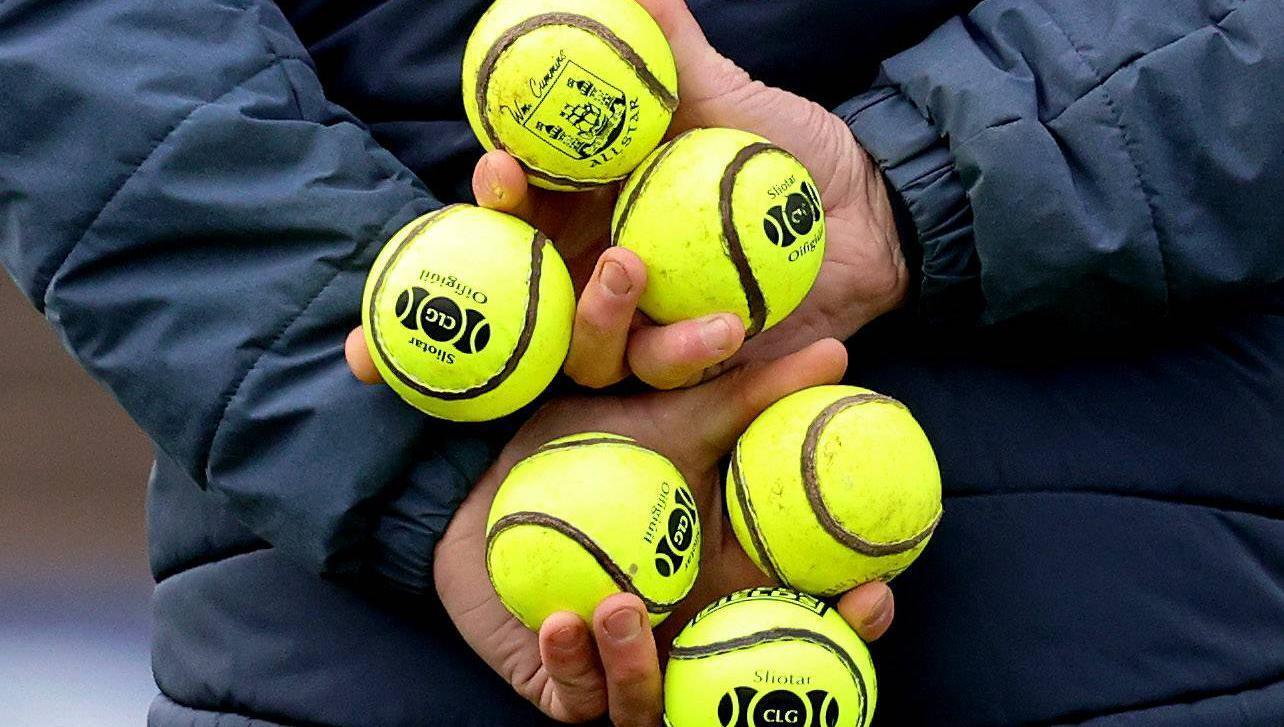
To ascertain the preferred sliotar, 14 players, seven county including Jason Forde (Tipperary), Alan Nolan (Dublin) and Rory O’Connor (Wexford) and seven club, tested sliotars from 11 different suppliers in Croke Park. They were asked to give a rating to each ball on criteria such as feel and strike. The identity of the manufacturers were never made known to them.
It isn’t trite to say this is a whole new ball game. The sliotars recently delivered to the GAA, which will be unveiled next week, are nothing like hurling has seen before.
Smart or digital, call them what you want but they are different. With a chip or a tag inserted in the core, match officials will be able to detect the provenance of the ball simply by holding their phone beside it using an authentication app.
Not that it is a dirty secret but the vast majority of sliotars have for several years been produced in Pakistan. However, the industry is unregulated. Some companies have gone to lengths to ensure their products were being produced ethically but the GAA couldn’t say for certain that could be said for every sliotar coming into the country.
It wasn’t enough that the balls carried the “Sliotar CLG Oifigiúil” stamp; that lamination had been widely abused. For the sake of its reputation as a community-based organisation as much as protecting those workers manufacturing the sliotars, the GAA literally had to go deeper and the inserted chip will be the equivalent of a Fair Trade logo, only stronger. All suppliers will be able to apply to Croke Park to produce the balls.
Going hand in hand with the ethical element of the initiative has been the pursuit of the ideal sliotar. While a uniform core should ensure more consistency, the GAA want to ensure the speed of the ball isn’t impacted by the tag.
As he did in this newspaper last month, sliotar workgroup chairman Ned Quinn told Congress last Saturday that the GAA Official Guide had to move with hurling. No longer were all sliotar surfaces leather; the synthetic covering had to be acknowledged. As well as that, the maximum mass of the ball that was permitted was lowered as well as the parameters of the height of its rims.
Formed last July, the workgroup met 22 times either virtually or in-person. To ascertain the preferred sliotar, 14 players, seven county including Jason Forde (Tipperary), Alan Nolan (Dublin) and Rory O’Connor (Wexford) and seven club, tested sliotars from 11 different suppliers in Croke Park. They were asked to give a rating to each ball on criteria such as feel and strike. The identity of the manufacturers were never made known to them.
Quinn’s admission at Congress last Saturday that the widely-held belief the sliotar wouldn’t go as far if it was made heavier was met with surprise by some delegates. It was an opinion he also held himself but in fact studies showed the ball would go further.
Why so? The density of the core of the ball. Something that could be extrapolated by the coefficient of restitution, which can be explained as “a number which indicates show much kinetic energy remains after a collision of two objects”.
Or, in layman’s terms, how far a sliotar bounces in the air having been dropped shoulder high and hitting the ground.
The phrase mightn’t be Greek to keen golfers. In late 2018, Bryson DeChambeau, dubbed “The Mad Scientist”, explained why he left the flag in for putts at some events and took it out at others. “It depends on the COR, the coefficient of restitution, of the flagsticks. In US Opens (metal flagsticks), I’ll take it out, and every other Tour event, when it’s fiberglass, I’ll leave it in and bounce that ball against the flagstick if I need to.”
It has previously been claimed that a smart chip might be able to help detect illegal handpasses but the technology in the sliotars that will be put into action in this year’s U20 All-Ireland championship and possibly next year’s senior championship, will not possess that capability.
In time, it might be further developed for such determinations but its only purpose right now is authentication. By holding a smartphone up to the sliotar, the app will be able to detect if the chip, similar in size to a five-cent coin, is inside with a HawkEye-like Tá or Níl.
As Quinn said last month, there are no plans in the short or medium term to launch the digital sliotar at club level due to cost reasons. Like the yellow sliotar, it will be the preserve of the inter-county game for now although economies of scale may make it possible in the years to come.
Ahead of the launch next Thursday, there is excitement and apprehension among officials. What they will hold in their hands is the result of a significant investment of time, effort and money. Their aim has been true, their work diligent but ultimately the players are the jurors. The U20 hurling championship commences next month, Leinster on April 2 and Munster on April 6 when Limerick face Clare. Only then will they realise what they already know is right is good enough. It isn’t trite to say this is a whole new ball game. The sliotars recently delivered to the GAA, which will be unveiled next week, are nothing like hurling has seen before.
CONNECT WITH US TODAY



Be the first to know the latest news and updates