The Castlemartyr connection: Ciarán Joyce and Mack Hansen putting East Cork village on the map
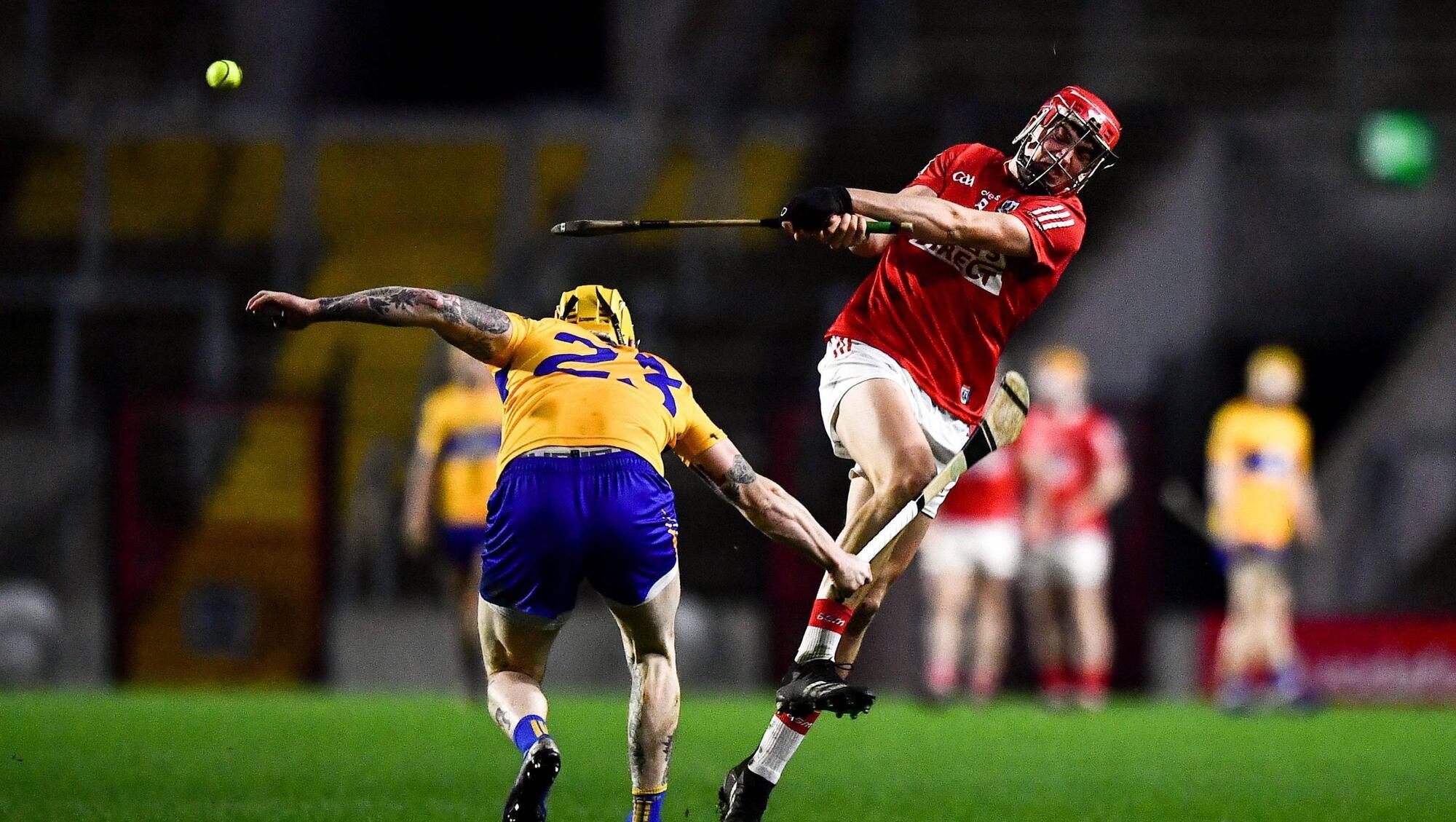
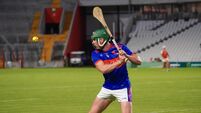
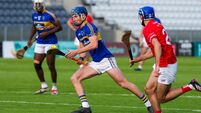
Cork's Ciaran Joyce in action against Aaron Fitzgerald of Clare during the Allianz Hurling League Division 1 Group A game at Páirc Ui Chaoimh
T WAS a special and somewhat surreal day for Castlemartyr last Saturday week as Ciarán Joyce made his senior hurling debut for Cork in their comfortable Allianz Hurling League Division 1 victory over Clare.
Joyce had an excellent outing, scoring three points and being fouled for a few more.
That display came just a few hours after Mack Hansen, another with very strong local links, also wowed in his maiden outing as Ireland’s rugby team blitzed Wales in their Six Nations opener.
That the grandsons of former East Cork neighbours would achieve such landmarks, despite one of them being born on the other end of the world, borders on the unbelievable.
Hurling is entwined in the Joyce family. Ciarán’s grandfather, Dan Joe won a Harty Cup with St Colman’s of Fermoy in 1948, an achievement emulated by his father, Carey with Midleton CBS in 1988. Incredibly,
Ciarán made it a rare, if not unique family treble, 70 years after Dan Joe and 30 after Carey, again in the Midleton CBS colours.
“There is good DNA there, a hurling bloodline,” as Carey’s former teacher and retired principal of Castlemartyr National School, Pat Wade explained.
The aforementioned Dan Joe, who still lives in the family home, was a neighbour of John and Lily O’Shea before the couple emigrated to Australia just over 50 years ago with their eight young children, Hansen’s mother Diane among them.
Castlemartyr postman and historian John Whyte must be credited for providing much of the salient information about Hansen’s roots.
John O’Shea had been a member of the legendary Castlemartyr team that won the club’s first ever county title, in the junior hurling championship in 1951. Paddy Cooney, father of future GAA president Christy, was a teammate. Struggling to make ends meet with a large, young family, he opted to avail of a scheme whereby the Australian government paid the majority of the travelling fare to incentivise immigration and help boost the country’s workforce and economy.
Wade was a child when the O’Sheas emigrated and recalls how it was the talk of the town. “John worked at Sportscraft in Castlemartyr village, a company making timber sports products like rackets and things like that,” Wade details.
“He was a foreman but the money was tight with a big family I’d say, so he decided he’d go with the assisted passage to Australia. He reckoned that in order to do well for his family, he’d try the land of
opportunity.
“I was a young fella of nine or 10 years of age. Where the petrol pumps are in the middle of Castlemartyr Village, what used to be Abernathy’s Garage, I was pumping petrol and I remember him coming up in his black (Ford) Prefect with the back of the car full of children and the story went around that he was about to go to Australia, and I said to myself, ‘My goodness, how far away is that?’ And the bravery to go off to that place. I remember it well.”
John established a building business that prospered, and another of his children,
Gabriel carried on the tradition and has a thriving construction company in New South Wales.
“They looked after a lot of people in Castlemartyr that went out to work there,” Wade reveals. “They never let them down. They were ever so accommodating to Irish people that went in that direction.”
In 1978, a Gaelic football and hurling team from Australia, comprised almost entirely of Irish-born players — there was just one Aussie, Joe Dorazio — embarked on a tour of Ireland that included Castle-
martyr.
The hosts, with the help of some guest players including the late, great Seanie O’Leary, who lined out for the hurlers, won both games but a feature of the visitors’ football team was the two goals scored by Tom O’Shea, son of John and Lily, and uncle of Mack Hansen.
Tom had first worn a Castlemartyr jersey in 1964 and won an East Cork U14 medal two years later, along with O’Leary and a number of his opponents on this noteworthy occasion.
The reconnection with Castlemartyr led to Tom returning to play and he helped them win the East Cork B football title that year.
More than 40 years later, having failed to progress at senior representative level despite starring for Australia in the U20 World Cup the same year Ciarán Joyce was winning a Harty, Hansen opted to utilise his heritage to broaden his horizons and expand his opportunities.
He has been a revelation in his debut season with Connacht and maintained those levels with a man-of-the-match performance at the Aviva Stadium against Wales, while he scored a sensational try in the weekend defeat to France.
“I lived on the same road as the two houses where their families lived, around half-way between Killeagh and Castlemartyr,” Wade explains.
“They were next-door neighbours, the nearest houses to one another. That the man of the match in the rugby, and if you like, the man of the match in the hurling between Cork and Clare a few hours later, both making their debuts, came from those houses is unbelievable. Their grandparents were good friends before John and Lily went to Australia. It would be lovely to get Mack down but I suppose he’s busy! But it would be brilliant if he could come down to the house of his forebears, and maybe even meet up with Ciarán. Wouldn’t that be something?”
It would indeed.


CONNECT WITH US TODAY



Be the first to know the latest news and updates